
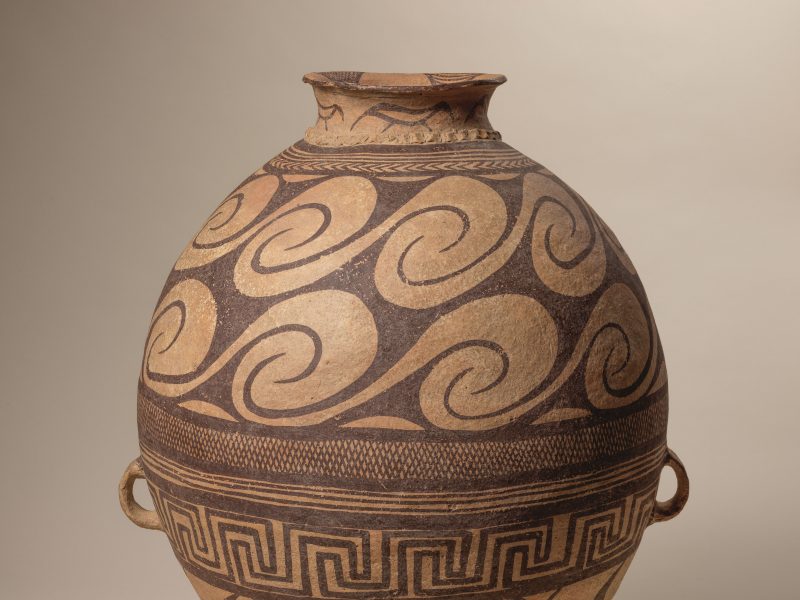
Lot 22 新石器時期 辛店文化(公元前兩千年晚期/一千年早期) 彩繪陶罐 | TRÈS GRANDE JARRE EN TERRE CUITE PEINTE
落槌价
预展中
成交价
预展中
| 拍卖公司 | 邦瀚斯 |
|---|---|
| 拍卖时间 | 2026年12月10日 |
拍品信息
拍品名称
新石器時期 辛店文化(公元前兩千年晚期/一千年早期) 彩繪陶罐 | TRÈS GRANDE JARRE EN TERRE CUITE PEINTE
年代
新石器時期 辛店文化(公元前兩千年晚期/一千年早期)
起拍价
未知
估值区间
EUR 30,000–40,000
尺寸
72 cm (28 1/4 in.) high
品相
未知
更多信息
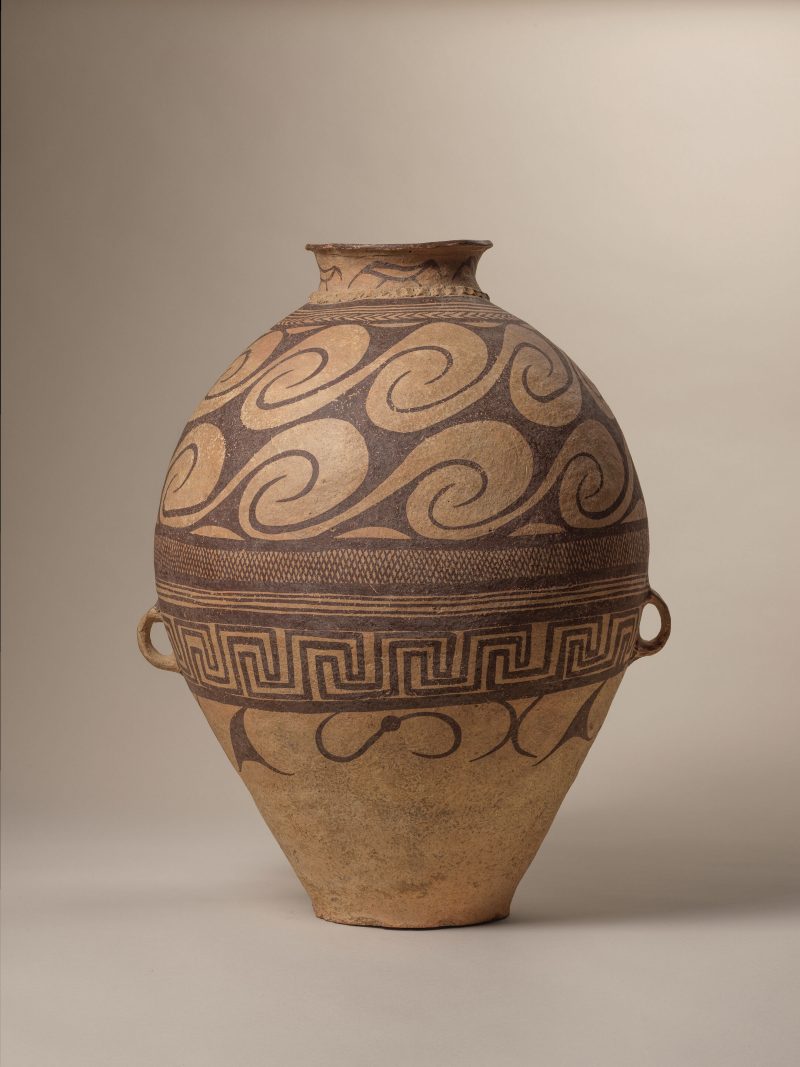
TRÈS GRANDE JARRE EN TERRE CUITE PEINTE
Période Néolithique, culture de Xindian, fin du IIe/début du Ie millénaire av. J.-C.
A VERY LARGE PAINTED POTTERY JAR
Neolithic period, Xindian Culture, late 2nd/early 1st millennium BC
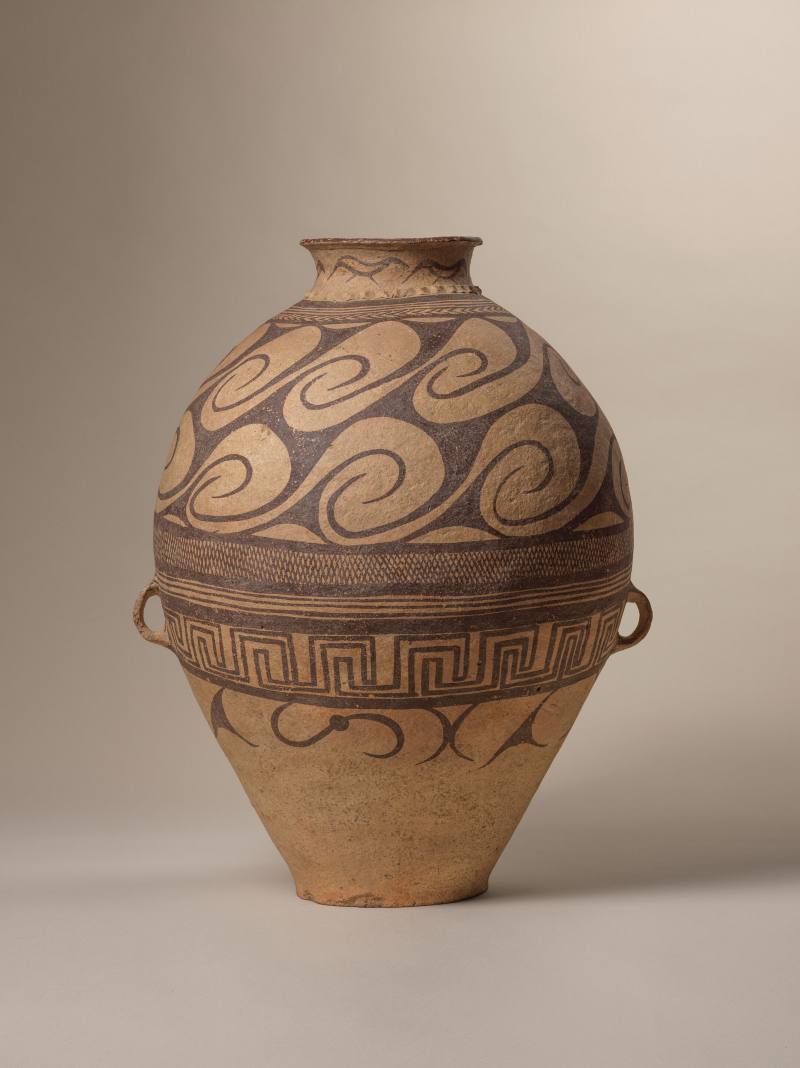
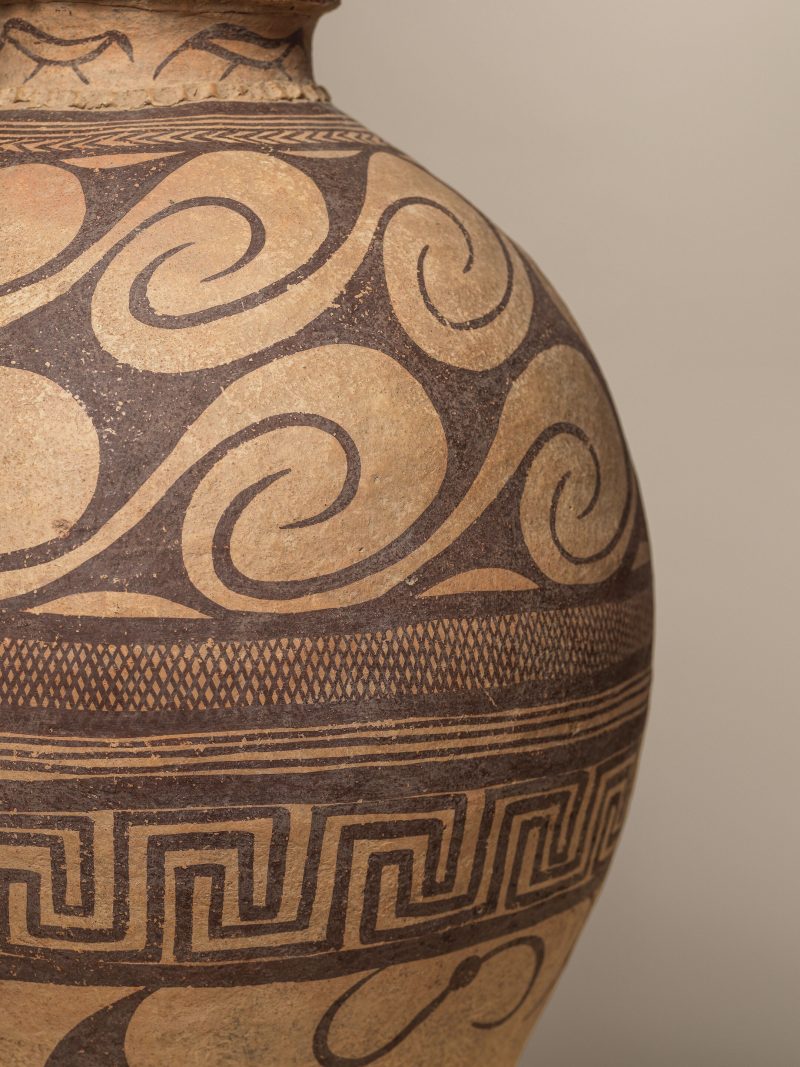
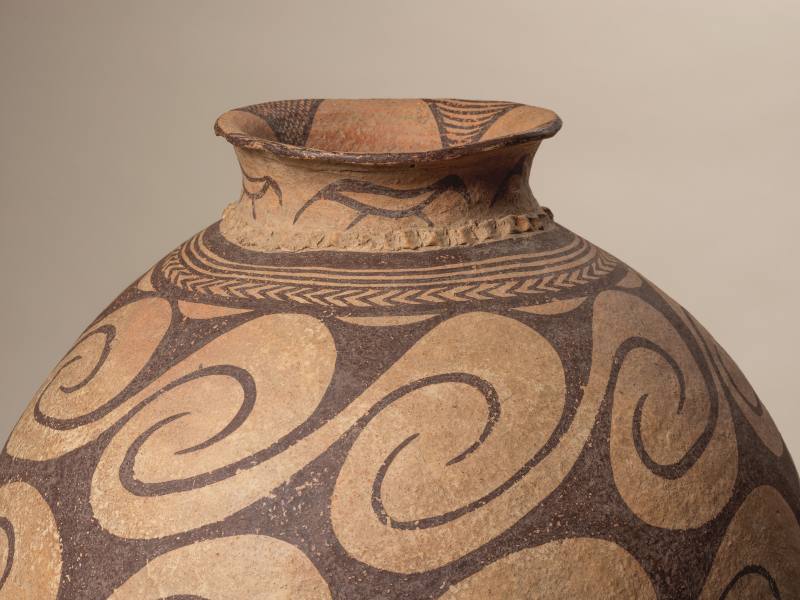
Of tall ovoid shape, tapering to a small flat base and rising to a short, flared neck with a rolled lip, boldly painted around the lower body with horizontal bands with geometric patterns below two registers of rolling spirals, the lower body set with a pair of loop handles, the beige clay slightly burnished with few remains of encrusted earth.
72 cm (28 1/4 in.) high
新石器時期 辛店文化(公元前兩千年晚期/一千年早期) 彩繪陶罐
The result of Oxford thermoluminescence test number TL test C118j43 (19 July 2018) is consistent with the dating of this lot.
本拍品經牛津熱釋光檢測編號C118j43 (2018年7月19日),結果與其斷代相符
Provenance:
Gisèle Croës Arts d'Extrême Orient, Brussels, 2018
Published, Illustrated and Exhibited:
Wui Po Kok, The Dawn of the Huaxia Civilization. Neolithic Painted Pottery Works from Wui Po Kok, Hong Kong, 2018, pp. 24-27.
來源:
Gisèle Croës Arts d'Extrême Orient,布魯塞爾,2018年
展覽著錄:
匯寶閣古美術,《The Dawn of the Huaxia Civilization. Neolithic Painted Pottery Works from Wui Po Kok》,香港,2018年,第24-27頁
The Xindian Culture, centred on present day Gansu Province and neighbouring areas of north-western China, is known for its painted pottery decorated with bold geometric and curvilinear designs, including spirals and meanders. The related Tangwang pottery tradition, identified at Tangwangchuan in Gansu in 1956, has been variously regarded as a distinct archaeological Culture or associated with the Xindian tradition. The present jar is notable for its monumental scale and its striking combination of sweeping spirals, interlocking meanders and loop handles.
Compare with a handled jar, Xindian–Tangwang Culture, circa 1000–900 BC, in the MIHO Museum, Shigaraki, Shiga Prefecture, Japan (no. 00008179), with related spiral decoration. For a comparable painted scroll pattern, see Liu, Qinghai caitao wenshi, Xining, 1989, figs. 224–226, attributed to the Kayue Culture, a Bronze Age culture of the upper Yellow River basin in present-day Qinghai Province.
以下内容由AI翻译:
【描述】
高卵圆形,底部逐渐收窄至一个小平底,向上延伸至短而外撇的颈部,口沿卷曲,下部器身大胆绘制了几何图案的水平带,其上方饰两道旋涡纹,下部器身设有两个环形把手,米黄色陶土略经打磨,带有少量附着的泥土。
辛店文化,中心位于今天的甘肃省及中国西北邻近地区,以其装饰有大胆几何和曲线设计的彩绘陶器而闻名,包括螺旋纹和曲折纹。1956年在甘肃唐汪川发现的相关唐汪陶器传统,有时被视为一种独立的考古文化,或与辛店文化相关。这件陶罐因其宏大的规模和引人注目的螺旋纹、交错曲折纹和环形把手的组合而引人注目。
可比较一件带把手的陶罐,辛店—唐汪文化,约公元前1000-900年,现藏于日本滋贺县信乐市MIHO博物馆(编号00008179),具有相关的螺旋纹装饰。对于类似的彩绘卷曲图案,见刘,《青海彩陶纹饰》,西宁,1989年,图224-226,归因于卡约文化,即黄河上游流域今青海省的青铜时代文化。
常见问题
这件新石器時期 辛店文化(公元前兩千年晚期/一千年早期) 彩繪陶罐 | TRÈS GRANDE JARRE EN TERRE CUITE PEINTE的成交价是多少?
落槌价为 预展中。 成交价为 预展中。
拍品的尺寸是多少?
72 cm (28 1/4 in.) high