
Lot 5 明崇禎 青花人物故事圖筆筒 | A BLUE AND WHITE 'LADY PLAYING FLUTE' BRUSHPOT, BITONG
落槌价
预展中
成交价
预展中
| 拍卖公司 | 邦瀚斯 |
|---|---|
| 拍卖时间 | 2026年11月05日 |
拍品信息
拍品名称
明崇禎 青花人物故事圖筆筒 | A BLUE AND WHITE 'LADY PLAYING FLUTE' BRUSHPOT, BITONG
年代
Chongzhen
起拍价
GBP 20,000
估值区间
GBP 20000 - 30000
尺寸
未知
品相
未知
更多信息
Chongzhen
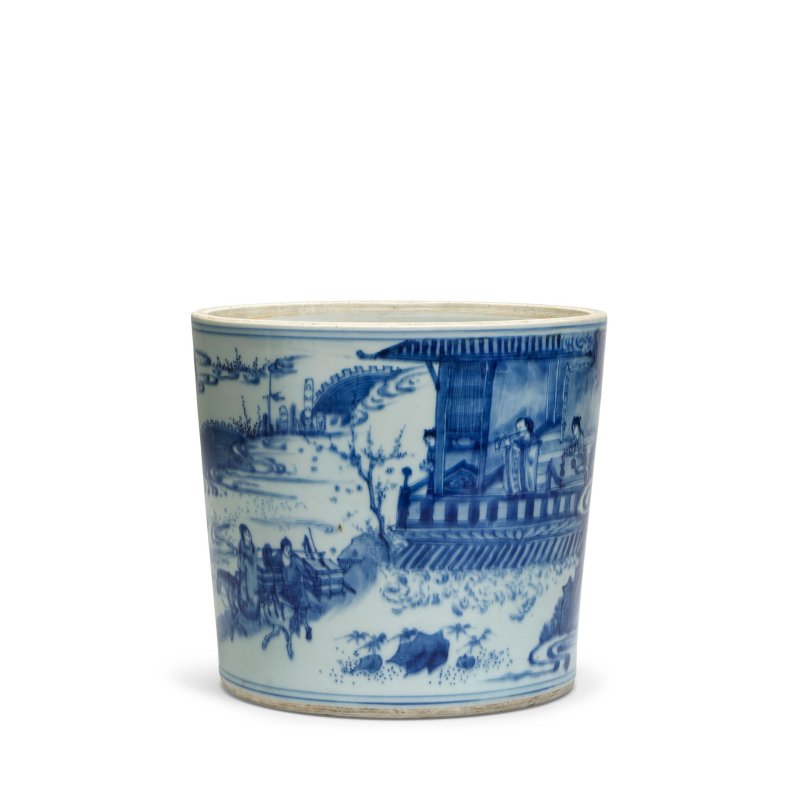
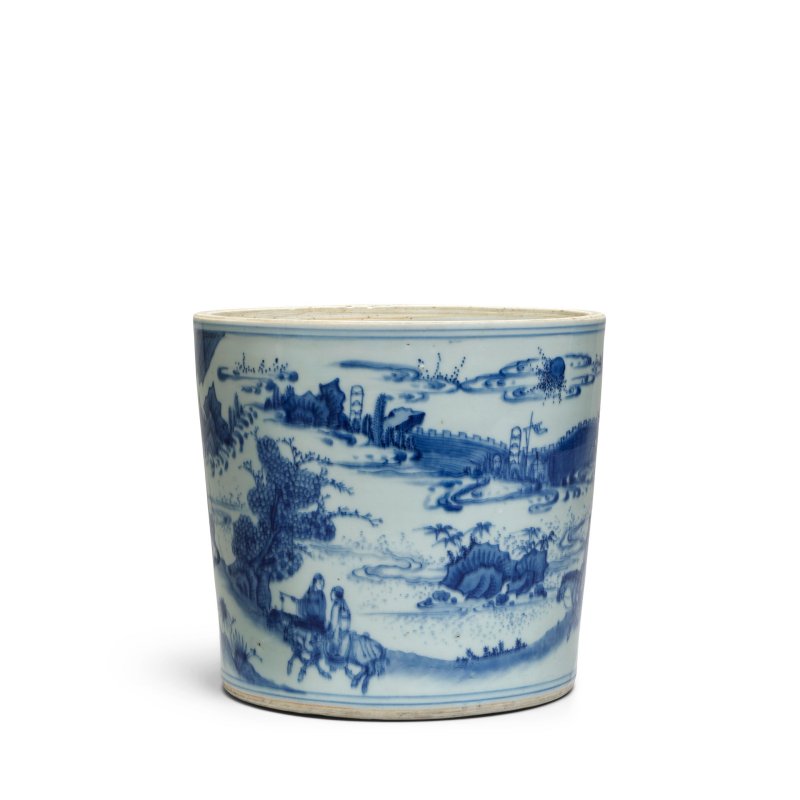
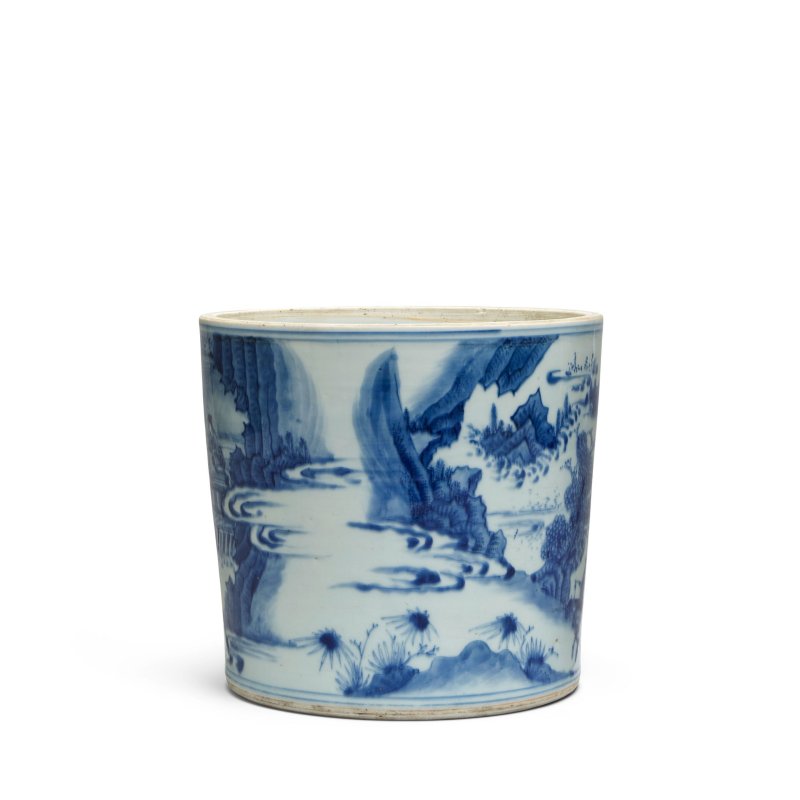
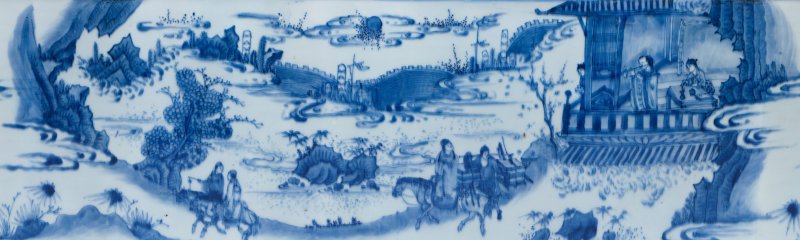
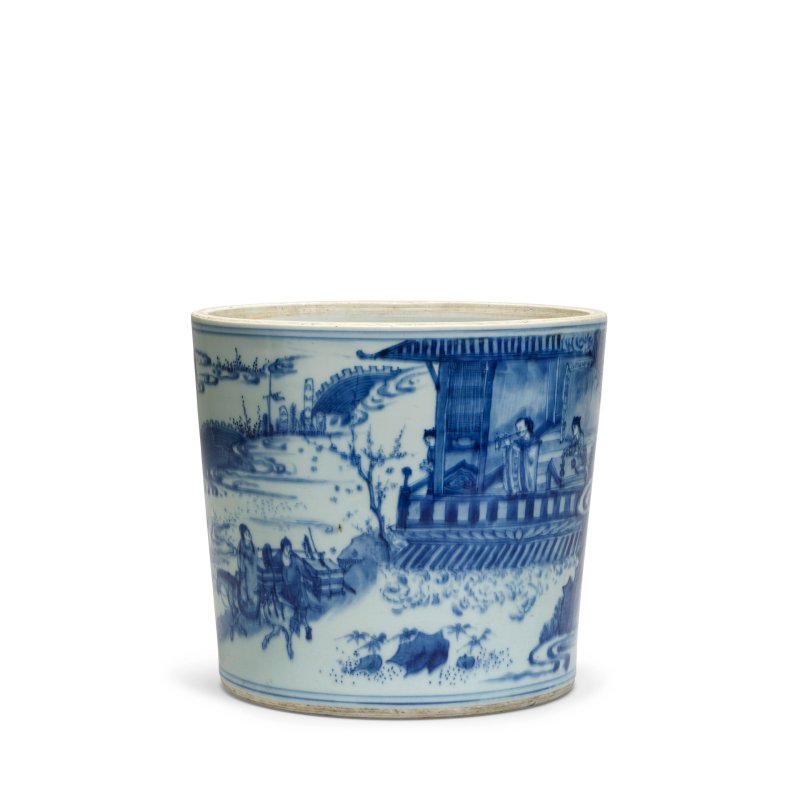
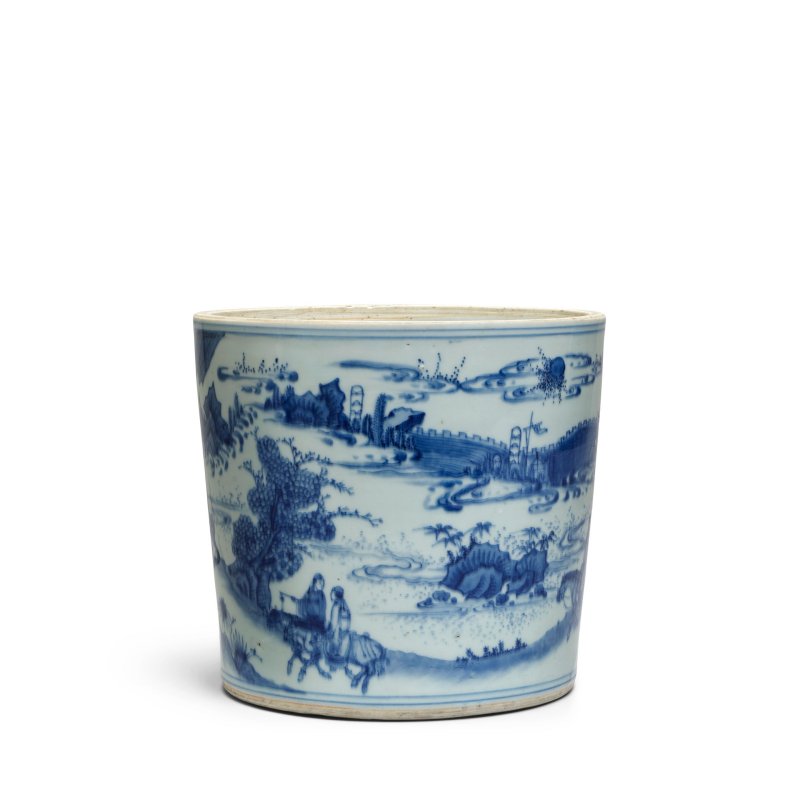
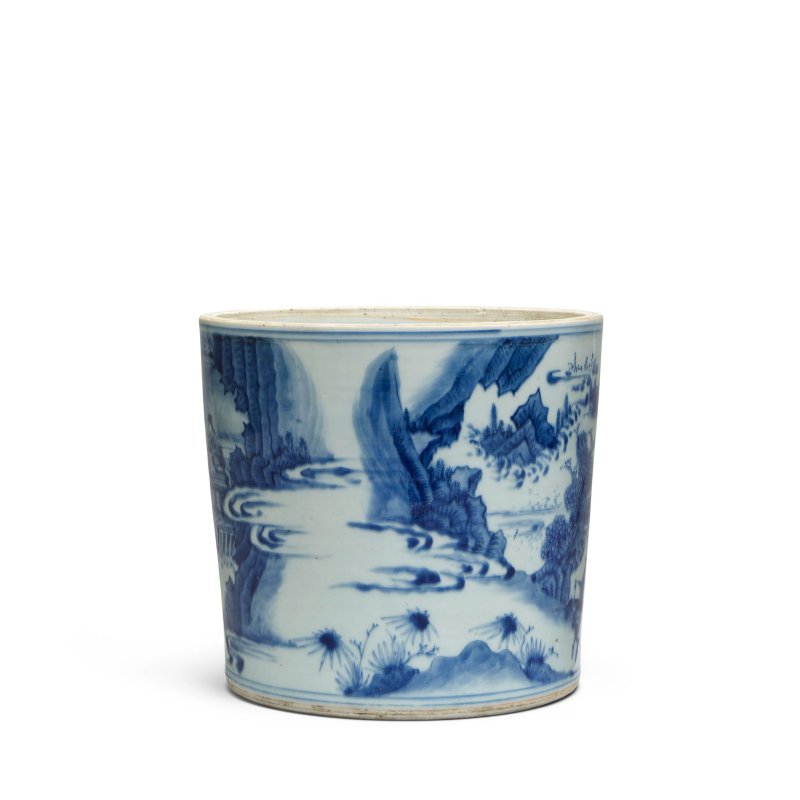
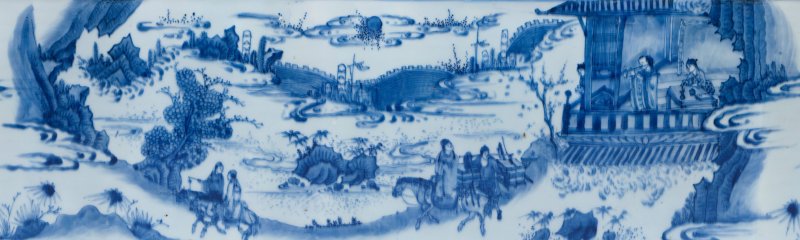
Sturdily potted with tapering sides rising from an unglazed foot to an unglazed rim, the exterior finely painted in underglaze cobalt-blue with a continuous landscape scene depicting a lady standing in a luxurious pavilion furnished with a screen and table bearing a book, brushpot and water pot, attended by two maidservants, the lady plays a flute while gazing towards a scholar mounted on horseback, who turns to look back over his shoulder, accompanied by an attendant carrying a shoulder pole suspending boxes, the scene framed by trees, swirling clouds and a distant city wall within a misty landscape. 21.8cm (8 1/2in) diam.
Footnotes
明崇禎 青花人物故事圖筆筒
Provenance:
Berwald Oriental Art, London
Acquired from the above on 6 July 2016
來源:
倫敦古董商Berwald Oriental Art
從上處獲得于2016年7月6日
The scene painted on the present brushpot belongs to the rich visual tradition of scholar and beauty () imagery that flourished during the late Ming and early Qing periods. The principal figures comprise a mounted scholar, accompanied by an attendant carrying a shoulder yoke, who turns to look towards a lady standing within a pavilion and playing the flute. Such scenes were intended to evoke ideals of romance, refinement, and literary accomplishment, themes that found expression in both popular drama and elite literature.
The flute-playing lady may recall celebrated poetic imagery such as that found in Du Mu's 杜牧 (803–852) ( 寄揚州韓綽判官):
青山隱隱水迢迢,
秋盡江南草未凋。
二十四橋明月夜,
玉人何處教吹簫?
Which may be translated as:
The celebrated concluding line asks, '' (玉人何處教吹簫?). By the seventeenth century, this poetic image had become deeply embedded within the Chinese visual imagination and was frequently employed to suggest longing, separation, and cultivated elegance. See for example, a blue and white jardinière, Kangxi, with a lady gazing out from a pavilion, but not playing a flute and with a different poetic inscription, illustrated in , Hong Kong, 2019, pp.68-69.
More broadly, however, the composition bears comparison with illustrations to dramatic literature, particularly (). The motif of a scholar travelling on horseback, accompanied by a servant bearing luggage, closely resembles depictions of Scholar Zhang's journey found in early woodblock editions of the play. The presence of walls, architectural structures, and banners in the distance may further reinforce the suggestion of arrival at an important urban or religious destination, recalling the opening episodes of the drama of Scholar Zhang's journey to the capital. Whether intended as a direct literary reference or a more general evocation of the scholar and beauty tradition, the scene demonstrates the close relationship between literature, theatre, and the decorative arts during the seventeenth century, when popular narratives increasingly supplied artists with a rich repertoire of pictorial subjects.
Compare with a related large blue and white 'investiture of the Gods' brushpot, Chongzhen, with similarly tapering sides, which was sold at Sotheby's New York, 22 March 2023, lot 513.
Sturdily potted with tapering sides rising from an unglazed foot to an unglazed rim, the exterior finely painted in underglaze cobalt-blue with a continuous landscape scene depicting a lady standing in a luxurious pavilion furnished with a screen and table bearing a book, brushpot and water pot, attended by two maidservants, the lady plays a flute while gazing towards a scholar mounted on horseback, who turns to look back over his shoulder, accompanied by an attendant carrying a shoulder pole suspending boxes, the scene framed by trees, swirling clouds and a distant city wall within a misty landscape. 21.8cm (8 1/2in) diam.
Footnotes
明崇禎 青花人物故事圖筆筒
Provenance:
Berwald Oriental Art, London
Acquired from the above on 6 July 2016
來源:
倫敦古董商Berwald Oriental Art
從上處獲得于2016年7月6日
The scene painted on the present brushpot belongs to the rich visual tradition of scholar and beauty () imagery that flourished during the late Ming and early Qing periods. The principal figures comprise a mounted scholar, accompanied by an attendant carrying a shoulder yoke, who turns to look towards a lady standing within a pavilion and playing the flute. Such scenes were intended to evoke ideals of romance, refinement, and literary accomplishment, themes that found expression in both popular drama and elite literature.
The flute-playing lady may recall celebrated poetic imagery such as that found in Du Mu's 杜牧 (803–852) ( 寄揚州韓綽判官):
青山隱隱水迢迢,
秋盡江南草未凋。
二十四橋明月夜,
玉人何處教吹簫?
Which may be translated as:
The celebrated concluding line asks, '' (玉人何處教吹簫?). By the seventeenth century, this poetic image had become deeply embedded within the Chinese visual imagination and was frequently employed to suggest longing, separation, and cultivated elegance. See for example, a blue and white jardinière, Kangxi, with a lady gazing out from a pavilion, but not playing a flute and with a different poetic inscription, illustrated in , Hong Kong, 2019, pp.68-69.
More broadly, however, the composition bears comparison with illustrations to dramatic literature, particularly (). The motif of a scholar travelling on horseback, accompanied by a servant bearing luggage, closely resembles depictions of Scholar Zhang's journey found in early woodblock editions of the play. The presence of walls, architectural structures, and banners in the distance may further reinforce the suggestion of arrival at an important urban or religious destination, recalling the opening episodes of the drama of Scholar Zhang's journey to the capital. Whether intended as a direct literary reference or a more general evocation of the scholar and beauty tradition, the scene demonstrates the close relationship between literature, theatre, and the decorative arts during the seventeenth century, when popular narratives increasingly supplied artists with a rich repertoire of pictorial subjects.
Compare with a related large blue and white 'investiture of the Gods' brushpot, Chongzhen, with similarly tapering sides, which was sold at Sotheby's New York, 22 March 2023, lot 513.
常见问题
这件明崇禎 青花人物故事圖筆筒 | A BLUE AND WHITE 'LADY PLAYING FLUTE' BRUSHPOT, BITONG的成交价是多少?
落槌价为 预展中。 成交价为 预展中。