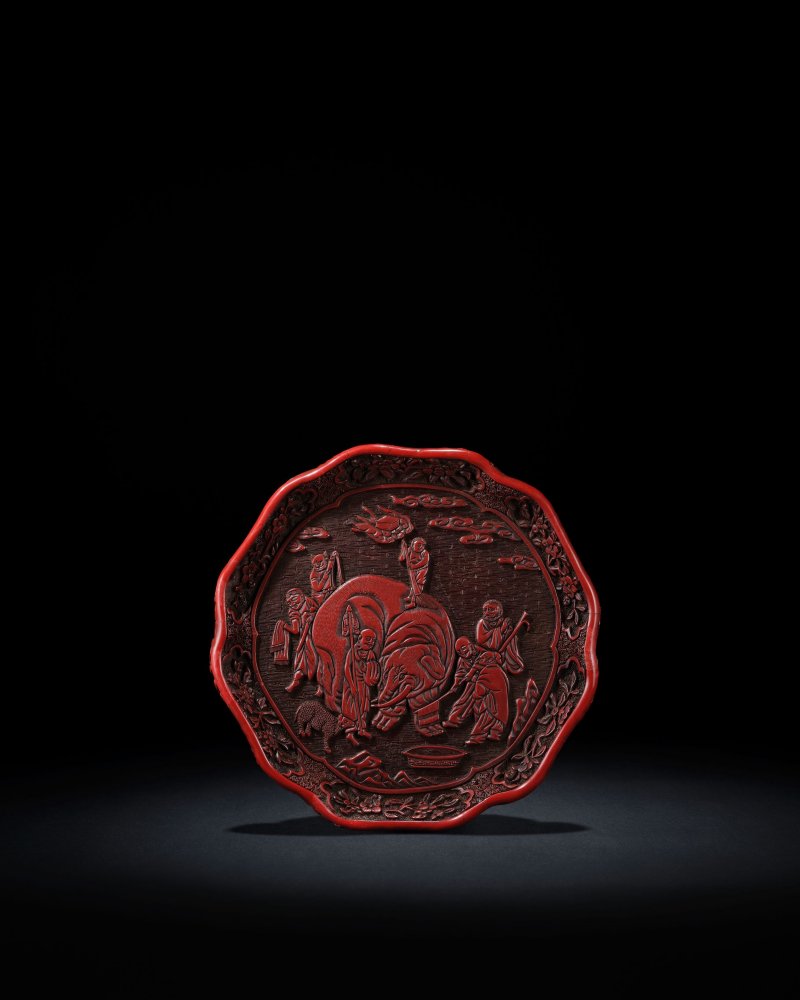


Lot 29 明晚期 剔紅洗象圖六瓣葵式盤 | A CARVED CINNABAR LACQUER 'WASHING THE ELEPHANT' DISH
落槌价
预展中
成交价
预展中
| 拍卖公司 | 邦瀚斯 |
|---|---|
| 拍卖时间 | 2026年10月28日 |
拍品信息
拍品名称
明晚期 剔紅洗象圖六瓣葵式盤 | A CARVED CINNABAR LACQUER 'WASHING THE ELEPHANT' DISH
年代
Late Ming Dynasty
起拍价
HKD 120,000
估值区间
HKD 120000 - 180000
尺寸
未知
品相
未知
更多信息
Late Ming Dynasty
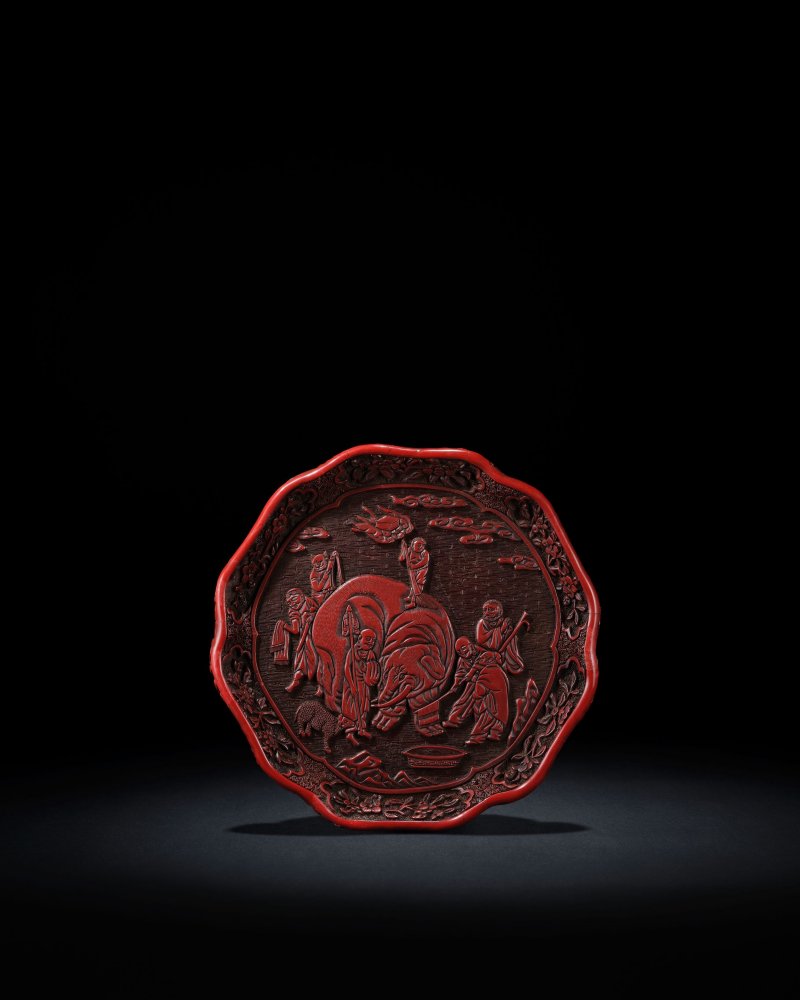
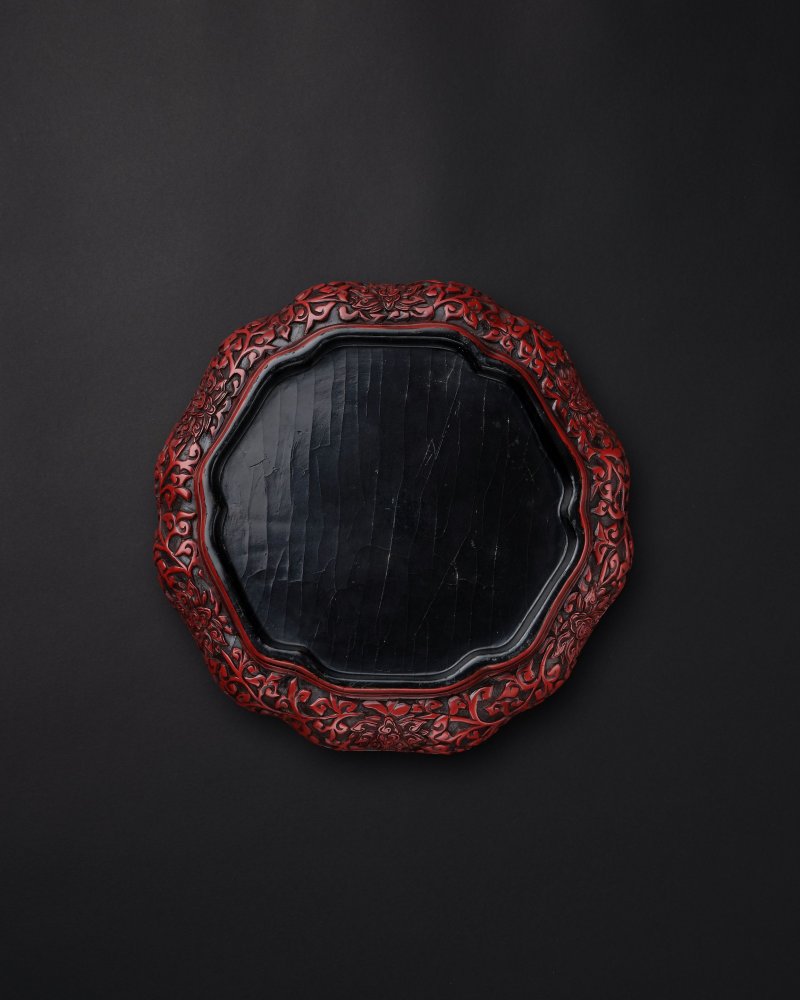
The six-lobed dish with shallow rising sides carved with panels enclosing flowering sprays, the interior deeply carved through thick layers of cinnabar lacquer with a large elephant attended by figures sweeping and washing the animal, a large basin placed before it, and a monk in long flowing robes carrying a staff standing beside it, the elephant turning its head towards the monk, all beneath scrolling ruyi clouds, fitted box.
19.5cm (7 5/8in) diam. (2).
Footnotes
明晚期 剔紅洗象圖六瓣葵式盤
The decoration on the present dish depicts a scene known as 'Washing the Elephant' (saoxiang, literally 'sweeping the elephant'), a subject imbued with Buddhist symbolism of purification and the cleansing of the mind. The association between the white elephant and Buddhism is particularly ancient, deriving in part from the legend of the Buddha's conception. According to tradition, Queen Maya, the Buddha's mother, had remained childless for many years when she dreamt that she was carried by four devas to Lake Anotatta in the Himalayas. There she encountered a magnificent white elephant bearing a white lotus in its trunk, which circled her three times before entering her womb through her right side. The elephant thus came to signify the Buddha's final incarnation and, more broadly, spiritual strength, wisdom and the disciplined mind.
Within Buddhist imagery, the act of washing or sweeping the elephant carries a further allegorical significance, the physical cleansing of the animal evoking the purification of the mind from delusion and worldly desire. The subject is also enriched by the linguistic associations of the Chinese word , meaning 'elephant', which may also suggest appearance, image or phenomenon. Thus , 'sweeping the elephant', could be understood metaphorically as 'sweeping away appearances' or illusions, giving the seemingly playful scene a deeper Buddhist meaning.
The subject was particularly favoured in painting and decorative arts from the late Ming into the early Qing dynasty, and versions are known on porcelain as well as in paintings by artists such as Qian Xuan (1235-1305), to whom a handscroll depicting Manjusri washing the elephant in the Palace Museum, Taipei, is traditionally attributed (acc.no.zhonghua000016). The composition continued to be revisited by Ming painters, notably Ding Yunpeng, whose , dated 1588, is in the Palace Museum, Taipei (acc.no.guhua000615), while a related painting, , after Qian Xuan, is in the Metropolitan Museum of Art, New York (acc.no.47.18.96). A number of late Ming and early Qing porcelains similarly depict the subject.
It is, however, exceptionally rare to encounter the 'washing the elephant' subject rendered in carved cinnabar lacquer. See a related carved cinnabar lacquer 'washing the elephant' octofoil dish, Jiajing six-character incised mark and of the period, which was sold at Christie's London, 5 November 2019, lot 25.
此盤盤面繪「洗象」圖,乃中國人物畫之傳統題材,與佛教禪宗淵源深厚,寓滌淨身心、清淨自性之意。白象與佛教之淵源甚古,部分源於佛陀降生之傳說。據載,佛陀之母摩耶夫人多年無子,一夜夢見四位天神攜其至喜馬拉雅山阿耨達池,遇一雄偉白象,以鼻執白蓮,繞身三匝,自右脅入胎。白象遂成佛陀應身之象徵,更指其精神力量、智慧與調伏之心。
於佛教文化中,洗象或掃象之舉別具深意。為象滌除塵垢,實喻淨化心靈、遠離妄念與世欲。「象」字亦可指外貌、形相或現象,故「掃象」可隱喻掃除形相或破除幻妄,使此看似嬉戲之景,別具佛教深意。
此題材於明晚期至清初,既常見於繪畫,亦廣施於各類器物裝飾,錢選(1235–1305)等畫家皆有涉筆。台北故宮博物院藏一卷錢選所作之《文殊洗象圖》(館藏編號:中畫000016),即屬此類。此構圖亦為明代畫家所承續,尤以丁雲鵬為著,其萬曆十六年(1588年)所作《洗象圖》,現藏台北故宮博物院(館藏編號:故畫000615);另有摹錢選之《洗象圖》,藏於紐約大都會藝術博物館(館藏編號47.18.96)。明晚期至清初瓷器亦多見此題材。
然以剔紅漆器表現洗象圖者,則極為罕見。參考一件剔紅洗象圖八瓣式盤,帶嘉靖六字刻款,售於倫敦佳士得,2019年11月5日,拍品編號25。
The six-lobed dish with shallow rising sides carved with panels enclosing flowering sprays, the interior deeply carved through thick layers of cinnabar lacquer with a large elephant attended by figures sweeping and washing the animal, a large basin placed before it, and a monk in long flowing robes carrying a staff standing beside it, the elephant turning its head towards the monk, all beneath scrolling ruyi clouds, fitted box.
19.5cm (7 5/8in) diam. (2).
Footnotes
明晚期 剔紅洗象圖六瓣葵式盤
The decoration on the present dish depicts a scene known as 'Washing the Elephant' (saoxiang, literally 'sweeping the elephant'), a subject imbued with Buddhist symbolism of purification and the cleansing of the mind. The association between the white elephant and Buddhism is particularly ancient, deriving in part from the legend of the Buddha's conception. According to tradition, Queen Maya, the Buddha's mother, had remained childless for many years when she dreamt that she was carried by four devas to Lake Anotatta in the Himalayas. There she encountered a magnificent white elephant bearing a white lotus in its trunk, which circled her three times before entering her womb through her right side. The elephant thus came to signify the Buddha's final incarnation and, more broadly, spiritual strength, wisdom and the disciplined mind.
Within Buddhist imagery, the act of washing or sweeping the elephant carries a further allegorical significance, the physical cleansing of the animal evoking the purification of the mind from delusion and worldly desire. The subject is also enriched by the linguistic associations of the Chinese word , meaning 'elephant', which may also suggest appearance, image or phenomenon. Thus , 'sweeping the elephant', could be understood metaphorically as 'sweeping away appearances' or illusions, giving the seemingly playful scene a deeper Buddhist meaning.
The subject was particularly favoured in painting and decorative arts from the late Ming into the early Qing dynasty, and versions are known on porcelain as well as in paintings by artists such as Qian Xuan (1235-1305), to whom a handscroll depicting Manjusri washing the elephant in the Palace Museum, Taipei, is traditionally attributed (acc.no.zhonghua000016). The composition continued to be revisited by Ming painters, notably Ding Yunpeng, whose , dated 1588, is in the Palace Museum, Taipei (acc.no.guhua000615), while a related painting, , after Qian Xuan, is in the Metropolitan Museum of Art, New York (acc.no.47.18.96). A number of late Ming and early Qing porcelains similarly depict the subject.
It is, however, exceptionally rare to encounter the 'washing the elephant' subject rendered in carved cinnabar lacquer. See a related carved cinnabar lacquer 'washing the elephant' octofoil dish, Jiajing six-character incised mark and of the period, which was sold at Christie's London, 5 November 2019, lot 25.
此盤盤面繪「洗象」圖,乃中國人物畫之傳統題材,與佛教禪宗淵源深厚,寓滌淨身心、清淨自性之意。白象與佛教之淵源甚古,部分源於佛陀降生之傳說。據載,佛陀之母摩耶夫人多年無子,一夜夢見四位天神攜其至喜馬拉雅山阿耨達池,遇一雄偉白象,以鼻執白蓮,繞身三匝,自右脅入胎。白象遂成佛陀應身之象徵,更指其精神力量、智慧與調伏之心。
於佛教文化中,洗象或掃象之舉別具深意。為象滌除塵垢,實喻淨化心靈、遠離妄念與世欲。「象」字亦可指外貌、形相或現象,故「掃象」可隱喻掃除形相或破除幻妄,使此看似嬉戲之景,別具佛教深意。
此題材於明晚期至清初,既常見於繪畫,亦廣施於各類器物裝飾,錢選(1235–1305)等畫家皆有涉筆。台北故宮博物院藏一卷錢選所作之《文殊洗象圖》(館藏編號:中畫000016),即屬此類。此構圖亦為明代畫家所承續,尤以丁雲鵬為著,其萬曆十六年(1588年)所作《洗象圖》,現藏台北故宮博物院(館藏編號:故畫000615);另有摹錢選之《洗象圖》,藏於紐約大都會藝術博物館(館藏編號47.18.96)。明晚期至清初瓷器亦多見此題材。
然以剔紅漆器表現洗象圖者,則極為罕見。參考一件剔紅洗象圖八瓣式盤,帶嘉靖六字刻款,售於倫敦佳士得,2019年11月5日,拍品編號25。
常见问题
这件明晚期 剔紅洗象圖六瓣葵式盤 | A CARVED CINNABAR LACQUER 'WASHING THE ELEPHANT' DISH的成交价是多少?
落槌价为 预展中。 成交价为 预展中。