
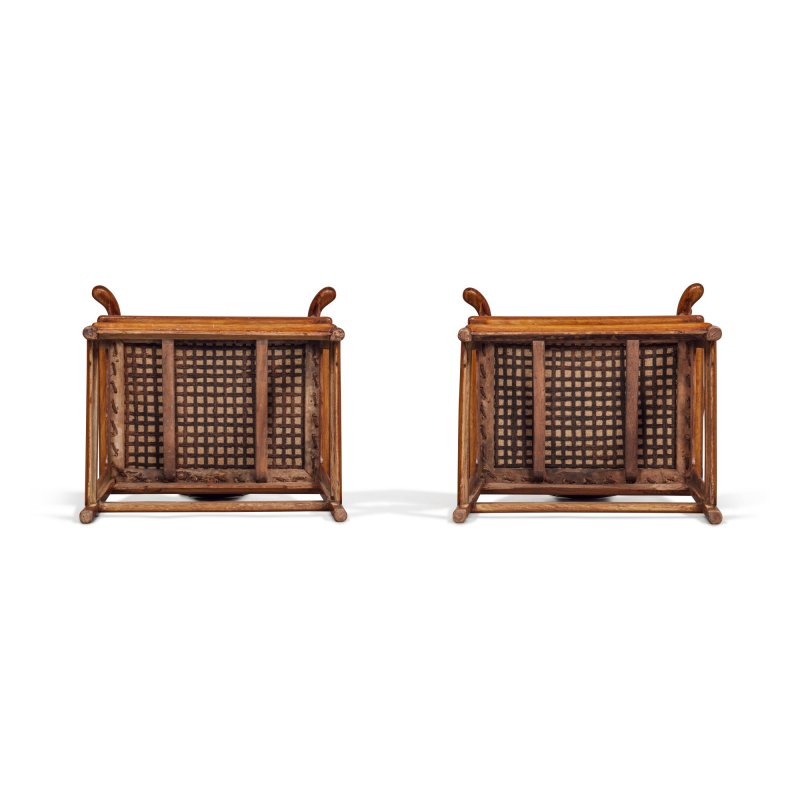
拍品信息
拍品名称
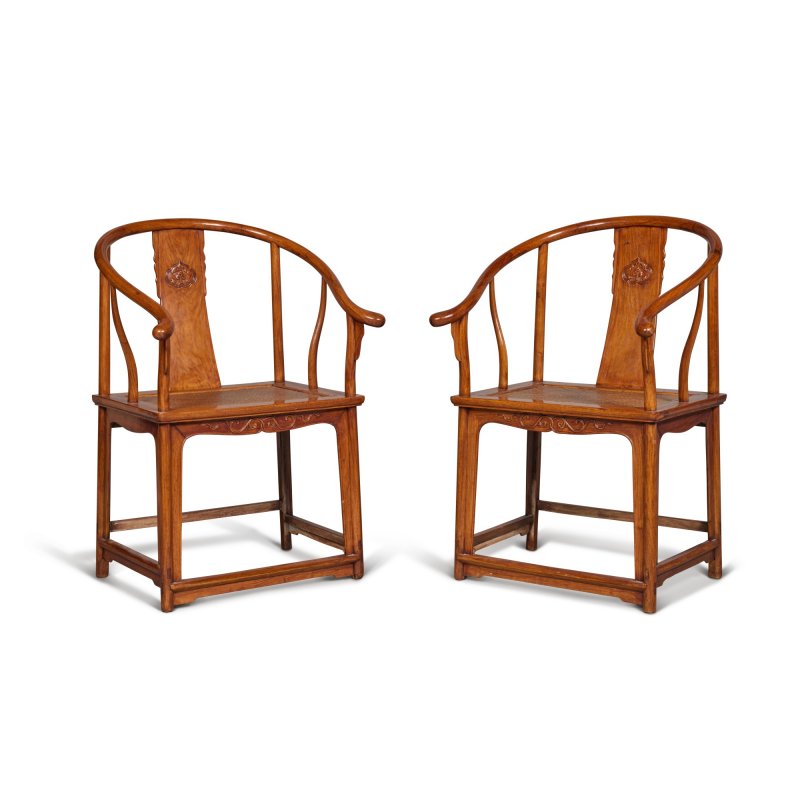
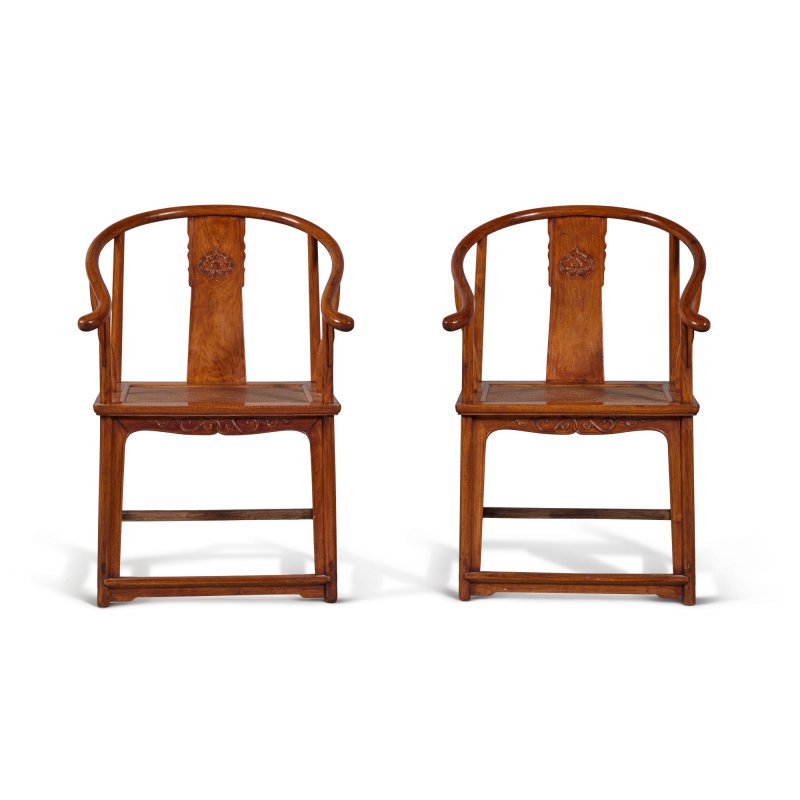
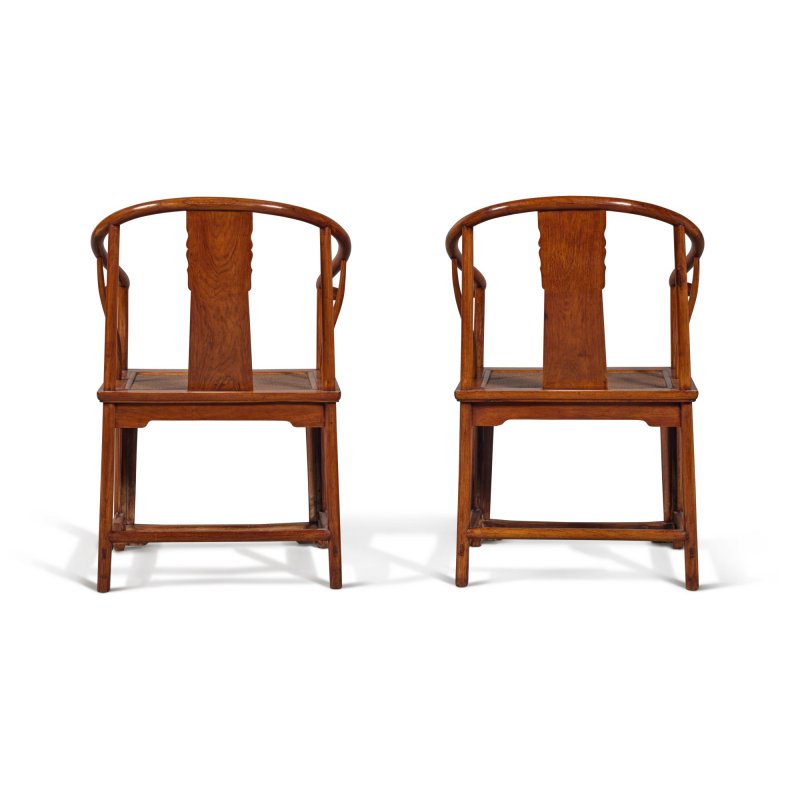
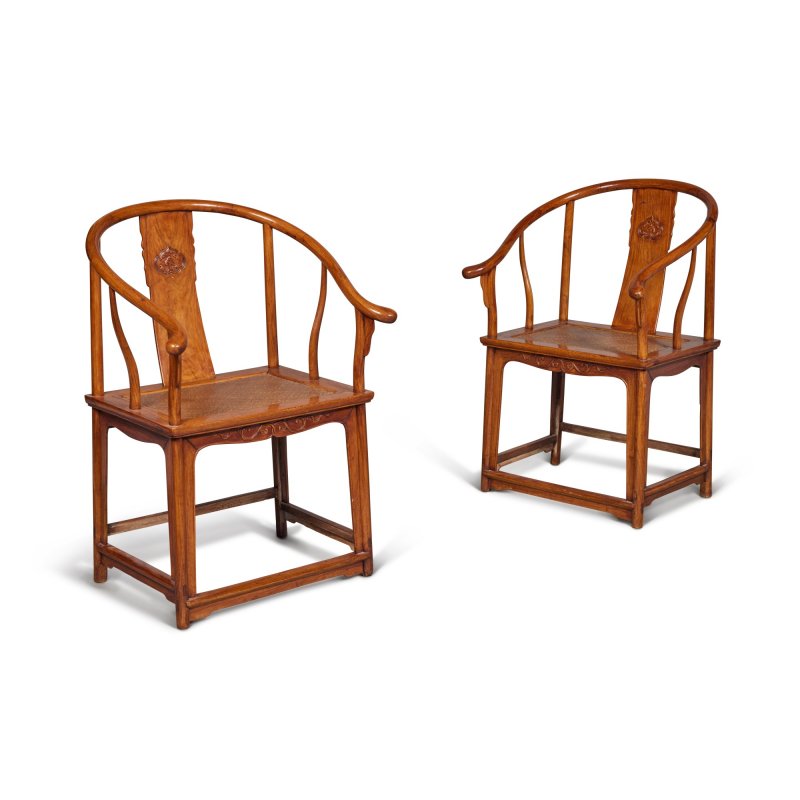
十七 / 十八世紀 黃花梨雕如意紋圈椅一對
起拍价
USD 60,000
估值区间
60,000 - 80,000 USD
尺寸
未知
品相
如欲了解本拍品狀況的更多資訊,請聯絡 Drew.Lerner@sothebys.com
更多信息
(2)
Height 38⅛ in., 97 cm; width 25 in., 63.5 cm; depth 21⅛ in., 53.7 cm
来源:恆藝古董家具有限公司,香港,1996年10月16日
图录
说明:Of magnificent rounded form and exceptional wood quality, the present pair of chairs is a particularly fine and classic example of beloved quanyi (lit. ‘circle chair’) design. This design, also described as ‘horseshoe back,’ was initially derived from vernacular designs in which lengths of bamboo would be steam-bent into U-shape backs and bound with natural fibers. With the development of the literati class and increased availability of precious hardwoods, these elegant designs soon were reimagined in the hands of cabinetmakers. The fragrant honey-colored huanghuali wood, in particular, became a frequent timber for those aiming to highlight their wealth and sophistication, with chairs like the present designed with complex joinery techniques to make their elegant and sturdy hardwood appear as soft and supple as a reed.
By the Ming dynasty, these quanyi had developed a reputation as symbols of honor and esteem, occasionally fitted with poles to convert them into sedan chairs for wealthy households. A pottery model of a horseshoe-back chair at the rear of a sixty-six piece funeral procession from a Ming dynasty tomb is now held in the lobby of the Shanghai Museum, illustrated in Treasures from the Shanghai Museum: 6,000 Years of Chinese Art, San Francisco 1983, no. 115.
Quanyi of this period can generally be classified into two subgroups: those left relatively plain and those, like the present, with ornamental ruyi carving and flanges to the backsplats and scrolling curvilinear aprons. These designs are discussed by Robert Hatfield Ellsworth in Chinese Furniture. Hardwood Examples of the Ming and Ch’ing Dynasties, New York, 1971, p. 86, where the author attributes them as innovations of the late Ming and Kangxi periods. He further observes the similarities between the curvilinear apron on chairs of this type and those found on Tang dynasty tables, such as the example in the Shōsōin Treasure House, Nara, illustrated in Sarah Handler, Austere Luminosity of Chinese Classical Furniture, Berkley, 2001, pl. 12.6.
The present ornate variety of quanyi are among the most beloved of the classical Chinese canon. Compare a closely related pair of this type illustrated by Grace Wu Bruce in The Best of The Best: The MQJ Collection of Ming Furniture, vol. 1, Beijing 2017, pp. 208-213; and a pair from the collection of Ruth and Bruce Dayton with a ruyi motif on the backsplat but without the accompanying flange in Robert Jacobsen and Nicholas Grindley, Classical Chinese Furniture in the Minneapolis Institute of Art, Minneapolis, 1999, cat. no. 12. Also compare a closely related pair of this design with ornamental backsplat and apron sold in our Hong Kong rooms, 9th October 2020, lot 3648; another pair, previously sold in these rooms, 23rd September 1995, lot 539, sold more recently in our Hong Kong rooms, 13th October 2021, lot 3669; and a single chair sold in our Hong Kong rooms, 4th April 2015, lot 2848.
Height 38⅛ in., 97 cm; width 25 in., 63.5 cm; depth 21⅛ in., 53.7 cm
来源:恆藝古董家具有限公司,香港,1996年10月16日
图录
说明:Of magnificent rounded form and exceptional wood quality, the present pair of chairs is a particularly fine and classic example of beloved quanyi (lit. ‘circle chair’) design. This design, also described as ‘horseshoe back,’ was initially derived from vernacular designs in which lengths of bamboo would be steam-bent into U-shape backs and bound with natural fibers. With the development of the literati class and increased availability of precious hardwoods, these elegant designs soon were reimagined in the hands of cabinetmakers. The fragrant honey-colored huanghuali wood, in particular, became a frequent timber for those aiming to highlight their wealth and sophistication, with chairs like the present designed with complex joinery techniques to make their elegant and sturdy hardwood appear as soft and supple as a reed.
By the Ming dynasty, these quanyi had developed a reputation as symbols of honor and esteem, occasionally fitted with poles to convert them into sedan chairs for wealthy households. A pottery model of a horseshoe-back chair at the rear of a sixty-six piece funeral procession from a Ming dynasty tomb is now held in the lobby of the Shanghai Museum, illustrated in Treasures from the Shanghai Museum: 6,000 Years of Chinese Art, San Francisco 1983, no. 115.
Quanyi of this period can generally be classified into two subgroups: those left relatively plain and those, like the present, with ornamental ruyi carving and flanges to the backsplats and scrolling curvilinear aprons. These designs are discussed by Robert Hatfield Ellsworth in Chinese Furniture. Hardwood Examples of the Ming and Ch’ing Dynasties, New York, 1971, p. 86, where the author attributes them as innovations of the late Ming and Kangxi periods. He further observes the similarities between the curvilinear apron on chairs of this type and those found on Tang dynasty tables, such as the example in the Shōsōin Treasure House, Nara, illustrated in Sarah Handler, Austere Luminosity of Chinese Classical Furniture, Berkley, 2001, pl. 12.6.
The present ornate variety of quanyi are among the most beloved of the classical Chinese canon. Compare a closely related pair of this type illustrated by Grace Wu Bruce in The Best of The Best: The MQJ Collection of Ming Furniture, vol. 1, Beijing 2017, pp. 208-213; and a pair from the collection of Ruth and Bruce Dayton with a ruyi motif on the backsplat but without the accompanying flange in Robert Jacobsen and Nicholas Grindley, Classical Chinese Furniture in the Minneapolis Institute of Art, Minneapolis, 1999, cat. no. 12. Also compare a closely related pair of this design with ornamental backsplat and apron sold in our Hong Kong rooms, 9th October 2020, lot 3648; another pair, previously sold in these rooms, 23rd September 1995, lot 539, sold more recently in our Hong Kong rooms, 13th October 2021, lot 3669; and a single chair sold in our Hong Kong rooms, 4th April 2015, lot 2848.
常见问题
拍品的品相状况如何?
如欲了解本拍品狀況的更多資訊,請聯絡 Drew.Lerner@sothebys.com
这件拍品的流传来源是什么?
恆藝古董家具有限公司,香港,1996年10月16日
图录
图录