
拍品信息
拍品名称
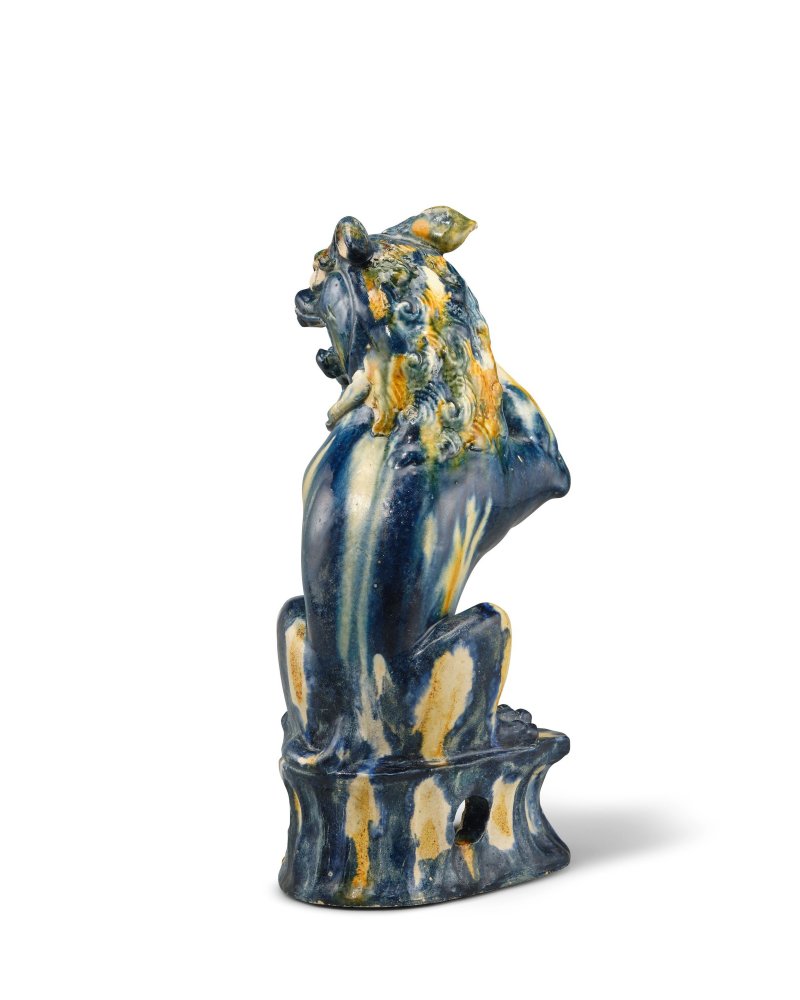
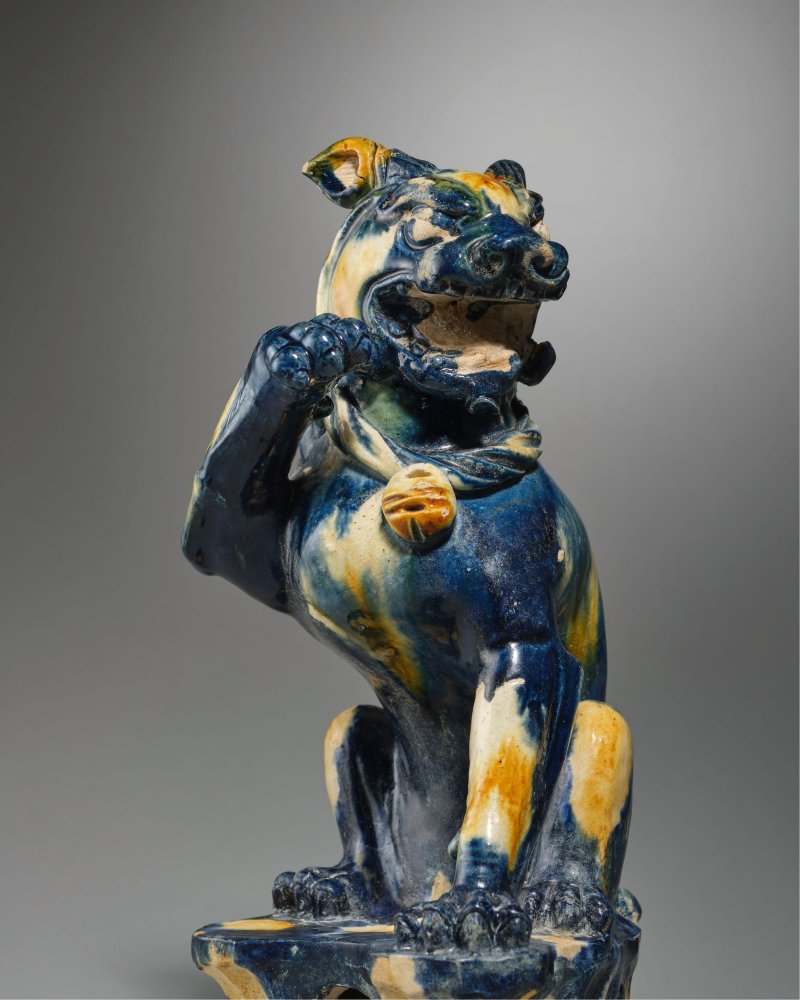
唐 三彩加藍坐獅 | A VERY RARE BLUE, STRAW AND AMBER-GLAZED LION
年代
Tang Dynasty
起拍价
HKD 250,000
估值区间
HKD 250000 - 350000
尺寸
未知
品相
未知
更多信息
Tang Dynasty
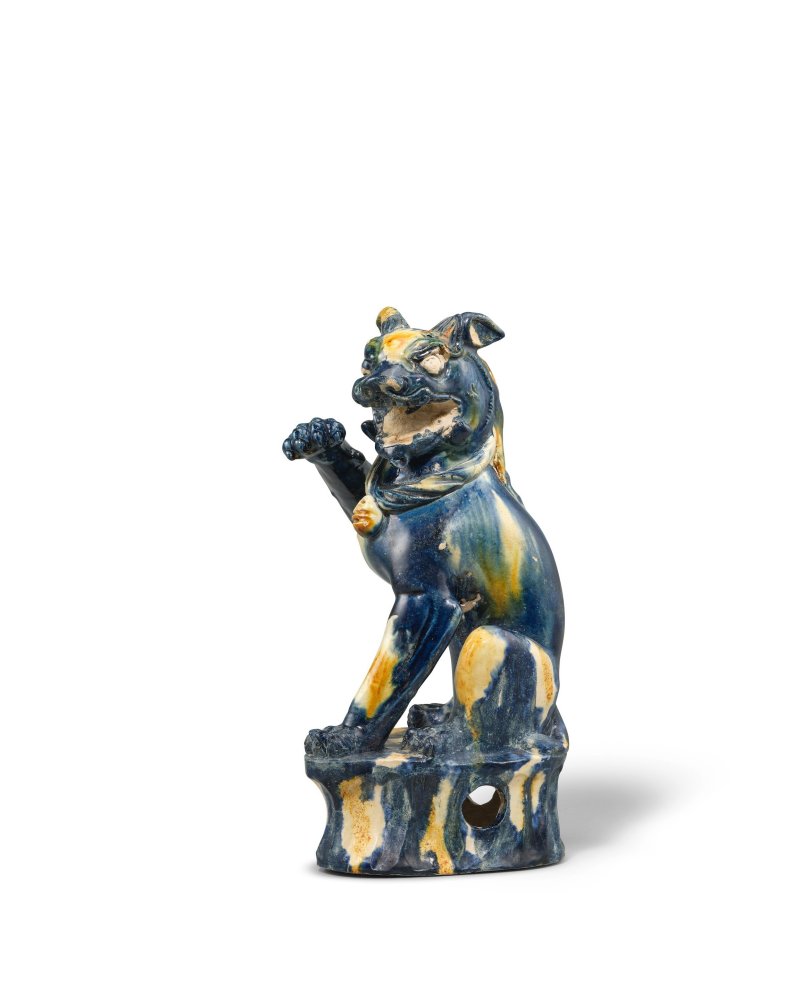
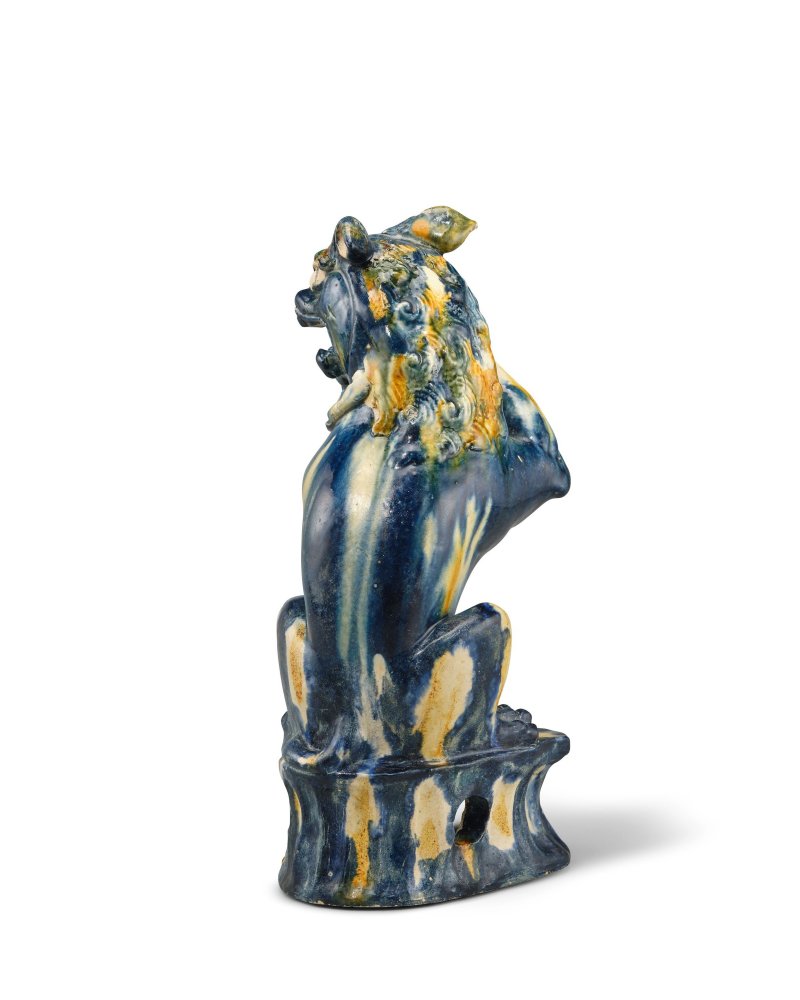
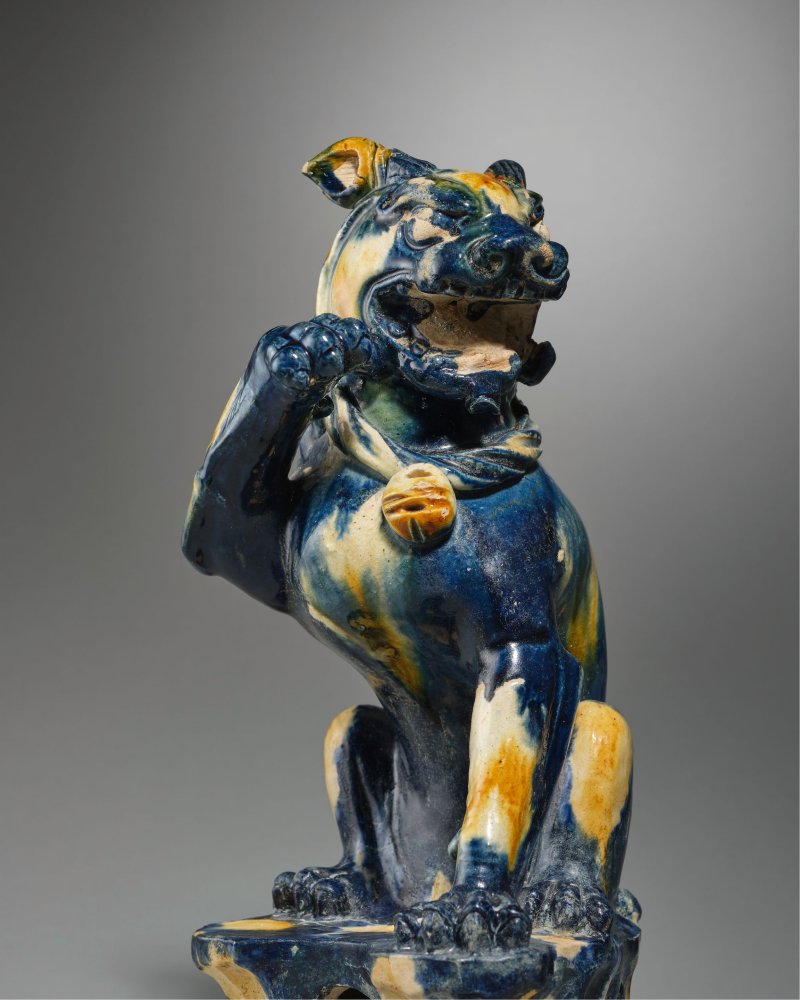
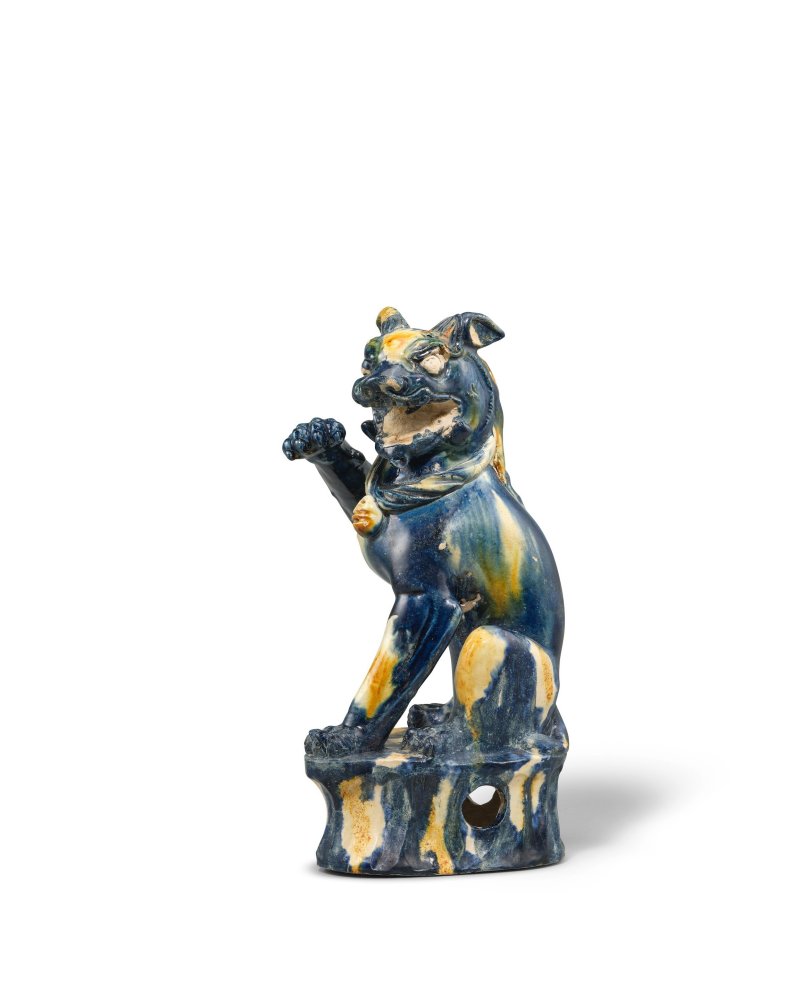
Dynamic and expressively modelled, seated atop a craggy, hollowed rockwork base with its right foreleg playfully raised and left leg planted, the head turned slightly to the side with open jaws revealing bared teeth, framed by flattened ears, bulging eyes, and a furled brow, a thick collar encircled around the neck supports a small bell at the chest, covered liberally in a rich, vibrant cobalt-blue glaze interspersed with warm amber splashes, the glazes pooling in the crevices and trickling down over the base to reveal the unglazed pale buff clay body beneath, fitted box.
25.2 cm (9 7/8in) high. (2).
Footnotes
唐 三彩加藍坐獅
The result of Oxford Authentication Ltd. thermoluminescence test no.C126k56, dated 19 August 2026, is consistent with the dating of this lot.
Masterfully modelled with compelling anatomical realism, this figure of a lion captures the quiet power and vigilant spirit of the animal. Generously covered in a rich cobalt-blue glaze, the sculpture encapsulates the cosmopolitan sophistication and artistic vitality of the High Tang dynasty.
The Tang period represents a monumental shift in Chinese ceramic history, an era when potters pushed the technical boundaries of the medium and transformed sculptural lead-glazed earthenware into expressive works of fine art. While pottery figures produced in earlier dynasties served primarily as humble surrogates for the afterlife, Tang figures evolved into bold displays of social status and material wealth. Elaborate sculptures such as the present piece were commissioned by Imperial and aristocratic patrons, paraded through the metropolitan centres of Luoyang and Chang'an during lavish funeral processions before being interred in elite tombs. In this public and ceremonial context, the addition of rare cobalt blue — a costly mineral pigment imported from West Asia via the Silk Road—served as a conspicuous statement of prestige, signalling the owner's high rank to both the earthly elite and the spirits of the underworld.
Compare a smaller and blue-glazed figure of a seated lion, Tang dynasty, which was sold at Christie's Hong Kong, 30 April 2026, lot 1107. See also a figure of a reclining buffalo, Tang dynasty, similarly glazed overall in blue, from the Sze Yuan Tang collection, which was sold at Sotheby's London, 4 November 2020, lot 234, and again at Sotheby's Hong Kong, 7 May 2025, lot 3668.
本坐獅造型精妙巧致,寫實且帶生動神韻,將雄獅之沉穩威嚴捕捉得淋漓盡致。通體施以濃艷豐厚之鈷藍釉,展現盛唐時期包羅萬象之國際化風采與蓬勃藝術活力。
唐代乃中國陶瓷史上具里程碑意義之時期。匠人不斷突破工藝界限,將原本僅具塑造功能之鉛釉陶器,昇華為富於表現力之藝術珍品。相較於前朝陶俑多作為單純之陪葬替代品,唐代陶造像已演變為顯赫社會地位與龐大財富之標志。如本品般精美繁複之雕塑,多由貴族特別訂製,隨後方始入葬於墓葬之中。此陶獅使用經由絲綢之路進口、極其昂貴之珍稀鈷藍料,無疑為尊貴地位之顯赫宣示,向世俗名流與冥界神靈昭示著主人之顯赫身分。
比較一件尺寸較小之唐三彩加藍坐獅像,售於香港佳士得,2026年4月30日,拍品編號1107。另可比較思源堂舊藏一件唐代臥水牛,通體同樣施以藍釉,先後售於倫敦蘇富比,2020年11月4日,拍品編號234,及香港蘇富比,2025年5月7日,拍品編號3668。
Dynamic and expressively modelled, seated atop a craggy, hollowed rockwork base with its right foreleg playfully raised and left leg planted, the head turned slightly to the side with open jaws revealing bared teeth, framed by flattened ears, bulging eyes, and a furled brow, a thick collar encircled around the neck supports a small bell at the chest, covered liberally in a rich, vibrant cobalt-blue glaze interspersed with warm amber splashes, the glazes pooling in the crevices and trickling down over the base to reveal the unglazed pale buff clay body beneath, fitted box.
25.2 cm (9 7/8in) high. (2).
Footnotes
唐 三彩加藍坐獅
The result of Oxford Authentication Ltd. thermoluminescence test no.C126k56, dated 19 August 2026, is consistent with the dating of this lot.
Masterfully modelled with compelling anatomical realism, this figure of a lion captures the quiet power and vigilant spirit of the animal. Generously covered in a rich cobalt-blue glaze, the sculpture encapsulates the cosmopolitan sophistication and artistic vitality of the High Tang dynasty.
The Tang period represents a monumental shift in Chinese ceramic history, an era when potters pushed the technical boundaries of the medium and transformed sculptural lead-glazed earthenware into expressive works of fine art. While pottery figures produced in earlier dynasties served primarily as humble surrogates for the afterlife, Tang figures evolved into bold displays of social status and material wealth. Elaborate sculptures such as the present piece were commissioned by Imperial and aristocratic patrons, paraded through the metropolitan centres of Luoyang and Chang'an during lavish funeral processions before being interred in elite tombs. In this public and ceremonial context, the addition of rare cobalt blue — a costly mineral pigment imported from West Asia via the Silk Road—served as a conspicuous statement of prestige, signalling the owner's high rank to both the earthly elite and the spirits of the underworld.
Compare a smaller and blue-glazed figure of a seated lion, Tang dynasty, which was sold at Christie's Hong Kong, 30 April 2026, lot 1107. See also a figure of a reclining buffalo, Tang dynasty, similarly glazed overall in blue, from the Sze Yuan Tang collection, which was sold at Sotheby's London, 4 November 2020, lot 234, and again at Sotheby's Hong Kong, 7 May 2025, lot 3668.
本坐獅造型精妙巧致,寫實且帶生動神韻,將雄獅之沉穩威嚴捕捉得淋漓盡致。通體施以濃艷豐厚之鈷藍釉,展現盛唐時期包羅萬象之國際化風采與蓬勃藝術活力。
唐代乃中國陶瓷史上具里程碑意義之時期。匠人不斷突破工藝界限,將原本僅具塑造功能之鉛釉陶器,昇華為富於表現力之藝術珍品。相較於前朝陶俑多作為單純之陪葬替代品,唐代陶造像已演變為顯赫社會地位與龐大財富之標志。如本品般精美繁複之雕塑,多由貴族特別訂製,隨後方始入葬於墓葬之中。此陶獅使用經由絲綢之路進口、極其昂貴之珍稀鈷藍料,無疑為尊貴地位之顯赫宣示,向世俗名流與冥界神靈昭示著主人之顯赫身分。
比較一件尺寸較小之唐三彩加藍坐獅像,售於香港佳士得,2026年4月30日,拍品編號1107。另可比較思源堂舊藏一件唐代臥水牛,通體同樣施以藍釉,先後售於倫敦蘇富比,2020年11月4日,拍品編號234,及香港蘇富比,2025年5月7日,拍品編號3668。
常见问题
这件唐 三彩加藍坐獅 | A VERY RARE BLUE, STRAW AND AMBER-GLAZED LION的成交价是多少?
落槌价为 预展中。 成交价为 预展中。