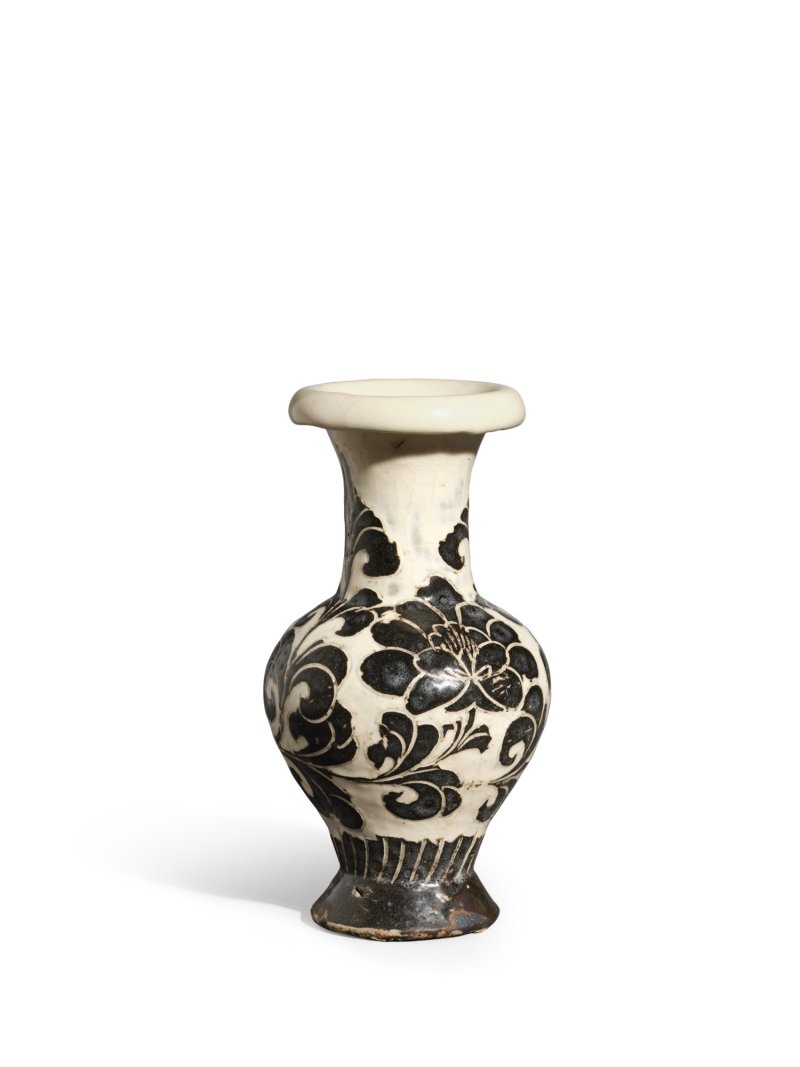

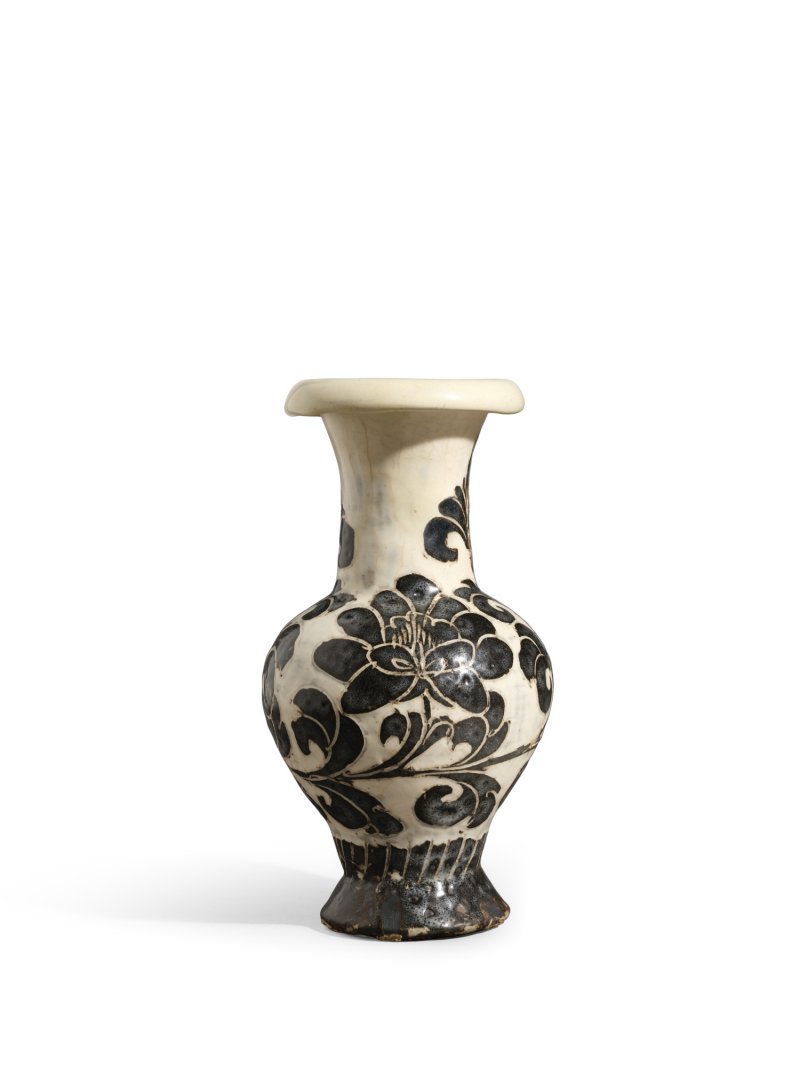
Lot 2091 A rare Cizhou sgraffiato 'peony' vase, Northern Song dynasty | 北宋 磁州白地剔黑彩牡丹紋撇口瓶
落槌价
****
成交价
****
拍品信息
拍品名称
A rare Cizhou sgraffiato 'peony' vase, Northern Song dynasty | 北宋 磁州白地剔黑彩牡丹紋撇口瓶
起拍价
HKD 400,000
估值区间
400,000 - 800,000 HKD
尺寸
未知
品相
Minor restoration to the mouth rim, and to a small area on the neck above the peony bloom. General surface wear.
口沿有修。瓶頸一小處(於牡丹花上方)見潤飾。正常器面磨痕。
If a condition report is provided to assist you with assessing the condition of the lot, it is for guidance purposes only. Such condition report may not refer to all faults, restoration, alterations, or adaptations because Sotheby's is not a professional conservator or restorer but rather a condition report is a statement of subjective, qualified opinion genuinely held by Sotheby's. For these reasons, any such condition report is not an alternative to taking your own professional advice regarding the condition of the lot. Prospective buyers should also refer to the Guide for Buyers at Auction which includes important notices concerning the type of property in this sale.
口沿有修。瓶頸一小處(於牡丹花上方)見潤飾。正常器面磨痕。
If a condition report is provided to assist you with assessing the condition of the lot, it is for guidance purposes only. Such condition report may not refer to all faults, restoration, alterations, or adaptations because Sotheby's is not a professional conservator or restorer but rather a condition report is a statement of subjective, qualified opinion genuinely held by Sotheby's. For these reasons, any such condition report is not an alternative to taking your own professional advice regarding the condition of the lot. Prospective buyers should also refer to the Guide for Buyers at Auction which includes important notices concerning the type of property in this sale.
更多信息
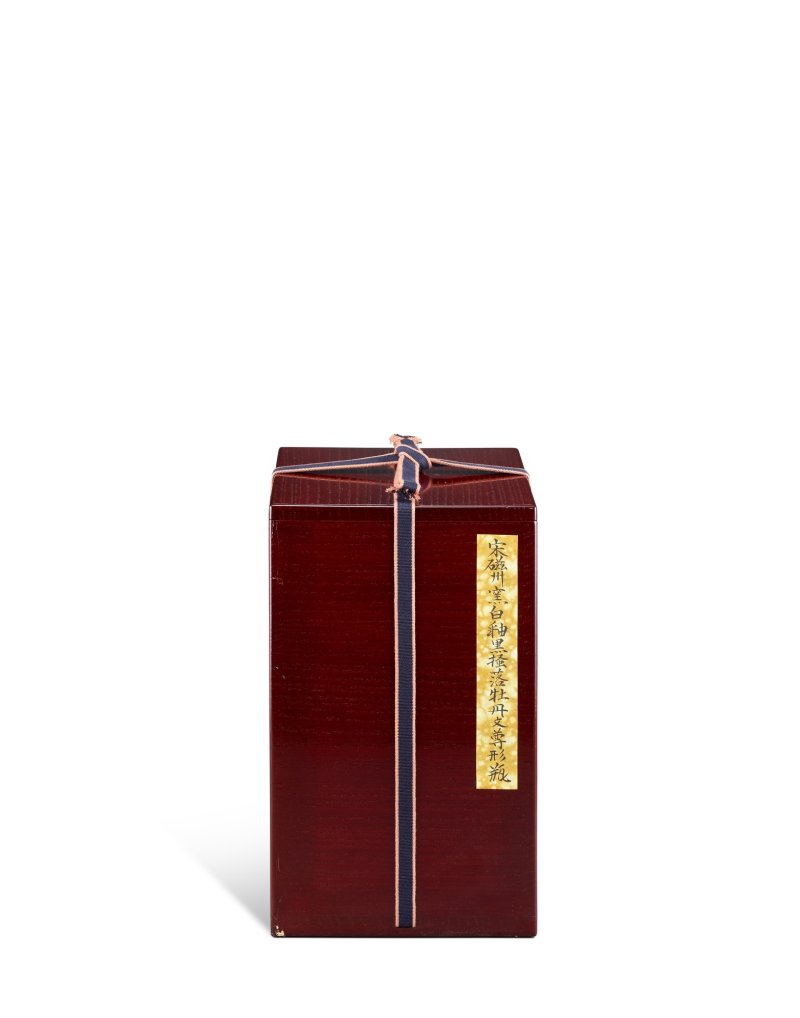
Japanese double wood box
21.6 cm
来源:Kochukyo Co., Ltd, Tokyo.
图录
说明:The Cizhou sgraffiato technique displayed on this vase was remarkably difficult to execute successfully and required immense precision. The process involved covering the vessel with a white slip, which, after drying, was overlaid with a dark brown slip. The artisan then skilfully carved away the negative space of the design to reveal the white ground beneath, leaving the bold peony motif in striking dark contrast. Finer details, such as the veins of the petals and leaves, were carefully incised through the dark slip using a sharp tool. Finally, the vessel was covered in a colourless, transparent glaze and fired. The decorator had to employ great dexterity and care when cutting away the background, as it was crucial not to carve too deeply and inadvertently remove the pale slip along with the dark.
A very similar Cizhou sgraffiato vase of comparable form and decoration, formerly in the collection of Hiroshima Koho and later handled by Kochukyo, Tokyo, was sold at Christie's New York, 13th September 2018, lot 809.
For other related examples in important museum collections, see a vase in the Matsuoka Museum of Art, Tokyo, illustrated in Selected Masterpieces of Oriental Ceramics, Tokyo, 1984, no. 23; and another of similar form and decoration but with a more rounded body, published in Tsugio Mikami, Sekai Toji Zenshu [Ceramic Art of the World], vol. 13, Tokyo, 1981, p. 238, no. 229. The present design was also executed with a green glaze, such as a Cizhou sgraffiato vase of very similar proportions in the Ataka Collection, illustrated in Masterpieces of Old Chinese Ceramics from Ataka Collection, Osaka, 1972, cat. no. 21. Compare also an example with a more compressed body in the Asian Art Museum of San Francisco, illustrated by He Li in Chinese Ceramics: A New Comprehensive Survey, New York, 1996, no. 319.
來源
壺中居,東京
本品器形挺拔優雅,撇口,長頸,圓腹,高圈足外撇。通體施白地剔黑彩牡丹紋,黑白對比強烈,紋飾流暢生動,花朵豐腴,枝葉蔓延,與器身之優美曲線相得益彰,實為北宋磁州窰之珍罕佳作。磁州窰之剔花工藝極考驗匠人功力,製作難度甚高。其技法乃先於胎體敷施白地化妝土,俟其半乾後再罩一層黑褐彩。隨後,匠人需以利刃剔去紋飾以外之黑彩,露出白色地子,使牡丹主體紋飾以黑彩醒目呈現。花蕊、葉脈等細節則以尖銳工具於黑彩上劃出,最後罩以透明釉入窰燒製。此過程需精準拿捏力度,剔刻時既要乾淨俐落,又不能用力過猛而傷及底層白地,足見工匠技藝之高超與用心。
參考一例極為相似之北宋磁州窰白地剔黑彩牡丹紋瓶,先後為廣島晃甫及東京壺中居舊藏,後於2018年9月13日紐約佳士得拍賣售出,拍品編號809。
其他重要博物館藏品中亦可見數例:東京松岡美術館藏有一例,錄於《東洋陶磁名品圖錄》,東京,1984年,編號23;另見三上次男編,《世界陶磁全集》,卷13,東京,1981年,頁238,編號229,其器形及紋飾相近,惟腹部較圓。此類紋飾亦見於綠釉器,如安宅舊藏一件比例極為相近之磁州窰綠釉剔花瓶,載於《安宅舊藏舊中國陶磁名品展》,大阪,1972年,編號21。另可比較三藩市亞洲藝術博物館藏一例,器腹較扁,見賀利著,《Chinese Ceramics: A New Comprehensive Survey》,紐約,1996年,圖版319。
21.6 cm
来源:Kochukyo Co., Ltd, Tokyo.
图录
说明:The Cizhou sgraffiato technique displayed on this vase was remarkably difficult to execute successfully and required immense precision. The process involved covering the vessel with a white slip, which, after drying, was overlaid with a dark brown slip. The artisan then skilfully carved away the negative space of the design to reveal the white ground beneath, leaving the bold peony motif in striking dark contrast. Finer details, such as the veins of the petals and leaves, were carefully incised through the dark slip using a sharp tool. Finally, the vessel was covered in a colourless, transparent glaze and fired. The decorator had to employ great dexterity and care when cutting away the background, as it was crucial not to carve too deeply and inadvertently remove the pale slip along with the dark.
A very similar Cizhou sgraffiato vase of comparable form and decoration, formerly in the collection of Hiroshima Koho and later handled by Kochukyo, Tokyo, was sold at Christie's New York, 13th September 2018, lot 809.
For other related examples in important museum collections, see a vase in the Matsuoka Museum of Art, Tokyo, illustrated in Selected Masterpieces of Oriental Ceramics, Tokyo, 1984, no. 23; and another of similar form and decoration but with a more rounded body, published in Tsugio Mikami, Sekai Toji Zenshu [Ceramic Art of the World], vol. 13, Tokyo, 1981, p. 238, no. 229. The present design was also executed with a green glaze, such as a Cizhou sgraffiato vase of very similar proportions in the Ataka Collection, illustrated in Masterpieces of Old Chinese Ceramics from Ataka Collection, Osaka, 1972, cat. no. 21. Compare also an example with a more compressed body in the Asian Art Museum of San Francisco, illustrated by He Li in Chinese Ceramics: A New Comprehensive Survey, New York, 1996, no. 319.
來源
壺中居,東京
本品器形挺拔優雅,撇口,長頸,圓腹,高圈足外撇。通體施白地剔黑彩牡丹紋,黑白對比強烈,紋飾流暢生動,花朵豐腴,枝葉蔓延,與器身之優美曲線相得益彰,實為北宋磁州窰之珍罕佳作。磁州窰之剔花工藝極考驗匠人功力,製作難度甚高。其技法乃先於胎體敷施白地化妝土,俟其半乾後再罩一層黑褐彩。隨後,匠人需以利刃剔去紋飾以外之黑彩,露出白色地子,使牡丹主體紋飾以黑彩醒目呈現。花蕊、葉脈等細節則以尖銳工具於黑彩上劃出,最後罩以透明釉入窰燒製。此過程需精準拿捏力度,剔刻時既要乾淨俐落,又不能用力過猛而傷及底層白地,足見工匠技藝之高超與用心。
參考一例極為相似之北宋磁州窰白地剔黑彩牡丹紋瓶,先後為廣島晃甫及東京壺中居舊藏,後於2018年9月13日紐約佳士得拍賣售出,拍品編號809。
其他重要博物館藏品中亦可見數例:東京松岡美術館藏有一例,錄於《東洋陶磁名品圖錄》,東京,1984年,編號23;另見三上次男編,《世界陶磁全集》,卷13,東京,1981年,頁238,編號229,其器形及紋飾相近,惟腹部較圓。此類紋飾亦見於綠釉器,如安宅舊藏一件比例極為相近之磁州窰綠釉剔花瓶,載於《安宅舊藏舊中國陶磁名品展》,大阪,1972年,編號21。另可比較三藩市亞洲藝術博物館藏一例,器腹較扁,見賀利著,《Chinese Ceramics: A New Comprehensive Survey》,紐約,1996年,圖版319。
常见问题
拍品的品相状况如何?
Minor restoration to the mouth rim, and to a small area on the neck above the peony bloom. General surface wear.
口沿有修。瓶頸一小處(於牡丹花上方)見潤飾。正常器面磨痕。
If a condition report is provided to assist you with assessing the condition of the lot, it is for guidance purposes only. Such condition report may not refer to all faults, restoration, alterations, or adaptations because Sotheby's is not a professional conservator or restorer but rather a condition report is a statement of subjective, qualified opinion genuinely held by Sotheby's. For these reasons, any such condition report is not an alternative to taking your own professional advice regarding the condition of the lot. Prospective buyers should also refer to the Guide for Buyers at Auction which includes important notices concerning the type of property in this sale.
口沿有修。瓶頸一小處(於牡丹花上方)見潤飾。正常器面磨痕。
If a condition report is provided to assist you with assessing the condition of the lot, it is for guidance purposes only. Such condition report may not refer to all faults, restoration, alterations, or adaptations because Sotheby's is not a professional conservator or restorer but rather a condition report is a statement of subjective, qualified opinion genuinely held by Sotheby's. For these reasons, any such condition report is not an alternative to taking your own professional advice regarding the condition of the lot. Prospective buyers should also refer to the Guide for Buyers at Auction which includes important notices concerning the type of property in this sale.
这件拍品的流传来源是什么?
Kochukyo Co., Ltd, Tokyo.
图录
图录