
拍品信息
拍品名称
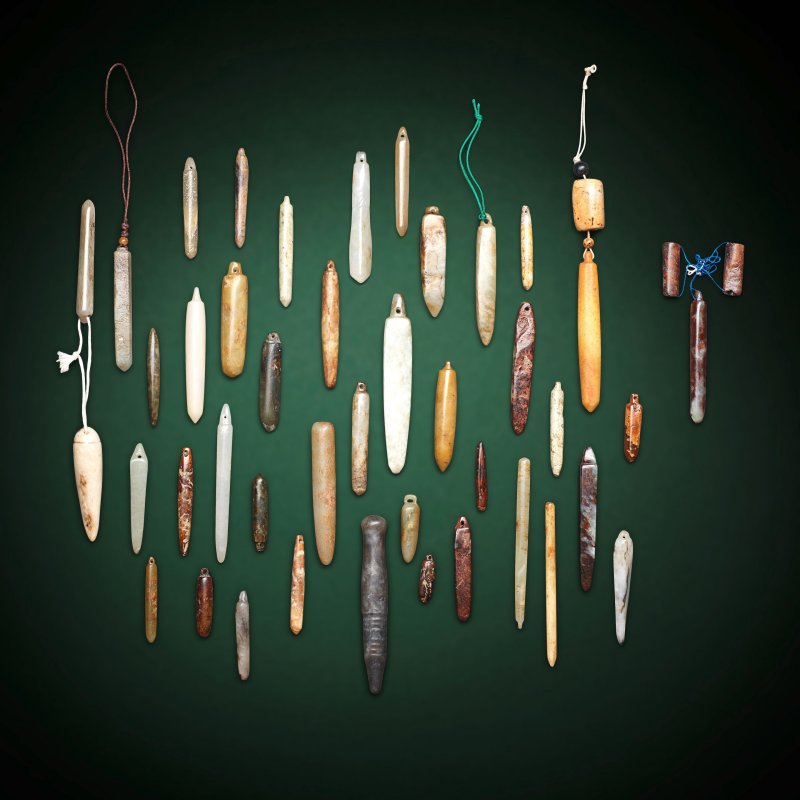
新石器時代及其後 玉錐形器一組 | A LARGE GROUP OF AWL-SHAPED JADE AND HARDSTONE ORNAMENTS
年代
Neolithic Period and later
起拍价
GBP 1,500
估值区间
GBP 1500 - 2000
尺寸
未知
品相
未知
更多信息
Neolithic Period and later
Comprising forty-four elongated pendants of varied form, carved from jade and hardstones of differing tones ranging from pale white to russet, dark brown and jasper-red, each pierced for suspension. The largest, 8.5cm (3 1/4in) long. (44).
Footnotes
新石器時代及其後 玉錐形器一組
The awl-shaped jade ornaments as seen in the present lot may originally have been tools used to scrape the acupuncture points of the human body for therapeutic purposes, gradually developing into ornaments imbued with the significance of communicating with the divine. In Liangzhu burials, these awl-shaped jade ornaments are often found with their pointed ends facing upward above the head of the deceased. They may have been sewn onto or fastened to a headdress through the small perforations. See further discussion and four related awl-shaped jade ornaments, Liangzhu Culture, c.3300-2300 BC, in the collection of the Palace Museum, Taipei, illustrated in Select Jades in the Palace Museum: The Spirit of Jade, I (故宮玉器精選全集:玉之靈I), Taipei, 2019, p.373.
See one related awl-shaped jade ornament, Shixia Culture, c.2500-1500 BC, excavated from Shixia site at Maha, Shaoguan, Guangdong Province, in the Guangdong Provincial Museum and illustrated by Gu Fang, , vol.11, Beijing, 2005, p.21.
Comprising forty-four elongated pendants of varied form, carved from jade and hardstones of differing tones ranging from pale white to russet, dark brown and jasper-red, each pierced for suspension. The largest, 8.5cm (3 1/4in) long. (44).
Footnotes
新石器時代及其後 玉錐形器一組
The awl-shaped jade ornaments as seen in the present lot may originally have been tools used to scrape the acupuncture points of the human body for therapeutic purposes, gradually developing into ornaments imbued with the significance of communicating with the divine. In Liangzhu burials, these awl-shaped jade ornaments are often found with their pointed ends facing upward above the head of the deceased. They may have been sewn onto or fastened to a headdress through the small perforations. See further discussion and four related awl-shaped jade ornaments, Liangzhu Culture, c.3300-2300 BC, in the collection of the Palace Museum, Taipei, illustrated in Select Jades in the Palace Museum: The Spirit of Jade, I (故宮玉器精選全集:玉之靈I), Taipei, 2019, p.373.
See one related awl-shaped jade ornament, Shixia Culture, c.2500-1500 BC, excavated from Shixia site at Maha, Shaoguan, Guangdong Province, in the Guangdong Provincial Museum and illustrated by Gu Fang, , vol.11, Beijing, 2005, p.21.
常见问题
这件新石器時代及其後 玉錐形器一組 | A LARGE GROUP OF AWL-SHAPED JADE AND HARDSTONE ORNAMENTS的成交价是多少?
落槌价为 预展中。 成交价为 预展中。


