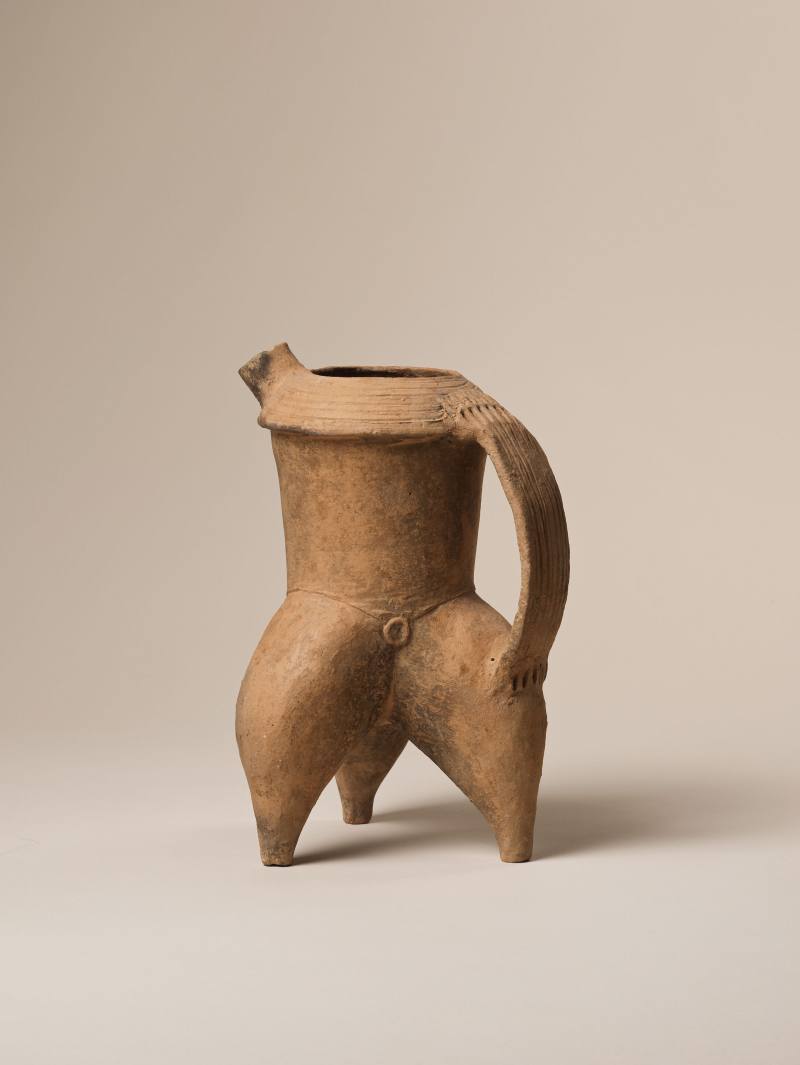

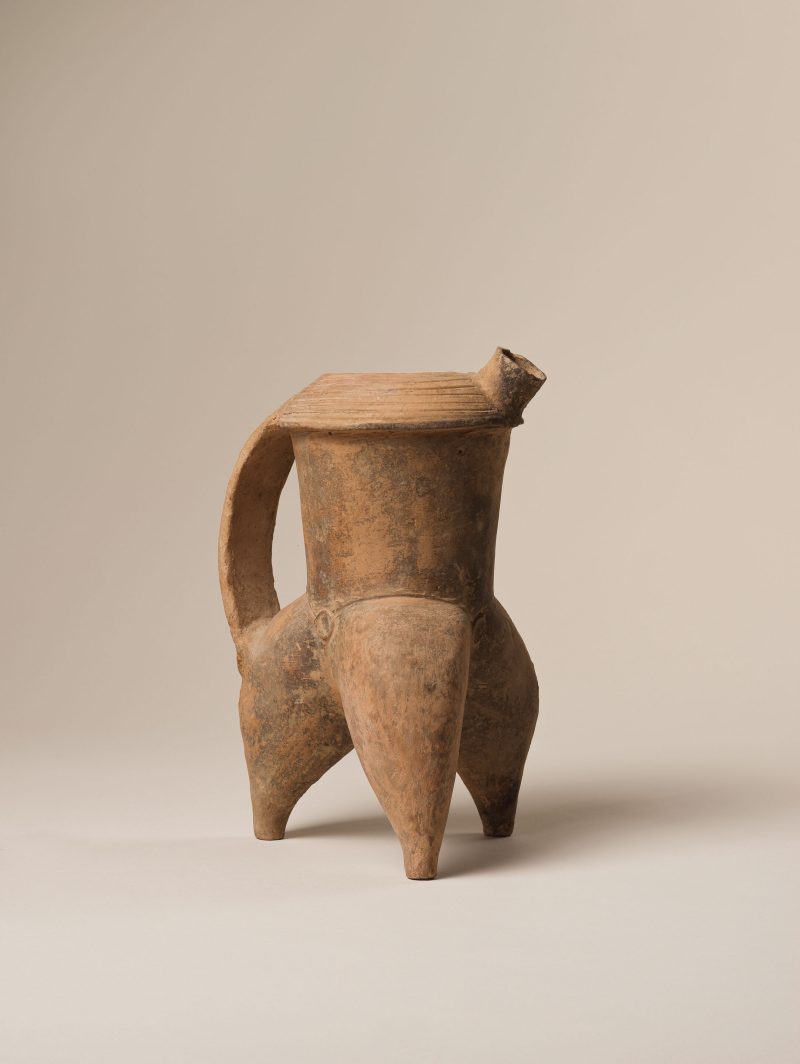
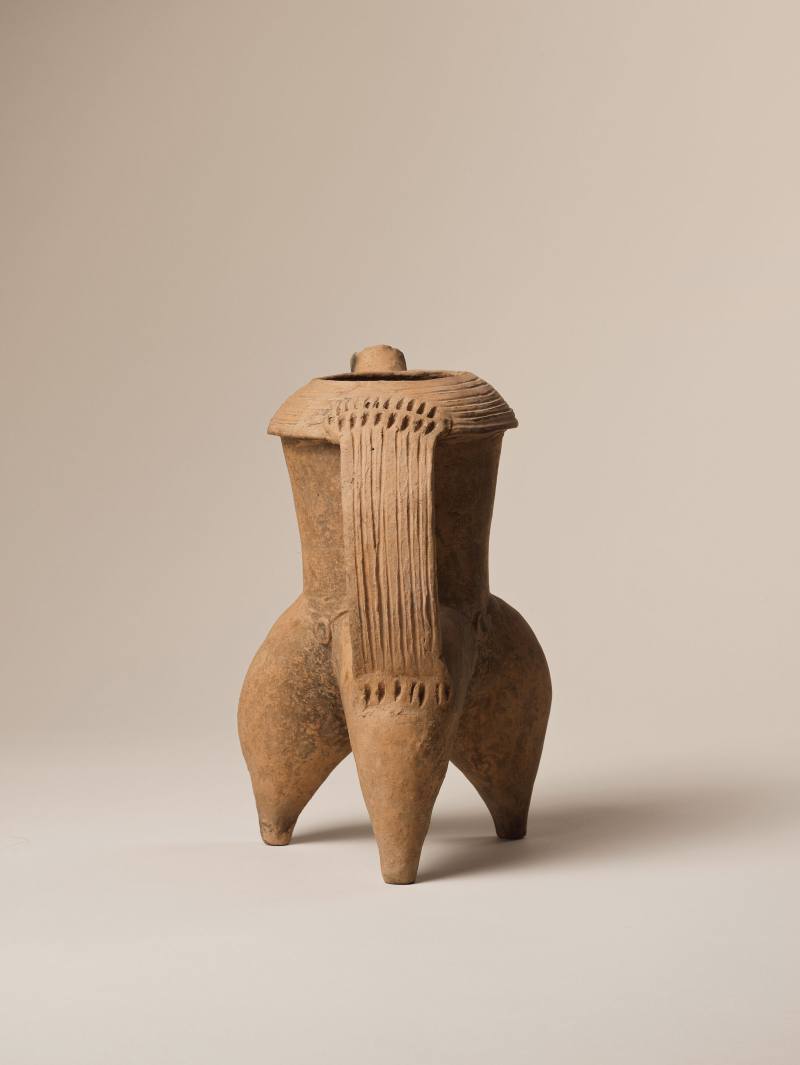
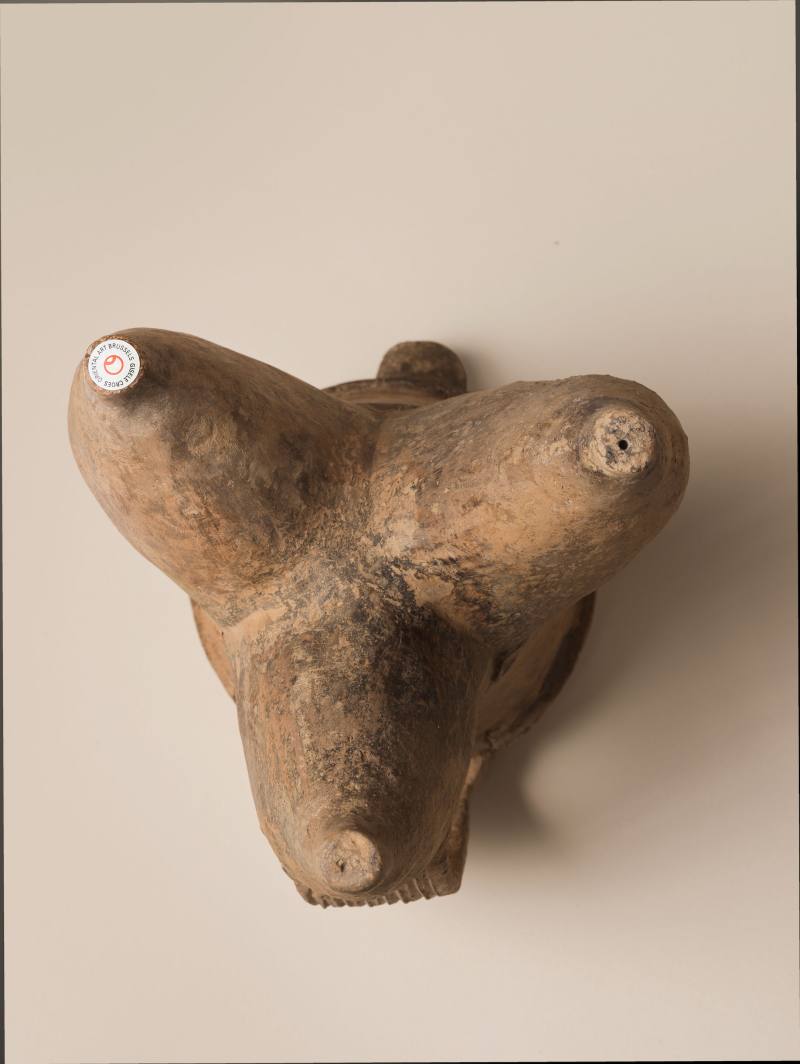
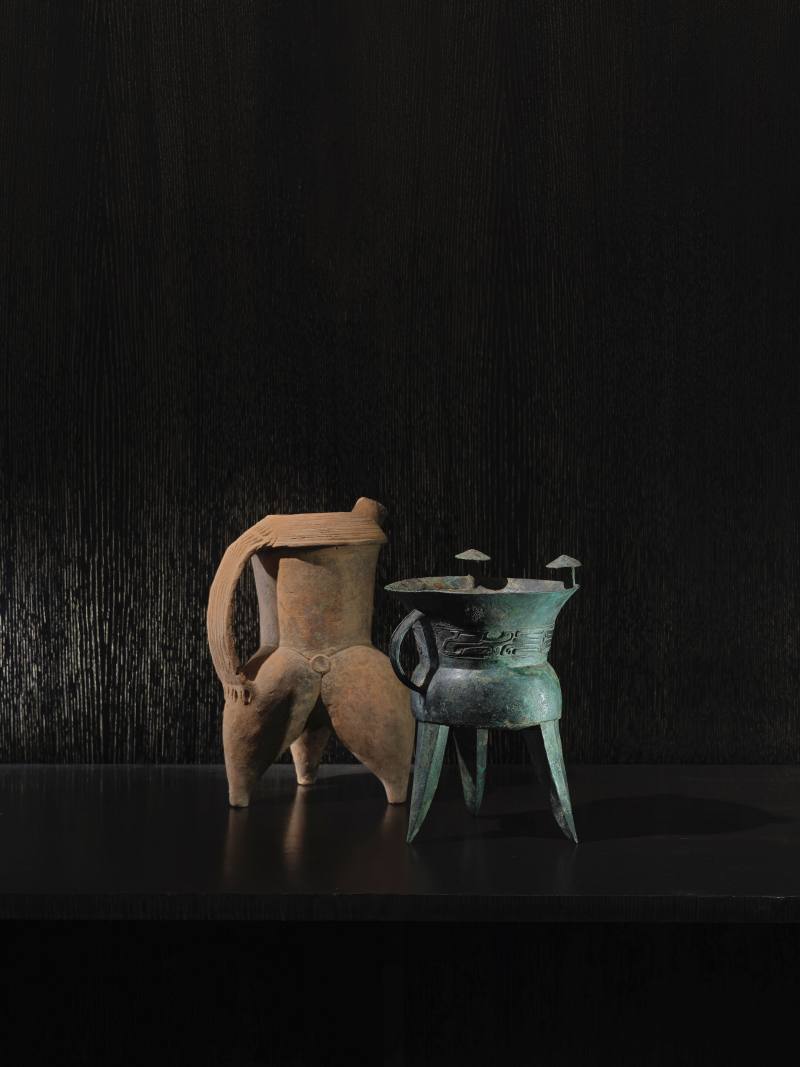
Lot 1 新石器時期 齊家文化 紅陶鬶 | RARE VERSEUSE TRIPODE EN TERRE CUITE
落槌价
预展中
成交价
预展中
| 拍卖公司 | 邦瀚斯 |
|---|---|
| 拍卖时间 | 2026年12月10日 |
拍品信息
拍品名称
新石器時期 齊家文化 紅陶鬶 | RARE VERSEUSE TRIPODE EN TERRE CUITE
年代
新石器時期 齊家文化
起拍价
未知
估值区间
EUR 6,000–8,000
尺寸
30 cm (11 3/4 in.) high
品相
未知
更多信息
RARE VERSEUSE TRIPODE EN TERRE CUITE
Période Néolithique, culture de Qijia, vers 2050-1700 av. J.-C.
A RARE TRIPOD POTTERY EWER
Neolithic period, Qijia Culture, ca. 2050-1700 BC
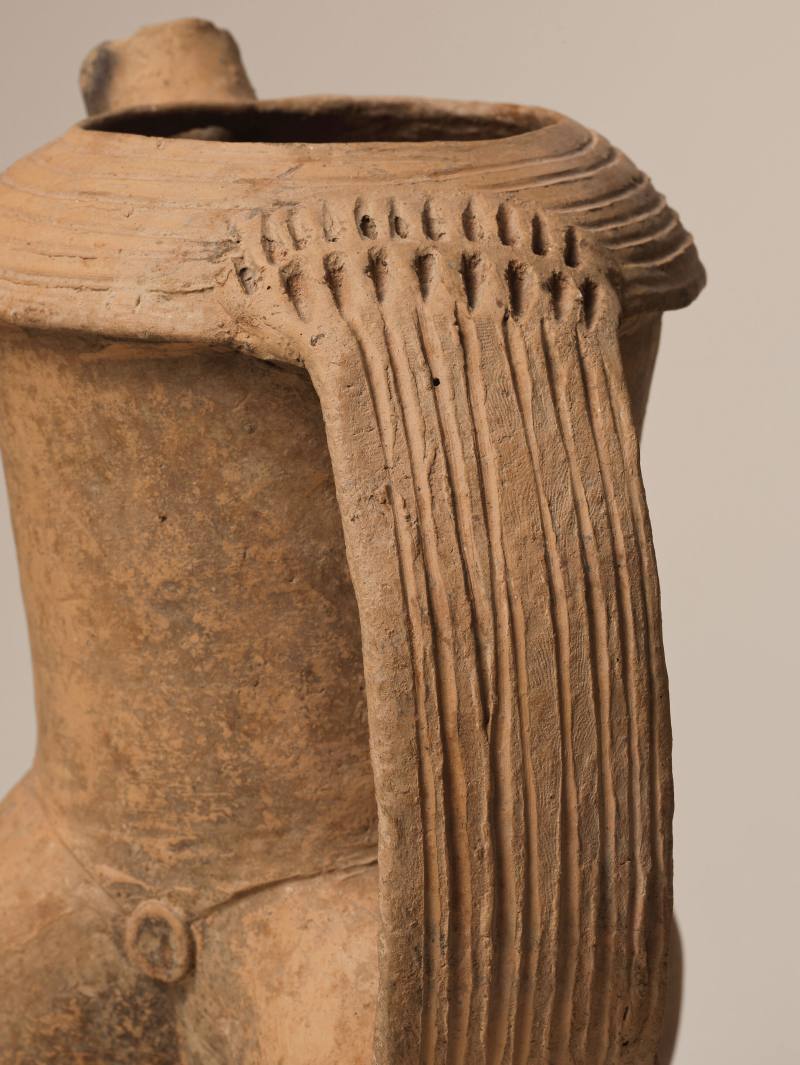
The body of circular, tapered section, raised on three rounded legs with pointed ends, set with a simple strap handle issuing from one leg and terminating on the recessed rim opposite a short straight spout.
30 cm (11 3/4 in.) high
新石器時期 齊家文化 紅陶鬶
Provenance:
Gisèle Croës Arts d'Extrême Orient, Brussels, 2013
來源:
Gisèle Croës Arts d'Extrême Orient,布魯塞爾,2013年
At the end of the 3rd millennium BC, the Qijia Culture based in northwest China across present-day provinces of Gansu, Qinghai, and Ningxia, succeeded the Majiayao Culture. It is known for its refined pottery characterised by its simplicity, devoid of any painted designs, often modelled with angular outlines and flat strapwork handles such as the present ewer demonstrates. Forms and techniques suggest links to metalworking and indeed, Qijia sites have yielded rare evidence of bronze metallurgy in China, including the production of bronze mirrors, see Regina Krahl, Chinese Ceramics from the Meiyintang Collection, London, 1994. p. 36.
The present ewer with its three sturdy legs is a common shape found in different neolithic cultures across China. Its form anticipates one of the earliest ritual vessels cast in bronze, the jia, as seen in Lot 2 of this sale. Like this pottery ewer, some of the earliest bronze jia dated to the Erligang phase of the Shang dynasty, have hollow, conical legs open to the interior, showing the influence of late neolithic pottery tripod ewers such as the present lot.
The result of QED Laboratoire, France, thermoluminescence test no.1408/BC-08-02 dated 27 February 2014, is consistent with the dating of this lot.
以下内容由AI翻译:
【描述】
器身呈圆形,逐渐收窄,底部有三个尖端的圆腿支撑,一侧有一简单的带状把手从其中一足伸出,接于短直流对侧内凹的口缘。
在公元前3千年末期,齐家文化在中国西北部的甘肃、青海和宁夏地区兴起,继承了马家窑文化。齐家文化以其精炼的陶器而闻名,这些陶器的特点是简洁,没有任何彩绘装饰,通常具有棱角分明的轮廓和平面带状把手,如这件执壶所示。其形状和技术表明与金属工艺有关,事实上,齐家遗址出土了中国罕见的青铜冶金证据,包括青铜镜的生产,见Regina Krahl, 《玫茵堂藏中国陶瓷》,伦敦,1994年,第36页。
这件三足稳固的执壶是中国新石器时代不同文化中常见的形状。它的形式预示了最早的青铜礼器之一——斝,如本场拍卖中的Lot 2所示。像这件陶制执壶一样,一些最早的商代二里岗时期的青铜斝,也有中空的锥形腿,内部相通,显示出晚期新石器时代陶制三足执壶的影响,如本件拍品。
常见问题
这件新石器時期 齊家文化 紅陶鬶 | RARE VERSEUSE TRIPODE EN TERRE CUITE的成交价是多少?
落槌价为 预展中。 成交价为 预展中。
拍品的尺寸是多少?
30 cm (11 3/4 in.) high