
拍品信息
拍品名称
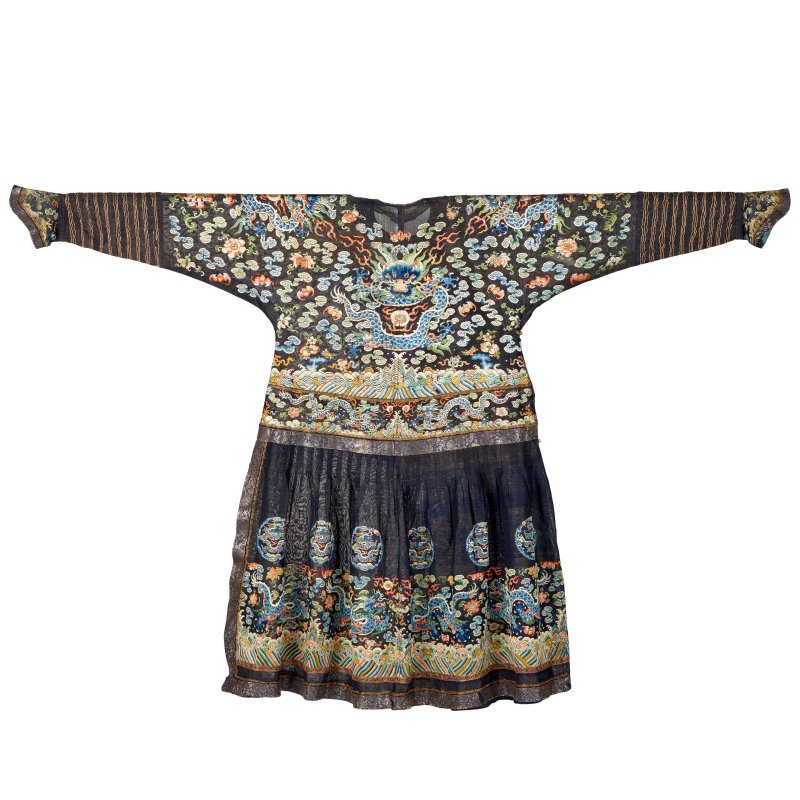
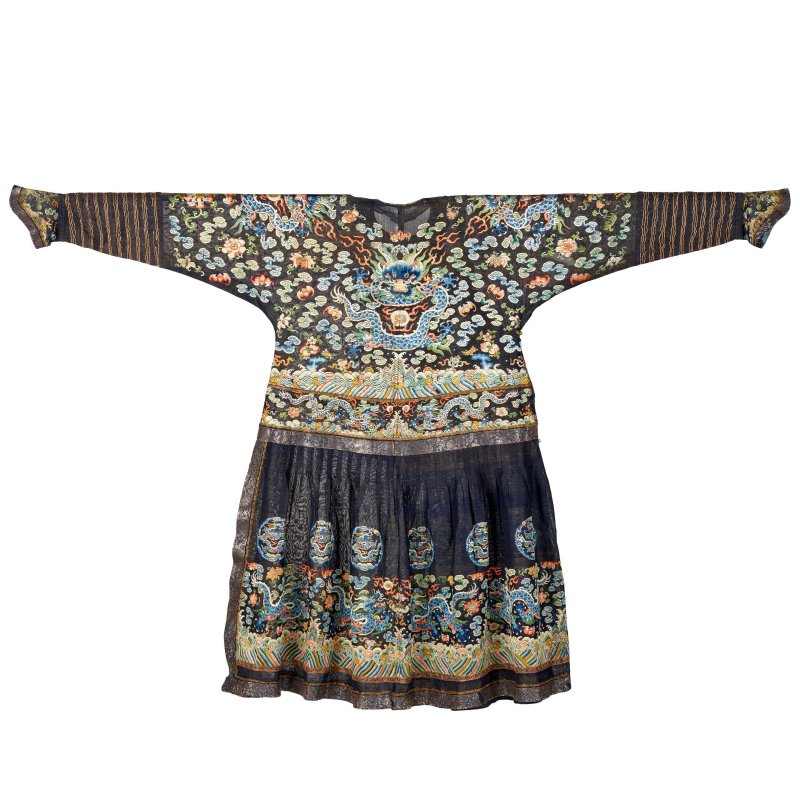
十九世紀 石青地納紗繡雲蝠龍紋朝袍 | A MIDNIGHT-BLUE EMBROIDERED GAUZE COURT ROBE, CHAO PAO
年代
19th century
起拍价
USD 15,000
估值区间
未知
尺寸
未知
品相
未知
更多信息
19th century
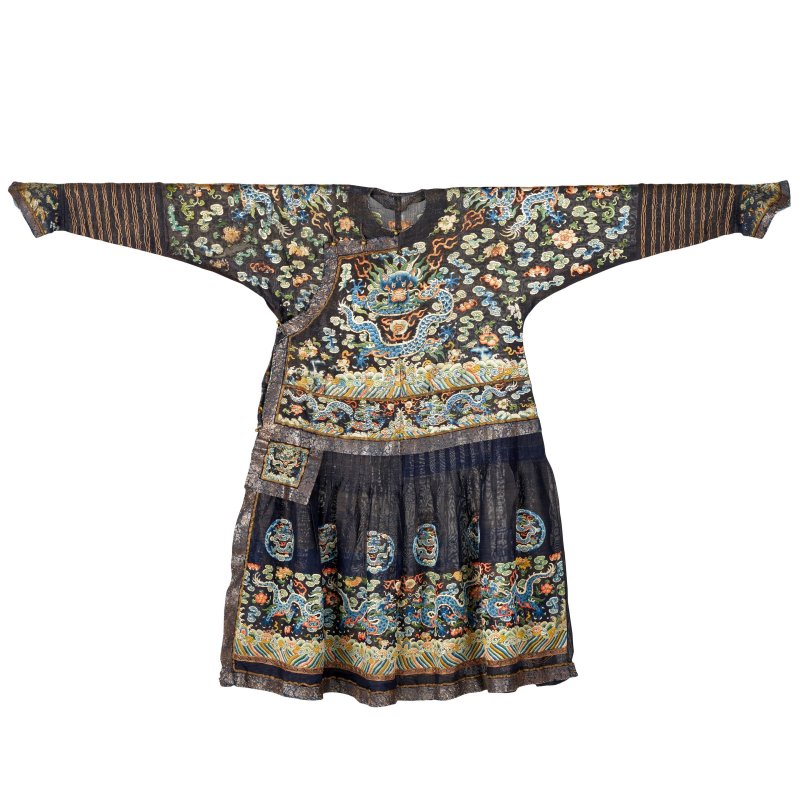
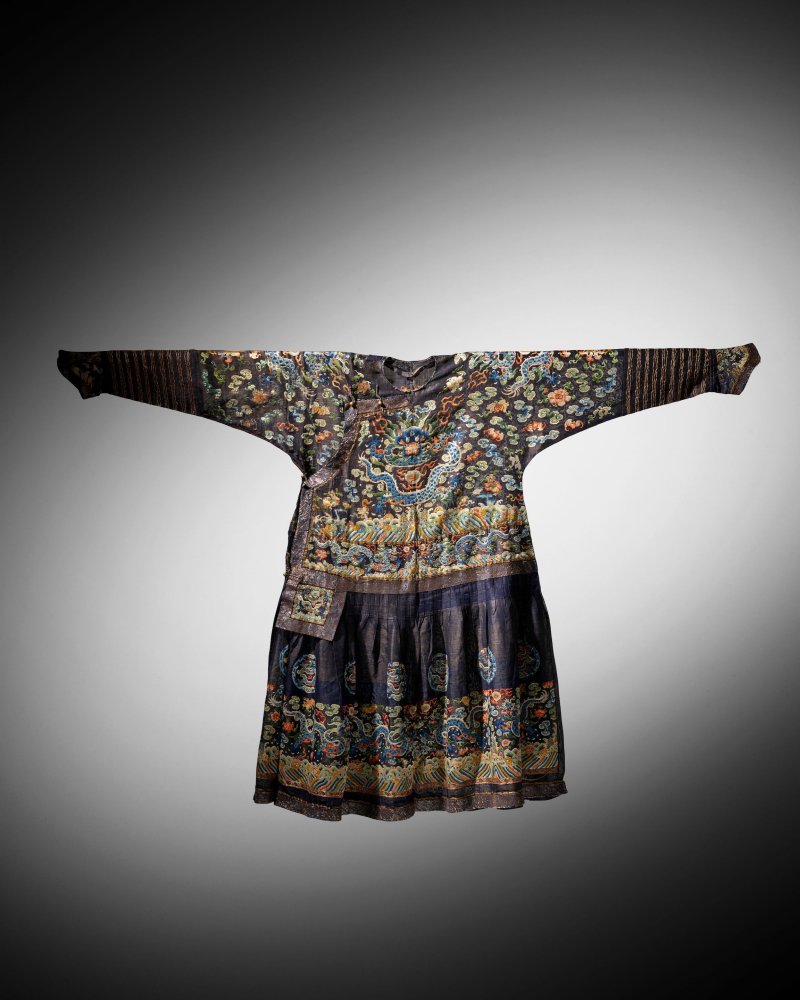
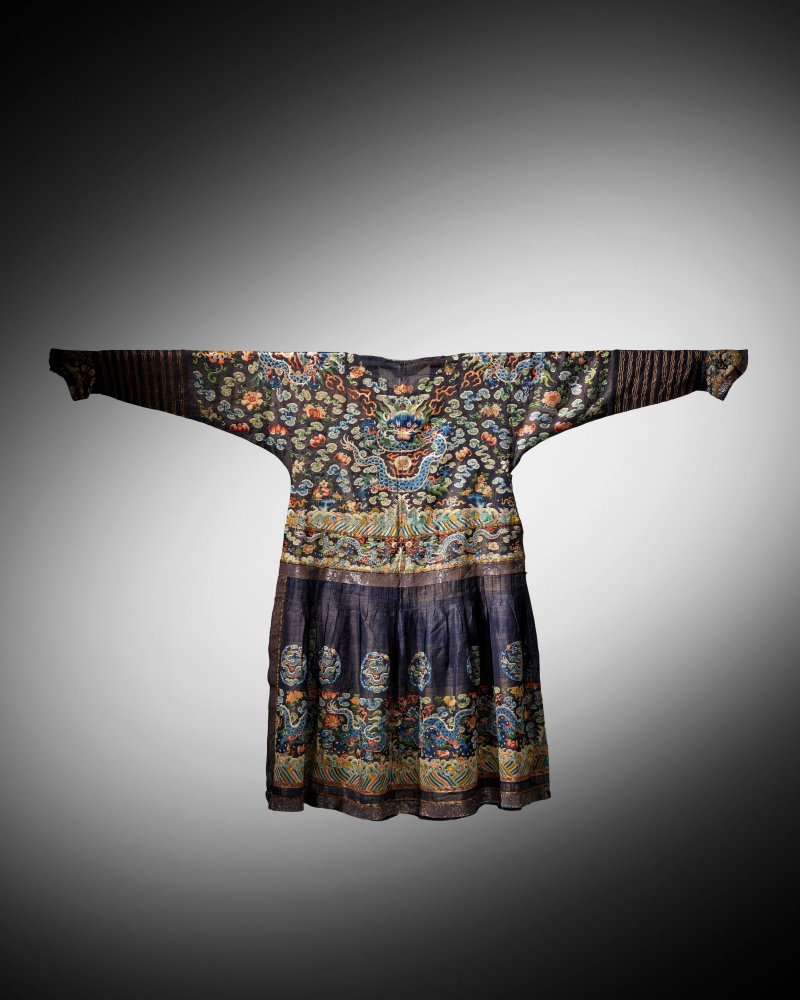
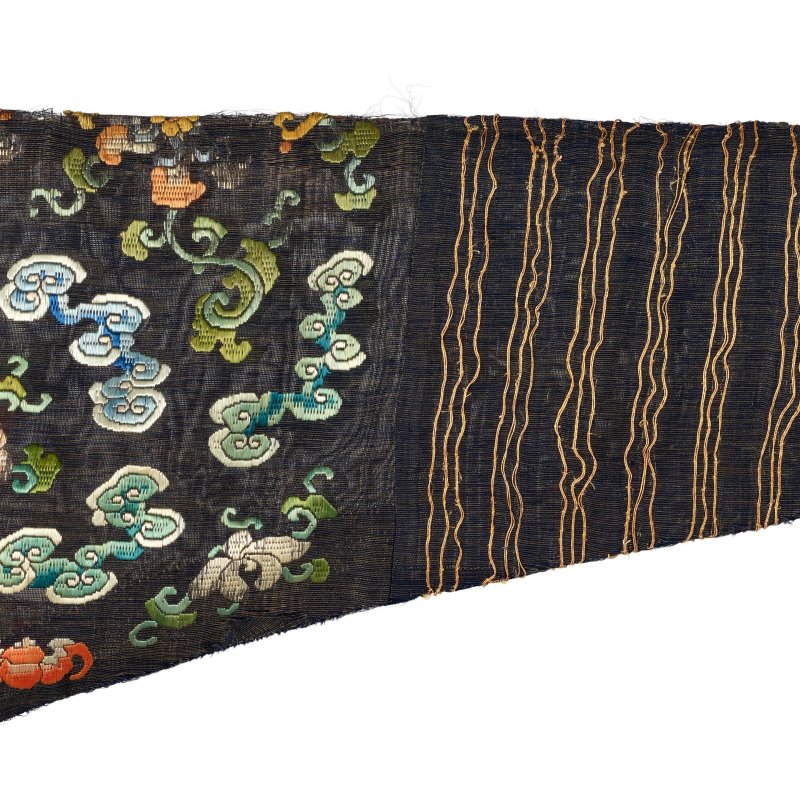
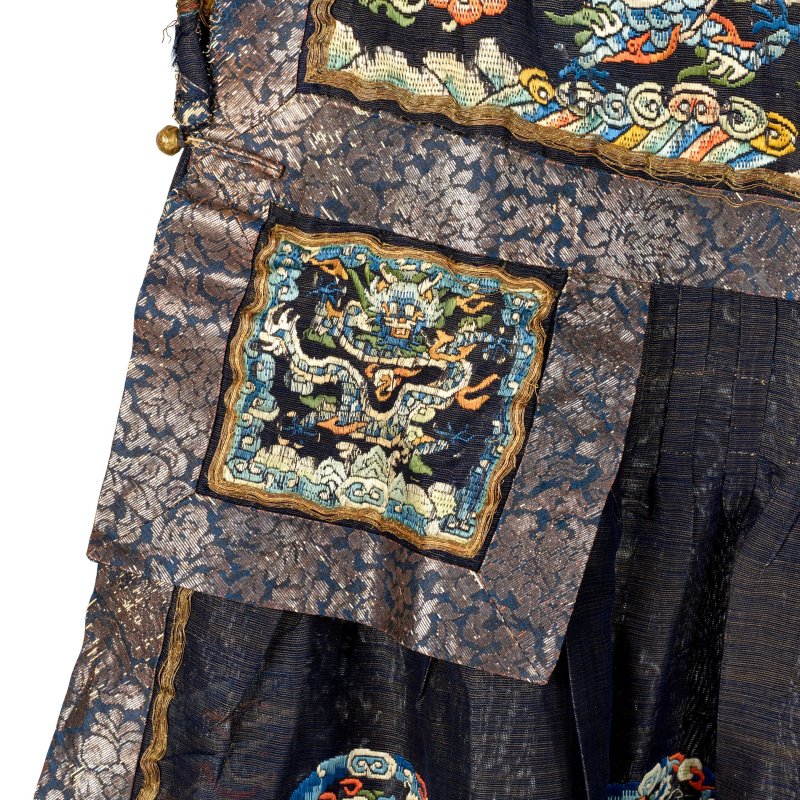
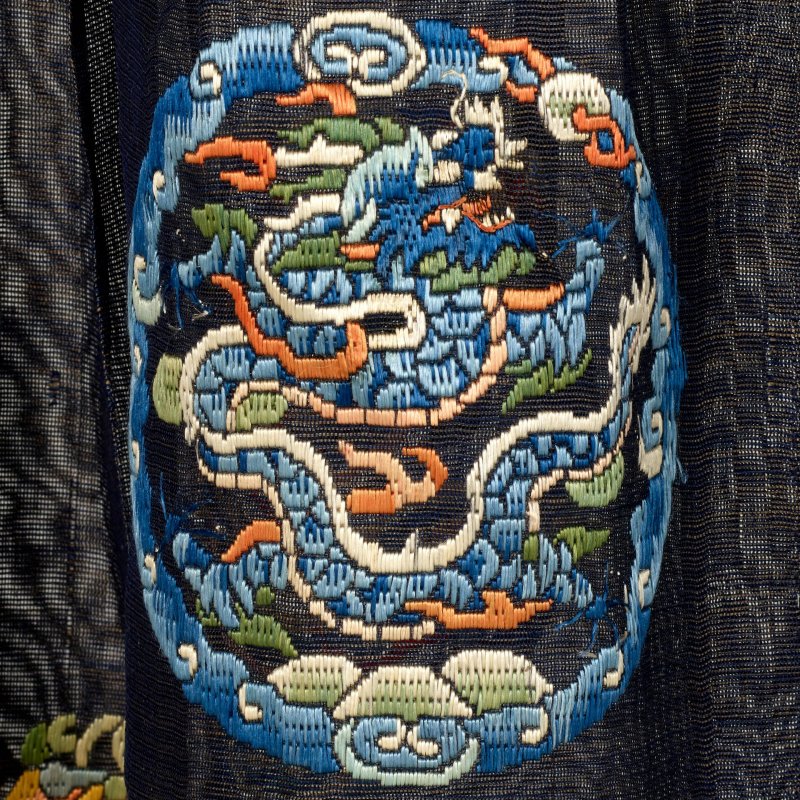
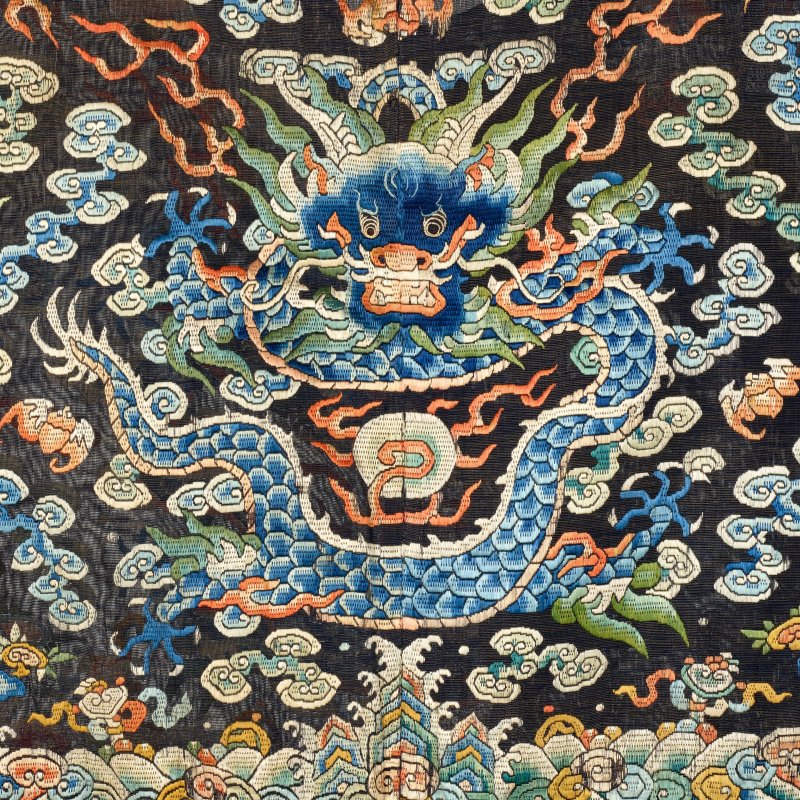
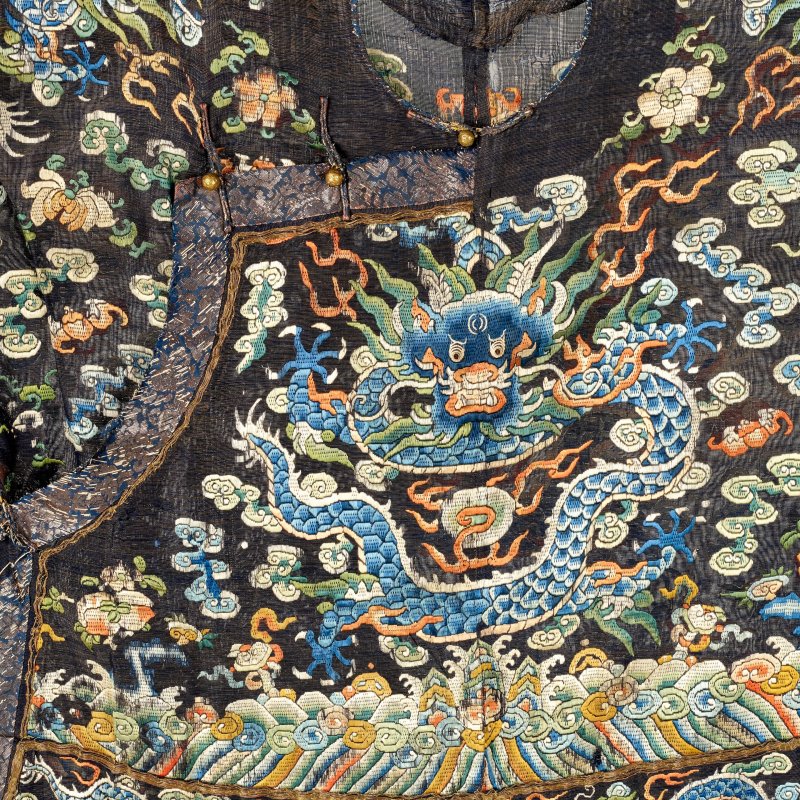
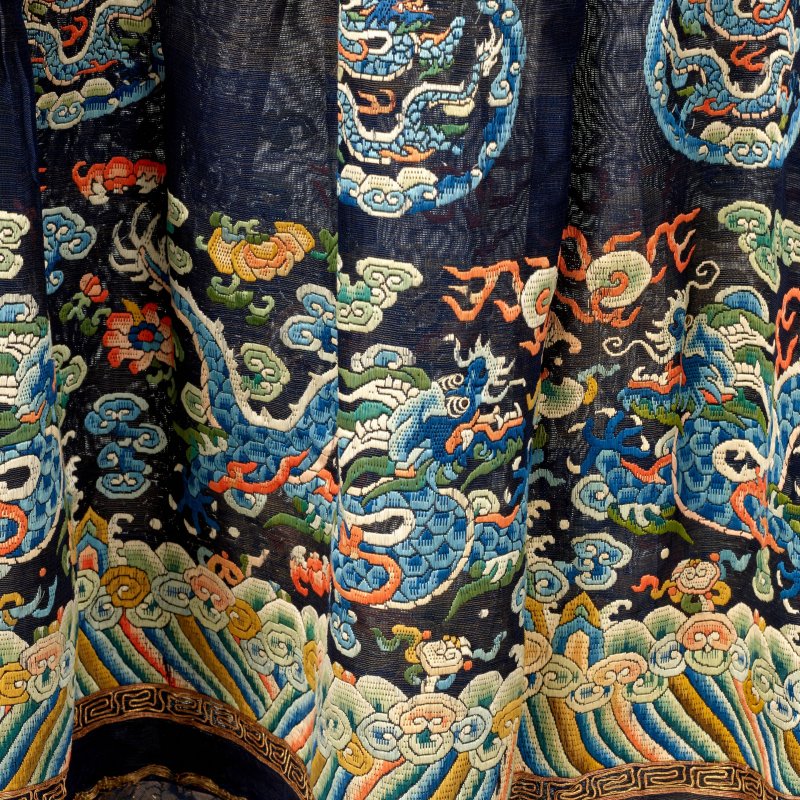
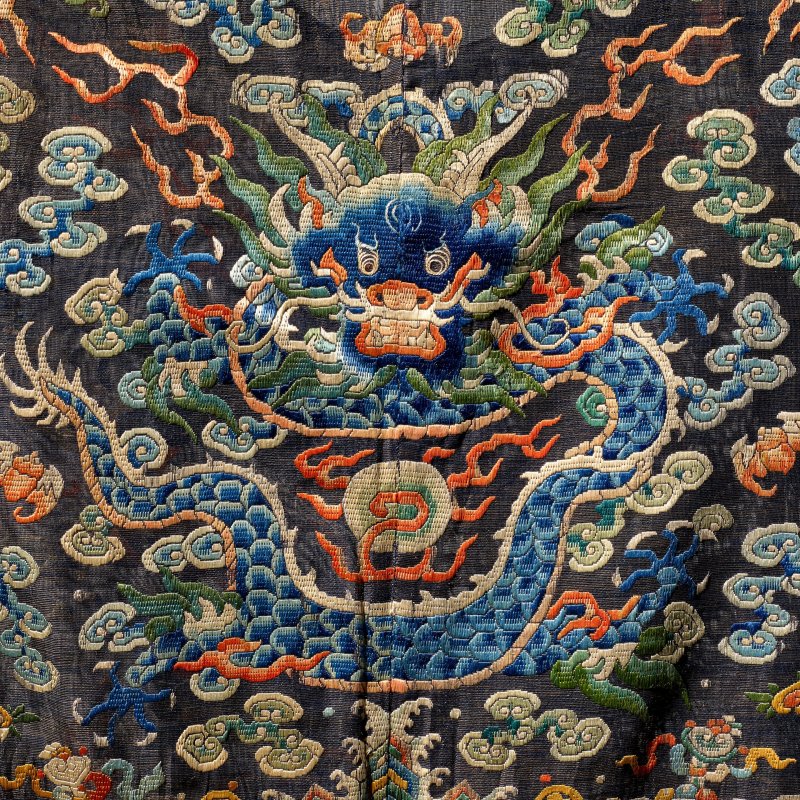
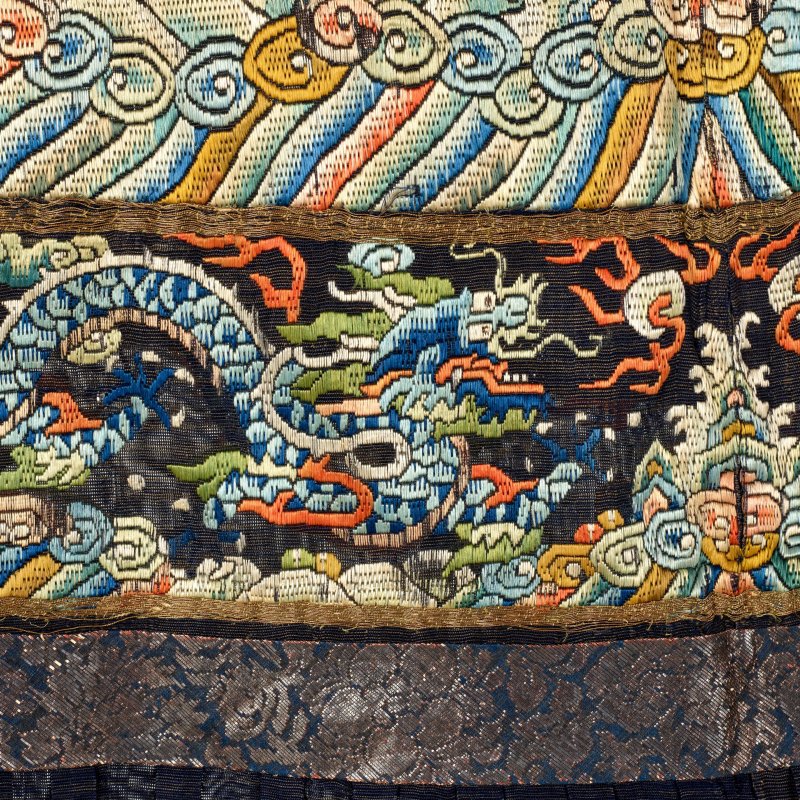
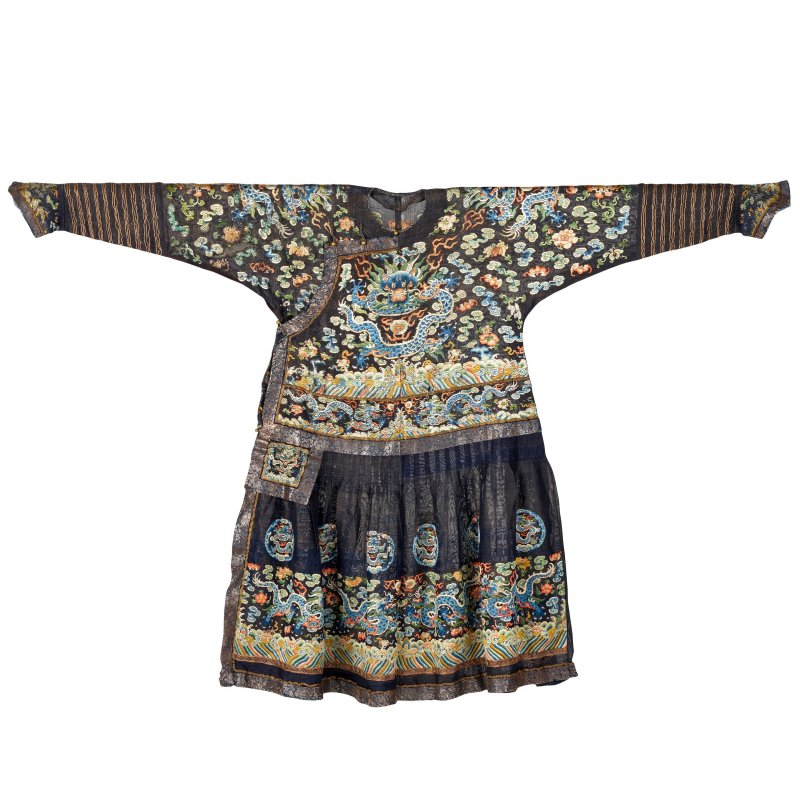
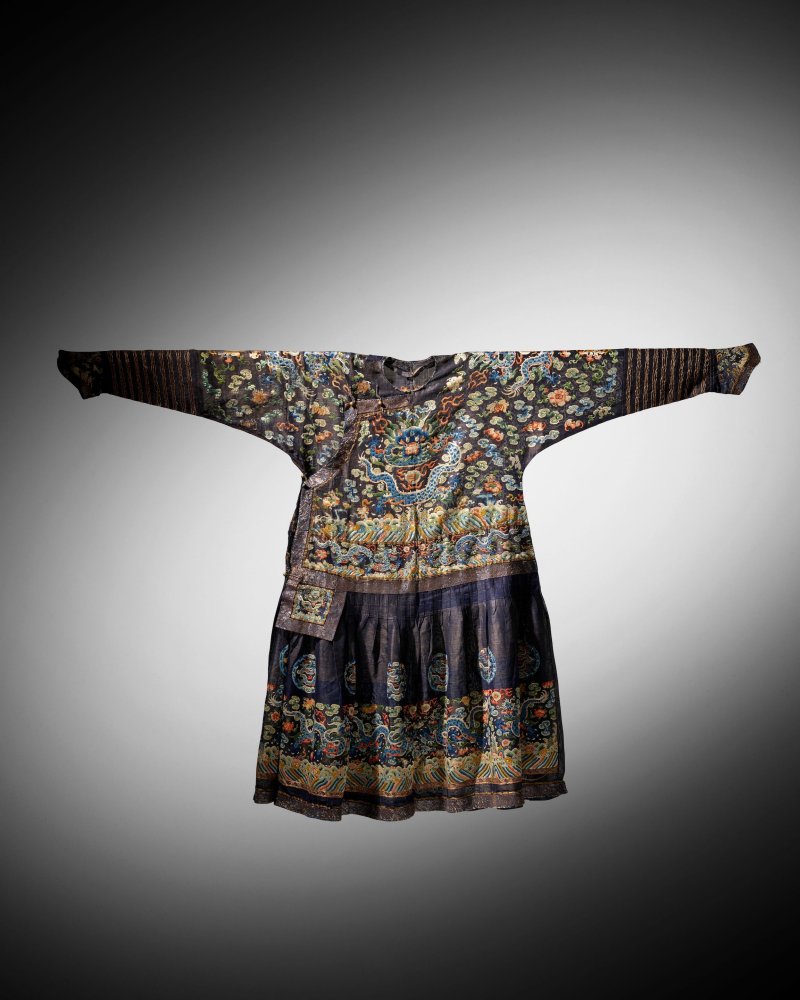
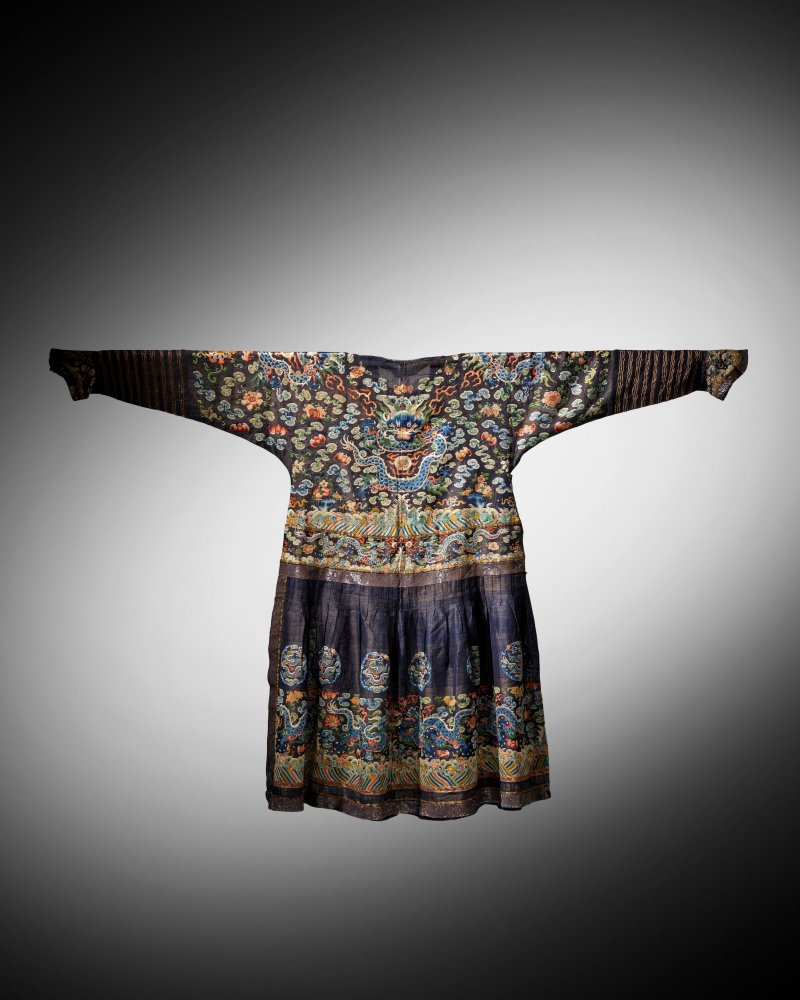
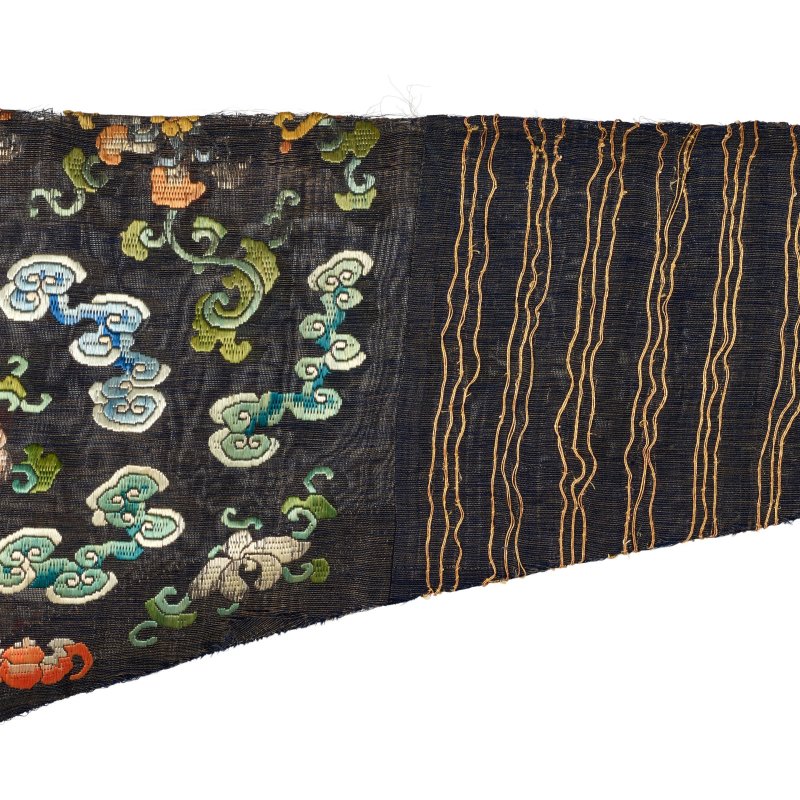
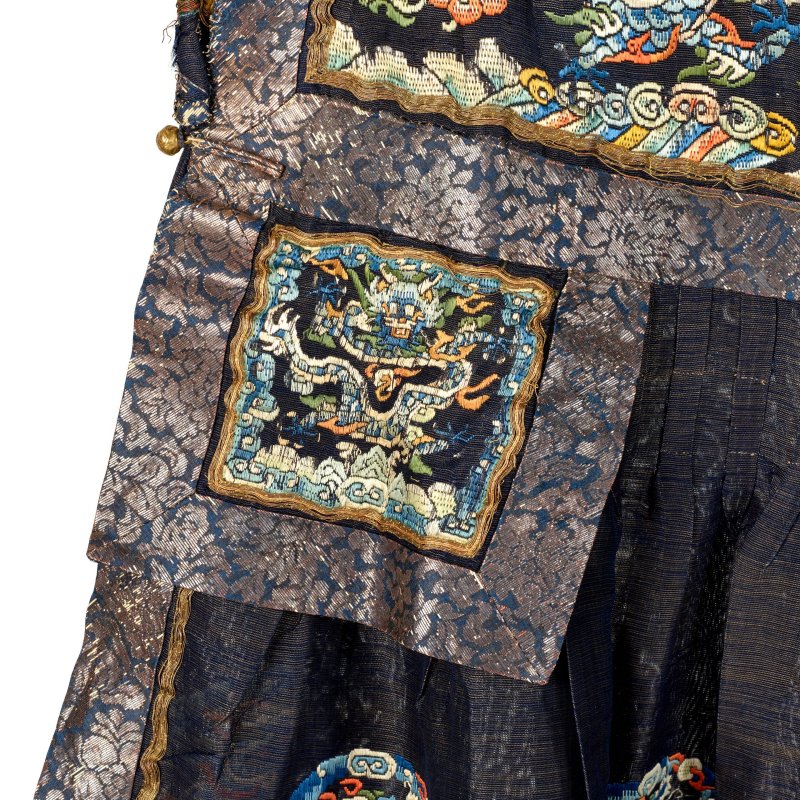
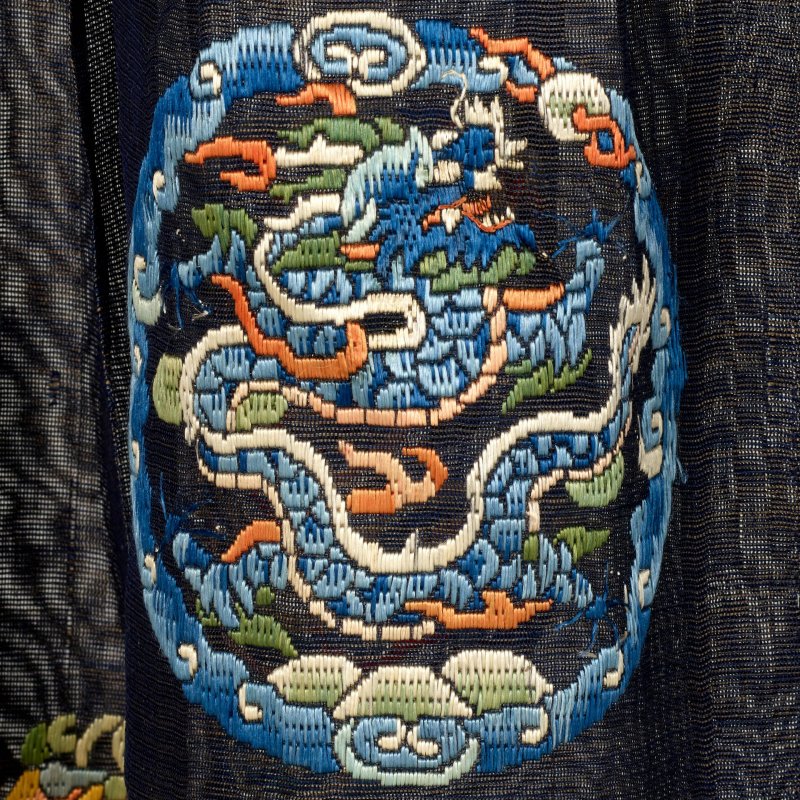
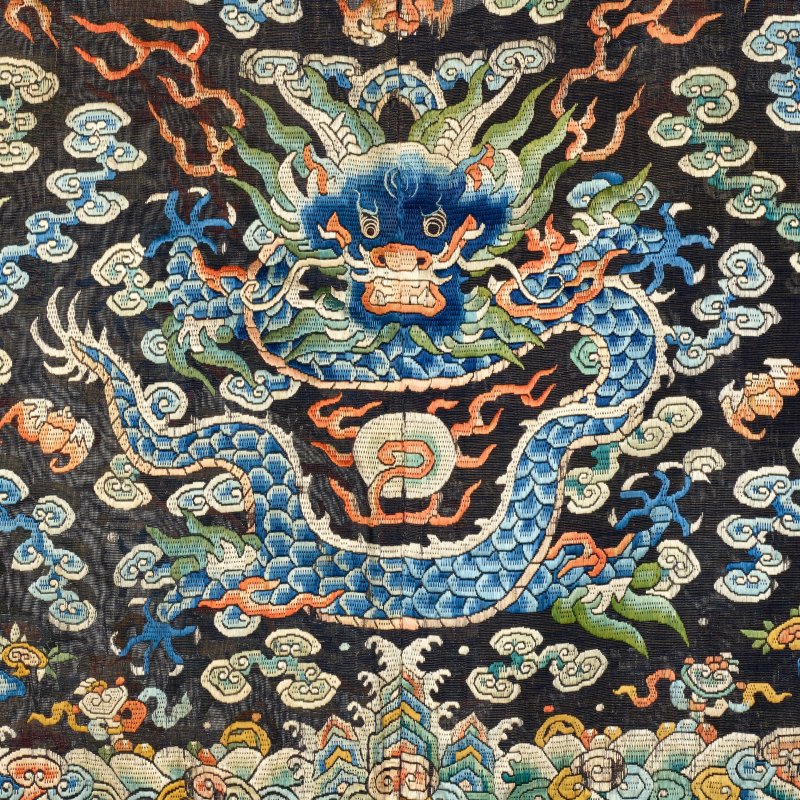
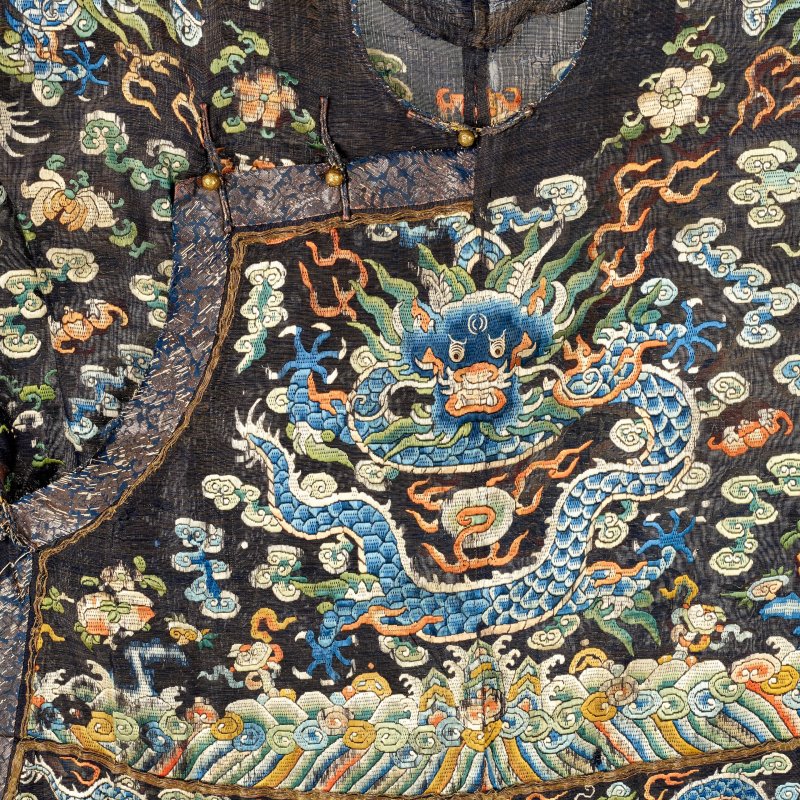
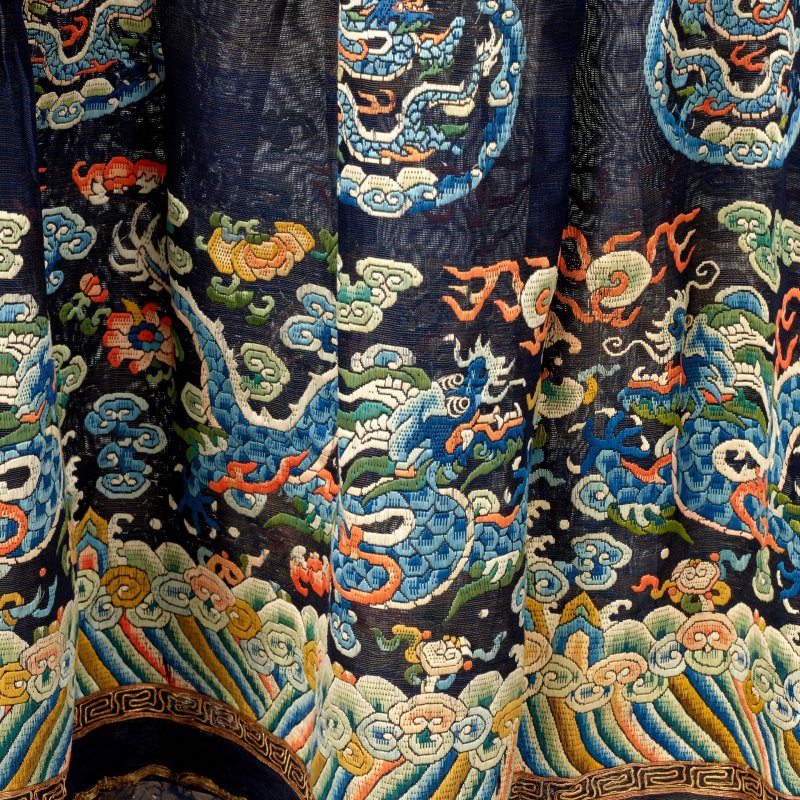
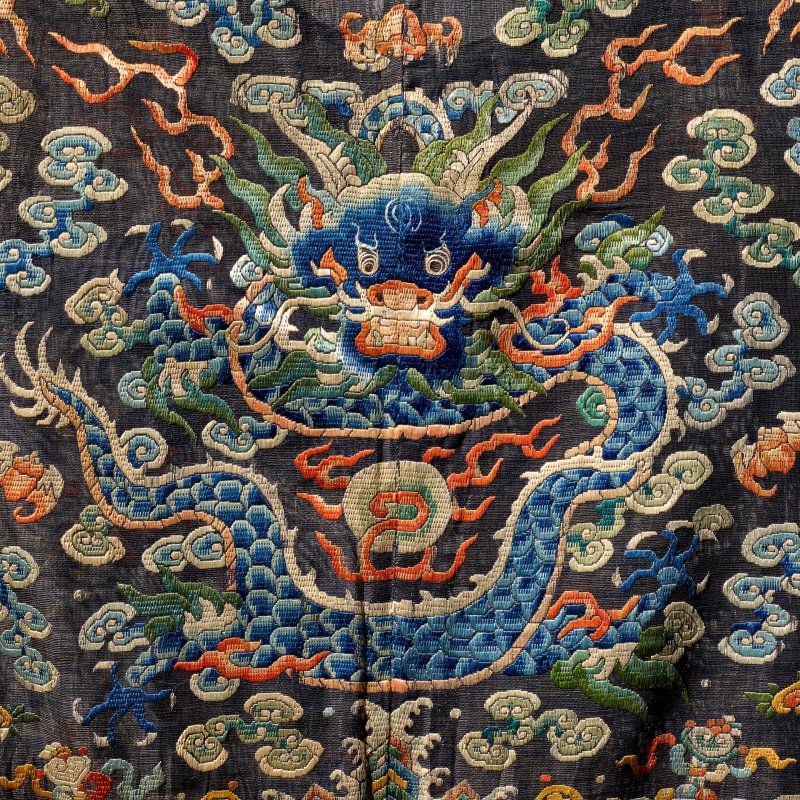
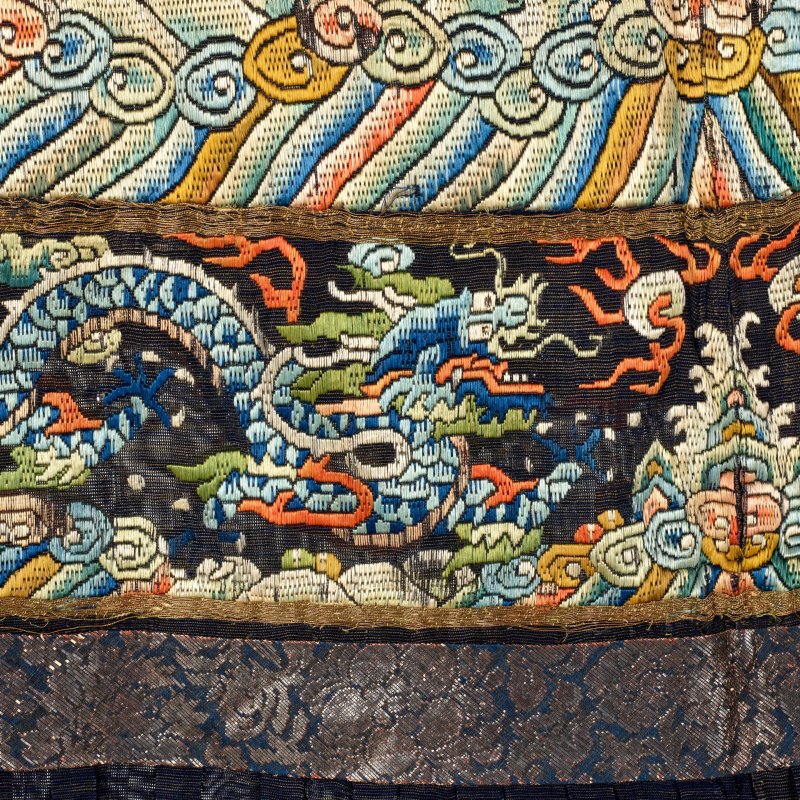
Finely worked in polychrome silk threads and couched gilt thread, the upper robe centered with a frontal five-clawed dragon above the cresting lishui waves, flanked by further dragons in profile amidst multicolored cloud scrolls, bats, and peaches, the attached dark-blue gauze pleated skirt embroidered with dragon roundels alternating with striding five-clawed dragons above turbulent lishui waves, the sleeves end in dark-blue ribbed cuffs with horse-hoof extensions, all enclosed within patterned woven borders.
52 7/8 x 77 1/4in (134.3 × 196.2cm)
Footnotes
十九世紀 石青地納紗繡雲蝠龍紋朝袍
The two-part construction of the chaopao, comprising a short side-fastening jacket joined to a pleated skirt, was derived from Ming court dress and subsequently adapted by the Manchu to reflect their equestrian heritage. Distinctive features include the overlapping right front, originally inspired by garments fashioned from animal skins to provide additional warmth and protection; narrow sleeves terminating in ribbed silk cuffs, allowing greater flexibility of movement while riding and hunting; and the characteristic horse-hoof cuffs, designed to shield the hands from the elements during mounted activities.
Season changes were strictly regulated and all court dress was divided into two categories, winter and summer costume, with minor variations in weight to compensate for the arrival of spring and the onset of autumn. This particular robe was probably made for the summer as summer robes were either lined with silk or made of gauze.
Compare a related summer gauze , similarly decorated with two arrangements of dragons and courtly motifs, but incorporating the Eight Buddhist Emblems, in the National Museum of Asian Art, Washington, D.C., accession no. F2015.7. Compare also another related example sold at Christie's Paris, 14 December 2011, lot 144. See also a silk of comparable design and construction, sold at Sotheby's New York, 16 September 2014, lot 523.
Finely worked in polychrome silk threads and couched gilt thread, the upper robe centered with a frontal five-clawed dragon above the cresting lishui waves, flanked by further dragons in profile amidst multicolored cloud scrolls, bats, and peaches, the attached dark-blue gauze pleated skirt embroidered with dragon roundels alternating with striding five-clawed dragons above turbulent lishui waves, the sleeves end in dark-blue ribbed cuffs with horse-hoof extensions, all enclosed within patterned woven borders.
52 7/8 x 77 1/4in (134.3 × 196.2cm)
Footnotes
十九世紀 石青地納紗繡雲蝠龍紋朝袍
The two-part construction of the chaopao, comprising a short side-fastening jacket joined to a pleated skirt, was derived from Ming court dress and subsequently adapted by the Manchu to reflect their equestrian heritage. Distinctive features include the overlapping right front, originally inspired by garments fashioned from animal skins to provide additional warmth and protection; narrow sleeves terminating in ribbed silk cuffs, allowing greater flexibility of movement while riding and hunting; and the characteristic horse-hoof cuffs, designed to shield the hands from the elements during mounted activities.
Season changes were strictly regulated and all court dress was divided into two categories, winter and summer costume, with minor variations in weight to compensate for the arrival of spring and the onset of autumn. This particular robe was probably made for the summer as summer robes were either lined with silk or made of gauze.
Compare a related summer gauze , similarly decorated with two arrangements of dragons and courtly motifs, but incorporating the Eight Buddhist Emblems, in the National Museum of Asian Art, Washington, D.C., accession no. F2015.7. Compare also another related example sold at Christie's Paris, 14 December 2011, lot 144. See also a silk of comparable design and construction, sold at Sotheby's New York, 16 September 2014, lot 523.