
拍品信息
拍品名称
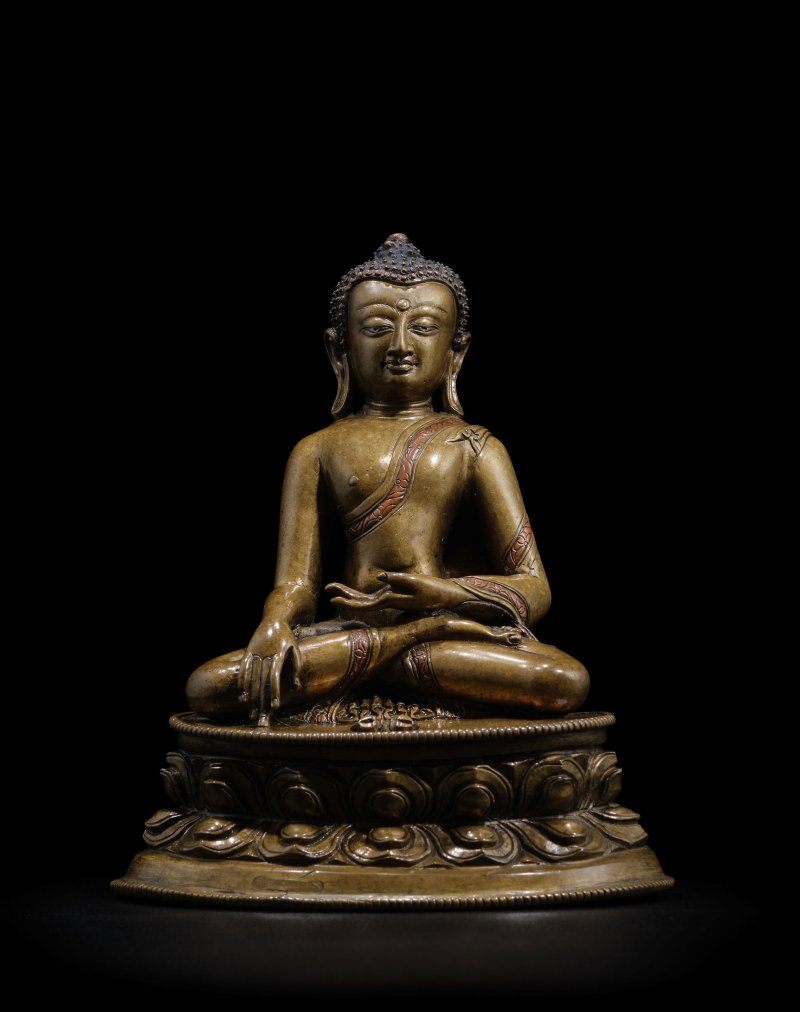
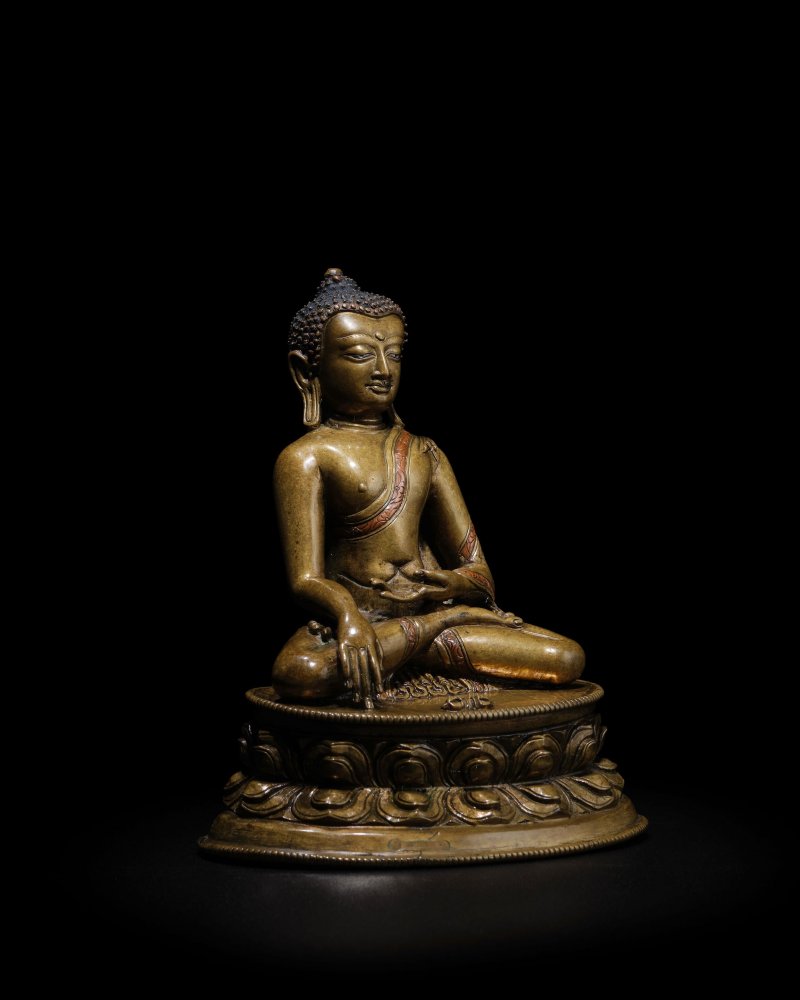
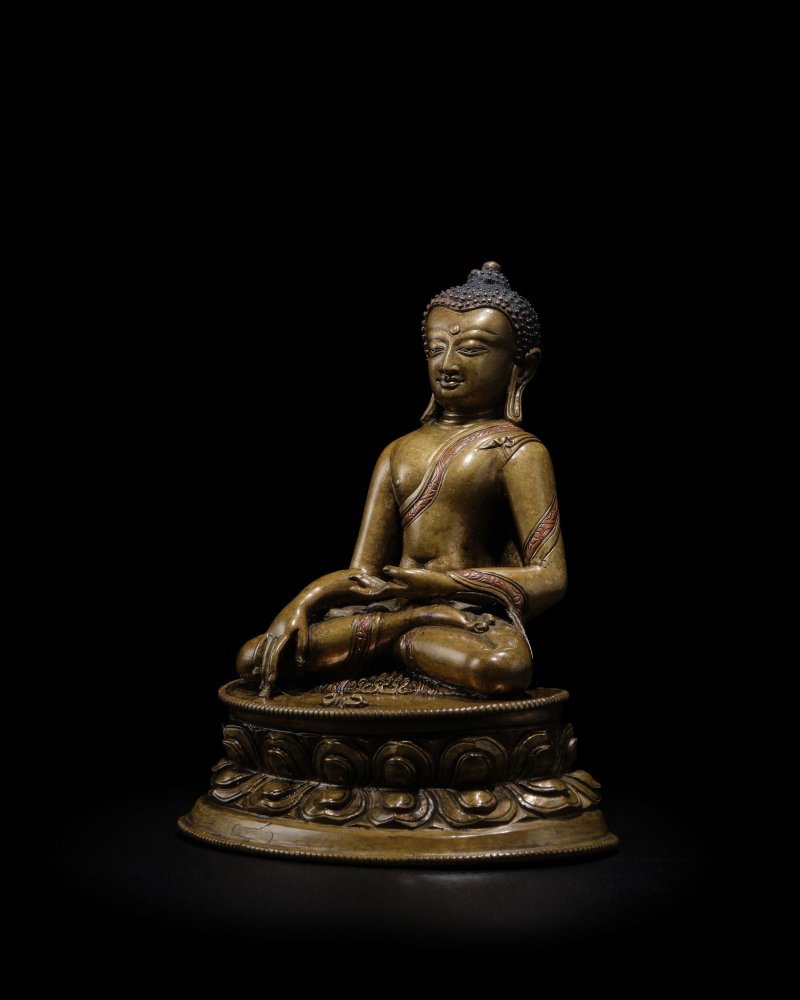
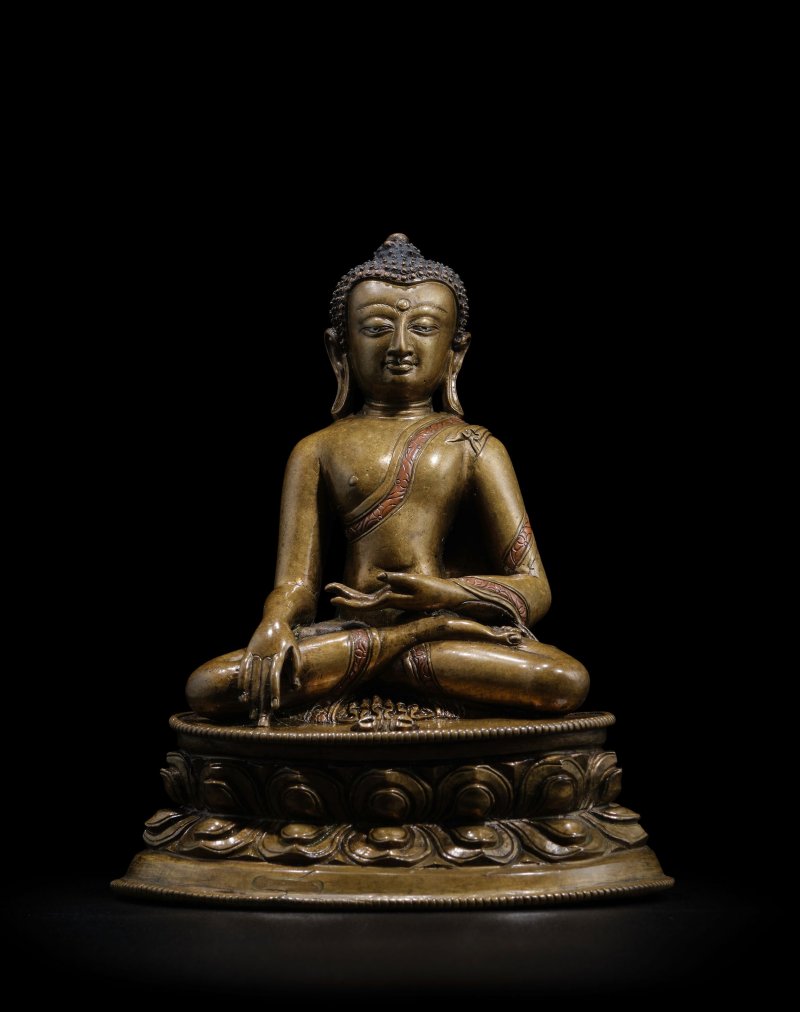
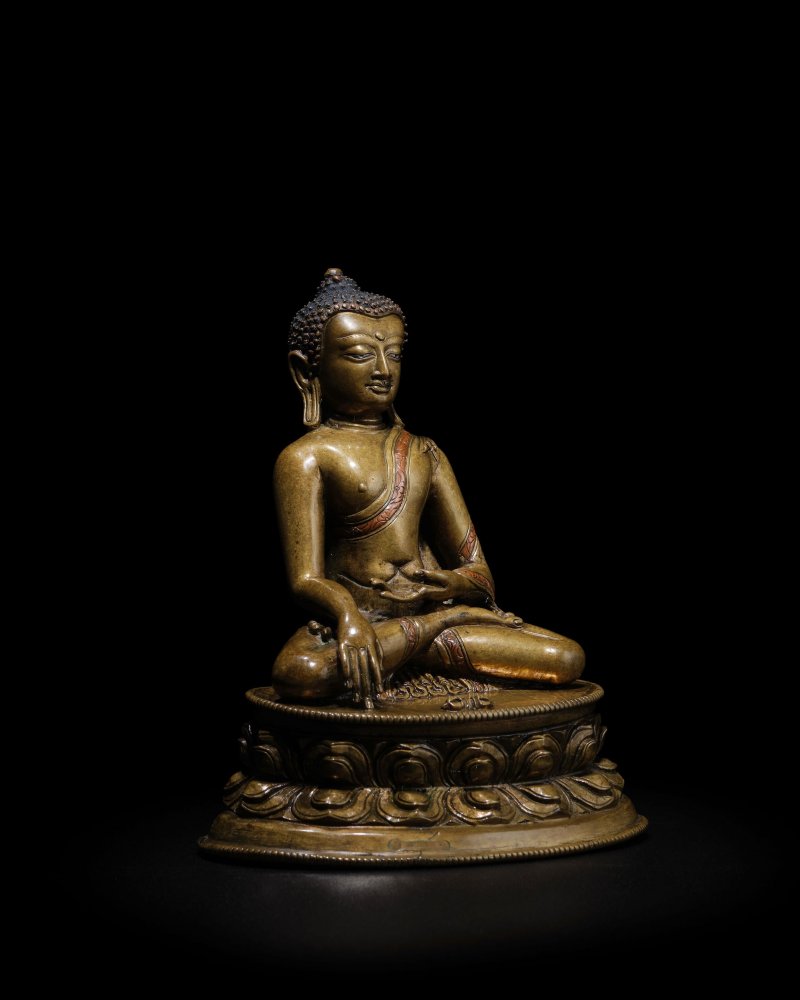
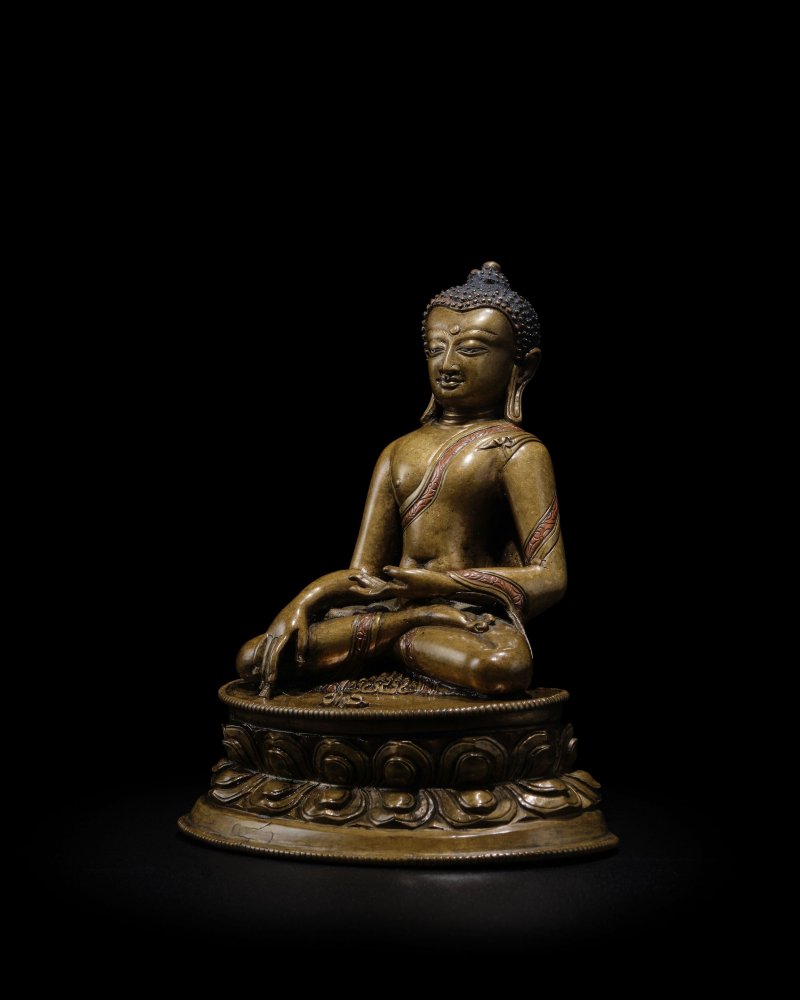
西藏 十三世紀 錯銀錯紅銅金剛座佛陀銅像 | A SILVER AND COPPER INLAID COPPER ALLOY FIGURE OF VAJRASANA BUDDHA
年代
TIBET, 13TH CENTURY
起拍价
HKD 700,000
估值区间
HKD 700000 - 900000
尺寸
未知
品相
未知
更多信息
TIBET, 13TH CENTURY
Himalayan Art Resources item no. 8889
15.5 cm (6 in.) high
Footnotes
西藏 十三世紀 錯銀錯紅銅金剛座佛陀銅像
Provenance
Ulrich von Schroeder Collection, 1998
Private Collection, Singapore, 1998–2015
John and Karina Stewart Collection, 2016
Mehmet Hassan Asian Art, Bangkok, 2016-2026
Cast in the round, this Buddha image, with its squat, robust proportions and full, symmetrically curved lotus petals, is characteristic of 13th-century Tibetan sculpture, compare a Buddha sold at Bonhams, Hong Kong, 3 October 2017, lot 17. Thick bands of patterned copper inlay mark the hems of his robe, while the silver-inlaid eyes may allude to the Buddha's enlightened nature. The treatment of the eyebrows, rendered as finely feathered ridges rather than simple arched bands, enhances the richly detailed surface of the sculpture.
The fishtail hem, gathered high on the left shoulder, together with the additional drapery falling over the left arm, is characteristic of the 13th-century Khasa Malla tradition; see the Rubin Museum of Art, New York (C2006.24.1). The broad fold of the robe draped across the shoulder is characteristic of the Pala style, the influence of which is evident in earlier Tibetan prototypes of the 12th and 13th centuries (von Schroeder, , 1981, pp. 179 and 289, nos. 33F and G, and 72C and G). These features reflect the close relationship between Tibetan, Nepalese, and Indian Buddhist sculpture during this period, as Tibetan artists adapted established Indian and Nepalese models into increasingly distinctive local forms.
The vajra positioned before the Buddha's feet has been interpreted as a reference to Bodhgaya, the site of the Buddha's enlightenment. Of particular interest is the consecration plate, engraved with a distinctive depiction of a snow lion. For a closely related example in both style and proportion, compare a Buddha figure sold at Bonhams, New York, 20 March 2018, lot 3209.
Himalayan Art Resources item no. 8889
15.5 cm (6 in.) high
Footnotes
西藏 十三世紀 錯銀錯紅銅金剛座佛陀銅像
Provenance
Ulrich von Schroeder Collection, 1998
Private Collection, Singapore, 1998–2015
John and Karina Stewart Collection, 2016
Mehmet Hassan Asian Art, Bangkok, 2016-2026
Cast in the round, this Buddha image, with its squat, robust proportions and full, symmetrically curved lotus petals, is characteristic of 13th-century Tibetan sculpture, compare a Buddha sold at Bonhams, Hong Kong, 3 October 2017, lot 17. Thick bands of patterned copper inlay mark the hems of his robe, while the silver-inlaid eyes may allude to the Buddha's enlightened nature. The treatment of the eyebrows, rendered as finely feathered ridges rather than simple arched bands, enhances the richly detailed surface of the sculpture.
The fishtail hem, gathered high on the left shoulder, together with the additional drapery falling over the left arm, is characteristic of the 13th-century Khasa Malla tradition; see the Rubin Museum of Art, New York (C2006.24.1). The broad fold of the robe draped across the shoulder is characteristic of the Pala style, the influence of which is evident in earlier Tibetan prototypes of the 12th and 13th centuries (von Schroeder, , 1981, pp. 179 and 289, nos. 33F and G, and 72C and G). These features reflect the close relationship between Tibetan, Nepalese, and Indian Buddhist sculpture during this period, as Tibetan artists adapted established Indian and Nepalese models into increasingly distinctive local forms.
The vajra positioned before the Buddha's feet has been interpreted as a reference to Bodhgaya, the site of the Buddha's enlightenment. Of particular interest is the consecration plate, engraved with a distinctive depiction of a snow lion. For a closely related example in both style and proportion, compare a Buddha figure sold at Bonhams, New York, 20 March 2018, lot 3209.
常见问题
这件西藏 十三世紀 錯銀錯紅銅金剛座佛陀銅像 | A SILVER AND COPPER INLAID COPPER ALLOY FIGURE OF VAJRASANA BUDDHA的成交价是多少?
落槌价为 预展中。 成交价为 预展中。