
拍品信息
拍品名称
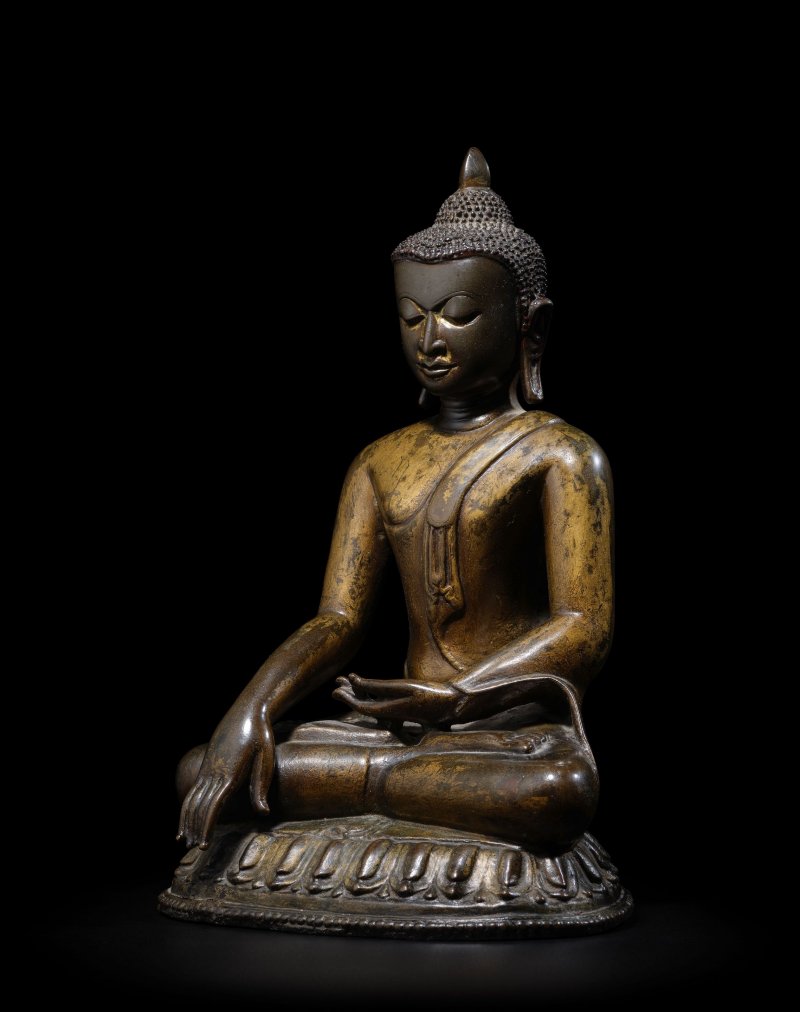
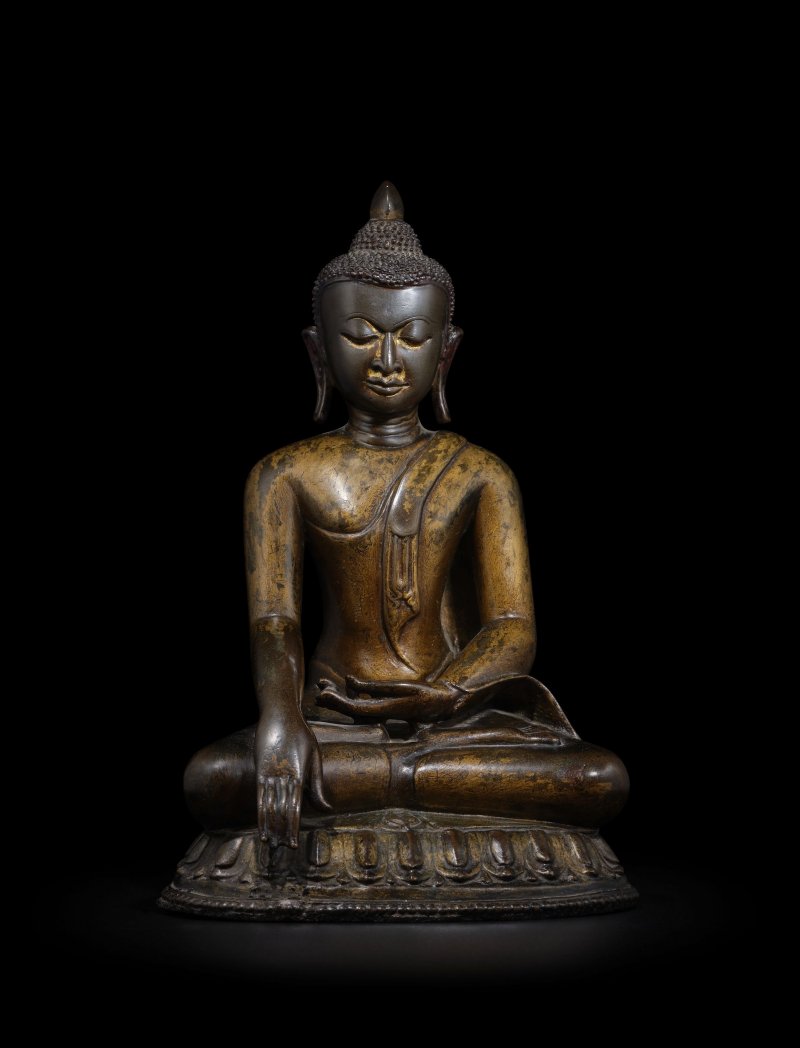
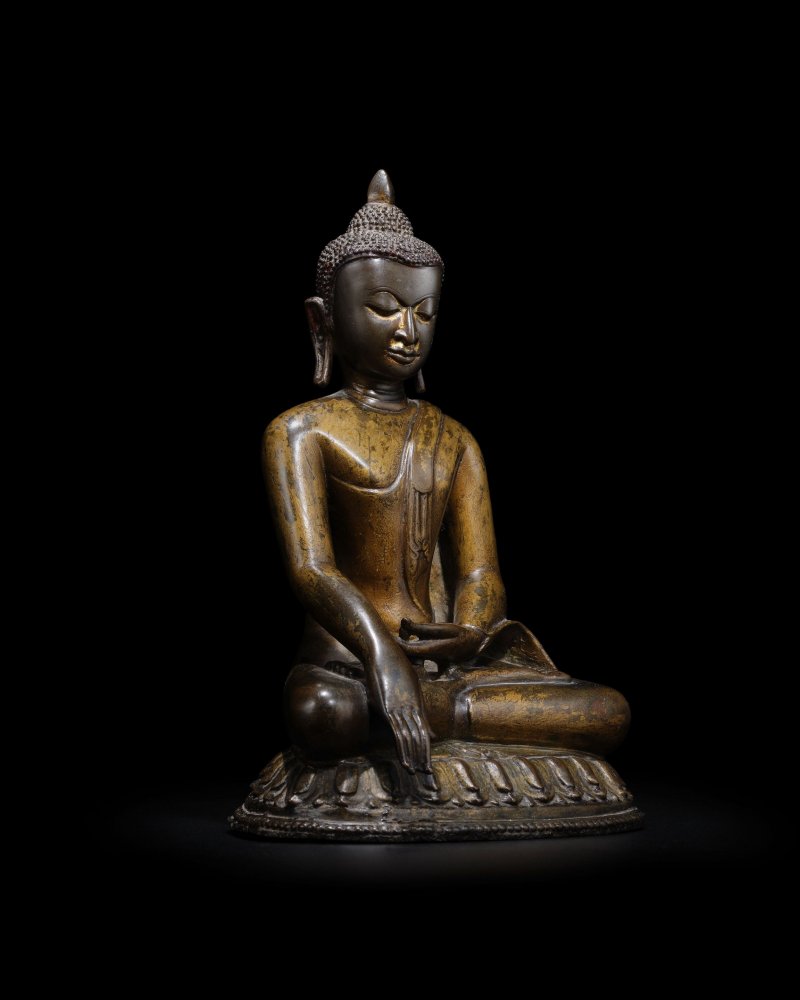
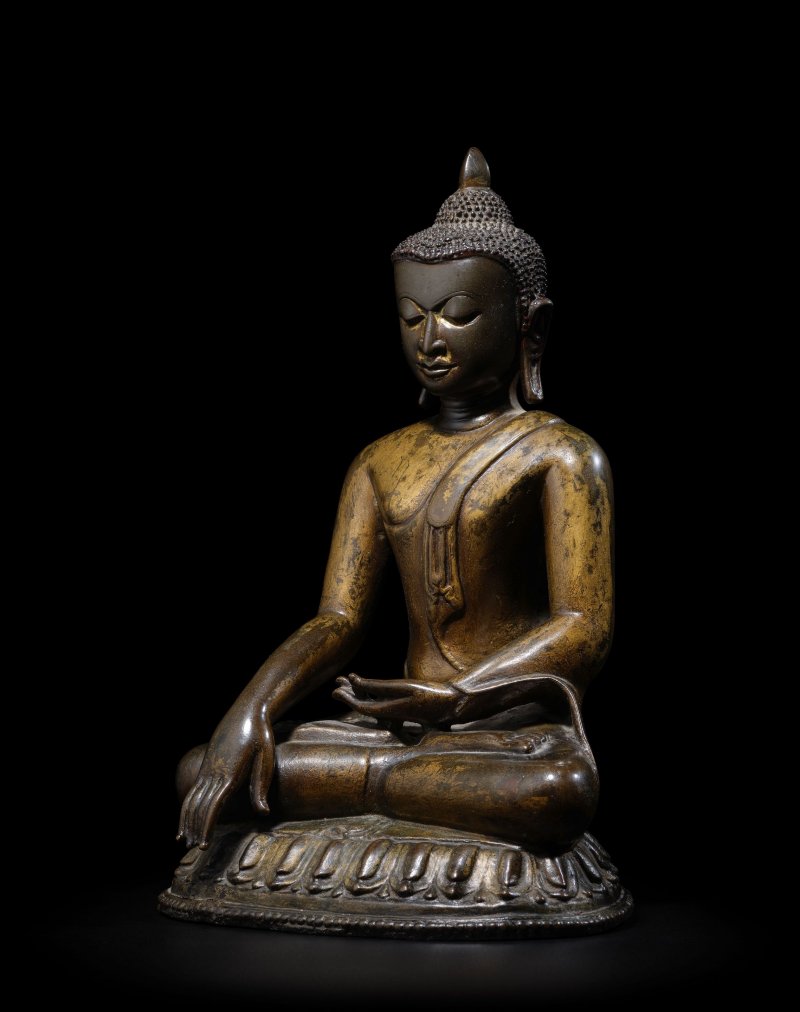
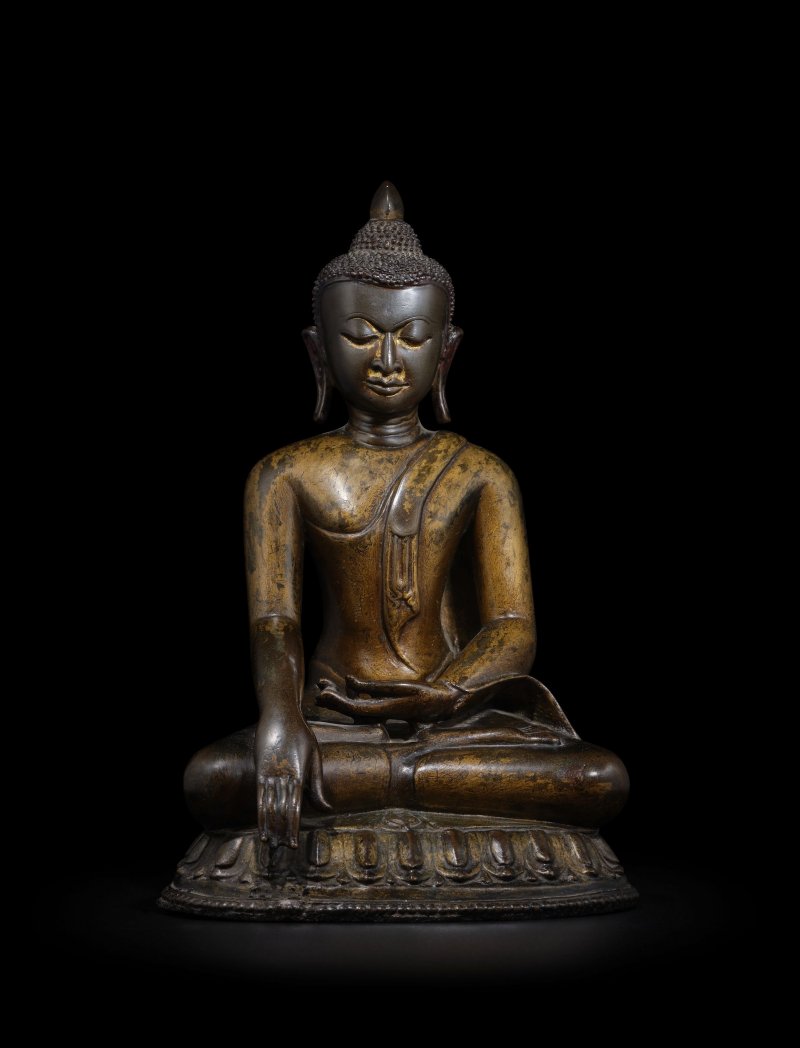
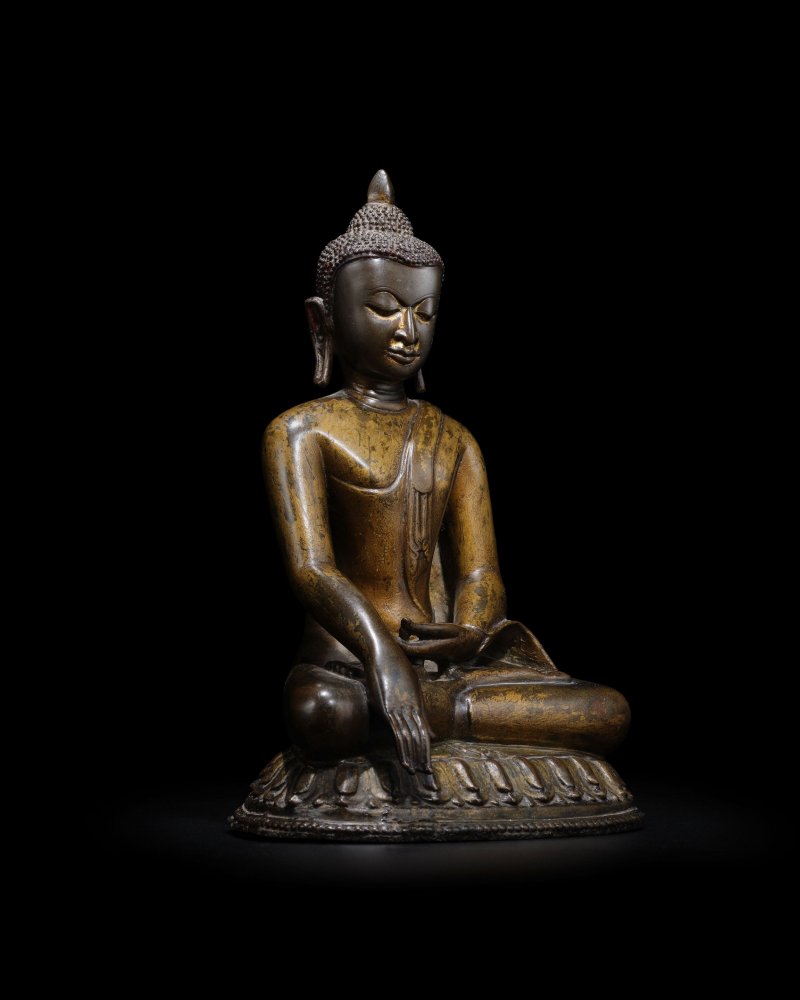
緬甸 阿拉干 十五世紀 釋迦牟尼銅像 | A COPPER ALLOY FIGURE OF BUDDHA SHAKYAMUNI
年代
BURMA (MYANMAR), ARAKAN, 15TH CENTURY
起拍价
HKD 250,000
估值区间
HKD 250000 - 350000
尺寸
未知
品相
未知
更多信息
BURMA (MYANMAR), ARAKAN, 15TH CENTURY
Bronze, cast in lost wax method; traces of gilding.
30.5 cm (11 in.) high
Footnotes
緬甸 阿拉干 十五世紀 釋迦牟尼銅像
Provenance
Collection of Mr and Mrs. JC. Moreau Gobard, Paris, 1990s
Collection of Mrs. Levien Eversen, The Netherlands, 2003-2017
Marcel Nies Oriental Art, Antwerp, 2017
The Maitri Collection, acquired from the above at TEFAF Maastricht, March 2018
The historic Kingdom of Arakan flourished between the 15th and 18th centuries in the coastal region along the Bay of Bengal in western Myanmar. Strategically situated between the Indian subcontinent and mainland Southeast Asia, Arakan prospered through maritime trade. Close commercial and cultural ties with Bengal, Sri Lanka, and other regions of South and Southeast Asia fostered a cosmopolitan artistic environment while reinforcing the kingdom's role as an important centre of Theravada Buddhism.
The present figure depicts the Buddha seated with the right hand lowered in (earth-touching gesture), one of the most enduring iconographic types in Arakanese Buddhist sculpture. Its sculptural vocabulary demonstrates close affinities with the Buddhist sculpture of the Pagan period in Myanmar (11th–13th century), itself deeply indebted to the artistic traditions of eastern India, particularly the Pala period (8th–12th century). Compare with a closely related bronze sold at Koller Auctions, Zurich, 7 June 2018, lot 409, and another example sold at Christie's, New York, 17 September 1999, lot 247.
Bronze, cast in lost wax method; traces of gilding.
30.5 cm (11 in.) high
Footnotes
緬甸 阿拉干 十五世紀 釋迦牟尼銅像
Provenance
Collection of Mr and Mrs. JC. Moreau Gobard, Paris, 1990s
Collection of Mrs. Levien Eversen, The Netherlands, 2003-2017
Marcel Nies Oriental Art, Antwerp, 2017
The Maitri Collection, acquired from the above at TEFAF Maastricht, March 2018
The historic Kingdom of Arakan flourished between the 15th and 18th centuries in the coastal region along the Bay of Bengal in western Myanmar. Strategically situated between the Indian subcontinent and mainland Southeast Asia, Arakan prospered through maritime trade. Close commercial and cultural ties with Bengal, Sri Lanka, and other regions of South and Southeast Asia fostered a cosmopolitan artistic environment while reinforcing the kingdom's role as an important centre of Theravada Buddhism.
The present figure depicts the Buddha seated with the right hand lowered in (earth-touching gesture), one of the most enduring iconographic types in Arakanese Buddhist sculpture. Its sculptural vocabulary demonstrates close affinities with the Buddhist sculpture of the Pagan period in Myanmar (11th–13th century), itself deeply indebted to the artistic traditions of eastern India, particularly the Pala period (8th–12th century). Compare with a closely related bronze sold at Koller Auctions, Zurich, 7 June 2018, lot 409, and another example sold at Christie's, New York, 17 September 1999, lot 247.
常见问题
这件緬甸 阿拉干 十五世紀 釋迦牟尼銅像 | A COPPER ALLOY FIGURE OF BUDDHA SHAKYAMUNI的成交价是多少?
落槌价为 预展中。 成交价为 预展中。