
拍品信息
拍品名称
清乾隆 掐絲琺瑯仿古饕餮紋簋式蓋爐連座 | A VERY RARE CLOISONNÉ ENAMEL ARCHAISTIC VESSEL ON STAND AND COVER, GUI
年代
Qianlong incised four-character mark and of the period
起拍价
HKD 3,000,000
估值区间
HKD 3000000 - 4000000
尺寸
未知
品相
未知
更多信息
Qianlong incised four-character mark and of the period
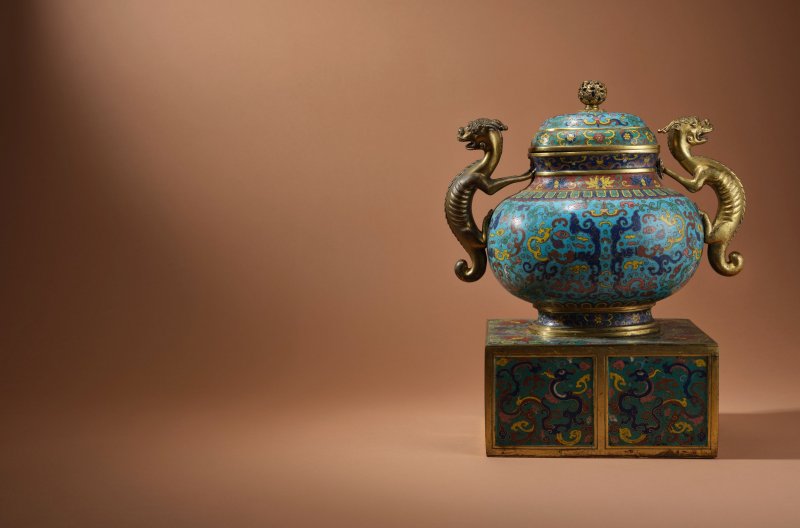
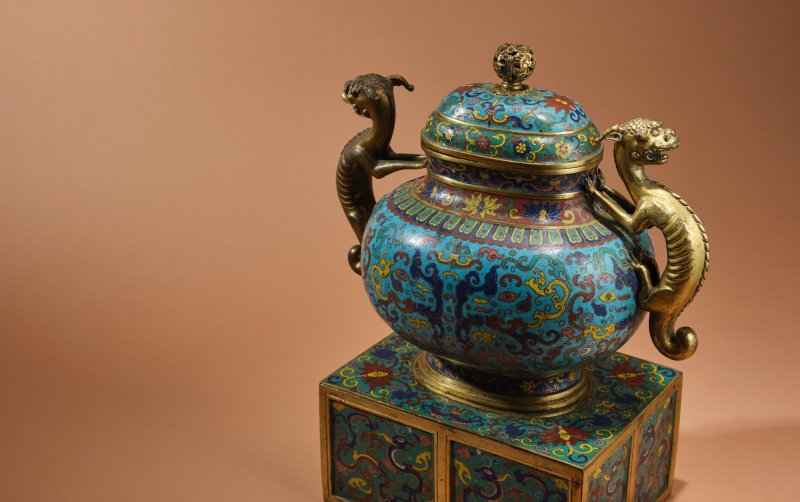
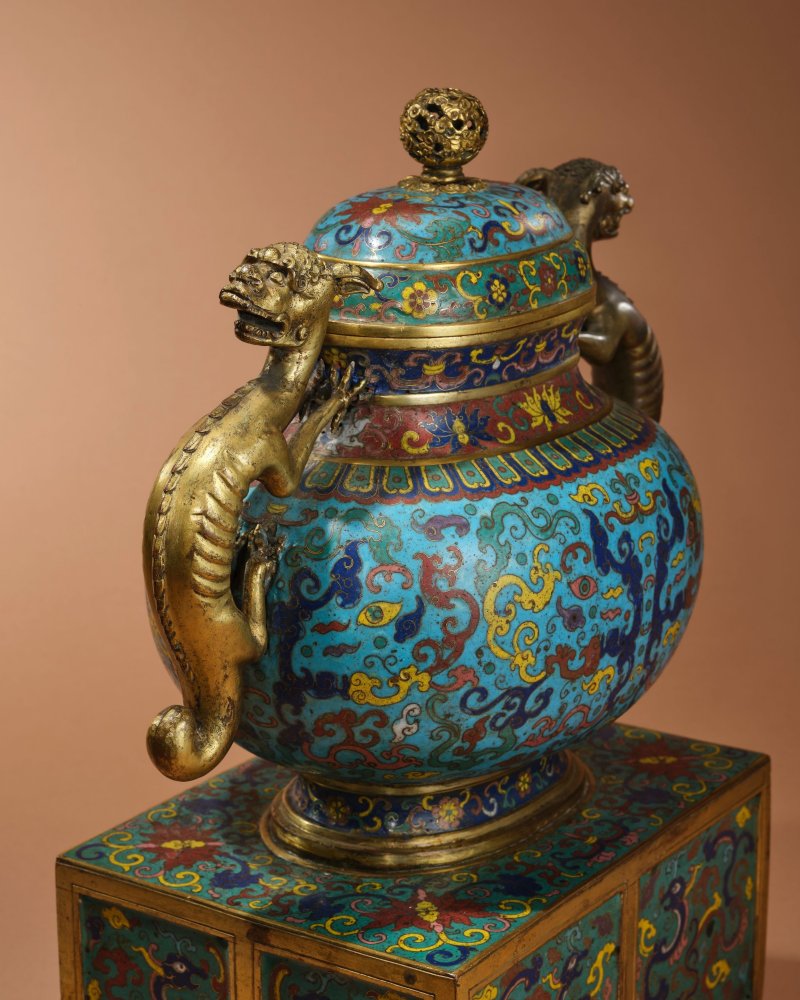
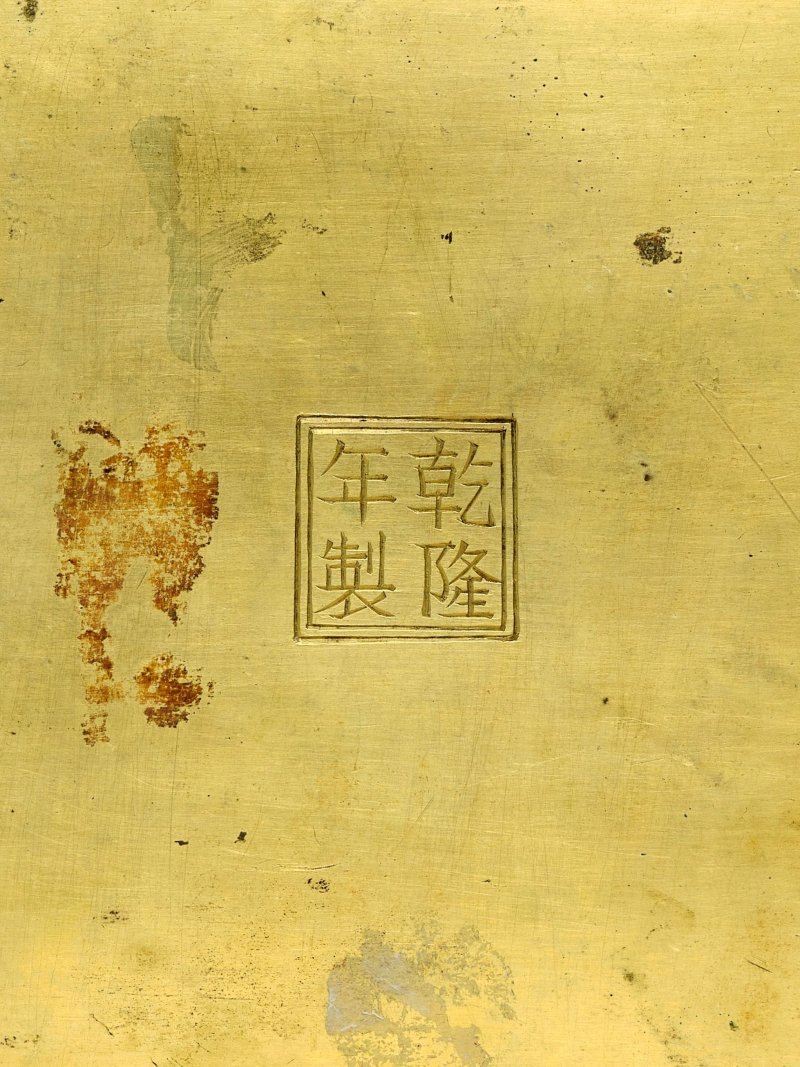
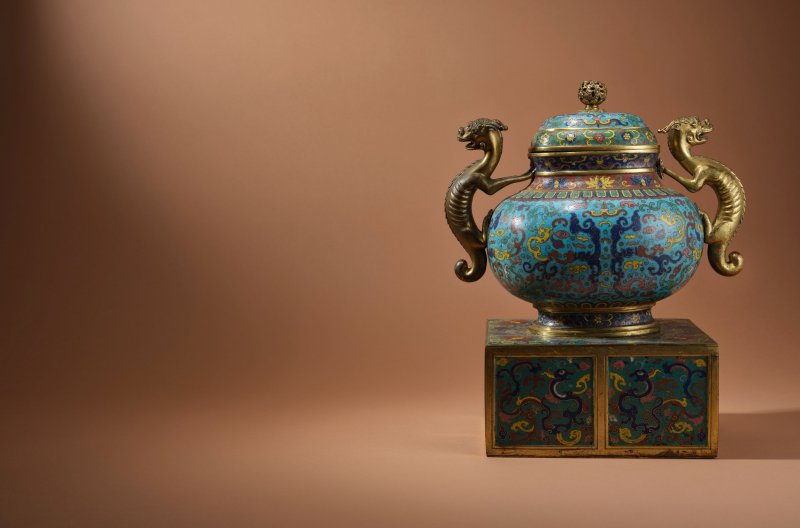
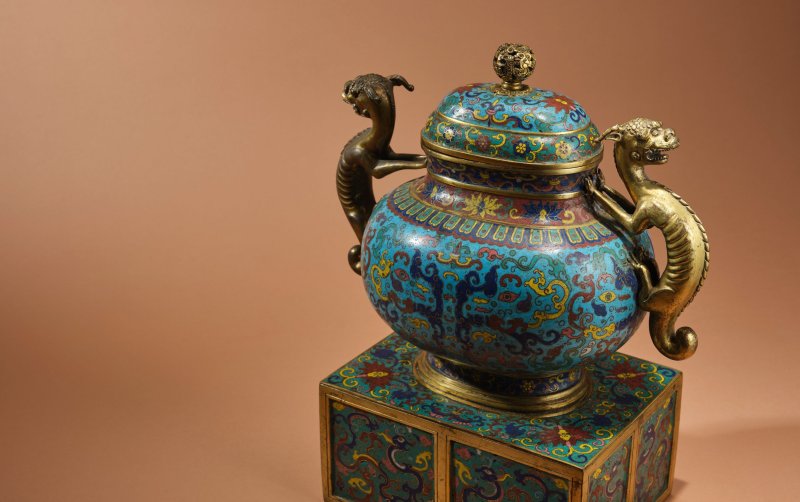
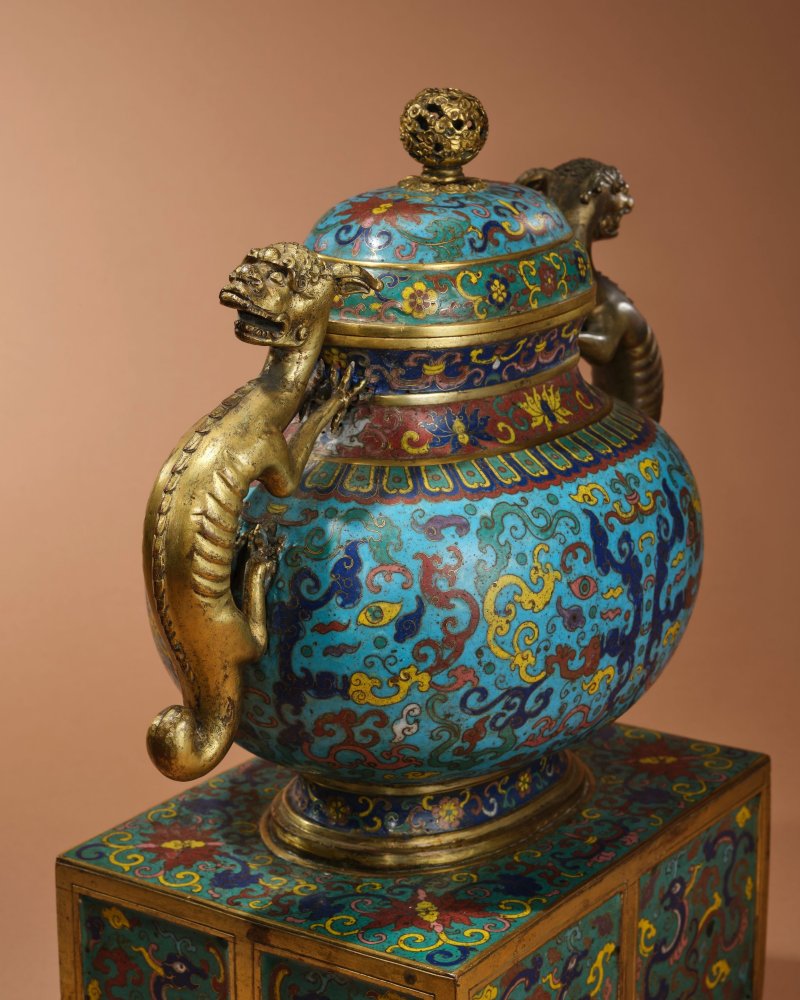
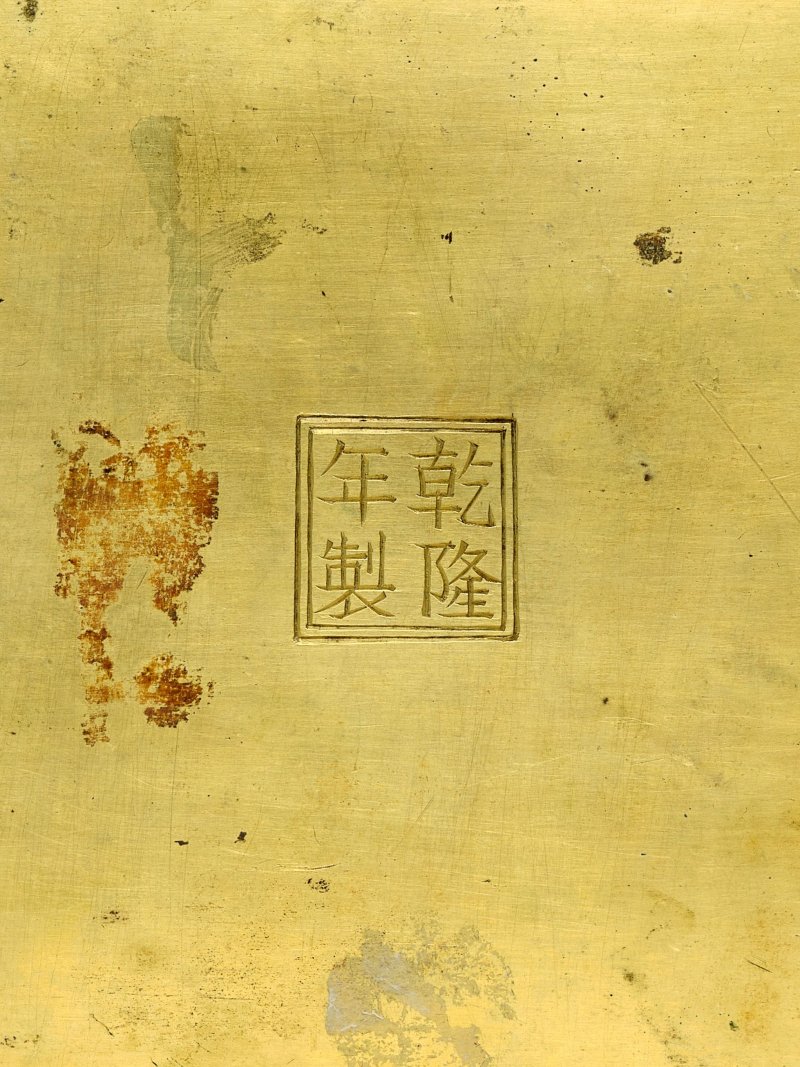
Modelled after the archaic bronze gui form, the compressed globular body superbly decorated in bright enamels with taotie masks formed by archaistic scrollwork between borders of petal lappet and below a lotus band on the neck, further embellished with decorative bands below the mouth rim and on the spreading foot, flanked by a pair of handles formed by gilt-bronze dragons with backward-turned heads, raised on a rectangular gilded stand decorated on the sides by framed panels of confronted archaistic birds, the top surface decorated with lotus scrolls, the domed cover similarly decorated and surmounted by a gilt-bronze globular finial cast in openwork as swirling clouds, the base incised with a four-character reign mark within a double square, box.
37.5cm (14 3/4in) high. (2).
Footnotes
清乾隆 掐絲琺瑯仿古饕餮紋簋式蓋爐連座
「乾隆年製」楷書刻款
Provenance:
Christie's New York, 29 March 2006, lot 306
紐約佳士得,2006年3月29日,拍品編號306
Imperial works of art made for the Court during the Qianlong period often blend archaic-inspired forms and designs, reflecting the Emperor's appreciation of the past and fascination with archaism, with a sense of opulence and grandeur representing the flamboyant taste of the Emperor during the High Qing era. The form of the present lot is inspired by the archaic bronze ritual food vessels, , that were particularly popular during the Western Zhou dynasty, distinguished by a pair of substantial handles and an integrally cast square socle. The craftsmen remarkably reinterpreted decorative elements that evoke those of archaic vessels, as demonstrated in the design and the archaistic birds presented in a more creative manner, while still reflecting echoes of an 'ancient' style. They also incorporated decorative motifs such as the lotus scrolls, which are typically found on cloisonné enamel wares from the Yuan and Ming dynasties.
It is very rare to find a cloisonné enamel vessel in the form of on stand. A much smaller example (15cm high), with incised Qianlong mark and of the period, is in the Palace Museum, Beijing, illustrated in , Beijing, 2011, p.294, no.234. The vessel decorated with design similarly formed by archaistic scrollwork and set with simplified dragon-handles. Another similar example of similar size (37cm high), Qianlong mark and of the period, is included in the exhibition at the Museum für Kunsthandwerk, Frankfurt am Main, and illustrated in the exhibition catalogue, Hannover, 1981, p.150, no.80.
A cloisonné enamel in the related form but with a black enamel ground and gilt-bronze phoenix-shaped handles, Yongzheng, was sold at Christie's Hong Kong, 30 May 2006, lot 1288. Compare also with a small (11.1cm high) cloisonné enamel archaistic platformed vessel and cover, , Qianlong four-character mark and of the period, which was sold at Christie's Hong Kong, 30 May 2012, lot 4021.
侈口,束頸,圓鼓腹,雙龍耳,帶蓋,方形座。施天藍色琺琅釉地,腹部飾仿古饕餮紋,蓋面飾纏枝蓮紋,蓋頂有鎏金鏤雕雲紋鈕。腹部兩側設龍形耳。方座施藍綠色琺琅釉地,飾仿古鳥紋。底鎏金,正中刻「乾隆年製」雙方框楷書款。
此簋式爐充分展現了乾隆朝掐絲琺瑯工藝的極高水準,其器形勻稱,設計講究,細節處理一絲不苟。無論是鑄造技術、琺瑯釉料的施敷,還是鎏金龍形雙耳的雕琢,都體現出工匠的非凡技藝。
乾隆時期宮廷御製的作品,經常結合仿古的造型與紋樣,既展現皇帝對古物的喜愛與崇古風尚,也呈現出盛清時期的華麗審美。其器形源於西周時期盛行之青銅禮器「簋」,器置雙耳,圈足下連鑄方座。工匠加入巧思,重新詮釋仿古紋飾,如獸面紋與變形鳥紋,然猶存古意;亦結合纏枝蓮紋等元明掐絲琺瑯常見之裝飾紋樣,足見帝皇尚古品味。
此類掐絲琺瑯器極為罕見。北京故宮博物院藏一件尺寸較小(高15厘米)之乾隆四字款掐絲琺瑯獸面紋龍耳簋式爐,見《故宮博物院藏品大系:琺瑯器編2:清掐絲琺瑯》,北京,2011年,頁294,編號234。該器亦飾以仿古卷雲紋構成之獸面紋,雙耳作簡化龍形。另有一件尺寸相同(高37厘米)之乾隆時期掐絲琺瑯簋,曾展於法蘭克福應用藝術博物館,《Die Ware aus dem Teufelsland: Chinesische und Japanische Cloisonné-und Champlevé-Arbeiten von 1400 bis 1900》特展,載於展覽圖錄,漢諾威,1981年,頁150,編號80。
雍正時期亦有鑄造類似掐絲琺瑯器。參考一件掐絲琺瑯簋,形制相近但施黑釉地,雙耳作鎏金鳳形,售於香港佳士得,2006年5月30日,拍品編號1288。比較一件尺寸較小之乾隆例(高11.1厘米),帶「乾隆年製」款,售於香港佳士得,2012年5月30日,拍品編號4021。
Modelled after the archaic bronze gui form, the compressed globular body superbly decorated in bright enamels with taotie masks formed by archaistic scrollwork between borders of petal lappet and below a lotus band on the neck, further embellished with decorative bands below the mouth rim and on the spreading foot, flanked by a pair of handles formed by gilt-bronze dragons with backward-turned heads, raised on a rectangular gilded stand decorated on the sides by framed panels of confronted archaistic birds, the top surface decorated with lotus scrolls, the domed cover similarly decorated and surmounted by a gilt-bronze globular finial cast in openwork as swirling clouds, the base incised with a four-character reign mark within a double square, box.
37.5cm (14 3/4in) high. (2).
Footnotes
清乾隆 掐絲琺瑯仿古饕餮紋簋式蓋爐連座
「乾隆年製」楷書刻款
Provenance:
Christie's New York, 29 March 2006, lot 306
紐約佳士得,2006年3月29日,拍品編號306
Imperial works of art made for the Court during the Qianlong period often blend archaic-inspired forms and designs, reflecting the Emperor's appreciation of the past and fascination with archaism, with a sense of opulence and grandeur representing the flamboyant taste of the Emperor during the High Qing era. The form of the present lot is inspired by the archaic bronze ritual food vessels, , that were particularly popular during the Western Zhou dynasty, distinguished by a pair of substantial handles and an integrally cast square socle. The craftsmen remarkably reinterpreted decorative elements that evoke those of archaic vessels, as demonstrated in the design and the archaistic birds presented in a more creative manner, while still reflecting echoes of an 'ancient' style. They also incorporated decorative motifs such as the lotus scrolls, which are typically found on cloisonné enamel wares from the Yuan and Ming dynasties.
It is very rare to find a cloisonné enamel vessel in the form of on stand. A much smaller example (15cm high), with incised Qianlong mark and of the period, is in the Palace Museum, Beijing, illustrated in , Beijing, 2011, p.294, no.234. The vessel decorated with design similarly formed by archaistic scrollwork and set with simplified dragon-handles. Another similar example of similar size (37cm high), Qianlong mark and of the period, is included in the exhibition at the Museum für Kunsthandwerk, Frankfurt am Main, and illustrated in the exhibition catalogue, Hannover, 1981, p.150, no.80.
A cloisonné enamel in the related form but with a black enamel ground and gilt-bronze phoenix-shaped handles, Yongzheng, was sold at Christie's Hong Kong, 30 May 2006, lot 1288. Compare also with a small (11.1cm high) cloisonné enamel archaistic platformed vessel and cover, , Qianlong four-character mark and of the period, which was sold at Christie's Hong Kong, 30 May 2012, lot 4021.
侈口,束頸,圓鼓腹,雙龍耳,帶蓋,方形座。施天藍色琺琅釉地,腹部飾仿古饕餮紋,蓋面飾纏枝蓮紋,蓋頂有鎏金鏤雕雲紋鈕。腹部兩側設龍形耳。方座施藍綠色琺琅釉地,飾仿古鳥紋。底鎏金,正中刻「乾隆年製」雙方框楷書款。
此簋式爐充分展現了乾隆朝掐絲琺瑯工藝的極高水準,其器形勻稱,設計講究,細節處理一絲不苟。無論是鑄造技術、琺瑯釉料的施敷,還是鎏金龍形雙耳的雕琢,都體現出工匠的非凡技藝。
乾隆時期宮廷御製的作品,經常結合仿古的造型與紋樣,既展現皇帝對古物的喜愛與崇古風尚,也呈現出盛清時期的華麗審美。其器形源於西周時期盛行之青銅禮器「簋」,器置雙耳,圈足下連鑄方座。工匠加入巧思,重新詮釋仿古紋飾,如獸面紋與變形鳥紋,然猶存古意;亦結合纏枝蓮紋等元明掐絲琺瑯常見之裝飾紋樣,足見帝皇尚古品味。
此類掐絲琺瑯器極為罕見。北京故宮博物院藏一件尺寸較小(高15厘米)之乾隆四字款掐絲琺瑯獸面紋龍耳簋式爐,見《故宮博物院藏品大系:琺瑯器編2:清掐絲琺瑯》,北京,2011年,頁294,編號234。該器亦飾以仿古卷雲紋構成之獸面紋,雙耳作簡化龍形。另有一件尺寸相同(高37厘米)之乾隆時期掐絲琺瑯簋,曾展於法蘭克福應用藝術博物館,《Die Ware aus dem Teufelsland: Chinesische und Japanische Cloisonné-und Champlevé-Arbeiten von 1400 bis 1900》特展,載於展覽圖錄,漢諾威,1981年,頁150,編號80。
雍正時期亦有鑄造類似掐絲琺瑯器。參考一件掐絲琺瑯簋,形制相近但施黑釉地,雙耳作鎏金鳳形,售於香港佳士得,2006年5月30日,拍品編號1288。比較一件尺寸較小之乾隆例(高11.1厘米),帶「乾隆年製」款,售於香港佳士得,2012年5月30日,拍品編號4021。
常见问题
这件清乾隆 掐絲琺瑯仿古饕餮紋簋式蓋爐連座 | A VERY RARE CLOISONNÉ ENAMEL ARCHAISTIC VESSEL ON STAND AND COVER, GUI的成交价是多少?
落槌价为 预展中。 成交价为 预展中。