
拍品信息
拍品名称
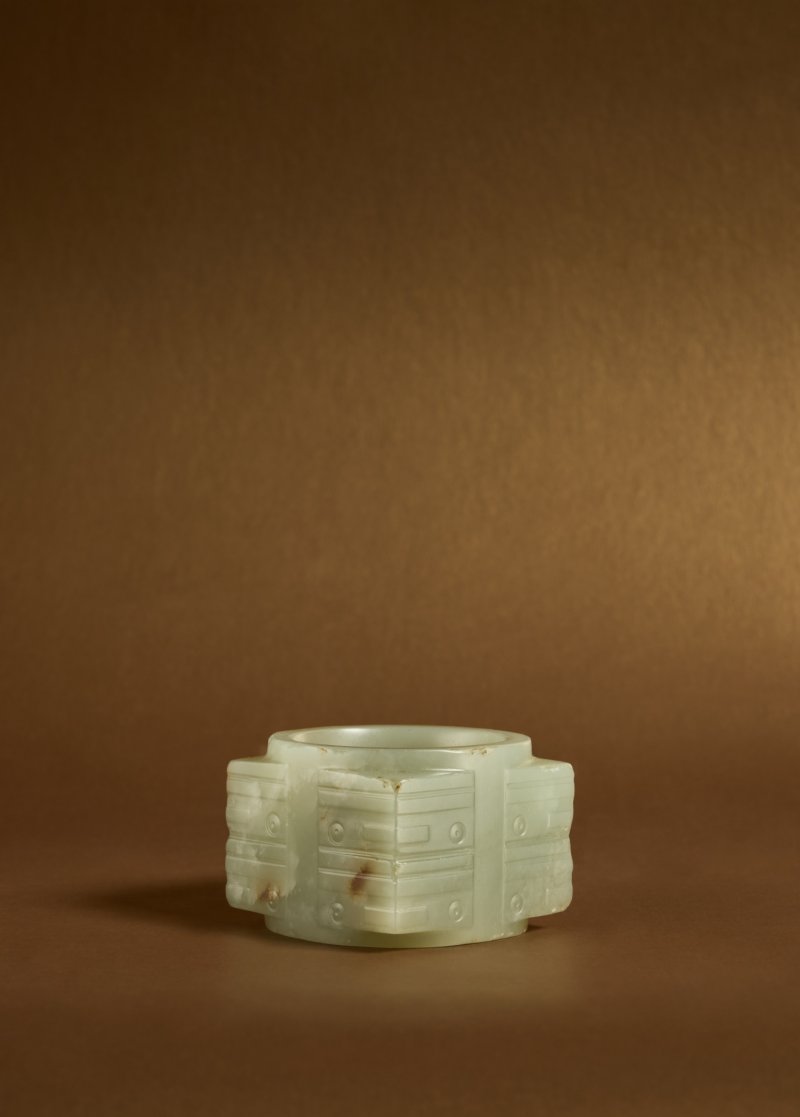
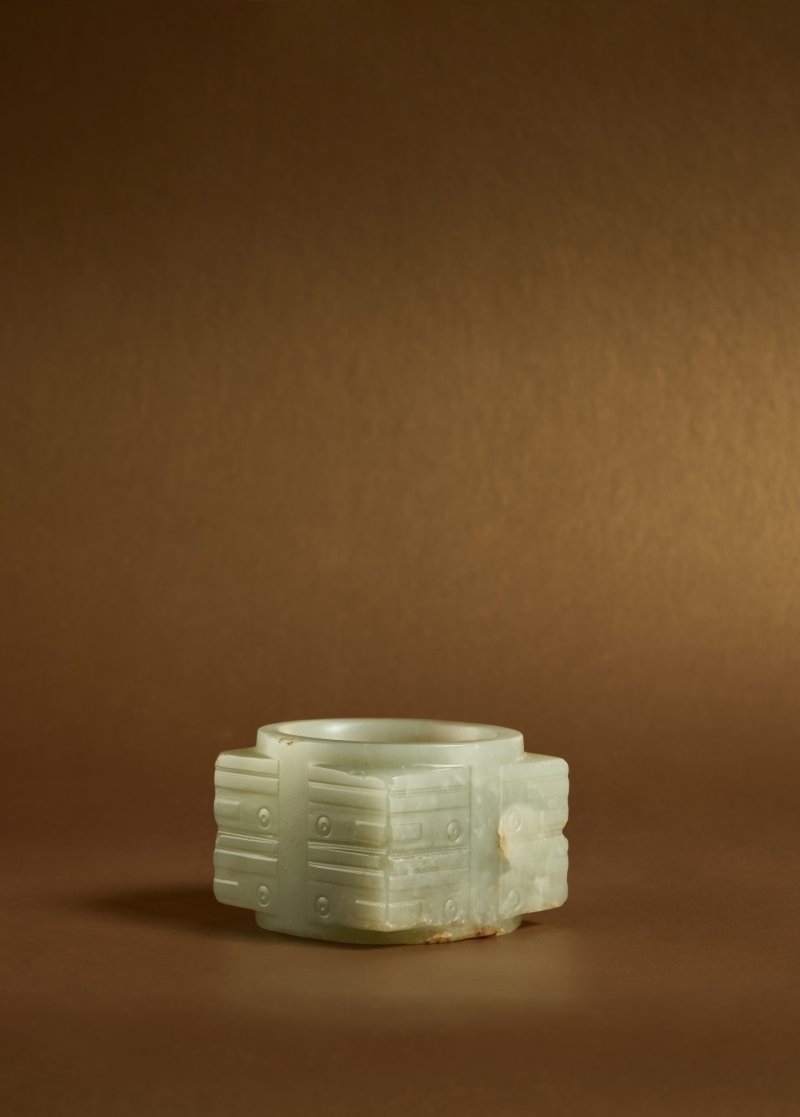
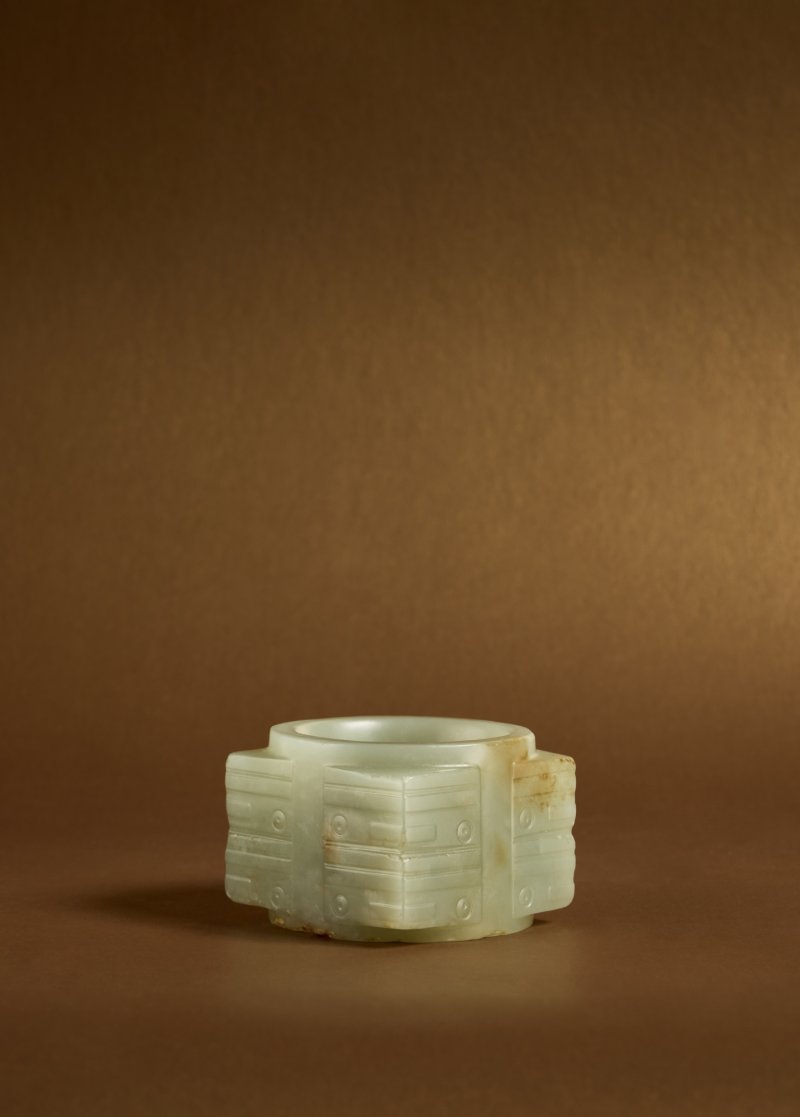
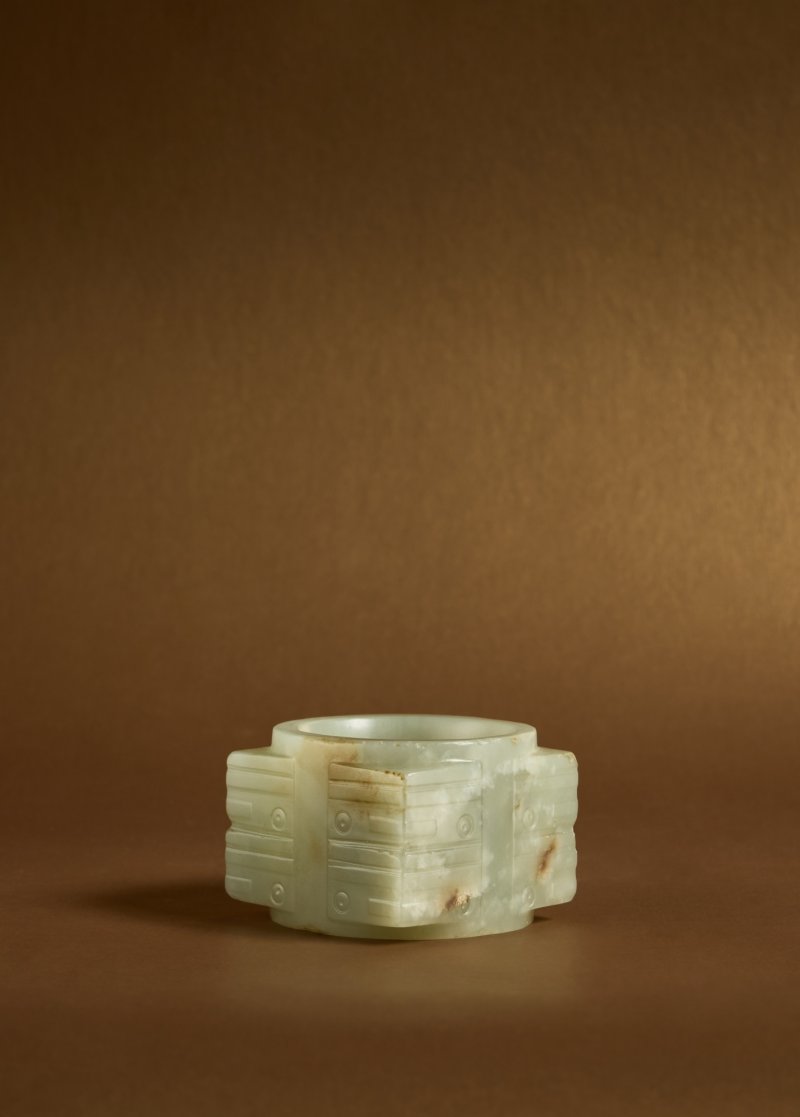
商或以後 玉琮
起拍价
USD 60,000
估值区间
60,000 - 80,000 USD
尺寸
未知
品相
如欲了解本拍品狀況的更多資訊,請聯絡 Drew.Lerner@sothebys.com
更多信息
Width 2⅛ in., 5.5 cm
来源:安思遠,紐約
Anthony Carter Ltd.,倫敦
图录
说明:Of serene celadon stone, suffused with russet splashes, the present cong retains the visual impact and drama of cong from the traditional Liangzhu canon while departing in its innovative design.
Although a fairly large number of neolithic jades appear to have survived the fall of the Liangzhu culture and the advent of the Shang dynasty, such as those preserved in the lavishly adorned tomb of Fu Hao (d. ca. 1200 BCE), the original ritual purposes and design schemata of these neolithic forms, including bi discs and cong rings, appear to have been lost in the transition.
In place of the fairly formalized masks of the Liangzhu, the Shang dynasty saw the rise of alternative cong designs: most famously those of unadorned surfaces but also a much smaller number, apparently including the present, which reimagined the anthropomorphic designs of their predecessors. Compare a closely related cong from the Grenville L. Winthrop Collection at the Harvard Art Museums, with eyes similarly aligned with their mouths in opposition to Liangzhu convention, in Max Loehr, Ancient Chinese Jades, Cambridge, 1975, pl. 237; and two similarly inexplicable geometric cong uncovered from the tomb of Fu Hao in the Shang capital of Anyang in The Jades from Yinxu, Beijing, 1981, pls 12 and 13.
Although a Shang dynasty attribution appears to be most convincing, similarly inexplicable yet striking cong designs appear to have also predated the Shang, particularly in the more remote regions. Compare a fascinating cong with the circular eyes of the mask design atypically carved into a ground of horizontal lines, uncovered from a neolithic site at Dantu, Wulian, Shandong province, and now preserved in the Wulian Museum in Gu Fang, The Complete Collection of Jades Unearthed in China, vol. 4 Shandong, Beijing, 2005, p. 28.
来源:安思遠,紐約
Anthony Carter Ltd.,倫敦
图录
说明:Of serene celadon stone, suffused with russet splashes, the present cong retains the visual impact and drama of cong from the traditional Liangzhu canon while departing in its innovative design.
Although a fairly large number of neolithic jades appear to have survived the fall of the Liangzhu culture and the advent of the Shang dynasty, such as those preserved in the lavishly adorned tomb of Fu Hao (d. ca. 1200 BCE), the original ritual purposes and design schemata of these neolithic forms, including bi discs and cong rings, appear to have been lost in the transition.
In place of the fairly formalized masks of the Liangzhu, the Shang dynasty saw the rise of alternative cong designs: most famously those of unadorned surfaces but also a much smaller number, apparently including the present, which reimagined the anthropomorphic designs of their predecessors. Compare a closely related cong from the Grenville L. Winthrop Collection at the Harvard Art Museums, with eyes similarly aligned with their mouths in opposition to Liangzhu convention, in Max Loehr, Ancient Chinese Jades, Cambridge, 1975, pl. 237; and two similarly inexplicable geometric cong uncovered from the tomb of Fu Hao in the Shang capital of Anyang in The Jades from Yinxu, Beijing, 1981, pls 12 and 13.
Although a Shang dynasty attribution appears to be most convincing, similarly inexplicable yet striking cong designs appear to have also predated the Shang, particularly in the more remote regions. Compare a fascinating cong with the circular eyes of the mask design atypically carved into a ground of horizontal lines, uncovered from a neolithic site at Dantu, Wulian, Shandong province, and now preserved in the Wulian Museum in Gu Fang, The Complete Collection of Jades Unearthed in China, vol. 4 Shandong, Beijing, 2005, p. 28.
常见问题
这件商或以後 玉琮的成交价是多少?
落槌价为 预展中。 成交价为 预展中。
拍品的品相状况如何?
如欲了解本拍品狀況的更多資訊,請聯絡 Drew.Lerner@sothebys.com
这件拍品的流传来源是什么?
安思遠,紐約
Anthony Carter Ltd.,倫敦
图录
Anthony Carter Ltd.,倫敦
图录