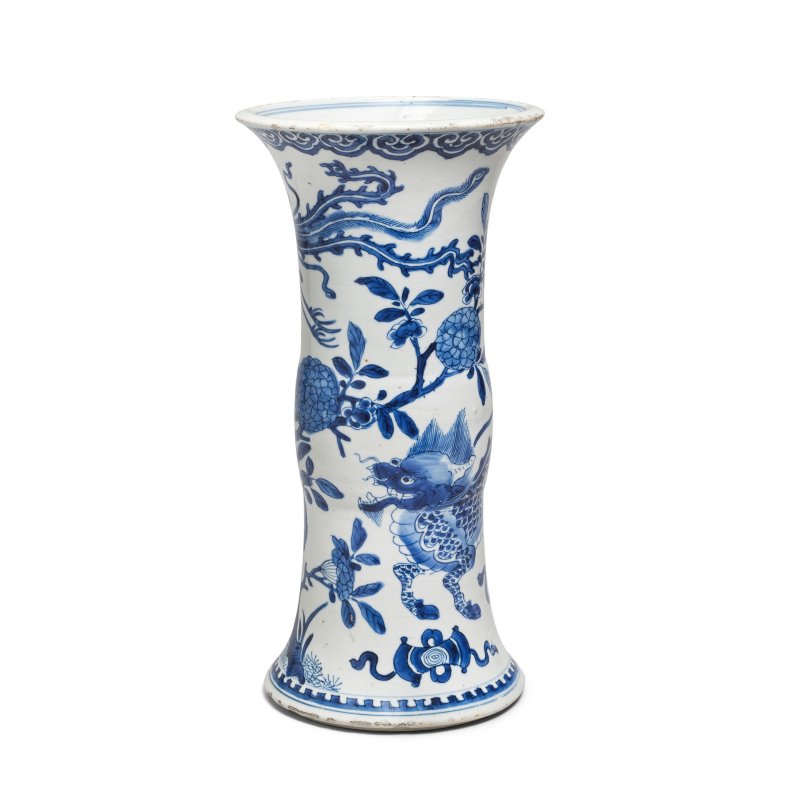

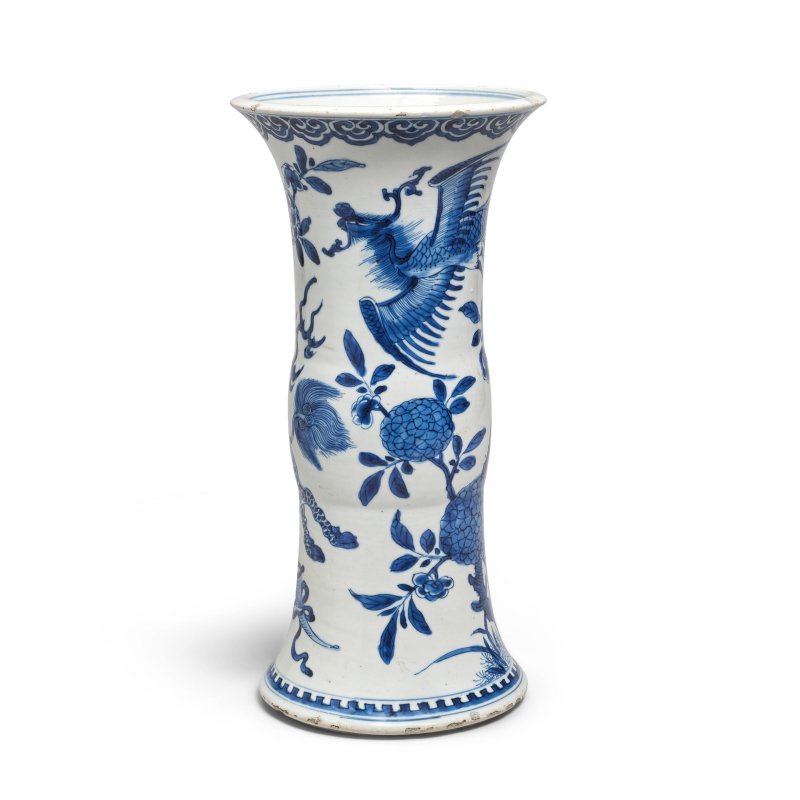
Lot 666 清康熙 青花麒麟鳳凰紋花觚 | A BLUE AND WHITE 'QILIN AND PHOENIX' VASE, GU
落槌价
预展中
成交价
预展中
| 拍卖公司 | 邦瀚斯 |
|---|---|
| 拍卖时间 | 2026年11月12日 |
拍品信息
拍品名称
清康熙 青花麒麟鳳凰紋花觚 | A BLUE AND WHITE 'QILIN AND PHOENIX' VASE, GU
年代
Kangxi
起拍价
GBP 1,200
估值区间
GBP 1200 - 1500
尺寸
未知
品相
未知
更多信息
Kangxi
The flared foot rising to a rounded midsection beneath a trumpet neck, decorated around the body with a qilin running beneath a prunus tree with a phoenix flying overhead, the tail feathers flaring out behind, all below a ruyi-head band below the rim.
30cm (12in) high.
Footnotes
清康熙 青花麒麟鳳凰紋花觚
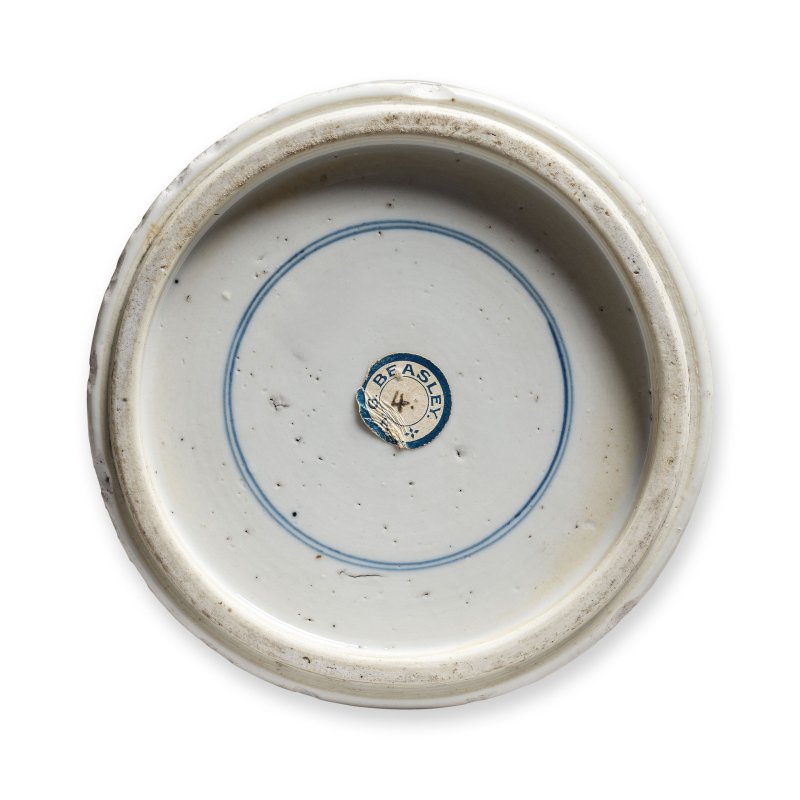
Provenance: Harry Geoffrey Beasley (1881-1939), Topsham (label - no.4)
Harry Geoffrey Beasley was a wealthy brewery owner whose private collecting passion began when, aged 13, he bought two Solomon Island clubs. In 1914 he was elected to the Royal Anthropological Institute with which he maintained an association until 1937. He and his wife, Irene, established the Cranmore Ethnographic Museum in Chislehurst, Kent where they had moved in 1928, compiling the Cranmore Index of Pacific Material Culture based on James Edge-Partington's Index for the British Museum and forming a considerable library. Although the Beasleys collected artefacts worldwide – including Africa (particularly Benin), North-West America and Asia - their main focus was the Pacific. Objects were acquired from dealers, missionaries and from, or in exchanges with, various museums. Beasley's comprehensive monograph on Oceanic fish-hooks was published in 1928. The Cranmore Museum was damaged by bombing in World War II and in accordance with Beasley's will his widow, Irene M. Beasley offered the first selection of the collection (apart from a limited reservation for herself) as a donation to the British Museum. The gift of several thousand items became fully effective in 1944. Other named beneficiaries include the Pitt-Rivers Museum, Oxford; The Museum of Archaeology and Anthropology, University of Cambridge; and National Museums, Scotland.
常见问题
这件清康熙 青花麒麟鳳凰紋花觚 | A BLUE AND WHITE 'QILIN AND PHOENIX' VASE, GU的成交价是多少?
落槌价为 预展中。 成交价为 预展中。