
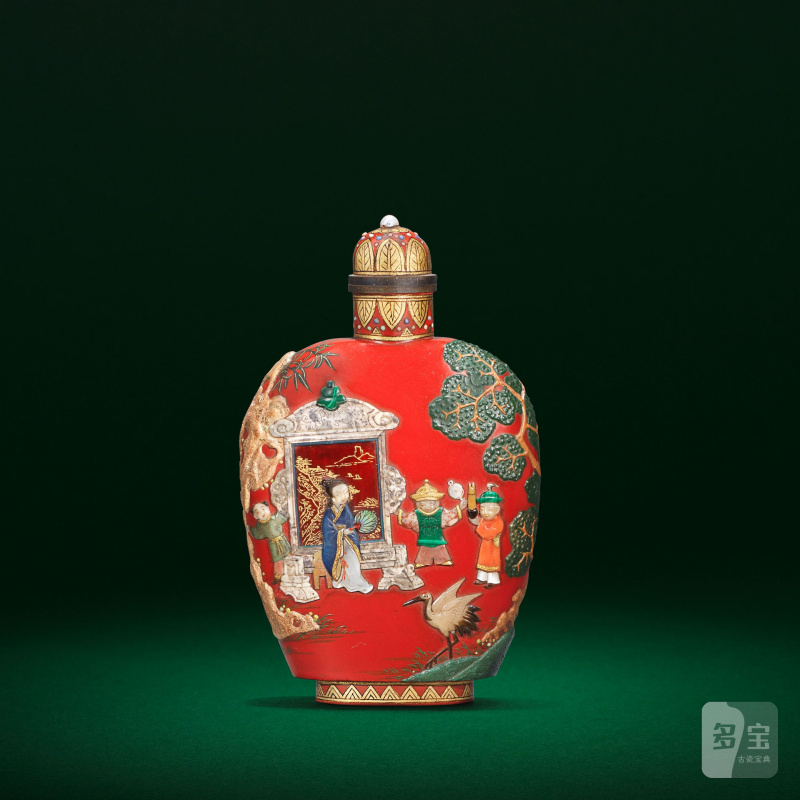
Lot 389Y 明治時期 紅漆嵌雜寶侍女嬰戲圖鼻煙壺 | A JAPANESE INLAID-LACQUER 'GARDEN SCENE' SNUFF BOTTLE AND COVER
落槌价
****
成交价
****
| 拍卖公司 | 邦瀚斯 |
|---|---|
| 拍卖时间 | 2026年05月18日 |
请安装多宝古瓷宝典APP,查看高清无损大图
拍品信息
拍品名称
明治時期 紅漆嵌雜寶侍女嬰戲圖鼻煙壺 | A JAPANESE INLAID-LACQUER 'GARDEN SCENE' SNUFF BOTTLE AND COVER
起拍价
GBP 800
估值区间
未知
尺寸
未知
品相
未知
更多信息
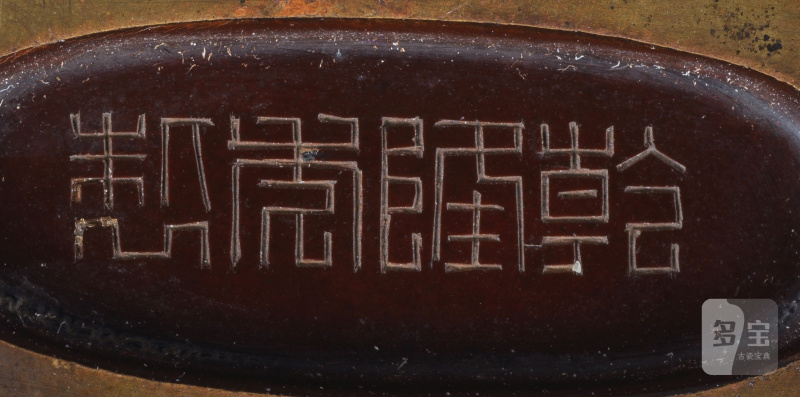
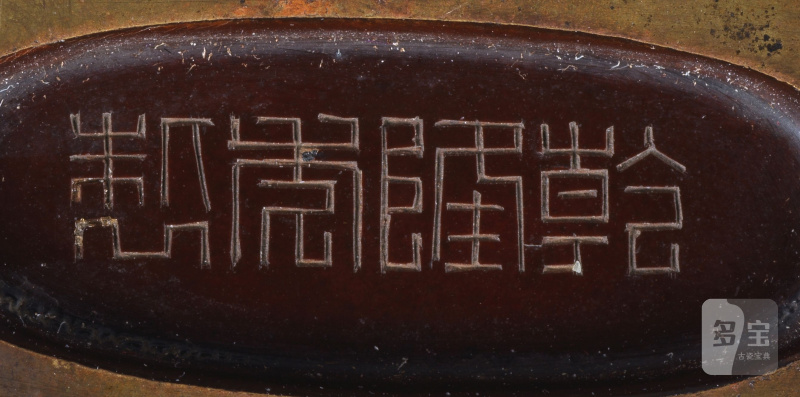
Qianlong four-character mark, Meiji Period
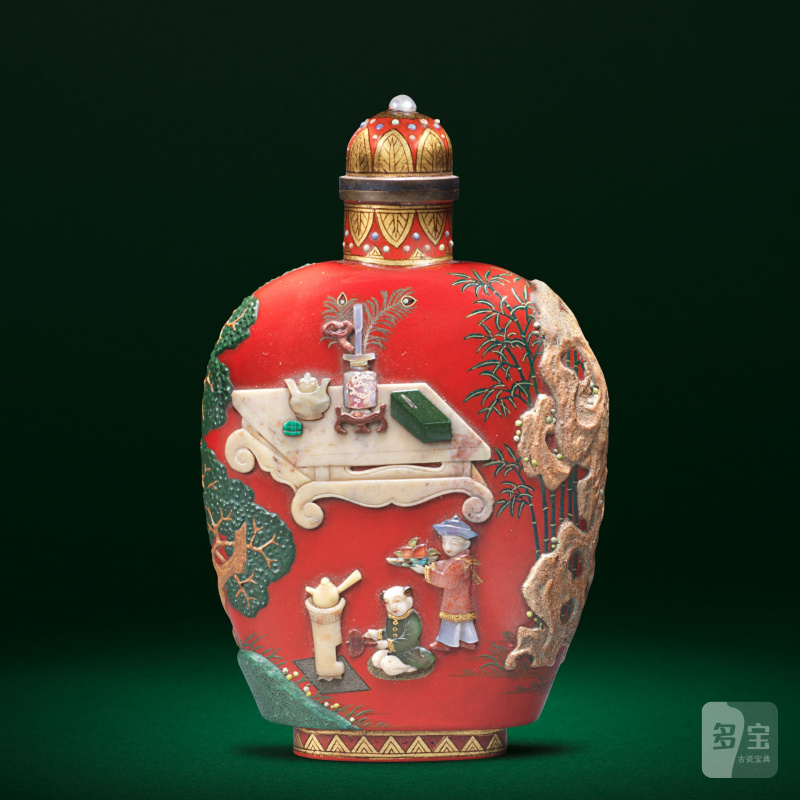
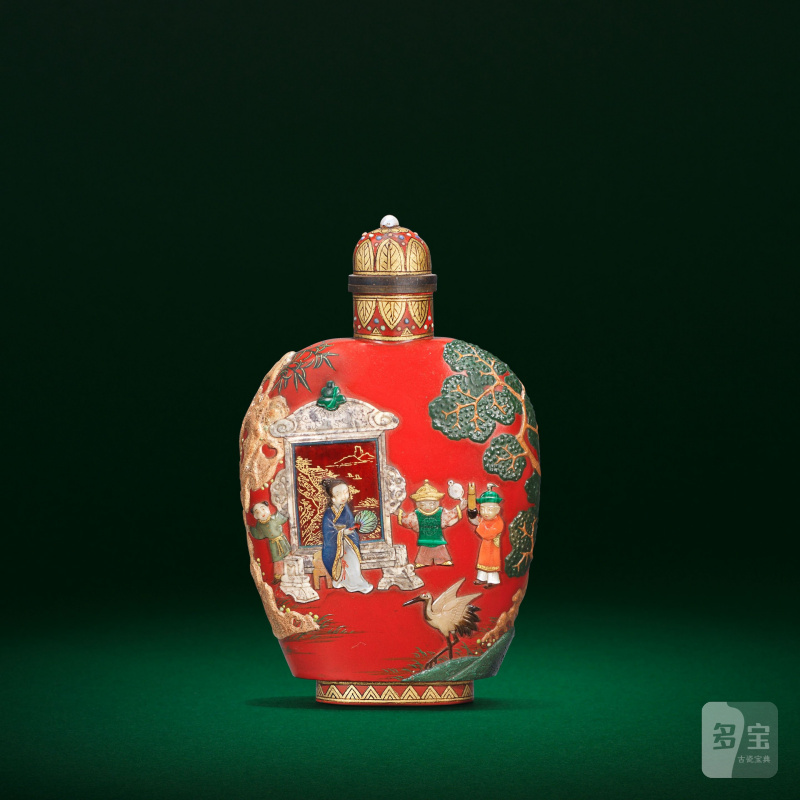
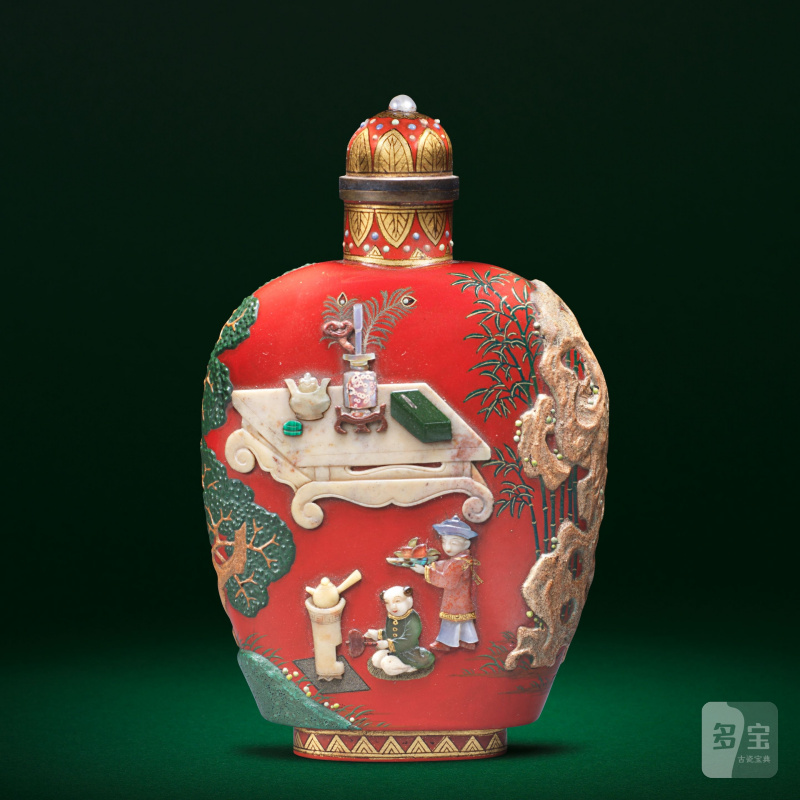
Of flattened form, supported on a straight foot and rising to a cylindrical neck, the body finely inlaid with a combination of hardstone, soapstone and mother-of-pearl amongst others to depict a continuous palatial garden scene in which children carefreely play, supervised by a sitting lady and attended by servant boys, amongst precious and scholarly objects, the two sides framed by a gnarled pine and a large rock with bamboo grove, the foot, neck and matching stopper gilt with bands of lappets. 10.7cm (4 1/4in) high including stopper. (2).
Footnotes
The item within this lot containing ivory has been registered in accordance with the Ivory Act (Section 10). Ref.H5UZRNW6
該批次中含有象牙的物品已根據《象牙法案》(章節10)註冊Ref.H5UZRNW6
明治時期 紅漆嵌雜寶侍女嬰戲圖鼻煙壺
「乾隆年製」篆書款
C. John
George A. Cohen, by 1974
Trudy and John Cohen, collection no.B81/L61
G.Cohen, , Birmingham, 1974, p.93, pl.32, no.367
C. John
George A. Cohen,1974年之前
Trudy及John Cohen伉儷,藏品編號.B81/L61
G.Cohen,《In Search of Netsuke and Inro》,英國伯明翰,1974年,第93頁,插圖32,編號367
The present lot is of the Tsuda Family style, namely Tsuda Sokan (circa 1872-mid-1930s) and his son Tsuda Fukuya (circa 20th century), active from the 1890s through to the 1940s and specialising in the embellishment of bottles. Frequently working with older Chinese snuff bottles made from materials such as jade, agate and amber, they also embellished Japanese bottles with lacquered-metal bases. Their process involved enhancing wares with intricate inlays, using materials such as soapstone and mother-of-pearl, and sometimes adding the Qianlong reign mark on the Japanese bottles they decorated. The distinctive style developed by the Tsuda workshop became highly influential, inspiring shops and independent artisans to produce bottles of the same style.
A related snuff bottle, Qianlong mark but 19th century, is illustrated by B.Stevens, , New York, 1976, no.814.
Of flattened form, supported on a straight foot and rising to a cylindrical neck, the body finely inlaid with a combination of hardstone, soapstone and mother-of-pearl amongst others to depict a continuous palatial garden scene in which children carefreely play, supervised by a sitting lady and attended by servant boys, amongst precious and scholarly objects, the two sides framed by a gnarled pine and a large rock with bamboo grove, the foot, neck and matching stopper gilt with bands of lappets. 10.7cm (4 1/4in) high including stopper. (2).
Footnotes
The item within this lot containing ivory has been registered in accordance with the Ivory Act (Section 10). Ref.H5UZRNW6
該批次中含有象牙的物品已根據《象牙法案》(章節10)註冊Ref.H5UZRNW6
明治時期 紅漆嵌雜寶侍女嬰戲圖鼻煙壺
「乾隆年製」篆書款
C. John
George A. Cohen, by 1974
Trudy and John Cohen, collection no.B81/L61
G.Cohen, , Birmingham, 1974, p.93, pl.32, no.367
C. John
George A. Cohen,1974年之前
Trudy及John Cohen伉儷,藏品編號.B81/L61
G.Cohen,《In Search of Netsuke and Inro》,英國伯明翰,1974年,第93頁,插圖32,編號367
The present lot is of the Tsuda Family style, namely Tsuda Sokan (circa 1872-mid-1930s) and his son Tsuda Fukuya (circa 20th century), active from the 1890s through to the 1940s and specialising in the embellishment of bottles. Frequently working with older Chinese snuff bottles made from materials such as jade, agate and amber, they also embellished Japanese bottles with lacquered-metal bases. Their process involved enhancing wares with intricate inlays, using materials such as soapstone and mother-of-pearl, and sometimes adding the Qianlong reign mark on the Japanese bottles they decorated. The distinctive style developed by the Tsuda workshop became highly influential, inspiring shops and independent artisans to produce bottles of the same style.
A related snuff bottle, Qianlong mark but 19th century, is illustrated by B.Stevens, , New York, 1976, no.814.