
拍品信息
拍品名称
晚清 錦綉「鶴鹿同春」及 「封侯八駿」掛屏兩幅 | TWO SILK EMBROIDERED 'AUSPICIOUS ANIMALS' PANELS
年代
Late Qing Dynasty
起拍价
USD 3,000
估值区间
未知
尺寸
未知
品相
未知
更多信息
Late Qing Dynasty
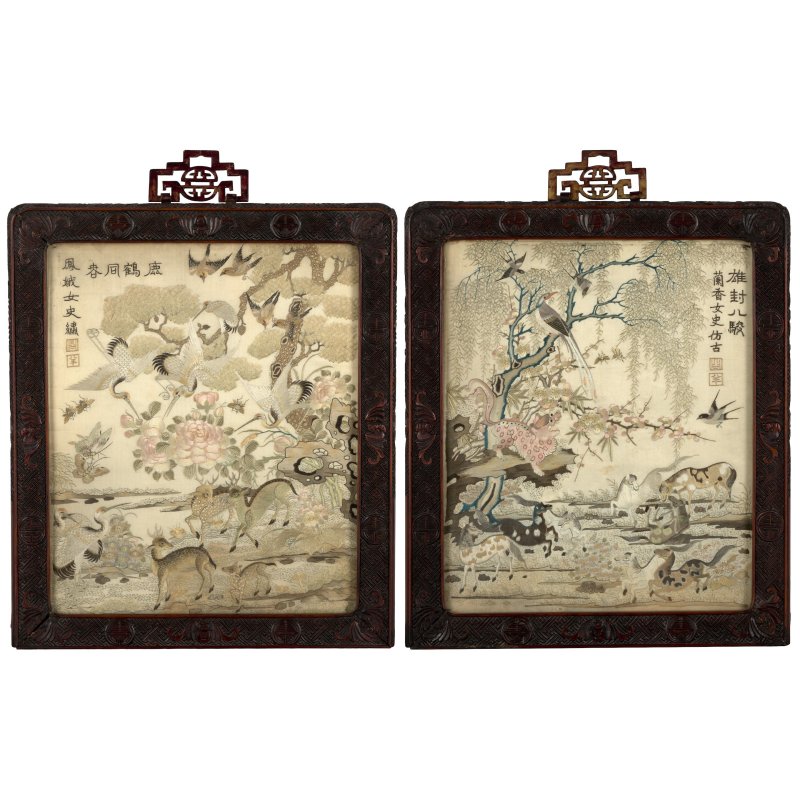
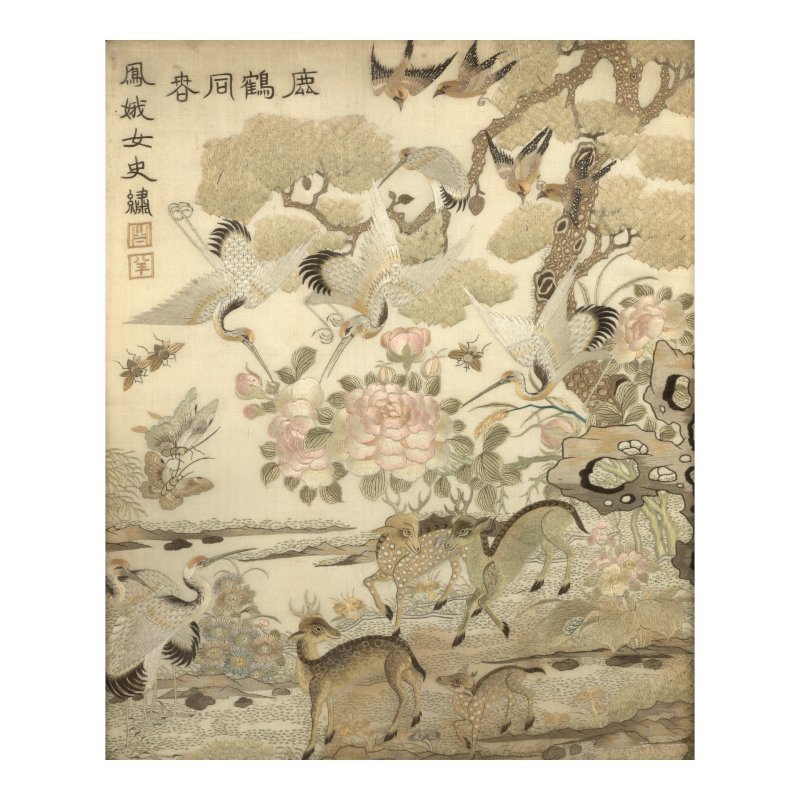
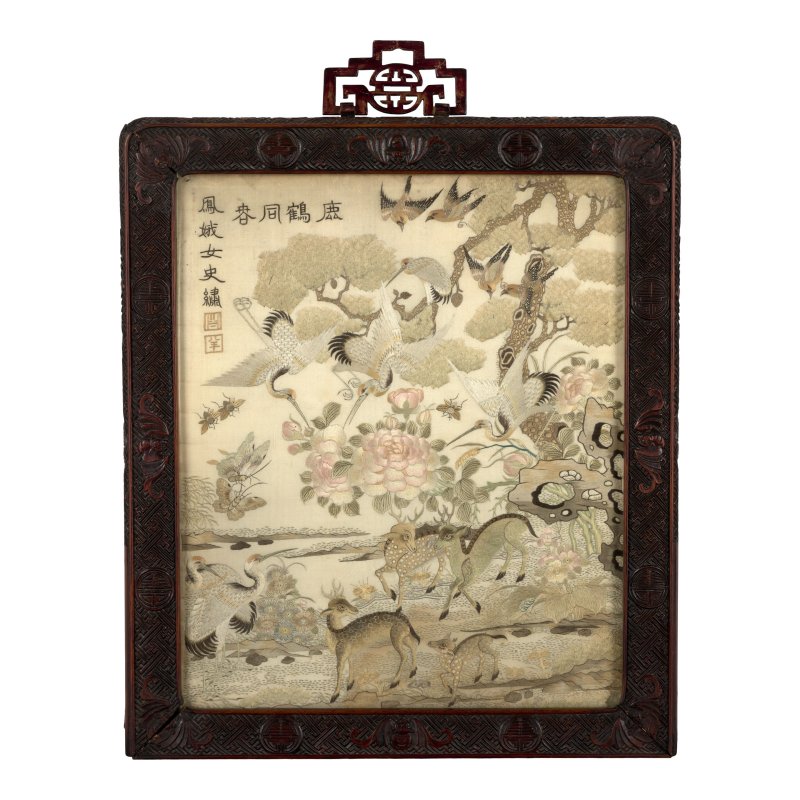
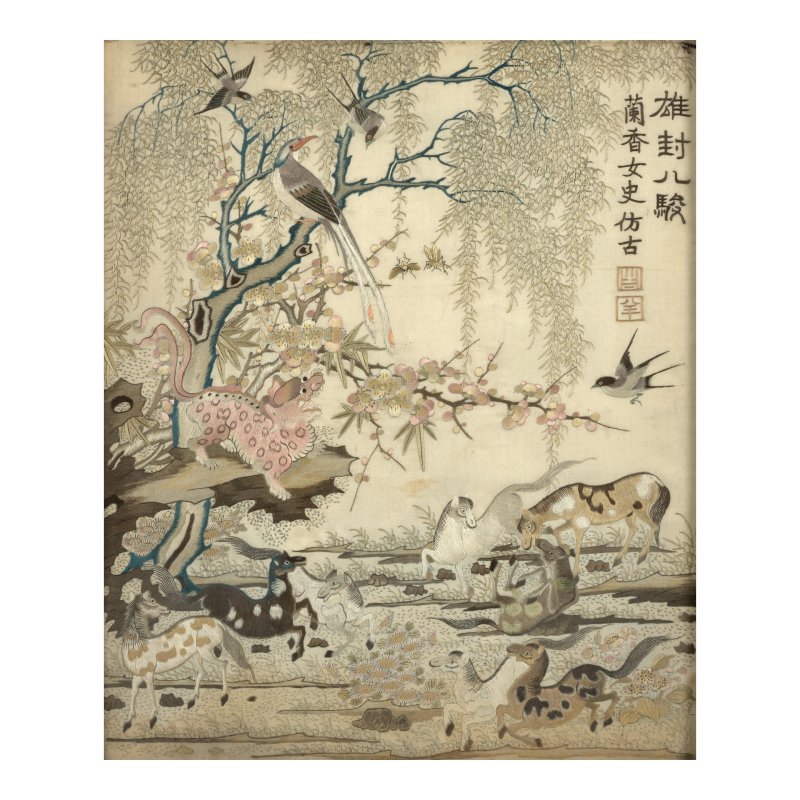
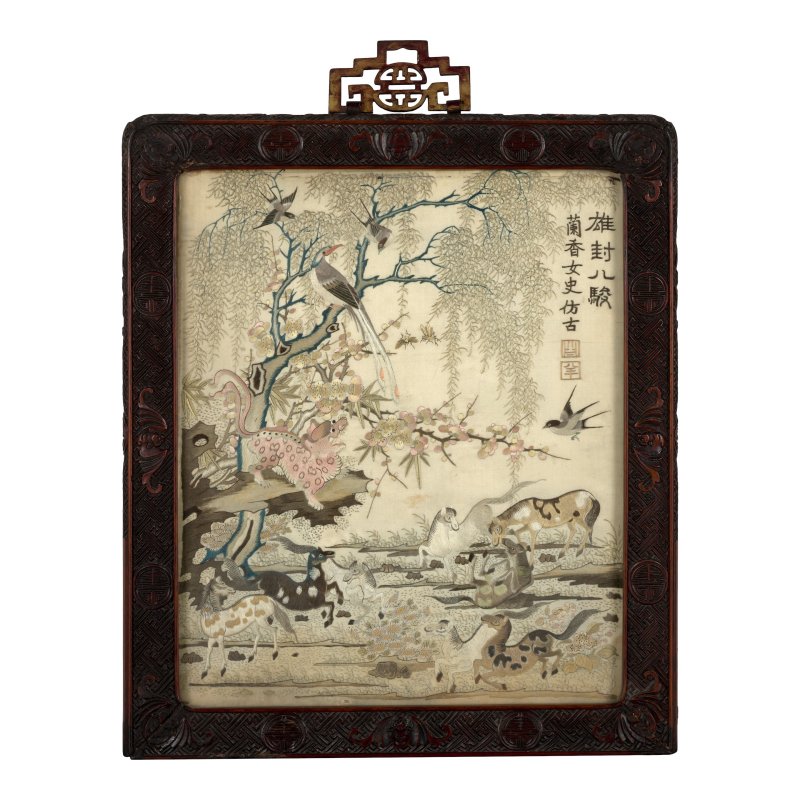
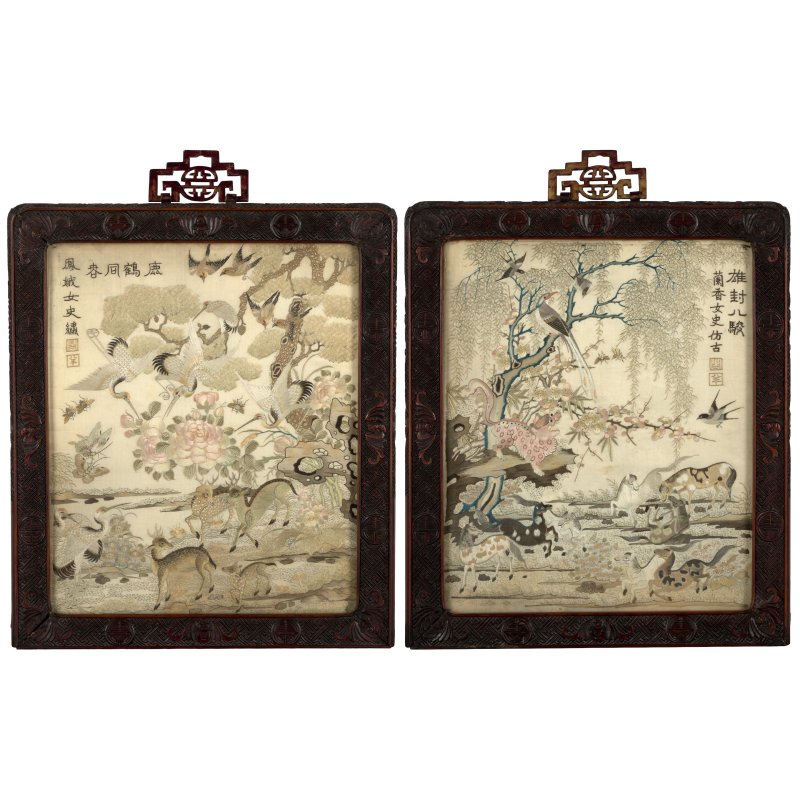
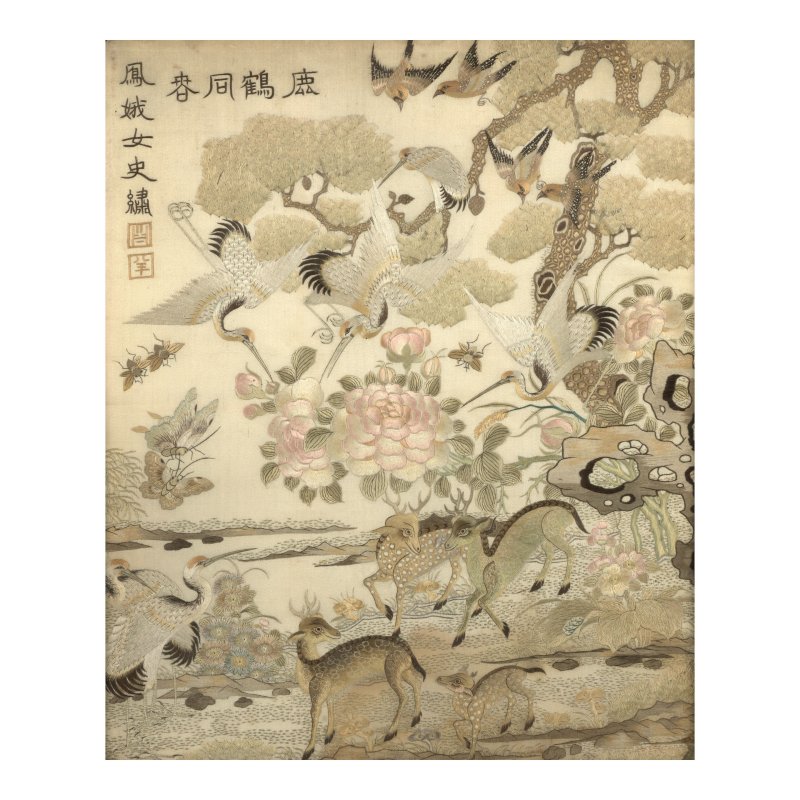
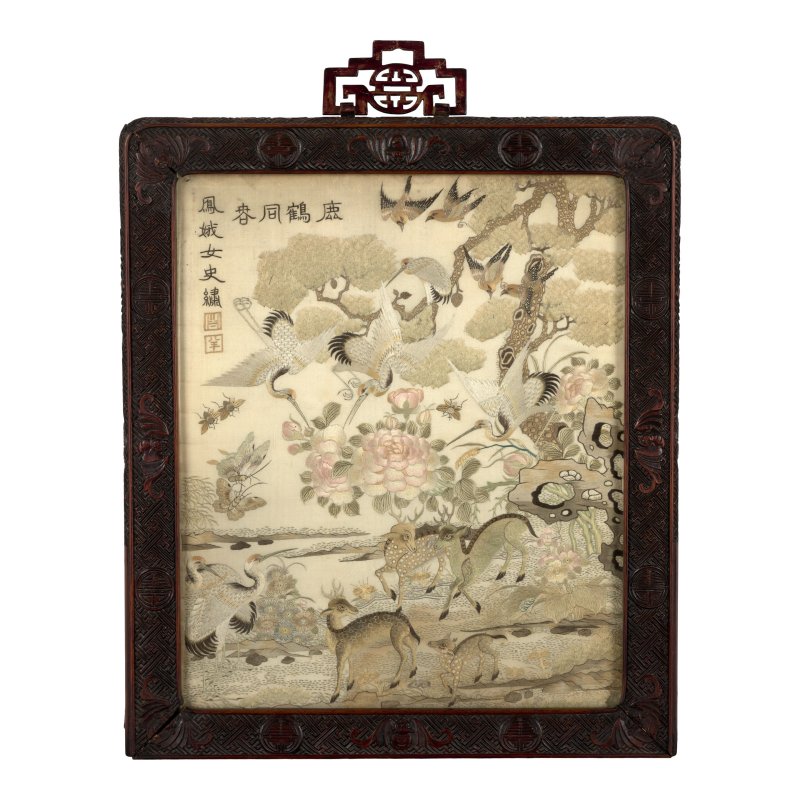
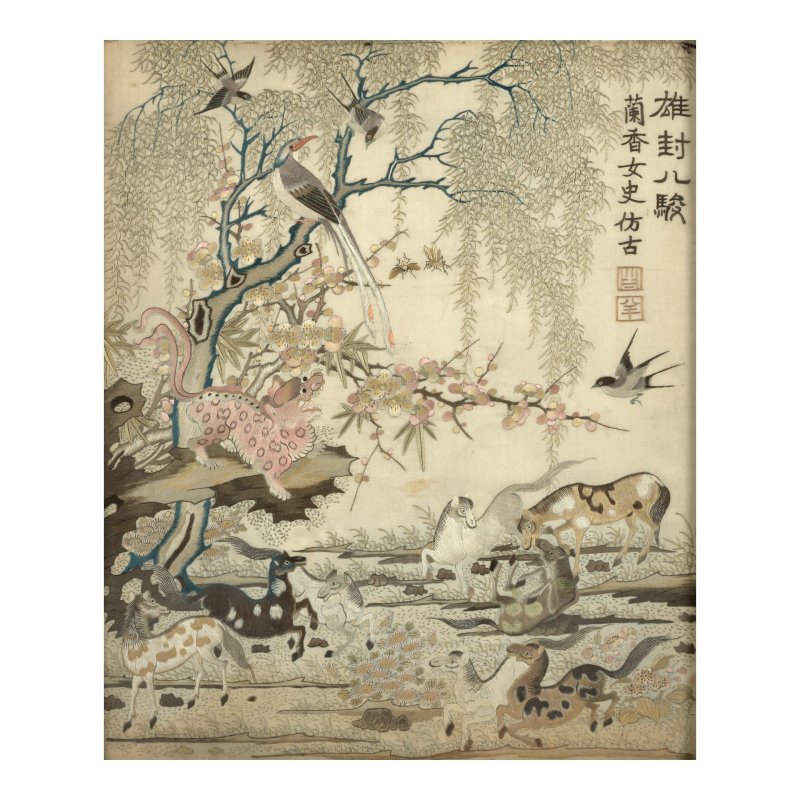
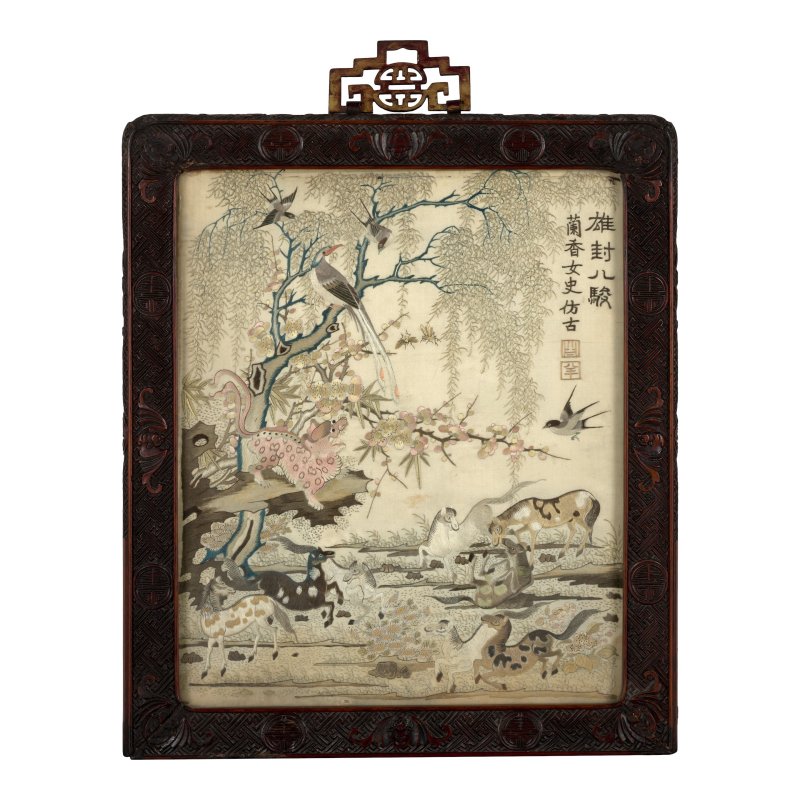
Each finely worked in polychrome silk threads in satin stitch on a pale-yellow silk ground and mounted within a carved hardwood frame with an openwork ruyi-form crest, one panel depicting the auspicious theme of Helu Tongchun (Crane and Deer Welcoming Spring), embroidered with a number of cranes in flight and at rest amidst flowering peony and pine trees, with a herd of deer traversing a rocky landscape below, accompanied by butterflies and bees, signed 'Embroidered by Lady Feng'e' (鳳娥女史繡), with a seal; the companion panel depicting the auspicious subject Fenghou Bajun (Enfeoffment and the Eight Steeds), embroidered with a herd of horses in a riverside landscape beneath willow and blossoming prunus trees, accompanied by swallows in flight and further flowering plants, inscribed 'After the Antique by Lady Lanxiang' (蘭香女史仿古), with a seal.
16 1/2 x 21 1/2 x 1 1/8in (41.9 × 54.6 × 2.9cm), framed
(2).
Footnotes
晚清 錦綉「鶴鹿同春」及 「封侯八駿」掛屏兩幅
The auspicious rebus Helu Tongchun (鶴鹿同春, 'Crane and Deer Welcoming Spring'). The crane symbolizes longevity, purity, and transcendence, while the deer (lu) is a pun for 'emolument' or official salary (, 祿), representing prosperity and official success. Together they express wishes for longevity, happiness, and a flourishing career, making the motif especially appropriate for birthday celebrations and congratulatory gifts.
The motif is traditionally associated with strength, perseverance, and swift success. In Chinese visual culture, the rebus (封侯八駿) combines the imagery of noble steeds with the auspicious wish for official promotion and distinction. The horse (, 馬) symbolizes energy, talent, and rapid advancement, while the phrase (封侯, 'to be enfeoffed as a marquis') conveys aspirations for high rank, honor, and lasting achievement.
Each finely worked in polychrome silk threads in satin stitch on a pale-yellow silk ground and mounted within a carved hardwood frame with an openwork ruyi-form crest, one panel depicting the auspicious theme of Helu Tongchun (Crane and Deer Welcoming Spring), embroidered with a number of cranes in flight and at rest amidst flowering peony and pine trees, with a herd of deer traversing a rocky landscape below, accompanied by butterflies and bees, signed 'Embroidered by Lady Feng'e' (鳳娥女史繡), with a seal; the companion panel depicting the auspicious subject Fenghou Bajun (Enfeoffment and the Eight Steeds), embroidered with a herd of horses in a riverside landscape beneath willow and blossoming prunus trees, accompanied by swallows in flight and further flowering plants, inscribed 'After the Antique by Lady Lanxiang' (蘭香女史仿古), with a seal.
16 1/2 x 21 1/2 x 1 1/8in (41.9 × 54.6 × 2.9cm), framed
(2).
Footnotes
晚清 錦綉「鶴鹿同春」及 「封侯八駿」掛屏兩幅
The auspicious rebus Helu Tongchun (鶴鹿同春, 'Crane and Deer Welcoming Spring'). The crane symbolizes longevity, purity, and transcendence, while the deer (lu) is a pun for 'emolument' or official salary (, 祿), representing prosperity and official success. Together they express wishes for longevity, happiness, and a flourishing career, making the motif especially appropriate for birthday celebrations and congratulatory gifts.
The motif is traditionally associated with strength, perseverance, and swift success. In Chinese visual culture, the rebus (封侯八駿) combines the imagery of noble steeds with the auspicious wish for official promotion and distinction. The horse (, 馬) symbolizes energy, talent, and rapid advancement, while the phrase (封侯, 'to be enfeoffed as a marquis') conveys aspirations for high rank, honor, and lasting achievement.