
Lot 3 西藏 十八世紀 《金剛鬘》系四壇城唐卡 | A THANGKA OF FOUR MANDALAS FROM THE VAJRAVALI SERIES
落槌价
****
成交价
****
拍品信息
拍品名称
西藏 十八世紀 《金剛鬘》系四壇城唐卡 | A THANGKA OF FOUR MANDALAS FROM THE VAJRAVALI SERIES
年代
TIBET, 18TH CENTURY
起拍价
HKD 60,000
估值区间
未知
尺寸
未知
品相
未知
更多信息
TIBET, 18TH CENTURY
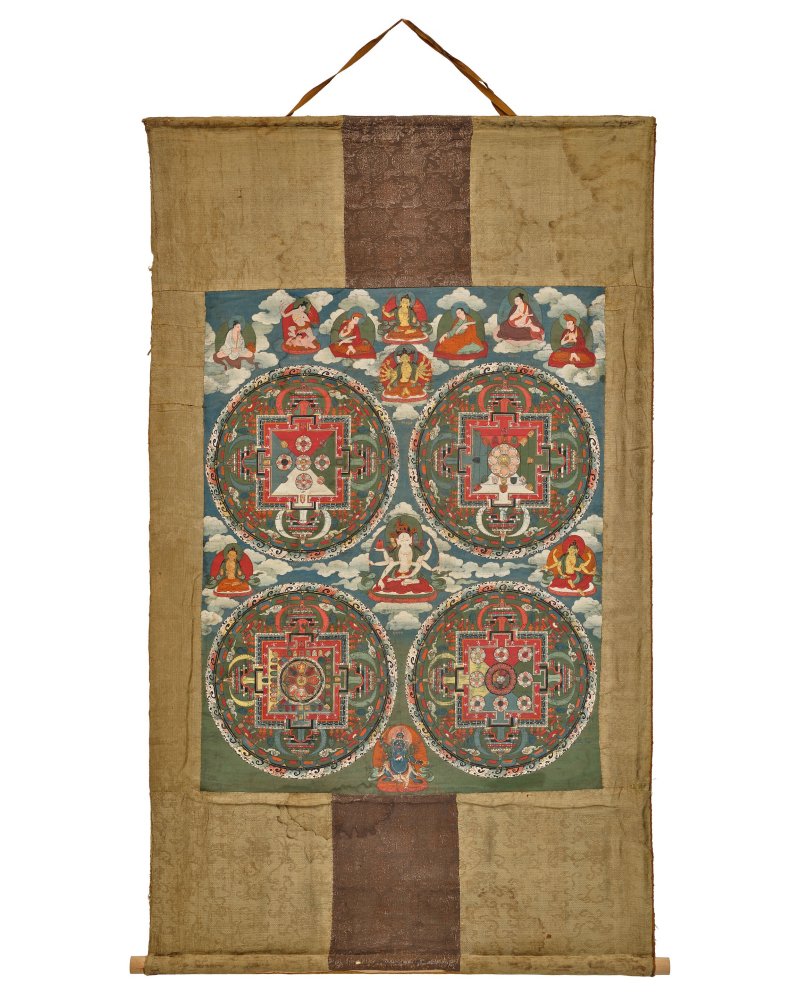
Distemper on cloth; with original silk mounts.
Himalayan Art Resources item no. 31231
Image: 71 x 56.5 cm (28 x 22 1/4 in.)
With silks: 115.5 x 71 cm (45 1/2 x 28 in.)
Footnotes
西藏 十八世紀 《金剛鬘》系四壇城唐卡
Published
Okura Museum of Art, The World of Mandala—Tamashige Tibet Collection, Tokyo, 2005, p. 19, cat. no. 6
Exhibited
The World of Mandala—Tamashige Tibet Collection, Tokyo, April 1—June 19, 2005
Provenance
Tamashige Collection, Tokyo, acquired between 1987-2001
Sotheby's, New York, 19 March 2014, lot 116
John and Karina Stewart Collection
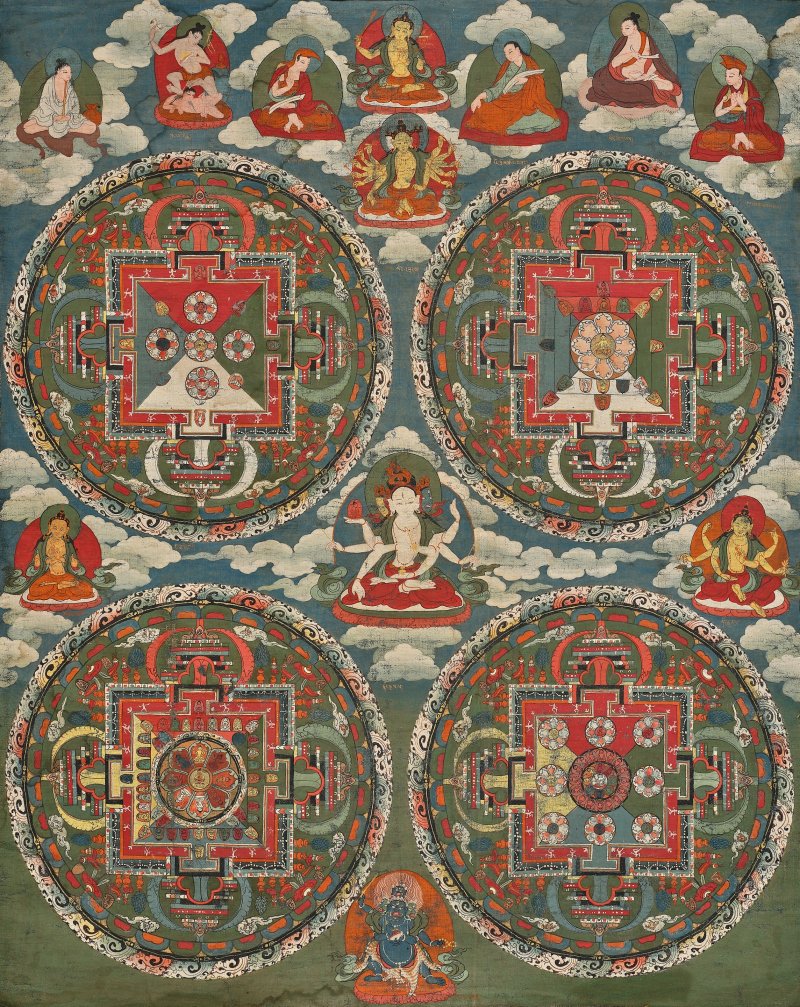
This thangka depicts the final four mandalas of the 45-mandala ("Garland of Vajras"), the tantric ritual compendium systematized by the Indian master Abhayakaragupta (c. 1064–1125). Read left to right and top to bottom, they comprise the Pancharaksha, or Five Protectresses (no. 42); six-armed Vasudhara, goddess of abundance (no. 43); Grahamatrika, "Mother of the Planets" (no. 44); and Ushnishavijaya, goddess of long life (no. 45). The upper register shows Manjushri flanked by six former lives of the Tibetan master Taranatha (1575–1634): Ratan Bahula, Mahasiddha Krishnacarya, Barompa Darma Wangchuk, Rongzom Chozang, Ozer Pal, and Lhanangpa Sangye Rinchen, linking the work to the Jonang tradition.
Between the mandalas appear Mahapratisara (beneath Manjushri), Grahamatrika, six-armed Vasudhara, and Ushnishavijaya; Four-Faced Mahakala appears at the base. The composition shares a similar configuration with a 15th-century painting in the Kimbell Art Museum (AP 2000.01), sharing the same sequence and interstitial deities, but showing the principal mandala deities in place of the Five Protectresses. The mandala palaces are set within concentric bands of lotus petals, vajras, and flames, though in the present painting the interstitial figures emerge from cloud scrolls against a deep blue ground. The execution is stylistically different than that of the Kimbell prototype, but preserves its essential iconographic structure.