
Lot 52 戰國時期 約公元前五世紀 青銅蟠螭紋甗 | RARE RÉCIPIENT RITUEL EN BRONZE, YAN
落槌价
预展中
成交价
预展中
| 拍卖公司 | 邦瀚斯 |
|---|---|
| 拍卖时间 | 2026年12月10日 |
拍品信息
拍品名称
戰國時期 約公元前五世紀 青銅蟠螭紋甗 | RARE RÉCIPIENT RITUEL EN BRONZE, YAN
年代
戰國時期 約公元前五世紀
起拍价
未知
估值区间
EUR 20,000–30,000
尺寸
33.7 cm (13 1/8 in) high
品相
未知
更多信息
RARE RÉCIPIENT RITUEL EN BRONZE, YAN
Période des Royaumes Combattants, vers Ve siècle av. J.-C.
A RARE ARCHAIC BRONZE RITUAL FOOD STEAMING VESSEL, YAN
Warring States period, ca. 5th century BC
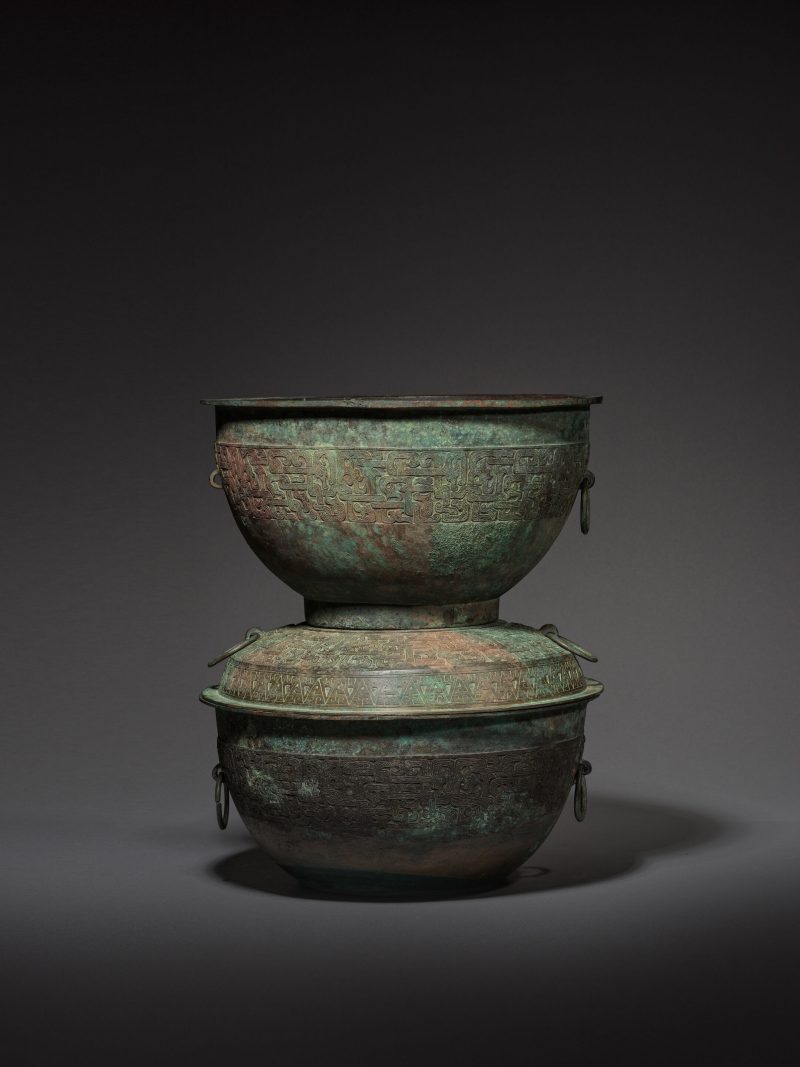
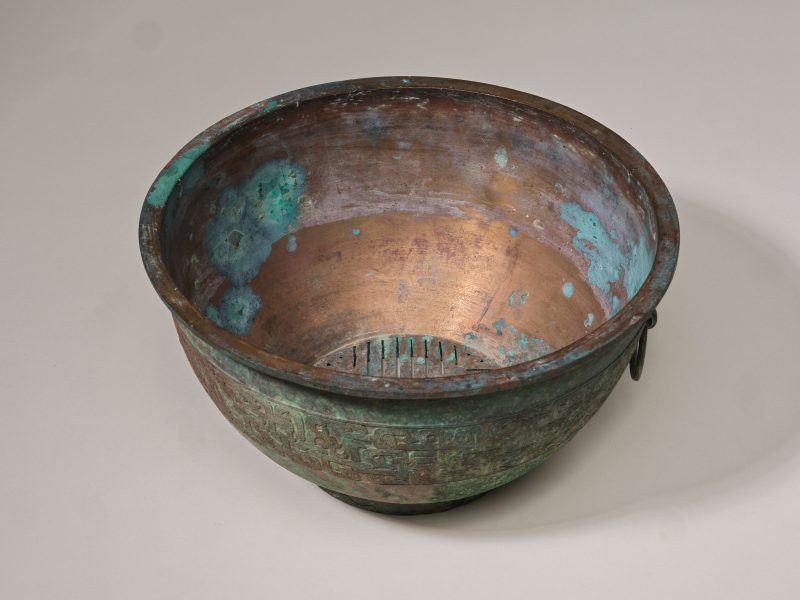
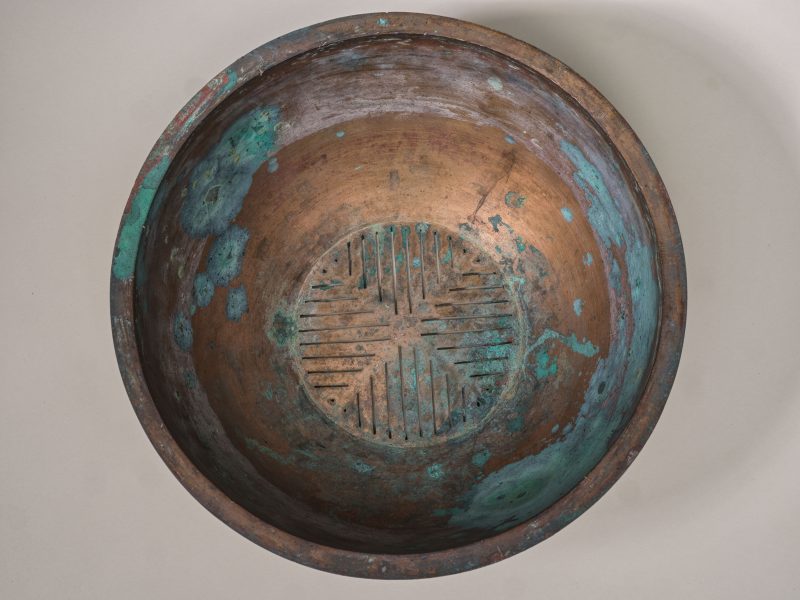
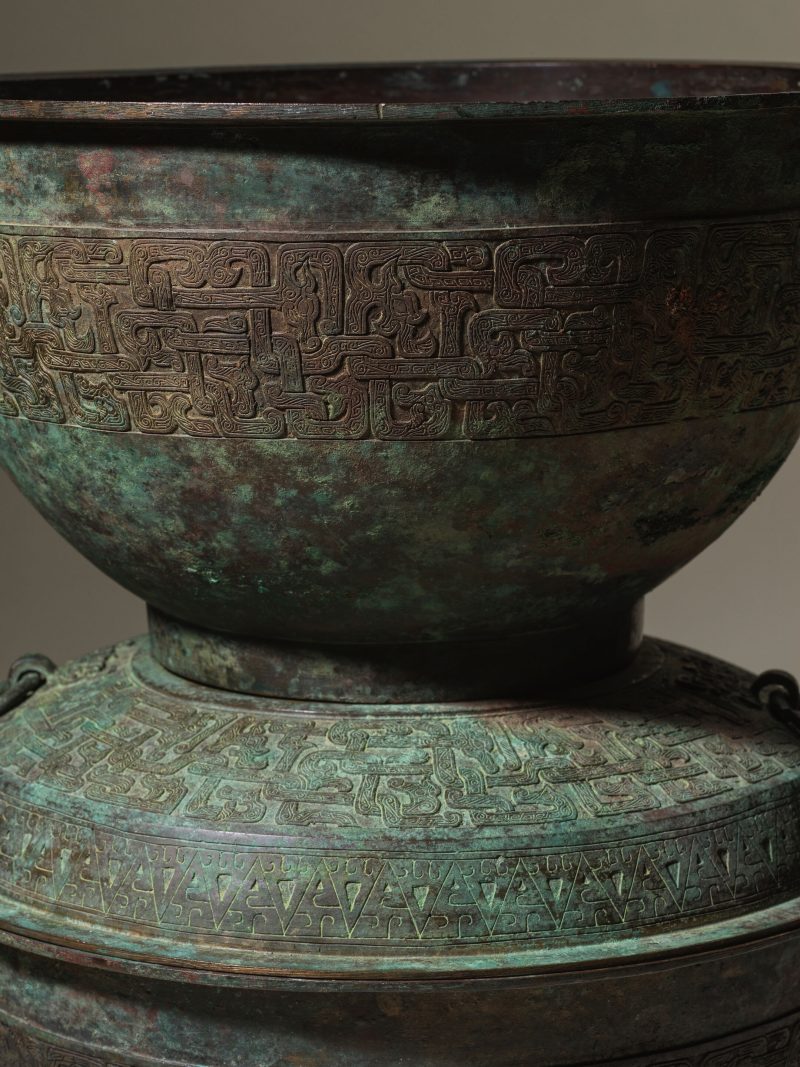
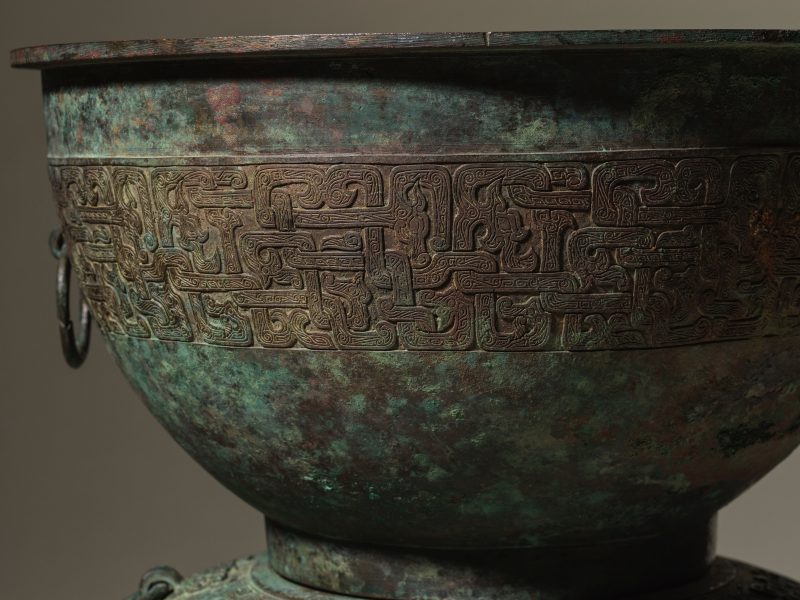
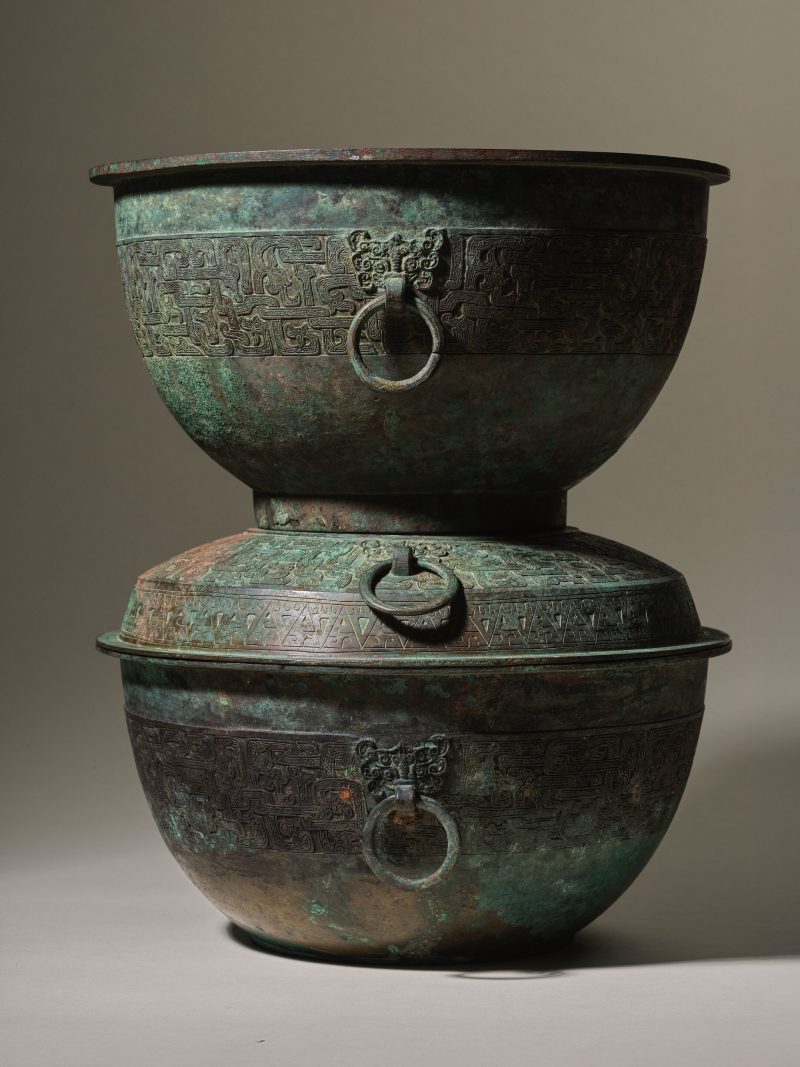
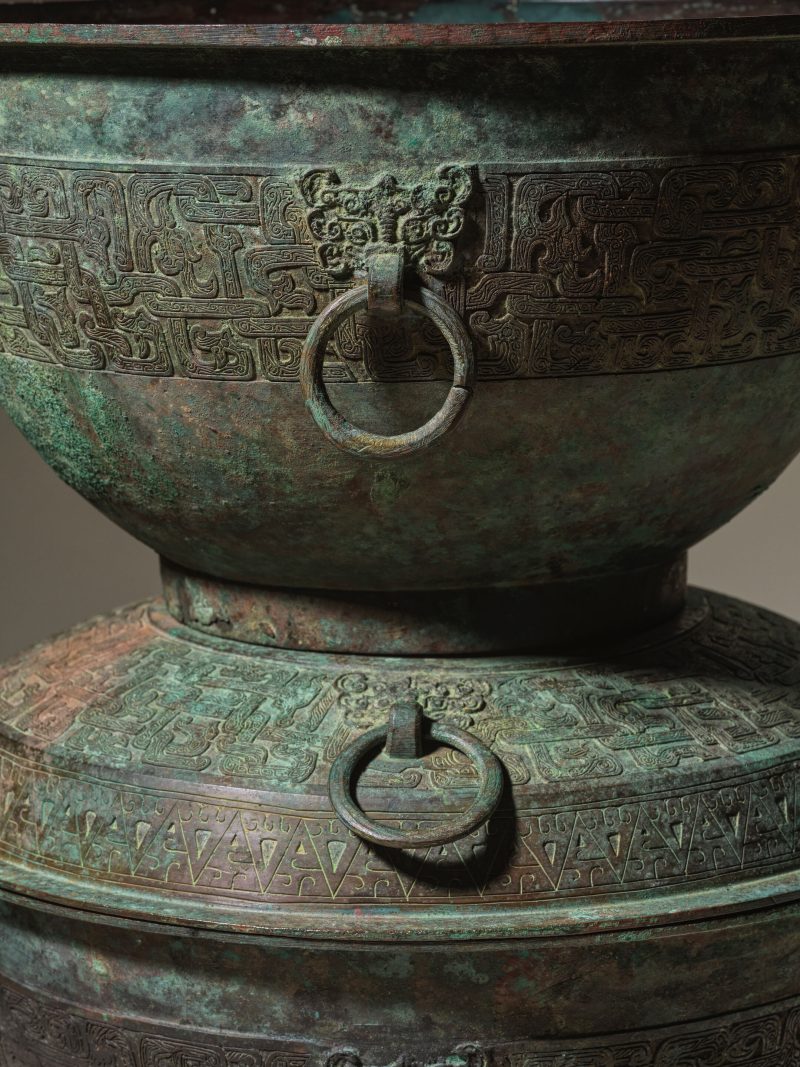
Comprised of three separate parts, the lower vessel and cover together of globular form tapering to a flat base, cast in low relief with two bands of interlaced snake-dragons, their sinuous bodies filled with fine hooks and volutes, their heads with prominent eyes and snouts, divided by a band of triangular volutes executed in intaglio, the lower vessel surmounted by a short, straight neck designed to fit neatly into the conforming foot of the bowl-shaped upper vessel, with deep U-shaped sides, the bottom of the interior pierced with steam vents cut as slits arranged in a circle, the bottom, middle and top applied with a pair of taotiemasks suspending loose ring handles, the bronze an even grey tone with some areas of lighter green patina.
33.7 cm (13 1/8 in) high (3).
戰國時期 約公元前五世紀 青銅蟠螭紋甗
Provenance:
Gisèle Croës Arts d'Extrême Orient, Brussels, 1999
來源:
Gisèle Croës Arts d'Extrême Orient,布魯塞爾, 1999年
The decoration cast in flat, ribbon-like relief around the sides and shoulder of this steamer may be compared with pattern blocks carved with very similar designs discovered among the debris at the Houma foundry site, illustrated in Li Xiating and Li Shaoxuan, Jinguo qingtong yishu tujian, Beijing, 2009, pp. 153, fig. 179 and p. 155, fig. 184. A related steamer vessel of similar shape is in the collection of the Metropolitan Museum of Art, New York (accession no. 13.220.42a–c). Compare also with a steamer of Han dynasty date, excavated in a tomb in Jiangjuncun, Zhongxian County, Chongqing, published in Kaogu, 2011.1, fig. 8.10. In 1999, a bronze steamer of similar shape and design was discovered in a tomb of the Western Jin dynasty near Loyang. It was positioned with other utensils in a dedicated 'kitchen' area of the tomb, see Wenwu, 2000.10, p. 29, fig. 5.
以下内容由AI翻译:
【描述】
由三个独立部分组成,下部容器和盖子共同呈球形,底部平坦,低浮雕铸造两圈交缠蛇龙纹,其蜿蜒的身体填充有细小的钩形和涡卷纹,眼部及吻部突出,中间由一圈三角形涡卷纹凹刻分隔。下部容器上方有一个短直颈,设计为与上部碗形容器的底座紧密配合,上部容器有深U形侧壁,内底开有狭缝形透气孔,环形排列,底部、中部和顶部各有一对饕餮面具,悬挂着活动的环形把手,青铜器呈均匀的灰色调,局部带有较浅的绿色锈迹。
这件蒸锅侧面和肩部的平带状浮雕装饰可以与侯马铸造遗址废墟中发现的非常相似的图案块进行比较,见 Li Xiating 和 Li Shaoxuan 所著《Jinguo qingtong yishu tujian》,北京,2009年,第153页,图179和第155页,图184。一件形状类似的蒸锅现藏于纽约大都会艺术博物馆(馆藏编号13.220.42a–c)。另可比较重庆忠县 Jiangjuncun出土的一件汉代蒸锅,见《考古》,2011年第1期,图8.10。1999年,在洛阳附近的一座西晋墓葬中发现了一件形状和设计类似的青铜蒸锅,它与其他器具一起放置在墓葬的专用“厨房”区域,见《文物》,2000年第10期,第29页,图5。
常见问题
这件戰國時期 約公元前五世紀 青銅蟠螭紋甗 | RARE RÉCIPIENT RITUEL EN BRONZE, YAN的成交价是多少?
落槌价为 预展中。 成交价为 预展中。
拍品的尺寸是多少?
33.7 cm (13 1/8 in) high