
拍品信息
拍品名称
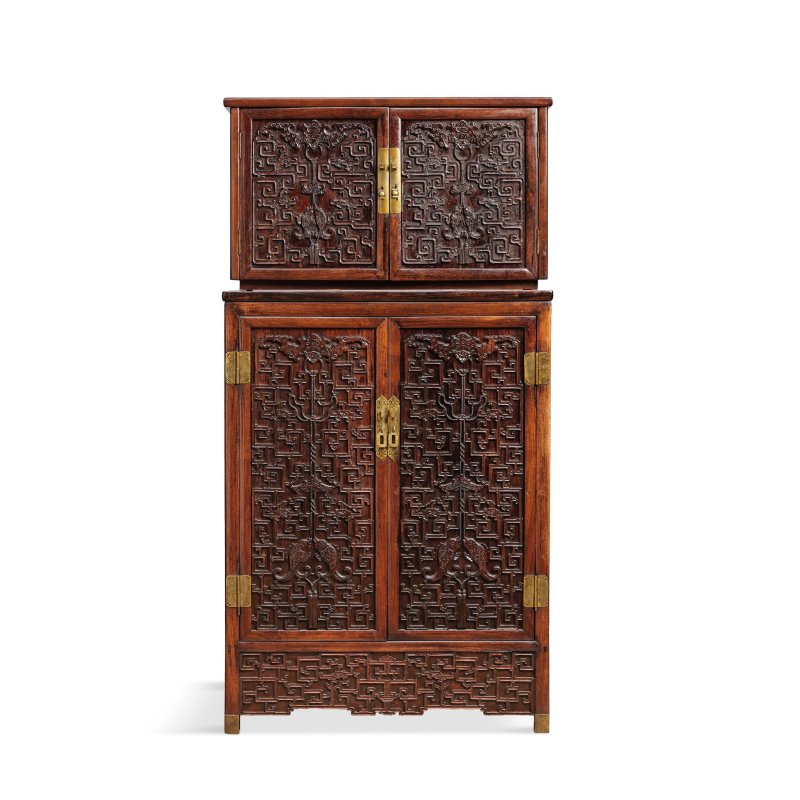
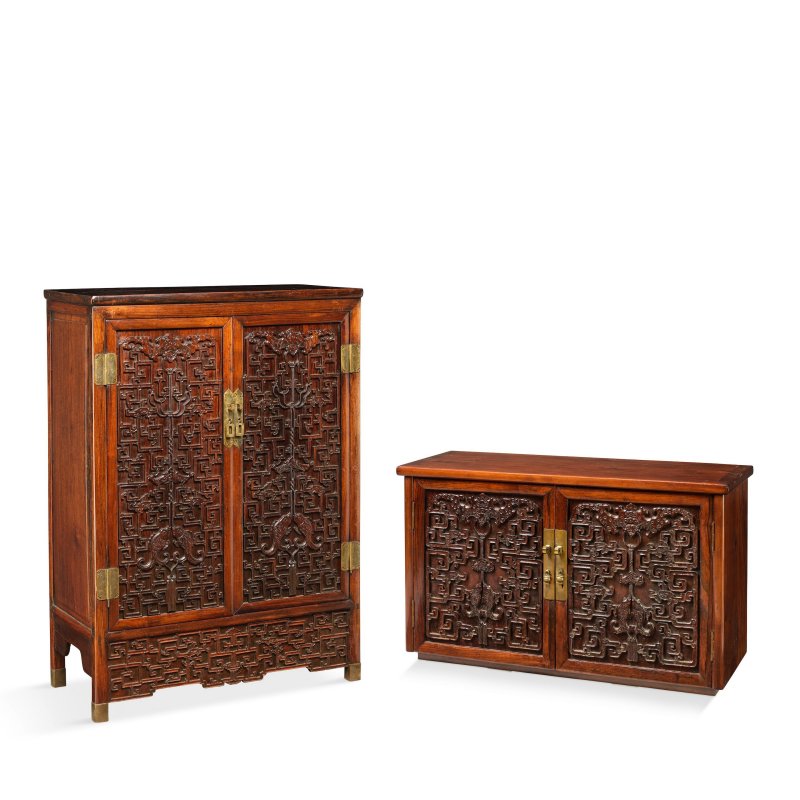
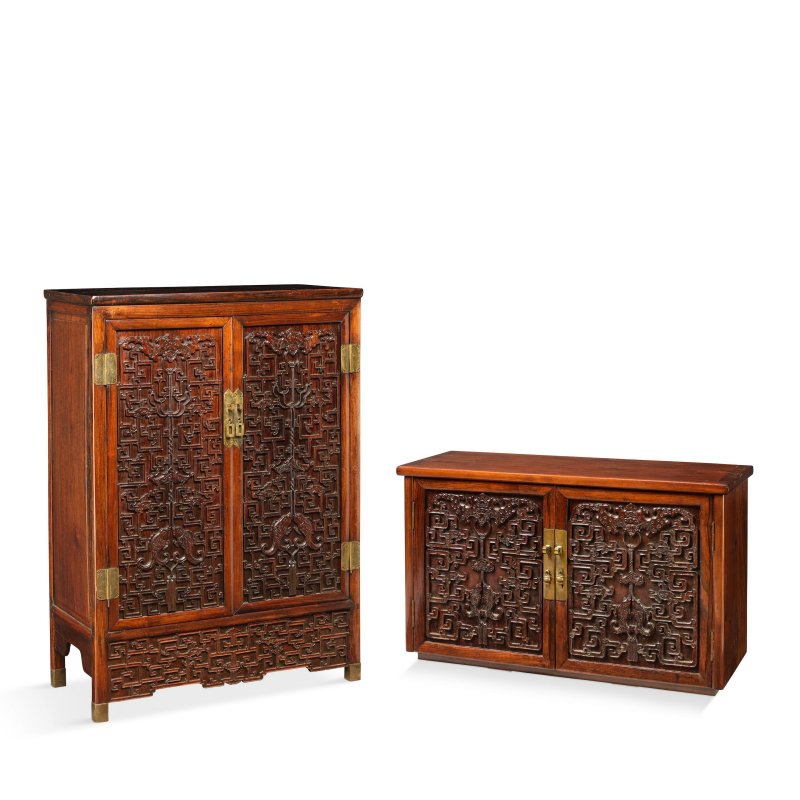
清中期 紅木花梨木雕福慶有餘紋底柜及顶柜 一组两件 | A HUALI AND HONGMU CABINET AND A HAT CHEST
年代
Mid-Qing Dynasty
起拍价
GBP 15,000
估值区间
GBP 15000 - 20000
尺寸
未知
品相
未知
更多信息
Mid-Qing Dynasty
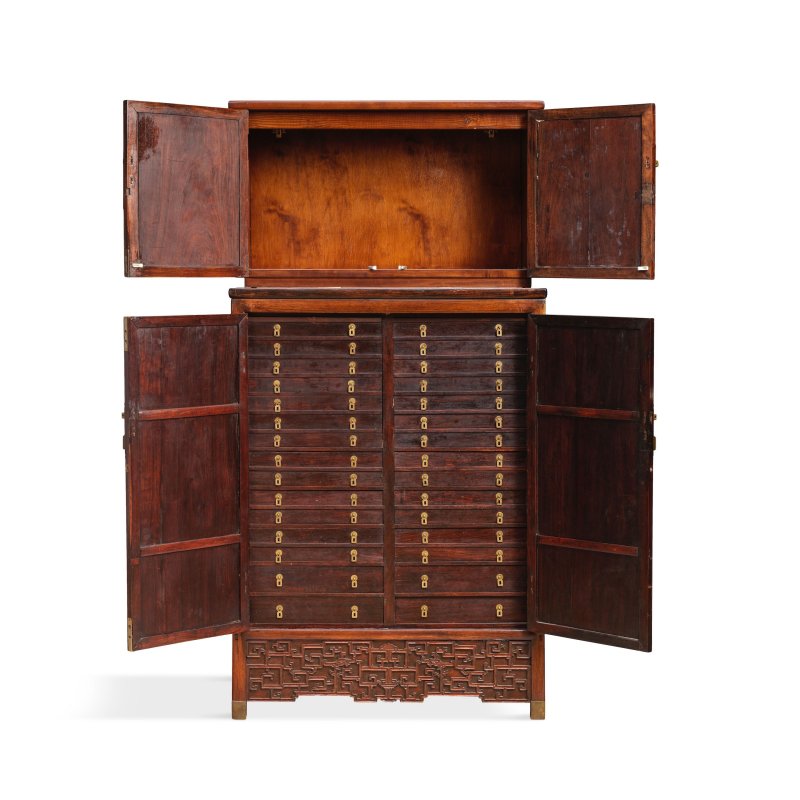
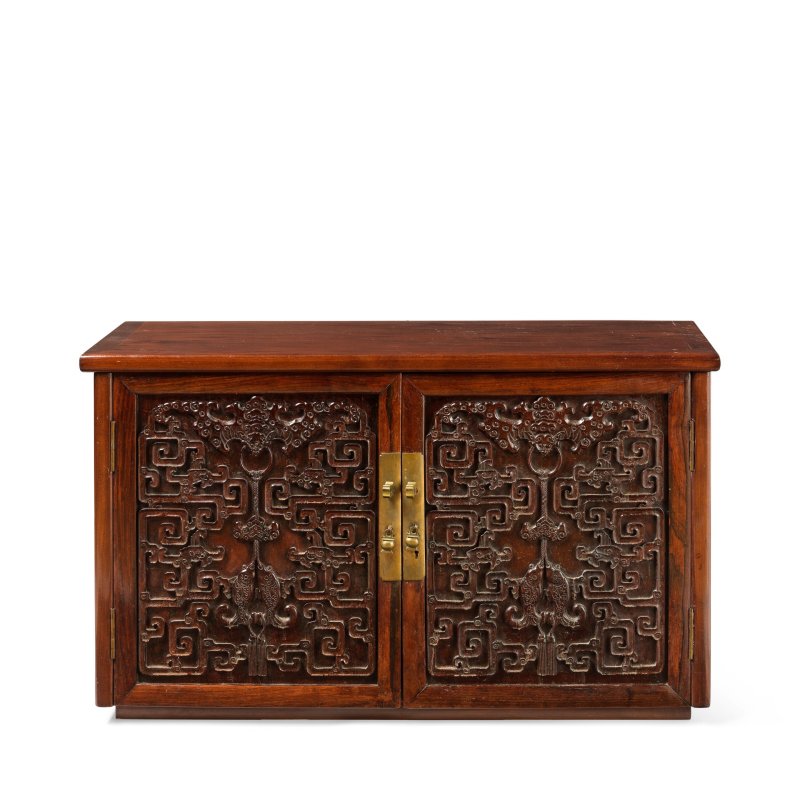
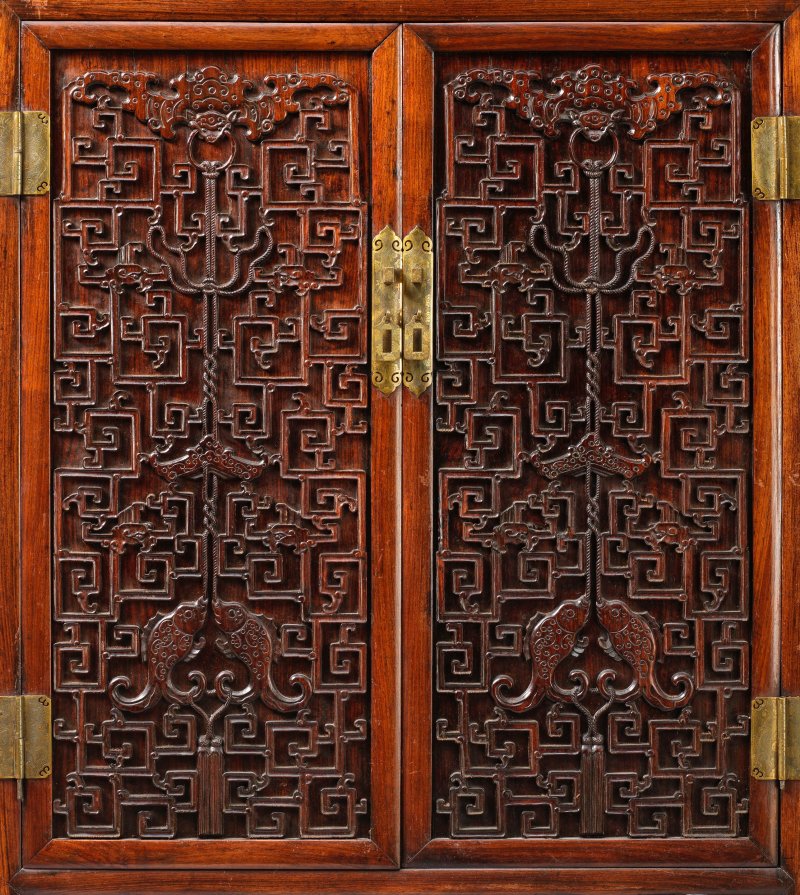
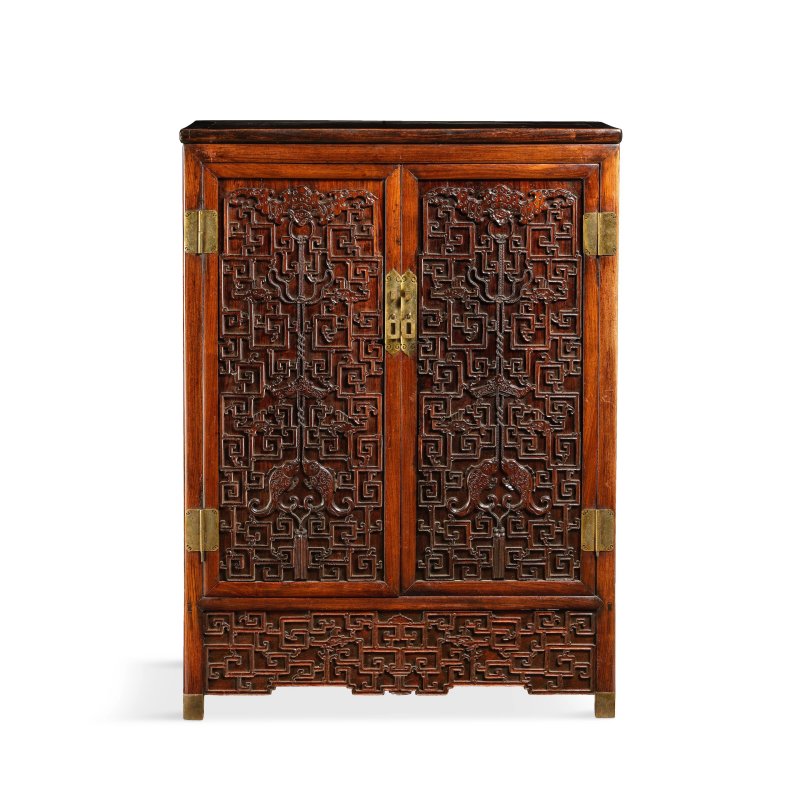
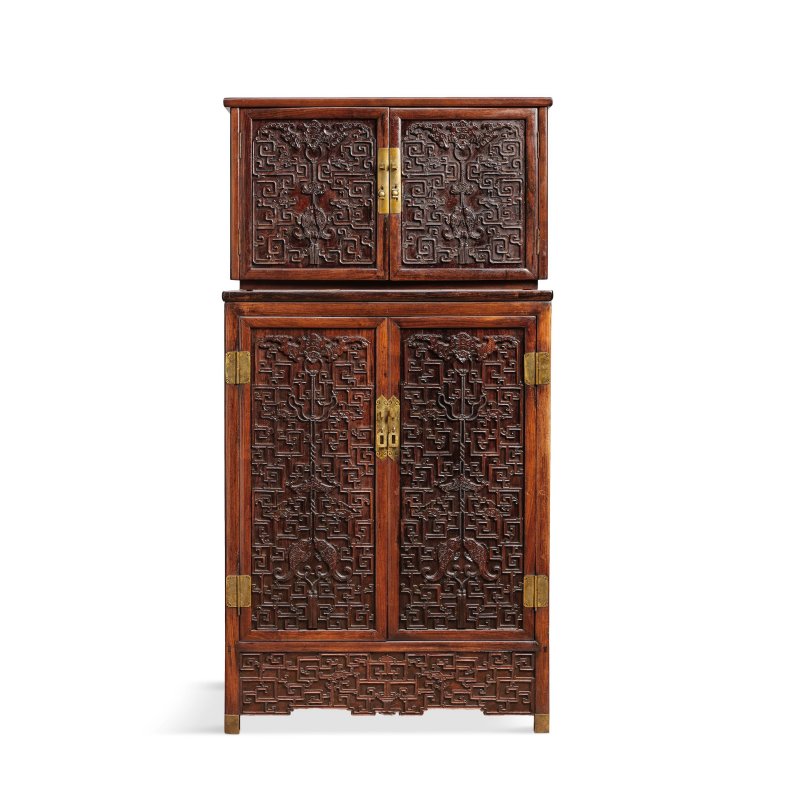
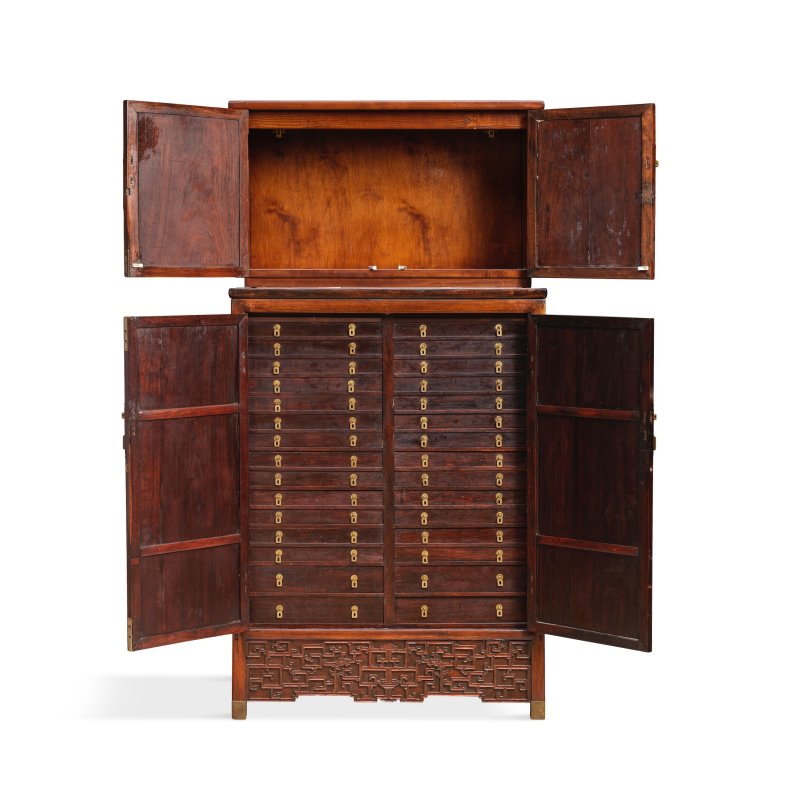
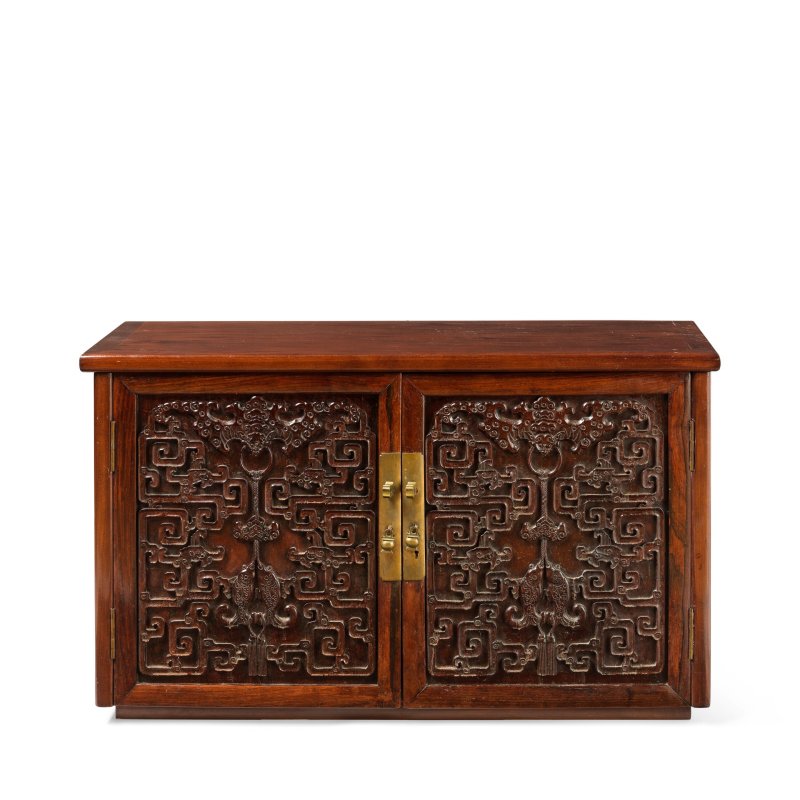
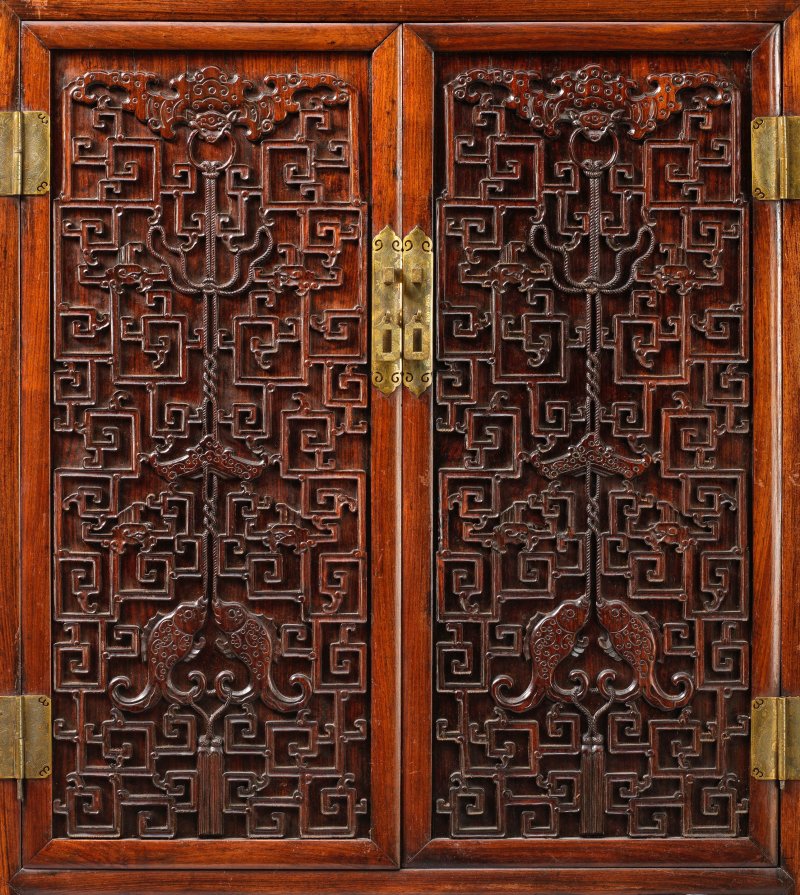
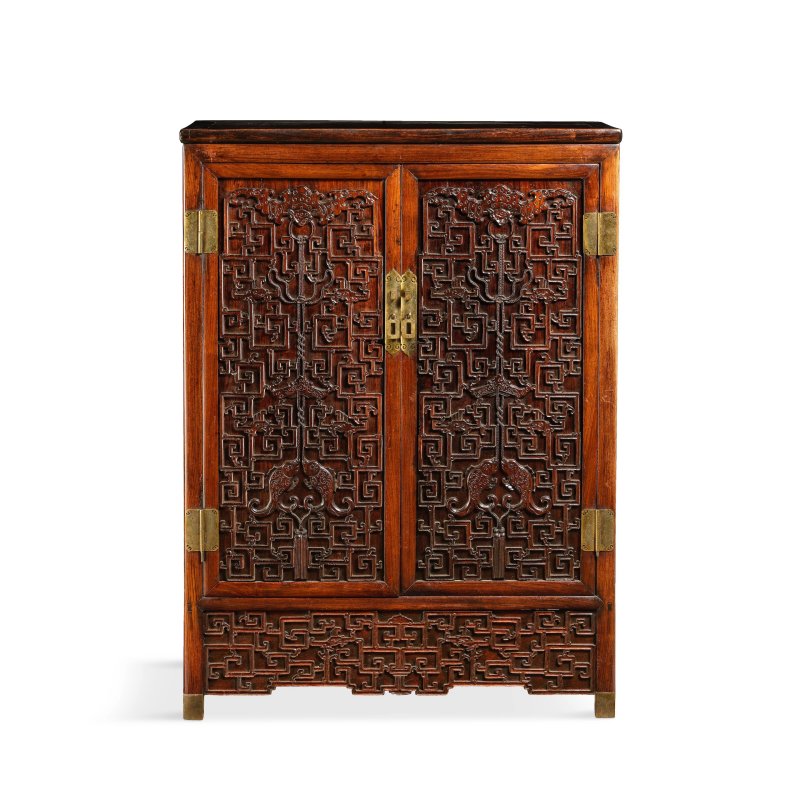
Of rectangular form, comprising a smaller top cabinet resting on a larger bottom cabinet, the doors carved in medium relief with a fish attached to a musical stone suspended from a ring held in the mouth of a bat, flanked by archaistic scrolling kui-dragons, the bottom cabinet with a shaped apron similarly carved, fitted with rectangular metal hinges, the metal lock plates with ruyi-head terminals, the interior with a façade of numerous drawers, Republic period. The cabinet: 138cm (54 1/4) high x 101cm (39 3/4in) wide x 44cm (17 3/8in) deep. The hat chest: 36cm (14 1/4in) deep x 97.5cm (38 1/2in) wide x 59.5cm (23 1/2in) high. (2).
Footnotes
清中期 紅木花梨木雕福慶有餘紋底柜及顶柜 一组两件
Provenance: Evaristo Caretti (1879-1955), China and Italy, and thence by descent
Noted in a valuation conducted by Robert Kleiner in 1988
來源:Evaristo Caretti (1879-1955),中國及意大利,並由後人保存迄今
Robert Kleiner于1988年所作的評估中提及此件拍品
See a very similar small (180cm high) hongmu square-corner cabinet and hat chest, , mid-Qing dynasty, illustrated by Tian Jiaqing, , Hong Kong, 1996, pp.220–223, no.100. The carved decoration of archaistic -dragons, bats, musical stones and double fish is closely related. The use of archaistic -dragons is characteristic of the mid-Qing taste for antiquity, reflecting a broader interest among the Qing scholarly elite in the study and reinterpretation of China's ancient past. This antiquarian interest was closely associated with the rise of 考證 ('evidential scholarship'), which placed renewed emphasis on the examination of ancient texts, inscriptions and material remains, and contributed to a wider revival of archaic forms in the arts. Such motifs were not simply copied from antiquity, but reinterpreted within contemporary decorative schemes. Tian interprets the combination of bat ( 蝠), musical stone ( 磬) and double fish ( 雙魚) as the auspicious rebus (福慶有餘), conveying the wish for 'endless rejoicing'. The same motif of bat, chime and double fish is carved on the back panel of a armchair, mid to late Qing dynasty, illustrated in ., no.37.
Compound cabinets of this type were used principally for the storage of clothing, with the upper section providing additional space for hats and other smaller garments or personal possessions. Such wardrobes could be made on a monumental scale in wealthy households. In Cao Xueqin's novel (), Granny Liu is astonished by the enormous wardrobes in the Jia household and wonders how their upper compartments could be reached, eventually realising that a ladder must be used. See, for example, a larger compound cabinet (280cm high), Qing dynasty, illustrated by Chen Zengbi, , Beijing, 2022, p.241.
The present cabinet is considerably more modest in scale, with its refinement and status instead expressed through the intricacy and labour-intensive nature of its carving. The carving is notable for its fine execution in relief, with twisted-rope borders and raised archaistic scrolls defined by sharply cut grooves and ridges. The careful separation of the raised ornament from the ground and the precise treatment of the narrow grooves give the decoration considerable clarity and depth despite the density of the composition. See related carving of archaistic -dragons on the lower panels of a sixteen-leaf screen with Luohans, Qianlong, illustrated in , New Haven and Yale, 2011, p.165, pl.49.
Compare with a similar large pair of compound cabinets, , 19th century, sold at Christie's Hong Kong, 31 May 2010, lot 2047.
Of rectangular form, comprising a smaller top cabinet resting on a larger bottom cabinet, the doors carved in medium relief with a fish attached to a musical stone suspended from a ring held in the mouth of a bat, flanked by archaistic scrolling kui-dragons, the bottom cabinet with a shaped apron similarly carved, fitted with rectangular metal hinges, the metal lock plates with ruyi-head terminals, the interior with a façade of numerous drawers, Republic period. The cabinet: 138cm (54 1/4) high x 101cm (39 3/4in) wide x 44cm (17 3/8in) deep. The hat chest: 36cm (14 1/4in) deep x 97.5cm (38 1/2in) wide x 59.5cm (23 1/2in) high. (2).
Footnotes
清中期 紅木花梨木雕福慶有餘紋底柜及顶柜 一组两件
Provenance: Evaristo Caretti (1879-1955), China and Italy, and thence by descent
Noted in a valuation conducted by Robert Kleiner in 1988
來源:Evaristo Caretti (1879-1955),中國及意大利,並由後人保存迄今
Robert Kleiner于1988年所作的評估中提及此件拍品
See a very similar small (180cm high) hongmu square-corner cabinet and hat chest, , mid-Qing dynasty, illustrated by Tian Jiaqing, , Hong Kong, 1996, pp.220–223, no.100. The carved decoration of archaistic -dragons, bats, musical stones and double fish is closely related. The use of archaistic -dragons is characteristic of the mid-Qing taste for antiquity, reflecting a broader interest among the Qing scholarly elite in the study and reinterpretation of China's ancient past. This antiquarian interest was closely associated with the rise of 考證 ('evidential scholarship'), which placed renewed emphasis on the examination of ancient texts, inscriptions and material remains, and contributed to a wider revival of archaic forms in the arts. Such motifs were not simply copied from antiquity, but reinterpreted within contemporary decorative schemes. Tian interprets the combination of bat ( 蝠), musical stone ( 磬) and double fish ( 雙魚) as the auspicious rebus (福慶有餘), conveying the wish for 'endless rejoicing'. The same motif of bat, chime and double fish is carved on the back panel of a armchair, mid to late Qing dynasty, illustrated in ., no.37.
Compound cabinets of this type were used principally for the storage of clothing, with the upper section providing additional space for hats and other smaller garments or personal possessions. Such wardrobes could be made on a monumental scale in wealthy households. In Cao Xueqin's novel (), Granny Liu is astonished by the enormous wardrobes in the Jia household and wonders how their upper compartments could be reached, eventually realising that a ladder must be used. See, for example, a larger compound cabinet (280cm high), Qing dynasty, illustrated by Chen Zengbi, , Beijing, 2022, p.241.
The present cabinet is considerably more modest in scale, with its refinement and status instead expressed through the intricacy and labour-intensive nature of its carving. The carving is notable for its fine execution in relief, with twisted-rope borders and raised archaistic scrolls defined by sharply cut grooves and ridges. The careful separation of the raised ornament from the ground and the precise treatment of the narrow grooves give the decoration considerable clarity and depth despite the density of the composition. See related carving of archaistic -dragons on the lower panels of a sixteen-leaf screen with Luohans, Qianlong, illustrated in , New Haven and Yale, 2011, p.165, pl.49.
Compare with a similar large pair of compound cabinets, , 19th century, sold at Christie's Hong Kong, 31 May 2010, lot 2047.
常见问题
这件清中期 紅木花梨木雕福慶有餘紋底柜及顶柜 一组两件 | A HUALI AND HONGMU CABINET AND A HAT CHEST的成交价是多少?
落槌价为 预展中。 成交价为 预展中。


