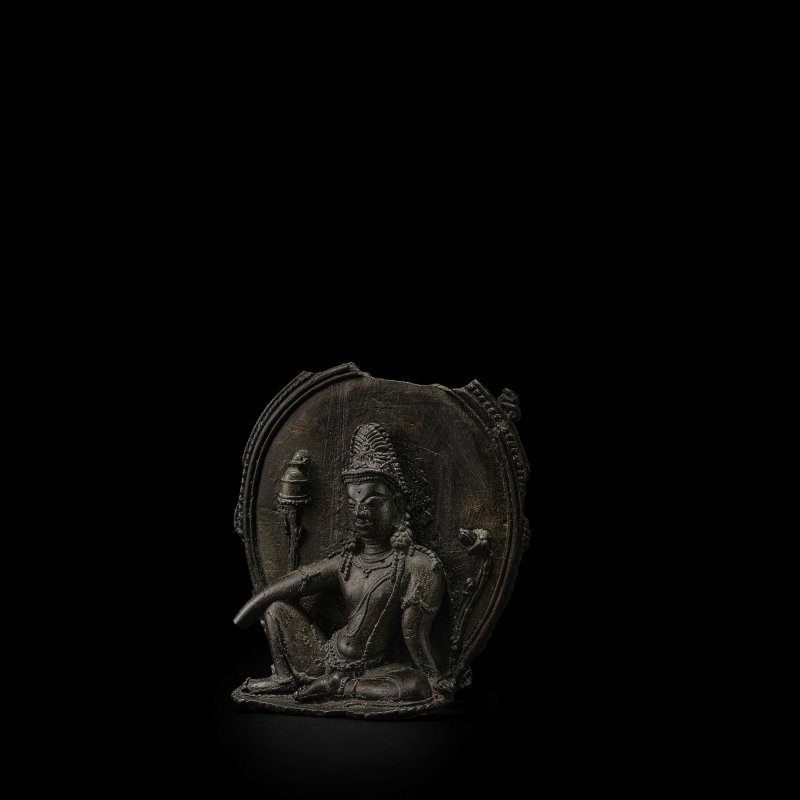

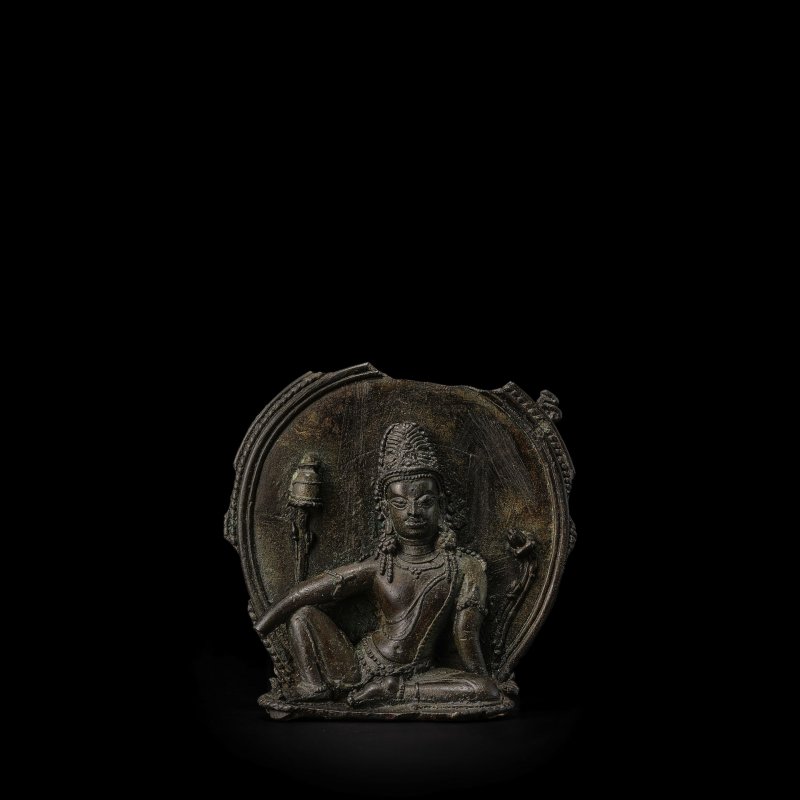
Lot 5 印度東北部 帕拉時期 邁納馬蒂 九/十世紀 蓮華手觀音銅像 | A COPPER ALLOY FIGURE OF PADMAPANI LOKESHVARA
落槌价
****
成交价
****
拍品信息
拍品名称
印度東北部 帕拉時期 邁納馬蒂 九/十世紀 蓮華手觀音銅像 | A COPPER ALLOY FIGURE OF PADMAPANI LOKESHVARA
年代
NORTHEASTERN INDIA, PALA PERIOD, MAINAMATI, 9TH/10TH CENTURY
起拍价
HKD 60,000
估值区间
未知
尺寸
未知
品相
未知
更多信息
NORTHEASTERN INDIA, PALA PERIOD, MAINAMATI, 9TH/10TH CENTURY
Himalayan Art Resources item no. 207019
8.5 cm (3 3/8 in.) high
Footnotes
印度東北部 帕拉時期 邁納馬蒂 九/十世紀 蓮華手觀音銅像
Provenance
Canadian Private Collection, since 2001
The languid, pliable form is rendered with a stylized naturalism, while the lotus stems frame the figure with an elegant sense of movement. The upward-slanting outer edge of the eyes and other facial features, jatamukuta hairstyle, and jewellery compares to the renowned 9th–10th century image of Avalokiteshvara from Mainamati in eastern Bengal, published in Lefevre and Boussac, Art of the Ganges Delta, 2007, pp. 54–55. Mainamati was an important early centre of Buddhist learning and artistic production, playing a significant role in the dissemination of Buddhism. The halo, with its beaded rim and interspersed curling flames, is also characteristic of the Pala style and compares closely with a small 9th–10th century bronze bodhisattva in The Metropolitan Museum of Art, New York (1987.142.214).