
拍品信息
拍品名称
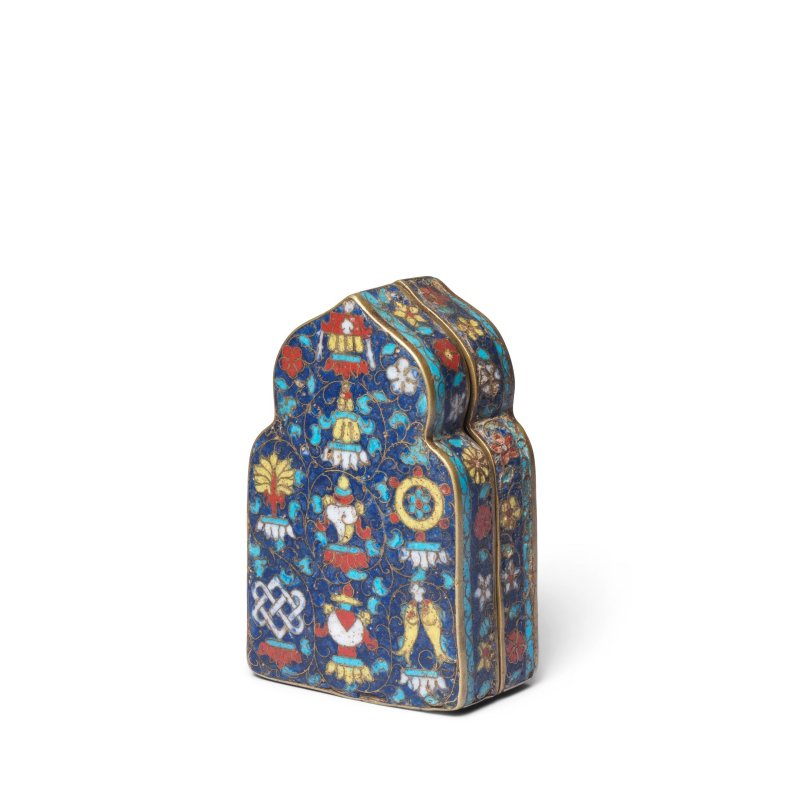
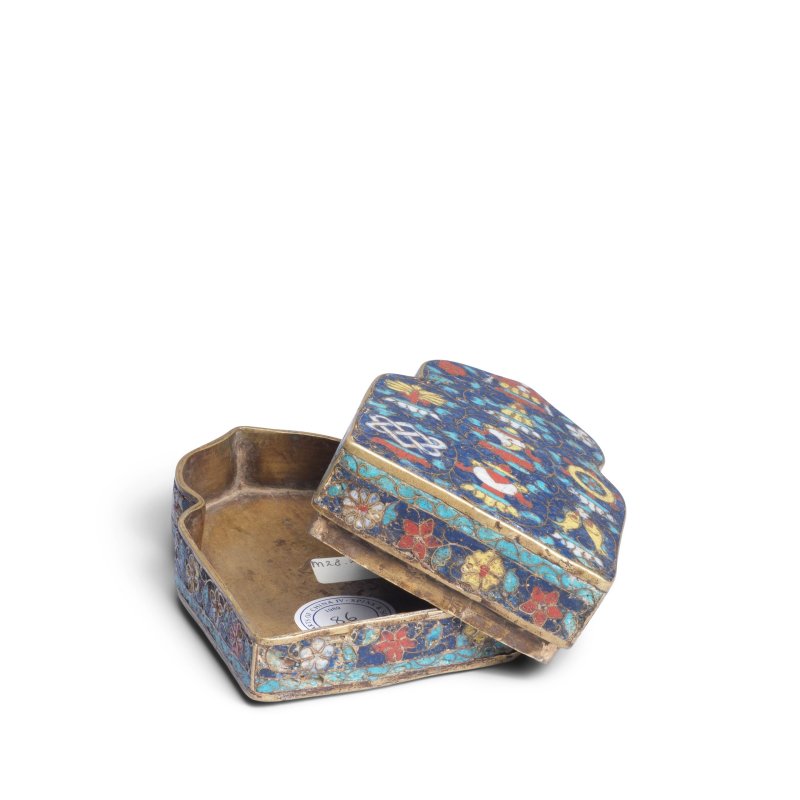
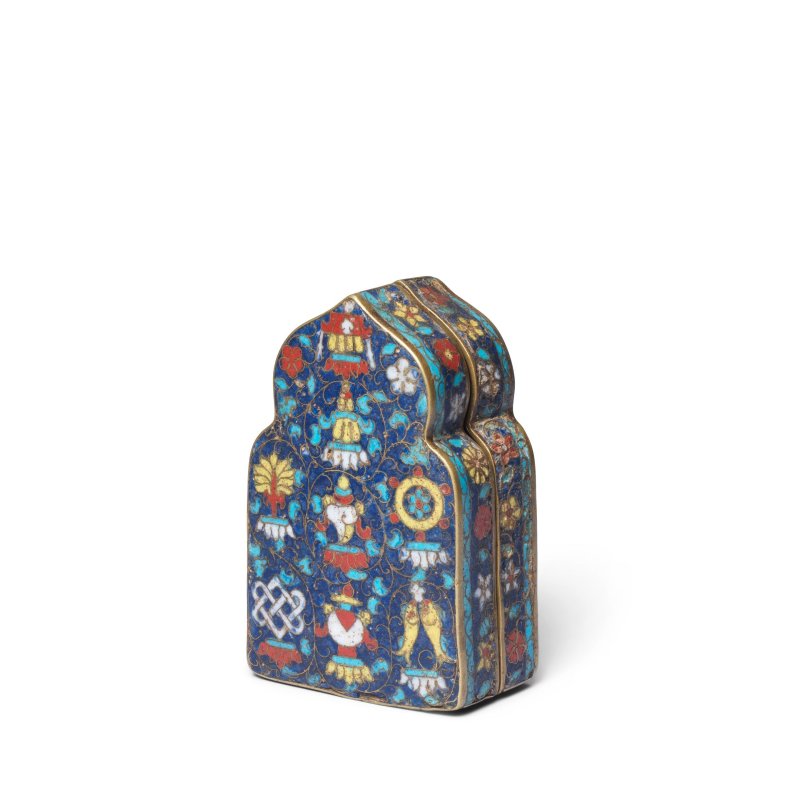
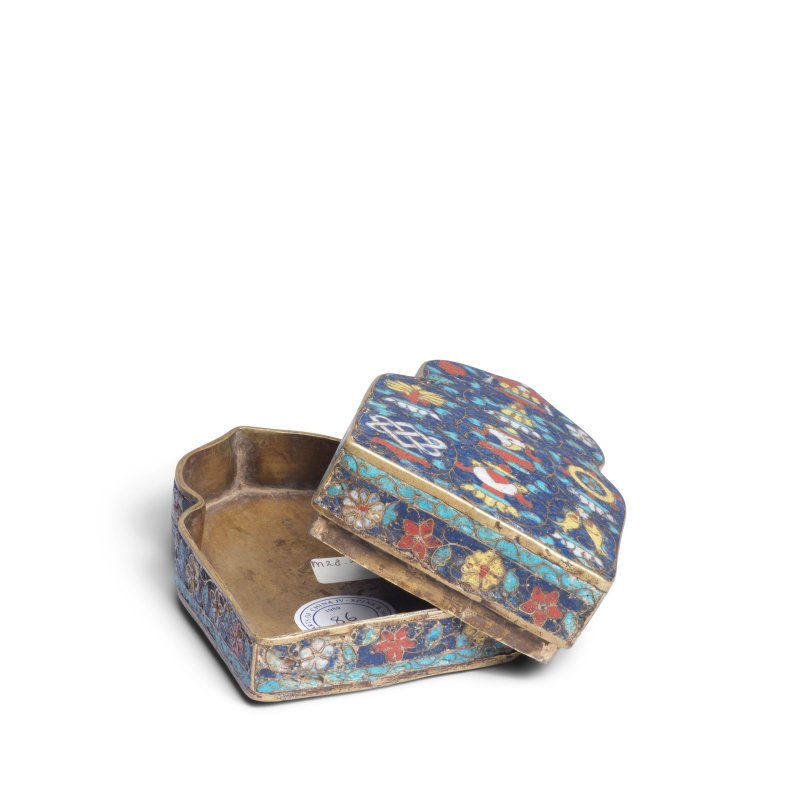
明 銅胎掐絲琺琅噶烏盒 | A RARE CLOISONNÉ ENAMEL 'BAJIXIANG' SHRINE BOX AND COVER, GAU
年代
Late Ming Dynasty
起拍价
GBP 2,500
估值区间
GBP 2500 - 3500
尺寸
未知
品相
未知
更多信息
Late Ming Dynasty
In the form of a shrine, the cover and box richly decorated with auspicious Buddhist emblems amongst meandering leaves and tendrils, the sides encircled by floral-head bands, all enamelled in yellow, red, pale blue, black and white on a lapis lazuli blue ground.
11cm (4 3/8in) high. (2).
Footnotes
明 銅胎掐絲琺琅噶烏盒
Provenance: Spink & Son Ltd., London
Frank P. Korn OBE (1914-1996) and Ruth Korn (1924-2026), Surrey, likely acquired during the 1989 Spink & Son Ltd. exhibition; noted in the Spink & Son Ltd., London valuation dated 21 February 1995
Published, Exhibited and Illustrated: Spink & Son Ltd., The Minor Arts of China IV, London, 1989, p.69, no.86.
來源:倫敦古董商Spink & Son Ltd.
大英帝國勛章獲得者Frank P. Korn (1914-1996)及Ruth Korn (1924-2026),英國薩里,或于1989年從Spink & Son Ltd.展覽處獲得;倫敦古董商Spink & Son Ltd.于1995年2月21日所作保險評估中曾提及
Spink & Son Ltd.,《The Minor Arts of China IV》,倫敦,1989年,第69頁,編號86
The present lot is a rare example of a Tibetan Buddhist , or portable reliquary shrine. Worn by monks and lay devotees or placed within a domestic shrine, boxes were designed to house sacred contents such as miniature images, relics, manuscripts, or consecrated substances, which were believed to confer spiritual protection and blessings upon the owner. The distinctive arched form of the present example follows traditional Tibetan portable shrines, while its surface is richly ornamented with various auspicious Buddhist symbols appropriate for its sacred function.
This iconographic programme reflects the close artistic and religious exchanges between the Ming Court and Tibetan Buddhist institutions, during which cloisonné enamelling was successfully adapted to forms associated with Tibetan Buddhist ritual practice. See a related cloisonné enamel box and cover decorated with the Eight Buddhist Emblems, Jingtai mark, in the Uldry Collection, illustrated by H.Brinker and A.Lutz, , Zürich, 1985, no.79.
In the form of a shrine, the cover and box richly decorated with auspicious Buddhist emblems amongst meandering leaves and tendrils, the sides encircled by floral-head bands, all enamelled in yellow, red, pale blue, black and white on a lapis lazuli blue ground.
11cm (4 3/8in) high. (2).
Footnotes
明 銅胎掐絲琺琅噶烏盒
Provenance: Spink & Son Ltd., London
Frank P. Korn OBE (1914-1996) and Ruth Korn (1924-2026), Surrey, likely acquired during the 1989 Spink & Son Ltd. exhibition; noted in the Spink & Son Ltd., London valuation dated 21 February 1995
Published, Exhibited and Illustrated: Spink & Son Ltd., The Minor Arts of China IV, London, 1989, p.69, no.86.
來源:倫敦古董商Spink & Son Ltd.
大英帝國勛章獲得者Frank P. Korn (1914-1996)及Ruth Korn (1924-2026),英國薩里,或于1989年從Spink & Son Ltd.展覽處獲得;倫敦古董商Spink & Son Ltd.于1995年2月21日所作保險評估中曾提及
Spink & Son Ltd.,《The Minor Arts of China IV》,倫敦,1989年,第69頁,編號86
The present lot is a rare example of a Tibetan Buddhist , or portable reliquary shrine. Worn by monks and lay devotees or placed within a domestic shrine, boxes were designed to house sacred contents such as miniature images, relics, manuscripts, or consecrated substances, which were believed to confer spiritual protection and blessings upon the owner. The distinctive arched form of the present example follows traditional Tibetan portable shrines, while its surface is richly ornamented with various auspicious Buddhist symbols appropriate for its sacred function.
This iconographic programme reflects the close artistic and religious exchanges between the Ming Court and Tibetan Buddhist institutions, during which cloisonné enamelling was successfully adapted to forms associated with Tibetan Buddhist ritual practice. See a related cloisonné enamel box and cover decorated with the Eight Buddhist Emblems, Jingtai mark, in the Uldry Collection, illustrated by H.Brinker and A.Lutz, , Zürich, 1985, no.79.
常见问题
这件明 銅胎掐絲琺琅噶烏盒 | A RARE CLOISONNÉ ENAMEL 'BAJIXIANG' SHRINE BOX AND COVER, GAU的成交价是多少?
落槌价为 预展中。 成交价为 预展中。


