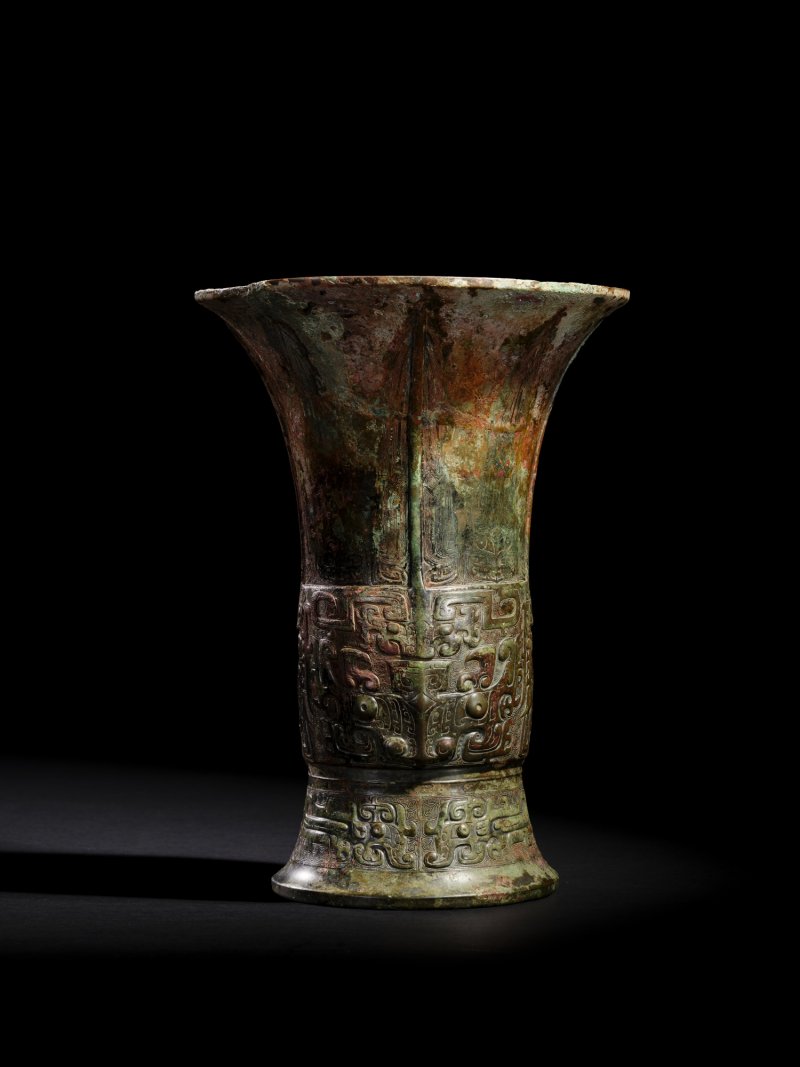

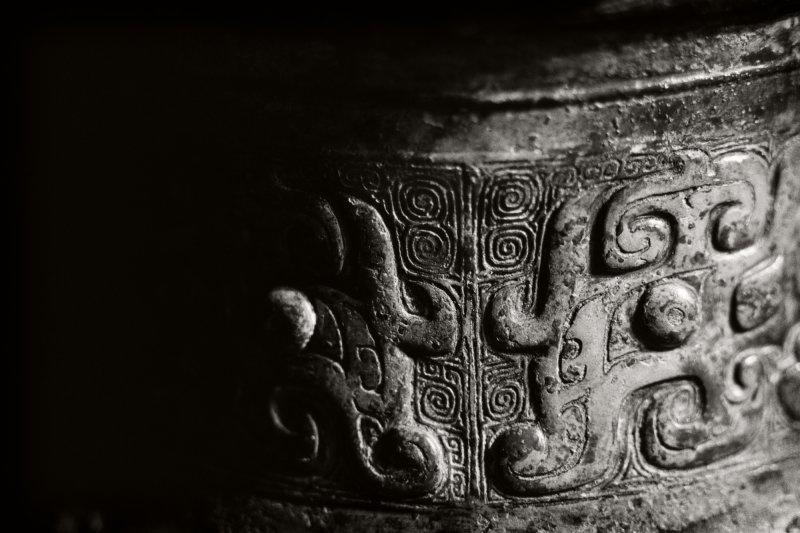
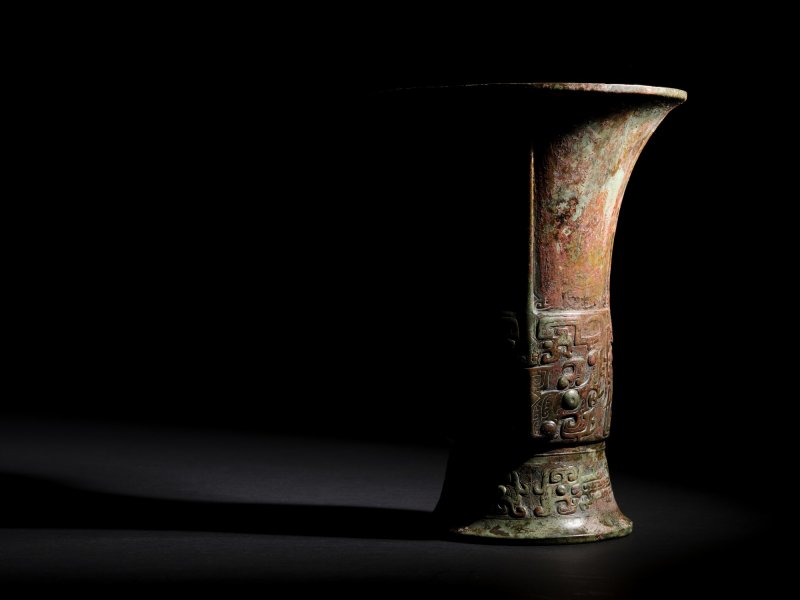
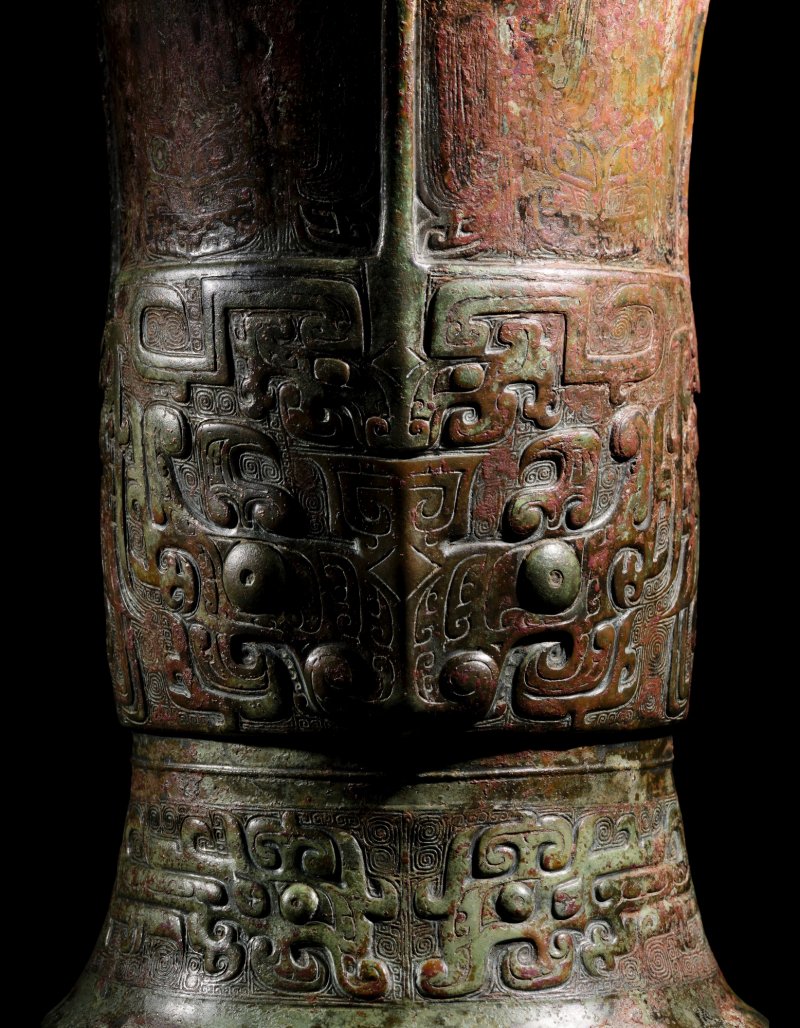
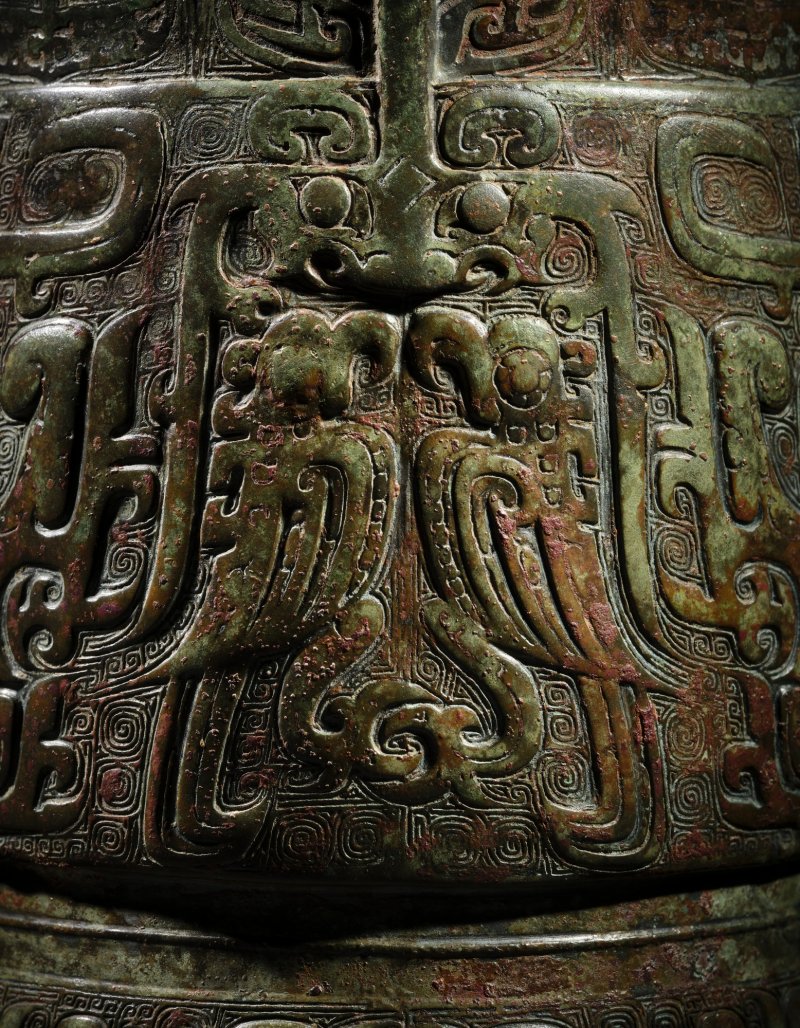
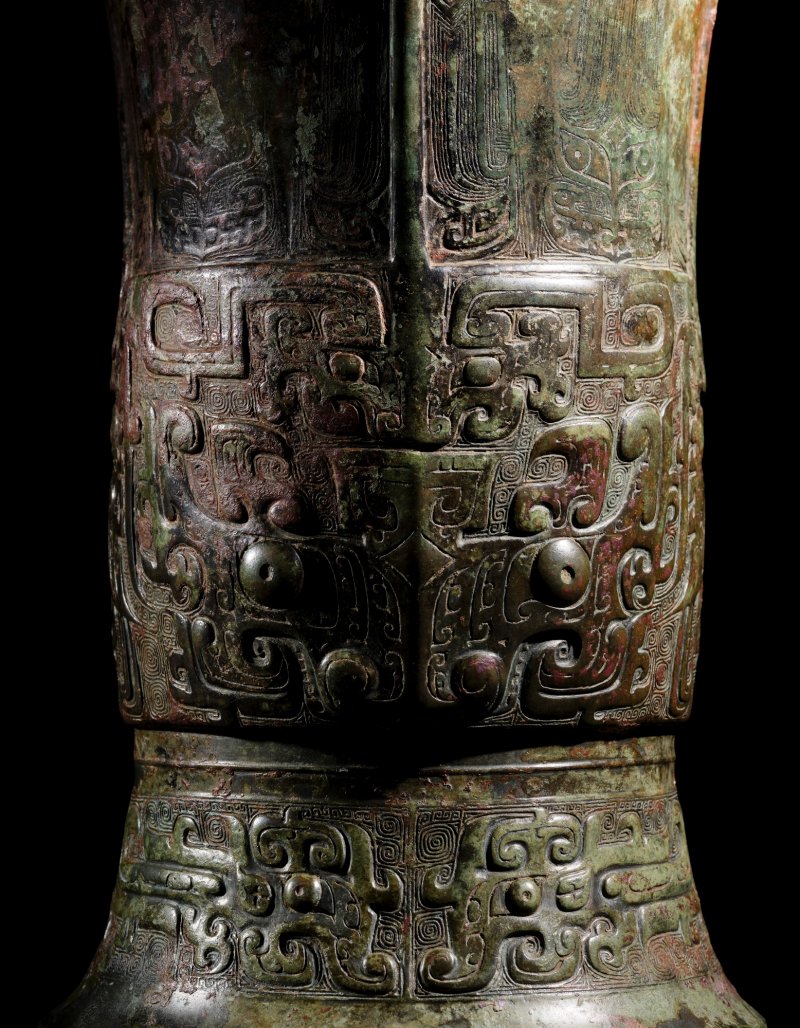
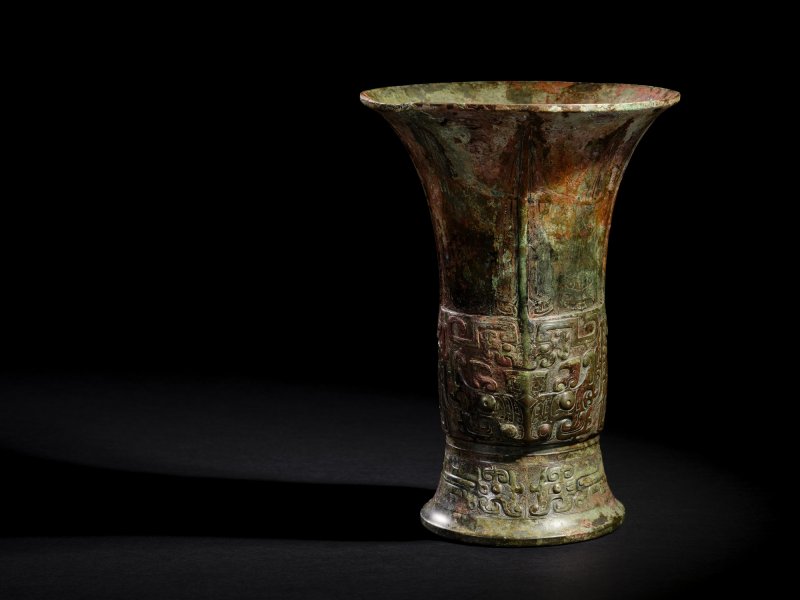
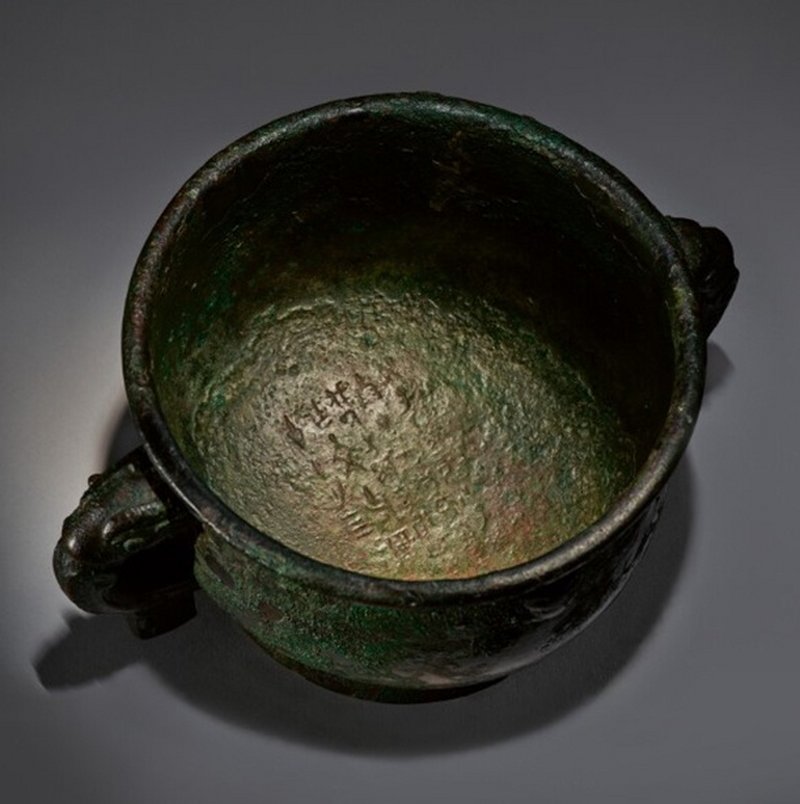
Lot 8014 The Xi Zun, a highly important documentary royal archaic bronze ritual wine vessel, Late Shang dynasty, Yinxu period IV, likely the reign of Di Xin (c. 1075–1046 BCE), the last king of the Shang dynasty, with a thirty-six-character inscription recording a ritual wine-offering banquet held on the 22nd day of the 6th month in the year corresponding to 1051 BCE | 商末 殷墟四期 或帝辛世(公元前約1075年-前約1046年)隰尊 三十六字銘文推斷為記載或於公元前1051年六月二十二日所行饗酒之禮
落槌价
预展中
成交价
预展中
| 拍卖公司 | 苏富比 |
|---|---|
| 拍卖时间 | 2026年10月30日 |
拍品信息
拍品名称
The Xi Zun, a highly important documentary royal archaic bronze ritual wine vessel, Late Shang dynasty, Yinxu period IV, likely the reign of Di Xin (c. 1075–1046 BCE), the last king of the Shang dynasty, with a thirty-six-character inscription recording a ritual wine-offering banquet held on the 22nd day of the 6th month in the year corresponding to 1051 BCE | 商末 殷墟四期 或帝辛世(公元前約1075年-前約1046年)隰尊 三十六字銘文推斷為記載或於公元前1051年六月二十二日所行饗酒之禮
起拍价
HKD 15,000,000
估值区间
15,000,000 - 30,000,000 HKD
尺寸
未知
品相
The vessel is in generally good condition, exceptionally well-preserved for a bronze of this considerable antiquity. The bronze features a highly attractive, richly mottled patina with characteristic malachite and cuprite encrustations that are entirely consistent with its age. As visible in X-ray, there are two cracks to the flared neck of the vessel extending downwards from the rim: one consolidated diagonal crack, alongside a further faint hairline crack. Some expected minor casting flaws, small nicks, and typical surface wear to the extremities consistent with archaic bronzes.
此器整體品相良好,以其高古年代一致。器表見正常松石綠鏽與赤銅礦紅鏽,整體皮殼溫潤,如 X 光可見,器頸撇口處有兩道自口沿向下延伸之裂紋:一道為經加固之斜向裂紋,另一道為細微裂紋。偶見高古青銅器年代相符之預期輕微鑄造瑕疵、小磕痕及邊緣處之典型表面磨損。
If a condition report is provided to assist you with assessing the condition of the lot, it is for guidance purposes only. Such condition report may not refer to all faults, restoration, alterations, or adaptations because Sotheby's is not a professional conservator or restorer but rather a condition report is a statement of subjective, qualified opinion genuinely held by Sotheby's. For these reasons, any such condition report is not an alternative to taking your own professional advice regarding the condition of the lot. Prospective buyers should also refer to the Guide for Buyers at Auction which includes important notices concerning the type of property in this sale.
更多信息
26.3 cm
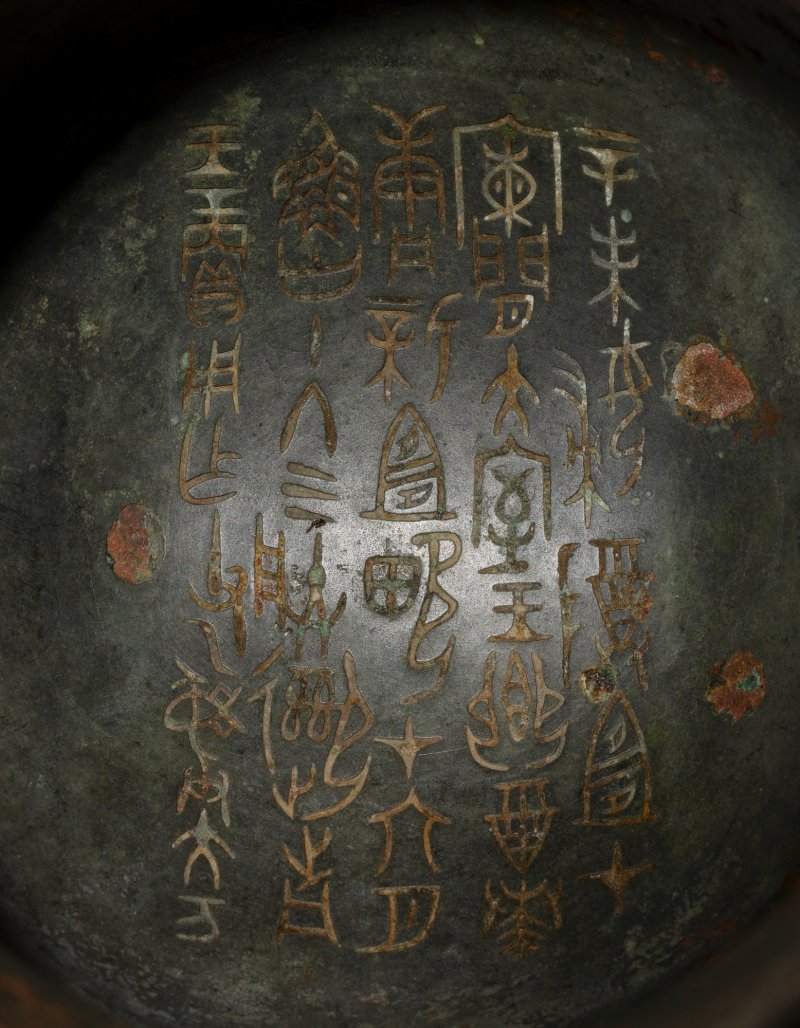
銘文:
辛未 婦尊宜 在𫴨太室 王饗酒 奏庸新宜田欠
在六月 鮋十終 三朕 隰前 王賞 用作父乙彝 大万
the interior inscribed with a thirty-six-character inscription reading xin wei fu zun yi zai lan tai shi wang xiang jiu zou yong xin yi shen zai liu yue you shi zhong san zhen Xi qian wang shang yong zuo fu yi yi da wan, which may be translated as:
“In the sixth month, on the day xinwei,
the Lady conducted the zunyi rite in the Taishi at Lan;
The King then hosted the xiangjiu ceremony,
during which a newly composed song was performed
to the accompaniment of yong music;
Ten chapters were played and repeated three times.
The leader and conductor of this performance, Xi,
who belonged to the Dawan clan, was rewarded by the King.
To commemorate this important event, Xi commissioned the casting
of this ritual bronze vessel in honour of his father, Yi.”
来源:A New York private collection, based on the patina, likely acquired prior to the Second World War.
Joyce Gallery, Hong Kong, acquired from the above, circa 2008.
An important Asian private collection.
展览:Beijing Oriental Art Expo, Beijing Exhibition Center, Beijing, 2013.
Imperial Treasures V. Archaic Bronzes from the Golden Age of China, Joyce Gallery, Hong Kong, 2016.
著录:Wu Zhenfeng, ‘Xi Zun mingwen chutan [First study of the inscription on the Xi Zun], Fudan University Research on Chinese Excavated Classics and Paleography (website), Shanghai, 2014, p. 2.
Institute of History and Philology Academia Sinica, Digital Archives of Bronze Images and Inscriptions (website), Taipei, 2014, NB1214.
Chen Zhi, ‘Shijing xinshiye [New horizons on Classic of Poetry]’, Guoxue xinshiye / New Horizons in Chinese Culture, no. 9, Hong Kong, 2015, p. 33.
Zhu Fenghan, ‘Xinjian shang jinwen kaoshi [Study of the newly discovered Shang bronze inscriptions], Chutu wenxian yu guwenzi yanjiu [Studies of excavated texts and paleography], vol. 6, Shanghai, 2015, p. 124.
Chen Zhi, ‘Haihunhoumu suojian ziyunfuyiyou shishi / An Interpretation of the Character Yun on the Bronze You Discovered From the Tomb of Marquis of Haihun’, Jiangxi shifan daxue xuebao / Journal of Jiangxi Normal University(Philosophy and Social Sciences Edition), no. 5, Nanchang, 2016, p. 11.
Li Jiahao, ‘Da Wan Zun mingwen shidu [Deciphering the inscription of the Da Wan Zun], Chutu wenxian / Excavated Documents, vol. 8, Shanghai, 2016, p. 37.
Li Xueqin, ‘Yuzun mingwen jianshi / My Concise Interpretation of the Inscription on Yu Wine Vessel’, Zhongyuan wenhua yanjiu / The Central Plains Culture Research, vol. 4, Zhengzhou, 2016, p. 11.
Wu Zhenfeng, Shangzhou qingtongqi mingwen ji tuxiang jicheng xubian [Sequel to the compendium of inscriptions and images of bronzes from Shang and Zhou dynasties], vol. 3, Shanghai, 2016, no. 0790, and vol. 1, p. 2.
Joyce Gallery, Imperial Treasures V. Archaic Bronzes from the Golden Age of China, Hong Kong, 2016, cat. no. 1.
Chen Jie and Wang Xudong, ‘2016 de xianqinshi yanjiu / The Study of Pre-Qin History in 2016’, Zhongguoshi yanjiu dongtai / Trends of Recent Researches on the History of China, no. 6, Beijing, 2017, p. 14.
Sun Yabing, ‘Jiaguwen, jinwen yanjiu zongshu [Study of oracle bone and archaic bronze inscriptions], Zhongguo kaoguxue nianjian [Almanac of archaeology in China], Beijing, 2017, p. 125.
Xia Qiyan, ‘Shilun shangdai de wudao wenhua [Discussion on the dancing culture of the Shang dynasty], Zhonghua wenhua luntan [Forum of Chinese culture], no. 11, Chengdu, 2017, p. 82.
Fu Qiang, ‘Xi Zun mingwen zai shi [Reinterpretation of the Xi Zun’s inscription], Fudan University Research on Chinese Excavated Classics and Paleography (website), Shanghai, 2018, p. 1.
Hu Ning, ‘Cong Xi Zun mingwen kan wanshang yishi yongyue [The study of ritual music in the late Shang dynasty based on the inscription of the Xi Zun], Zhongyuan wenhua yanjiu / The Central Plains Culture Research, Henan, 2018, p. 107.
Ma Chao, ‘Shishuo Xi Zun mingwen zhongde zhiyong zi [Try to talk about the word 'zhiyong' in the inscription of Xi Zun]’, Xuexingtang yuyan wenzi luncong [Collection of essays on language and characters from the Xuexingtang], Chongqing, 2018, p. 27.
Suetsugu Nobuyuki, ‘Yuzun [Imperial vessel]’, Kanjigaku Kenkyu / Journal of Kanji Studies, no. 6, Kyoto, 2018, p. 48.
Zuo Yong, ‘Xi Zun mingwen yu shangdai shiyue [The inscription on Xi Zun and poetry and music in the Shang dynasty], Chutu wenxian / Excavated Documents, vol. 15, Shanghai, 2019, p. 46.
He Jiaxing, ‘Yinshang jiagu yu yuexue tanyuan / The Oracle Bones of the Shang Dynasty and the Origin of Musicology’, Jianghuai luntan / Jianghuai Tribune, no. 6, Hefei, 2020, p. 155.
Liu Yuan, ‘Lun yinjinwen de tezheng tixi / On The Feature System of the Yin-Dynasty Bronze Inscription’, Gugong bowuyuan yuankan / Palace Museum Journal, no. 11, Beijing, 2020, p. 52.
Bai Jiahui, ‘Li Gui mingwen suoshe landi diwang kaobian / Interpreting the Geographic Locations Mentioned in the Inscriptions of the Li Gui Vessel’, Wenbo / Relics and Museolgy, no. 6, Xi’an, 2021, p. 71.
Chen Zhi, ‘Xinjian fuyi zun (gu) ming shi shi [An attempt to decipher the inscription of the newly discovered Fu Yi Zun (Gu)], Banbu xueshu shi, yiwei lixiansheng – Li Xueqin xiansheng xueshu chengjiu yu xueshu Sixiang guoji yantaohui lunwenji [Half of an Academic History Embodied in One Scholar: Proceedings of the International Symposium on the Scholarly Achievements and Intellectual Legacy of Li Xueqin], Beijing, 2021, pp 435, and Shen Pei, ‘Response to Chen Zhi’, pp 444-445 and Dong Shan, ‘Response to Chen Zhi’, pp 446-447.
Yabu Toshihiro, Liu Haiyu, trans., ‘Cong jiagu jinwen ziliao kan maoshi zhongde wanwu – yi beifeng jianxi pian wei zhongxin [From the oracle bone inscriptions, we can see the 'Wanwu' in ' Maoshi '-centered on 'Beifeng · Jianxi']’, Qingtongqi yu jinwen / Bronzes and Inscriptions, no. 7, Beijing, 2021, p. 22.
Liu Yuan, ‘Shangmo zhi xizhou zaoqi cibei yanjiu – jianming ceming zhidu de lishi yuanyuan / Study on the Bestowal of Cowrie Shells from Late Shang to Early Western Zhou Dynasty——Including Study on the Historical Origins of the System for Conferring Official, Noble, and Royal Titles’, Lishi yanjiu / Historical Research, no. 5, Beijing, 2022, p. 55.
Zhang Weijie, ‘Cong jiagu jinwen kan ‘gu’, ‘wan’ de wenhua tese yu xiangguan wenti [The characteristics and relevant issues of "gu" and "wan" in the oracle and bronze inscriptions]’, Fudan University Research on Chinese Excavated Classics and Paleography (website), Shanghai, 2022, p. 30.
Zhang Xiuhua, ‘Xi Zun suojian xiangli yanjiu [The study of Xiangli based on the inscription of Xi Zun], Guji zhengli yanjiu xuekan / Journal of Ancient Books Collation and Studies, no. 3, Changchun, 2022, p. 72.
Zhou Baohong, ‘Xinjian shangmo jinwen kaoshi liangpian [The study of two newly discovered late Shang inscriptions], Jiaguwen yu yinshangshi / Bulletin of Oracle Bone Inscriptions and Yin-Shang History, Shanghai, 2022, p. 275.
Cao Dazhi, ‘Lun muweilan / Study on Wooden Fences’, Nanfang wenwu / Cultural Relics in Southern China, no. 3, Nanchang, 2023, p. 91.
Jin Minglun, ‘Shuo shangzhou jinwen ‘zunyi’ [‘Zunyi’ in the inscriptions of Shang and Zhou bronzes], Qingtongqi yu jinwen / Bronzes and Inscriptions, no. 11, Beijing, 2023, p. 18.
Tang Jigen and Wu Jiancong, ‘Discovery, Conservation and Presentation of Palace Buildings in Shang Dynasty’, World Architecture, no. 11, Beijing, 2023, p. 35.
Xia Yunan, ‘Chenchen zhuqi xinkao / A New Exploration on Chenchen's Bronzes’, Hubei meishu xueyuan xuebao / Hubei Institute of Fine Arts Journal, no. 3, Wuhan, 2024, p. 28.
Zheng Kailei, ‘Xi Zun de wenshi ji zhizuo beijing kaoshu / Research on Xi Zun’s Decoration and Production Background’, Yishu bowuguan / Art Museum Magazine, no. 6, Beijing, 2024, p. 4.
Ma Kangya, ‘Shijing ‘ci’ ‘shou’ kao / Research of ‘Ci’ and ‘Shou’ in The Book of Poetry’, Jingchu xuekan / Jingchu Academic Journal, no. 1, Jingmen, 2025, p. 38.
Xia Yunan, ‘Yi ‘yueji’ wei zhongxin kan yinzhou lizhi zhuanxiang / The Transformation of the Ritual System from Shang to Zhou Dynasties Centered on ‘Yue Ji’’, Lishi yanjiu / Historical Research, no. 1, Beijing, 2025, p. 73.
Wang Zhengyuan, ‘Wanshang guizu de lixiang xingxiang: laizi yinxu muzang de qishi / The Ideal Figure of Late Shang Nobleman: Insights into the Elite Mortuary Practices at Yinxu’, Zhejiang daxue xuebao (renwen shehui kexue ban) / Journal of Zhejiang University(Humanities and Social Sciences), no. 5, Hangzhou, 2026, p. 40.
图录
说明:來源
紐約私人收藏,據青銅皮殼判定,應為第二次世界大戰前組建之收藏
御雅居,香港,約2008年購於上述處
重要亞洲私人收藏
展覽
《北京東方藝術品博覽會》,北京展覽館,北京,2013年
《吉金御賞》,御雅居,香港,2016年
出版
吳鎮烽,〈隰尊銘文初探〉,《復旦大學出土文獻與古文字研究中心(網站論文)》,上海,2014年,頁2
中央研究院歷史語言研究所,《殷周金文暨青銅器資料庫(網站)》,台北,2014年,編號NB1214
陳致,〈詩經新視野〉,《國學新視野》,期9,香港,2015年,頁33
朱鳳瀚,〈新見商金文考釋(二篇)〉,《出土文獻與古文字研究》,輯6,上海,2015年,頁124
陳致:〈海昏侯墓所見子田允父乙卣試釋〉,《江西師範大學學報(哲學社會科學版)》,期5,南昌,2016年,頁11
李家浩,〈大万尊銘文釋讀〉,《出土文獻》,輯八,上海,2016年,頁37
李學勤,〈魚尊銘文簡釋〉,《中原文化研究》,期4,鄭州,2016年,頁11
吳鎮烽,《商周青銅器銘文暨圖像集成續編》,卷3,上海,2016年,編號0790及卷1,頁2
御雅居,《吉金御賞》,香港,2016年,編號1
陳絜及王旭東,〈2016年的先秦史研究〉,《中國史研究動態》,期6,北京,2017年,頁14
孫亞冰,〈甲骨文、金文研究綜述〉,《中國考古學年鑑》,北京,2017年,頁125
夏奇艷,〈試論商代的舞蹈文化〉,《中華文化論壇》,期11,成都,2017年,頁82
付強,〈隰尊銘文再釋〉,《復旦大學出土文獻與古文字研究中心(網站論文)》,上海,2018年,頁1
胡寧,〈從隰尊銘文看晚商儀式用樂〉,《中原文化研究》,河南,2018年,頁107
馬超,〈試說隰尊銘文中的「之同」字〉,《學行堂語言文字論叢》,重慶,2018年,頁27
末次信行,〈御尊〉,《漢字學研究》,號6,京都,2018年,頁48
左勇,〈隰尊銘文與商代詩樂〉,《出土文獻》,輯15,上海,2019年,頁46
何家興,〈殷商甲骨與樂學探源〉,《江淮論壇》,期6,合肥,2020年,頁155
劉源,〈論殷金文的特徵體系〉,《故宮博物院院刊》,期11,北京,2020年,頁52
白嘉慧,〈利簋銘文所涉𫴨地地望考辨〉,《文博》,期6,西安,2021年,頁71
陳致,〈新見父乙尊(觚)銘試釋〉,《半部學術史,一位李先生——李學勤先生學術成就與學術思想國際研討會論文集》,北京,2021年,頁435及沈培,〈答陳致《新見父乙尊(觚)銘試釋》〉,頁444-445、董珊,〈答陳致《新見父乙尊(觚)銘試釋》〉,頁446-447
藪敏裕著,劉海宇譯,〈從甲骨金文資料看《毛詩》中的「万舞」——以《邶風‧簡兮》篇爲中心〉,《青銅器與金文》,輯7,北京,2021年,頁22
劉源,〈商末至西周早期賜貝研究——兼論冊命制度的歷史淵源〉,《歷史研究》,期5,北京,2022年,頁55
張惟捷:〈從甲骨金文看「瞽」、「万」的文化特色與相關問題〉,《復旦大學出土文獻與古文字研究中心(網站論文)》,上海,2022年,頁30
張秀華,〈隰尊所見饗禮研究〉,《古籍整理研究學刊》,期3,2022年,頁72
周寶宏,〈新見商末金文考釋兩篇〉,《甲骨文與殷商史》,輯12,北京,2022年,頁275
曹大志,〈論木圍欄〉,《南方文物》,期3,南昌,2023年,頁91
靳明倫,〈説商周金文「尊宜」〉,《青銅器與金文》,輯11,北京,2023年,頁18
唐际根及吳健聰,〈 商王朝宮室類建築的發現、保護與展示〉,《世界建築》,期11,北京,2023,頁35
夏虞南,〈臣辰諸器新考〉,《湖北美術學院學報》,期3,武漢,2024年,頁28
鄭凱磊,〈隰尊的紋飾及製作背景考述〉,《藝術博物館》,期6,2024年,頁4
馬康雅,〈《詩經》「錫」 「受」考〉,《荊楚學刊》,期1,荊門,2025年,頁38
夏虞南,〈以「禴祭」爲中心看殷周禮制轉向〉,《歷史研究》,期1,北京,2025年,頁73
王正原,〈晚商貴族的理想形象:來自殷墟墓葬的啓示〉,《浙江大學學報(人文社會科學版)》,期5,杭州,2026年,頁40
常见问题
这件The Xi Zun, a highly important documentary royal archaic bronze ritual wine vessel, Late Shang dynasty, Yinxu period IV, likely the reign of Di Xin (c. 1075–1046 BCE), the last king of the Shang dynasty, with a thirty-six-character inscription recording a ritual wine-offering banquet held on the 22nd day of the 6th month in the year corresponding to 1051 BCE | 商末 殷墟四期 或帝辛世(公元前約1075年-前約1046年)隰尊 三十六字銘文推斷為記載或於公元前1051年六月二十二日所行饗酒之禮的成交价是多少?
落槌价为 预展中。 成交价为 预展中。
拍品的品相状况如何?
The vessel is in generally good condition, exceptionally well-preserved for a bronze of this considerable antiquity. The bronze features a highly attractive, richly mottled patina with characteristic malachite and cuprite encrustations that are entirely consistent with its age. As visible in X-ray, there are two cracks to the flared neck of the vessel extending downwards from the rim: one consolidated diagonal crack, alongside a further faint hairline crack. Some expected minor casting flaws, small nicks, and typical surface wear to the extremities consistent with archaic bronzes.
此器整體品相良好,以其高古年代一致。器表見正常松石綠鏽與赤銅礦紅鏽,整體皮殼溫潤,如 X 光可見,器頸撇口處有兩道自口沿向下延伸之裂紋:一道為經加固之斜向裂紋,另一道為細微裂紋。偶見高古青銅器年代相符之預期輕微鑄造瑕疵、小磕痕及邊緣處之典型表面磨損。
If a condition report is provided to assist you with assessing the condition of the lot, it is for guidance purposes only. Such condition report may not refer to all faults, restoration, alterations, or adaptations because Sotheby's is not a professional conservator or restorer but rather a condition report is a statement of subjective, qualified opinion genuinely held by Sotheby's. For these reasons, any such condition report is not an alternative to taking your own professional advice regarding the condition of the lot. Prospective buyers should also refer to the Guide for Buyers at Auction which includes important notices concerning the type of property in this sale.
此器整體品相良好,以其高古年代一致。器表見正常松石綠鏽與赤銅礦紅鏽,整體皮殼溫潤,如 X 光可見,器頸撇口處有兩道自口沿向下延伸之裂紋:一道為經加固之斜向裂紋,另一道為細微裂紋。偶見高古青銅器年代相符之預期輕微鑄造瑕疵、小磕痕及邊緣處之典型表面磨損。
If a condition report is provided to assist you with assessing the condition of the lot, it is for guidance purposes only. Such condition report may not refer to all faults, restoration, alterations, or adaptations because Sotheby's is not a professional conservator or restorer but rather a condition report is a statement of subjective, qualified opinion genuinely held by Sotheby's. For these reasons, any such condition report is not an alternative to taking your own professional advice regarding the condition of the lot. Prospective buyers should also refer to the Guide for Buyers at Auction which includes important notices concerning the type of property in this sale.
这件拍品的流传来源是什么?
A New York private collection, based on the patina, likely acquired prior to the Second World War.
Joyce Gallery, Hong Kong, acquired from the above, circa 2008.
An important Asian private collection.
Joyce Gallery, Hong Kong, acquired from the above, circa 2008.
An important Asian private collection.
这件拍品曾在哪些展览中展出过?
Beijing Oriental Art Expo, Beijing Exhibition Center, Beijing, 2013.
Imperial Treasures V. Archaic Bronzes from the Golden Age of China, Joyce Gallery, Hong Kong, 2016.
Imperial Treasures V. Archaic Bronzes from the Golden Age of China, Joyce Gallery, Hong Kong, 2016.
这件拍品被哪些著录书籍记载?
Wu Zhenfeng, ‘Xi Zun mingwen chutan [First study of the inscription on the Xi Zun], Fudan University Research on Chinese Excavated Classics and Paleography (website), Shanghai, 2014, p. 2.
Institute of History and Philology Academia Sinica, Digital Archives of Bronze Images and Inscriptions (website), Taipei, 2014, NB1214.
Chen Zhi, ‘Shijing xinshiye [New horizons on Classic of Poetry]’, Guoxue xinshiye / New Horizons in Chinese Culture, no. 9, Hong Kong, 2015, p. 33.
Zhu Fenghan, ‘Xinjian shang jinwen kaoshi [Study of the newly discovered Shang bronze inscriptions], Chutu wenxian yu guwenzi yanjiu [Studies of excavated texts and paleography], vol. 6, Shanghai, 2015, p. 124.
Chen Zhi, ‘Haihunhoumu suojian ziyunfuyiyou shishi / An Interpretation of the Character Yun on the Bronze You Discovered From the Tomb of Marquis of Haihun’, Jiangxi shifan daxue xuebao / Journal of Jiangxi Normal University(Philosophy and Social Sciences Edition), no. 5, Nanchang, 2016, p. 11.
Li Jiahao, ‘Da Wan Zun mingwen shidu [Deciphering the inscription of the Da Wan Zun], Chutu wenxian / Excavated Documents, vol. 8, Shanghai, 2016, p. 37.
Li Xueqin, ‘Yuzun mingwen jianshi / My Concise Interpretation of the Inscription on Yu Wine Vessel’, Zhongyuan wenhua yanjiu / The Central Plains Culture Research, vol. 4, Zhengzhou, 2016, p. 11.
Wu Zhenfeng, Shangzhou qingtongqi mingwen ji tuxiang jicheng xubian [Sequel to the compendium of inscriptions and images of bronzes from Shang and Zhou dynasties], vol. 3, Shanghai, 2016, no. 0790, and vol. 1, p. 2.
Joyce Gallery, Imperial Treasures V. Archaic Bronzes from the Golden Age of China, Hong Kong, 2016, cat. no. 1.
Chen Jie and Wang Xudong, ‘2016 de xianqinshi yanjiu / The Study of Pre-Qin History in 2016’, Zhongguoshi yanjiu dongtai / Trends of Recent Researches on the History of China, no. 6, Beijing, 2017, p. 14.
Sun Yabing, ‘Jiaguwen, jinwen yanjiu zongshu [Study of oracle bone and archaic bronze inscriptions], Zhongguo kaoguxue nianjian [Almanac of archaeology in China], Beijing, 2017, p. 125.
Xia Qiyan, ‘Shilun shangdai de wudao wenhua [Discussion on the dancing culture of the Shang dynasty], Zhonghua wenhua luntan [Forum of Chinese culture], no. 11, Chengdu, 2017, p. 82.
Fu Qiang, ‘Xi Zun mingwen zai shi [Reinterpretation of the Xi Zun’s inscription], Fudan University Research on Chinese Excavated Classics and Paleography (website), Shanghai, 2018, p. 1.
Hu Ning, ‘Cong Xi Zun mingwen kan wanshang yishi yongyue [The study of ritual music in the late Shang dynasty based on the inscription of the Xi Zun], Zhongyuan wenhua yanjiu / The Central Plains Culture Research, Henan, 2018, p. 107.
Ma Chao, ‘Shishuo Xi Zun mingwen zhongde zhiyong zi [Try to talk about the word 'zhiyong' in the inscription of Xi Zun]’, Xuexingtang yuyan wenzi luncong [Collection of essays on language and characters from the Xuexingtang], Chongqing, 2018, p. 27.
Suetsugu Nobuyuki, ‘Yuzun [Imperial vessel]’, Kanjigaku Kenkyu / Journal of Kanji Studies, no. 6, Kyoto, 2018, p. 48.
Zuo Yong, ‘Xi Zun mingwen yu shangdai shiyue [The inscription on Xi Zun and poetry and music in the Shang dynasty], Chutu wenxian / Excavated Documents, vol. 15, Shanghai, 2019, p. 46.
He Jiaxing, ‘Yinshang jiagu yu yuexue tanyuan / The Oracle Bones of the Shang Dynasty and the Origin of Musicology’, Jianghuai luntan / Jianghuai Tribune, no. 6, Hefei, 2020, p. 155.
Liu Yuan, ‘Lun yinjinwen de tezheng tixi / On The Feature System of the Yin-Dynasty Bronze Inscription’, Gugong bowuyuan yuankan / Palace Museum Journal, no. 11, Beijing, 2020, p. 52.
Bai Jiahui, ‘Li Gui mingwen suoshe landi diwang kaobian / Interpreting the Geographic Locations Mentioned in the Inscriptions of the Li Gui Vessel’, Wenbo / Relics and Museolgy, no. 6, Xi’an, 2021, p. 71.
Chen Zhi, ‘Xinjian fuyi zun (gu) ming shi shi [An attempt to decipher the inscription of the newly discovered Fu Yi Zun (Gu)], Banbu xueshu shi, yiwei lixiansheng – Li Xueqin xiansheng xueshu chengjiu yu xueshu Sixiang guoji yantaohui lunwenji [Half of an Academic History Embodied in One Scholar: Proceedings of the International Symposium on the Scholarly Achievements and Intellectual Legacy of Li Xueqin], Beijing, 2021, pp 435, and Shen Pei, ‘Response to Chen Zhi’, pp 444-445 and Dong Shan, ‘Response to Chen Zhi’, pp 446-447.
Yabu Toshihiro, Liu Haiyu, trans., ‘Cong jiagu jinwen ziliao kan maoshi zhongde wanwu – yi beifeng jianxi pian wei zhongxin [From the oracle bone inscriptions, we can see the 'Wanwu' in ' Maoshi '-centered on 'Beifeng · Jianxi']’, Qingtongqi yu jinwen / Bronzes and Inscriptions, no. 7, Beijing, 2021, p. 22.
Liu Yuan, ‘Shangmo zhi xizhou zaoqi cibei yanjiu – jianming ceming zhidu de lishi yuanyuan / Study on the Bestowal of Cowrie Shells from Late Shang to Early Western Zhou Dynasty——Including Study on the Historical Origins of the System for Conferring Official, Noble, and Royal Titles’, Lishi yanjiu / Historical Research, no. 5, Beijing, 2022, p. 55.
Zhang Weijie, ‘Cong jiagu jinwen kan ‘gu’, ‘wan’ de wenhua tese yu xiangguan wenti [The characteristics and relevant issues of "gu" and "wan" in the oracle and bronze inscriptions]’, Fudan University Research on Chinese Excavated Classics and Paleography (website), Shanghai, 2022, p. 30.
Zhang Xiuhua, ‘Xi Zun suojian xiangli yanjiu [The study of Xiangli based on the inscription of Xi Zun], Guji zhengli yanjiu xuekan / Journal of Ancient Books Collation and Studies, no. 3, Changchun, 2022, p. 72.
Zhou Baohong, ‘Xinjian shangmo jinwen kaoshi liangpian [The study of two newly discovered late Shang inscriptions], Jiaguwen yu yinshangshi / Bulletin of Oracle Bone Inscriptions and Yin-Shang History, Shanghai, 2022, p. 275.
Cao Dazhi, ‘Lun muweilan / Study on Wooden Fences’, Nanfang wenwu / Cultural Relics in Southern China, no. 3, Nanchang, 2023, p. 91.
Jin Minglun, ‘Shuo shangzhou jinwen ‘zunyi’ [‘Zunyi’ in the inscriptions of Shang and Zhou bronzes], Qingtongqi yu jinwen / Bronzes and Inscriptions, no. 11, Beijing, 2023, p. 18.
Tang Jigen and Wu Jiancong, ‘Discovery, Conservation and Presentation of Palace Buildings in Shang Dynasty’, World Architecture, no. 11, Beijing, 2023, p. 35.
Xia Yunan, ‘Chenchen zhuqi xinkao / A New Exploration on Chenchen's Bronzes’, Hubei meishu xueyuan xuebao / Hubei Institute of Fine Arts Journal, no. 3, Wuhan, 2024, p. 28.
Zheng Kailei, ‘Xi Zun de wenshi ji zhizuo beijing kaoshu / Research on Xi Zun’s Decoration and Production Background’, Yishu bowuguan / Art Museum Magazine, no. 6, Beijing, 2024, p. 4.
Ma Kangya, ‘Shijing ‘ci’ ‘shou’ kao / Research of ‘Ci’ and ‘Shou’ in The Book of Poetry’, Jingchu xuekan / Jingchu Academic Journal, no. 1, Jingmen, 2025, p. 38.
Xia Yunan, ‘Yi ‘yueji’ wei zhongxin kan yinzhou lizhi zhuanxiang / The Transformation of the Ritual System from Shang to Zhou Dynasties Centered on ‘Yue Ji’’, Lishi yanjiu / Historical Research, no. 1, Beijing, 2025, p. 73.
Wang Zhengyuan, ‘Wanshang guizu de lixiang xingxiang: laizi yinxu muzang de qishi / The Ideal Figure of Late Shang Nobleman: Insights into the Elite Mortuary Practices at Yinxu’, Zhejiang daxue xuebao (renwen shehui kexue ban) / Journal of Zhejiang University(Humanities and Social Sciences), no. 5, Hangzhou, 2026, p. 40.
图录