
拍品信息
拍品名称
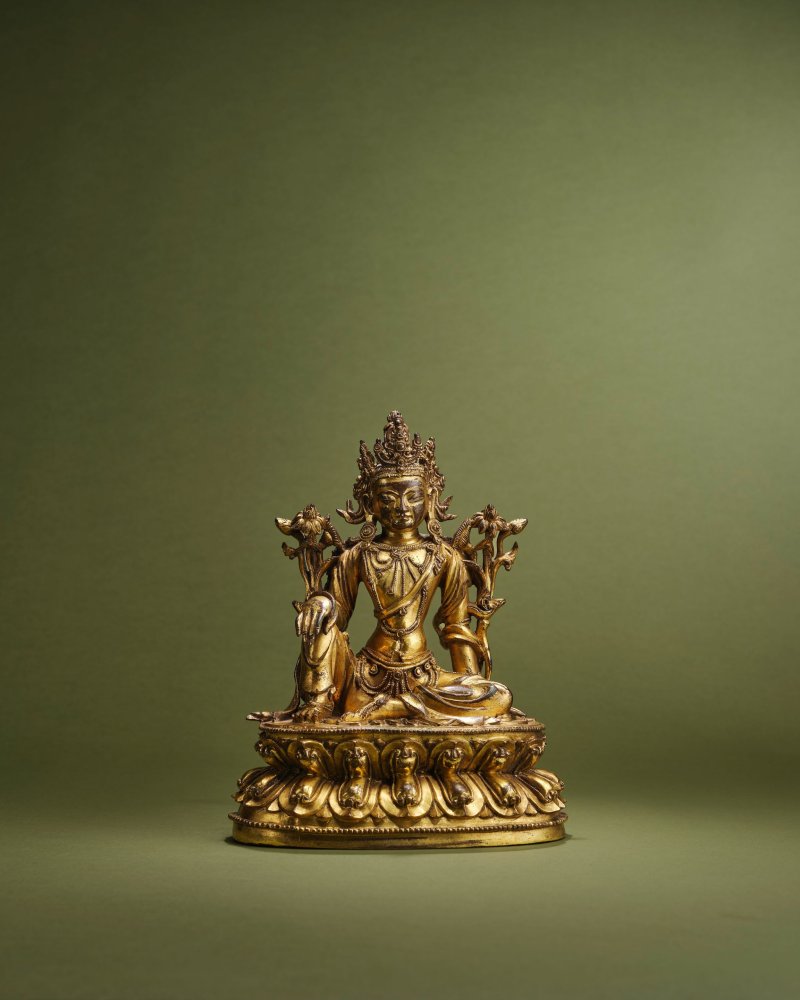
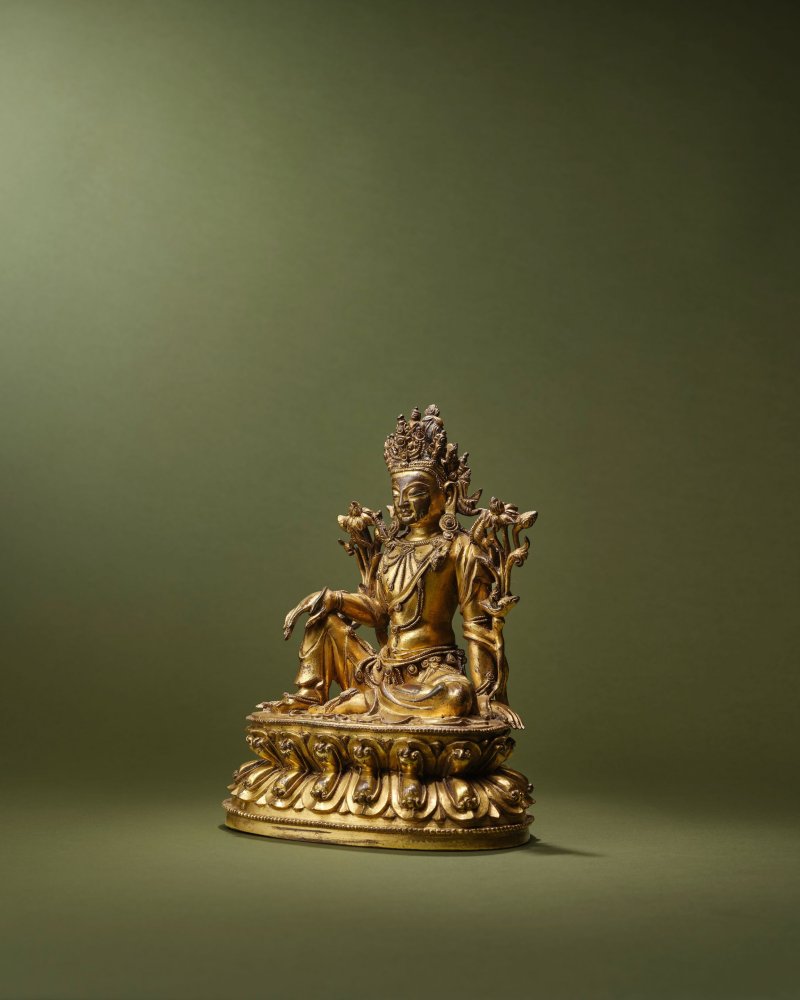
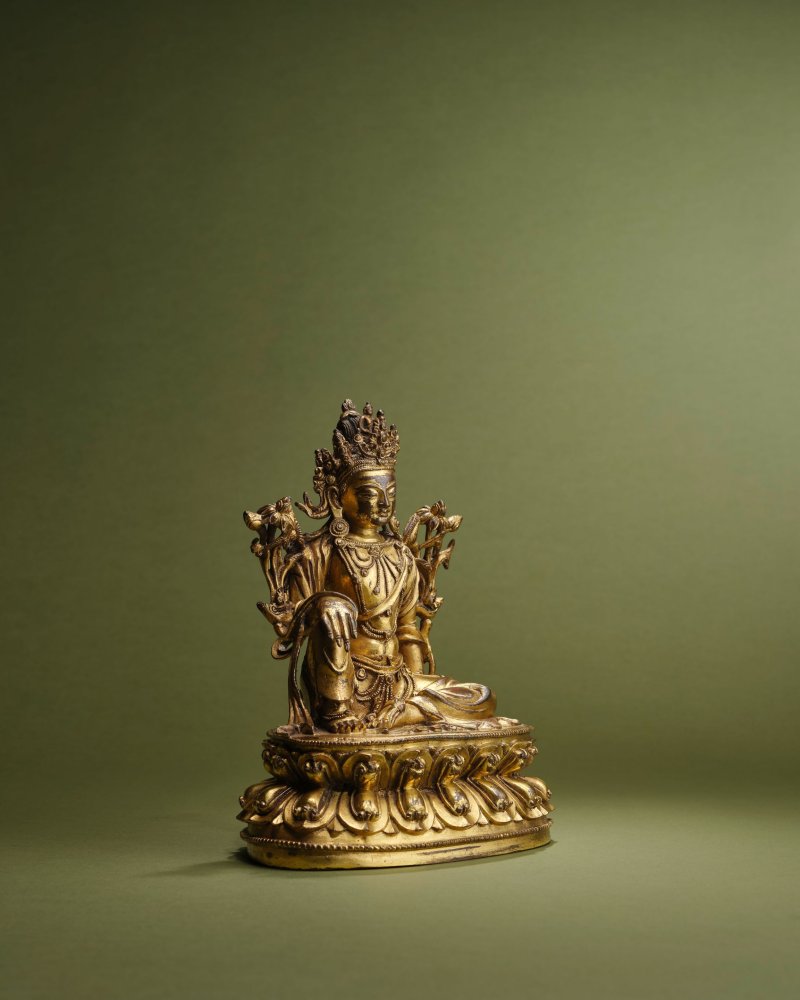
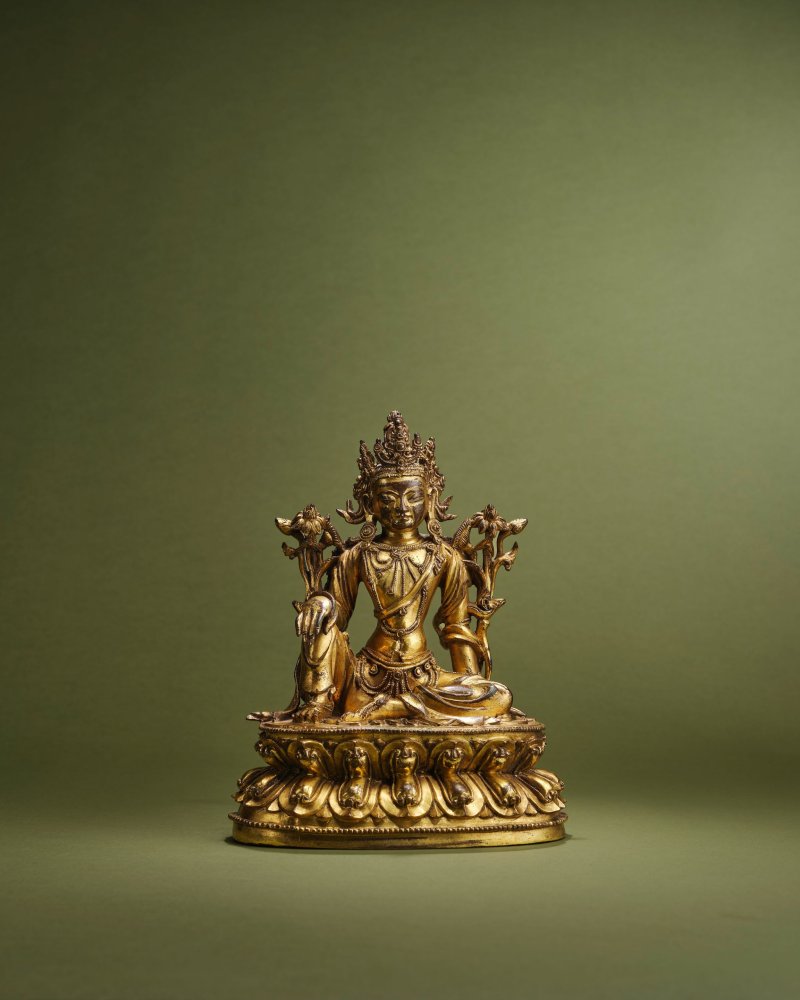
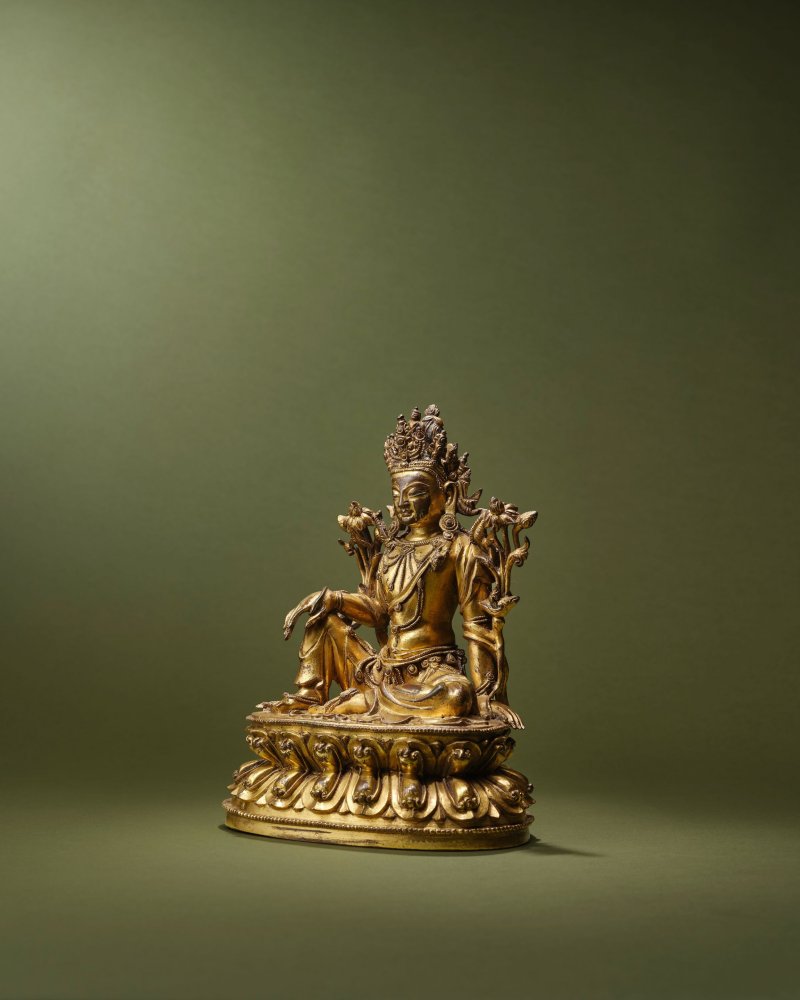
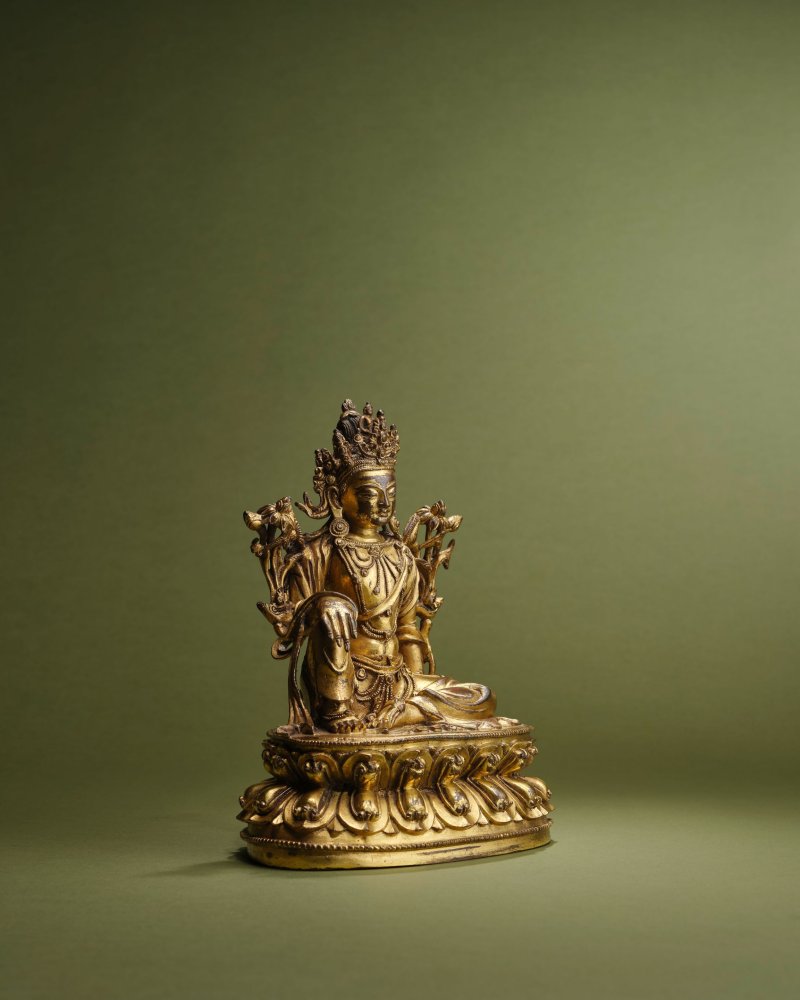
十五世紀 銅鎏金蓮花手觀音坐像 | A RARE GILT-BRONZE FIGURE OF AVALOKITESHVARA PADMAPANI
年代
15th century
起拍价
HKD 600,000
估值区间
HKD 600000 - 800000
尺寸
未知
品相
未知
更多信息
15th century
The bodhisattva gracefully cast, seated in rajalilasana (royal ease), the left hand reaching over the edge of the double-lotus base, gently holding the tip of a lotus stem rising along the arm to frame the shoulders, the right hand resting on the raised knee, mirroring the gesture, the deity draped in a flowing dhoti secured with a sash, adorned with intricate jewellery including necklaces, armlets, large circular earrings, and a foliated tiara topped with a small figure of the Buddha before an artfully arranged chignon, the face bearing a serene and contemplative expression, the base unsealed.
18.5cm (7 2/8in) high.
Footnotes
十五世紀 銅鎏金蓮花手觀音坐像
Provenance:
Bonhams London, 3 November 2022, lot 141
來源:
倫敦邦瀚斯,2022年11月3日,拍品編號141
(Sanskrit: 'Lotus in Hand') is a bodhisattva embodying compassion, frequently depicted holding a lotus flower and often shown in (Royal Ease), a posture that conveys both elegance and approachability. This form is distinguished from other manifestations of Avalokitesvara by the lotus attribute and the graceful, attentive pose, emphasising the bodhisattva's role in responding to the needs of sentient beings. The figure is often adorned with elaborate jewellery and a tiara, which in this example features a small figure of the Buddha, typically Amitabha, highlighting Avalokitesvara's close association with the celestial Buddha and her elevated spiritual authority.
The epithet Padmapani underscores the purity and spiritual awakening symbolised by the lotus, which rises unstained from the mud and exudes a delicate fragrance, a metaphor for compassion arising amidst the suffering of the world. Revered across Mahayana Buddhism, Avalokitesvara is believed to hear the cries of devotees and intervene with mercy, and the serene, contemplative expression of Padmapani, combined with the posture and lotus attributes, communicates both accessibility and transcendence, making this an enduring and highly venerated form in Buddhist art.
See a related gilt-bronze figure of Avalokiteshvara Padmapani, Yongle, with a similar figure of Buddha before the chignon, illustrated by U.von Schroeder, , Vol.2, Hong Kong, 2001, p.1270, pl.353A-B. The elaborate jewellery and the sinuous body with the left hand going over the pedestal is similar to a gilt-brass figure of Padmapani, Ming dynasty, 1500-1550, in the Cleveland Museum of Art, Ohio, illustrated by U.von Schroeder, , Hong Kong, 1981, p.531, fig.151F. The same figure has subsequently been redated on the museum's website to around 1450. Compare also with a related gilt-bronze figure of Avalokiteshvara, second half of the 15th century, illustrated in , Taipei, 1993, pp.80-81, no.33.
蓮花手觀音(梵文Padmapani,意為「蓮花手」)乃大悲之化身,常持蓮華,多呈自在坐姿,姿態優雅從容,彰顯其濟世度人之悲心。此形相與其他觀音化身之別,即在於蓮花標誌與安詳注視之姿,突出菩薩回應眾生苦難之願力。觀音面容豐潤,雙目俯視,寂靜慈祥。頭戴五葉寶冠,垂耳戴圓璫。高發髻前雕阿彌陀佛小像,寓意觀音與阿彌陀佛因緣甚深。右腿弓起,左腿盤曲,左手握蓮花莖支撐在蓮座上,右手輕搭右膝。袒上身,胸前垂掛項鏈瓔珞,腰繫連珠腰帶,披帛繞臂,下穿薄裙。
蓮花手觀音以拈蓮花而得名。蓮花出淤泥而不染,暗香浮動,象徵純淨與覺悟,亦喻對世間苦難之惻隱。大乘佛教崇奉觀音菩薩,深信其傾聽眾生祈願,廣施慈悲。此蓮花手觀音像面容靜穆,姿態自在,手執蓮花,既予人親近之感,亦具超凡之氣,實為經典之作。
參考一尊永樂時期銅鎏金蓮花手觀音像,髮髻前亦有相似之佛小像,見施羅德,《Buddhist Sculptures in Tibet》,卷2,香港,2001年,頁1270,圖版353A及B。本拍品所飾之華麗瓔珞及其蜿蜒身姿、左手垂撫蓮座之態,與克利夫蘭藝術博物館藏一件明代(1500-1550年)銅鎏金蓮花手觀音像相似,見施羅德《Indo-Tibetan Bronzes》,香港,1981年,頁531,圖151F;該館網站其後將此像年代修訂為約1450年。另可比對一件十五世紀下半葉銅鎏金觀音像,載於《金銅佛造像圖錄》,台北,1993年,頁80至81,編號33。
The bodhisattva gracefully cast, seated in rajalilasana (royal ease), the left hand reaching over the edge of the double-lotus base, gently holding the tip of a lotus stem rising along the arm to frame the shoulders, the right hand resting on the raised knee, mirroring the gesture, the deity draped in a flowing dhoti secured with a sash, adorned with intricate jewellery including necklaces, armlets, large circular earrings, and a foliated tiara topped with a small figure of the Buddha before an artfully arranged chignon, the face bearing a serene and contemplative expression, the base unsealed.
18.5cm (7 2/8in) high.
Footnotes
十五世紀 銅鎏金蓮花手觀音坐像
Provenance:
Bonhams London, 3 November 2022, lot 141
來源:
倫敦邦瀚斯,2022年11月3日,拍品編號141
(Sanskrit: 'Lotus in Hand') is a bodhisattva embodying compassion, frequently depicted holding a lotus flower and often shown in (Royal Ease), a posture that conveys both elegance and approachability. This form is distinguished from other manifestations of Avalokitesvara by the lotus attribute and the graceful, attentive pose, emphasising the bodhisattva's role in responding to the needs of sentient beings. The figure is often adorned with elaborate jewellery and a tiara, which in this example features a small figure of the Buddha, typically Amitabha, highlighting Avalokitesvara's close association with the celestial Buddha and her elevated spiritual authority.
The epithet Padmapani underscores the purity and spiritual awakening symbolised by the lotus, which rises unstained from the mud and exudes a delicate fragrance, a metaphor for compassion arising amidst the suffering of the world. Revered across Mahayana Buddhism, Avalokitesvara is believed to hear the cries of devotees and intervene with mercy, and the serene, contemplative expression of Padmapani, combined with the posture and lotus attributes, communicates both accessibility and transcendence, making this an enduring and highly venerated form in Buddhist art.
See a related gilt-bronze figure of Avalokiteshvara Padmapani, Yongle, with a similar figure of Buddha before the chignon, illustrated by U.von Schroeder, , Vol.2, Hong Kong, 2001, p.1270, pl.353A-B. The elaborate jewellery and the sinuous body with the left hand going over the pedestal is similar to a gilt-brass figure of Padmapani, Ming dynasty, 1500-1550, in the Cleveland Museum of Art, Ohio, illustrated by U.von Schroeder, , Hong Kong, 1981, p.531, fig.151F. The same figure has subsequently been redated on the museum's website to around 1450. Compare also with a related gilt-bronze figure of Avalokiteshvara, second half of the 15th century, illustrated in , Taipei, 1993, pp.80-81, no.33.
蓮花手觀音(梵文Padmapani,意為「蓮花手」)乃大悲之化身,常持蓮華,多呈自在坐姿,姿態優雅從容,彰顯其濟世度人之悲心。此形相與其他觀音化身之別,即在於蓮花標誌與安詳注視之姿,突出菩薩回應眾生苦難之願力。觀音面容豐潤,雙目俯視,寂靜慈祥。頭戴五葉寶冠,垂耳戴圓璫。高發髻前雕阿彌陀佛小像,寓意觀音與阿彌陀佛因緣甚深。右腿弓起,左腿盤曲,左手握蓮花莖支撐在蓮座上,右手輕搭右膝。袒上身,胸前垂掛項鏈瓔珞,腰繫連珠腰帶,披帛繞臂,下穿薄裙。
蓮花手觀音以拈蓮花而得名。蓮花出淤泥而不染,暗香浮動,象徵純淨與覺悟,亦喻對世間苦難之惻隱。大乘佛教崇奉觀音菩薩,深信其傾聽眾生祈願,廣施慈悲。此蓮花手觀音像面容靜穆,姿態自在,手執蓮花,既予人親近之感,亦具超凡之氣,實為經典之作。
參考一尊永樂時期銅鎏金蓮花手觀音像,髮髻前亦有相似之佛小像,見施羅德,《Buddhist Sculptures in Tibet》,卷2,香港,2001年,頁1270,圖版353A及B。本拍品所飾之華麗瓔珞及其蜿蜒身姿、左手垂撫蓮座之態,與克利夫蘭藝術博物館藏一件明代(1500-1550年)銅鎏金蓮花手觀音像相似,見施羅德《Indo-Tibetan Bronzes》,香港,1981年,頁531,圖151F;該館網站其後將此像年代修訂為約1450年。另可比對一件十五世紀下半葉銅鎏金觀音像,載於《金銅佛造像圖錄》,台北,1993年,頁80至81,編號33。
常见问题
这件十五世紀 銅鎏金蓮花手觀音坐像 | A RARE GILT-BRONZE FIGURE OF AVALOKITESHVARA PADMAPANI的成交价是多少?
落槌价为 预展中。 成交价为 预展中。