
拍品信息
拍品名称
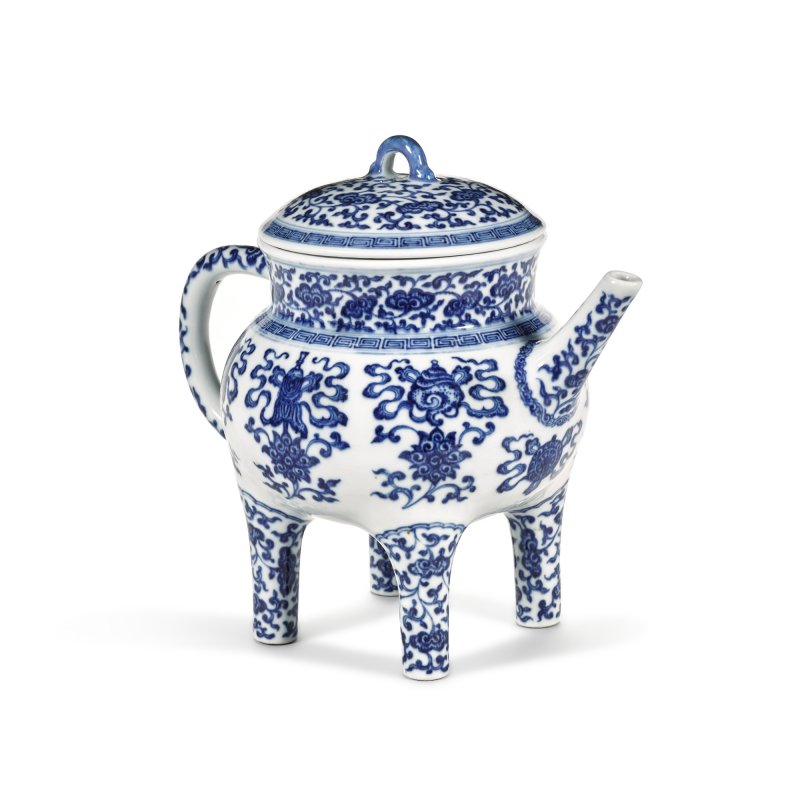
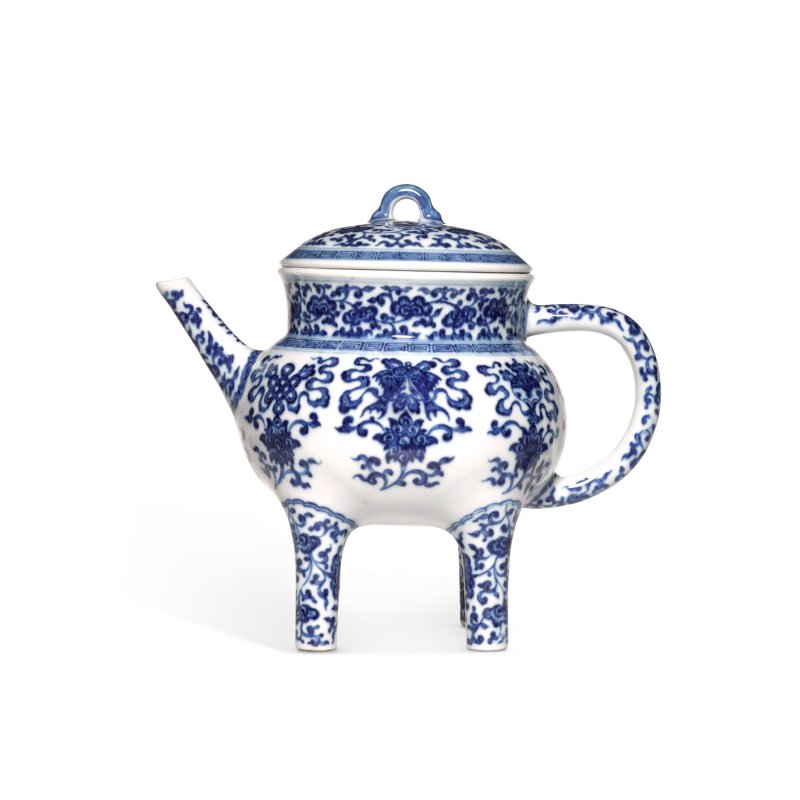
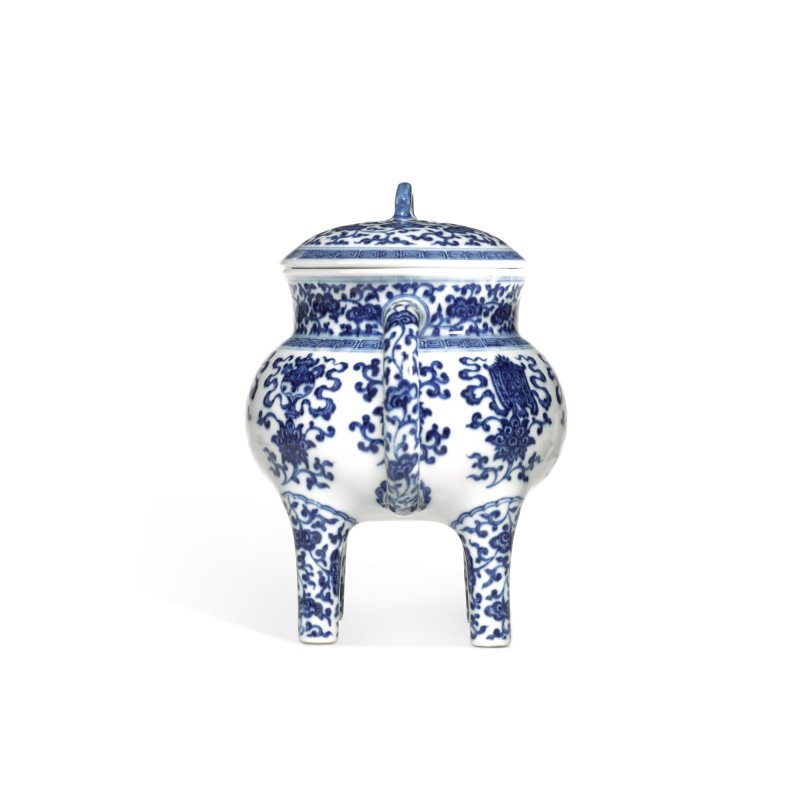
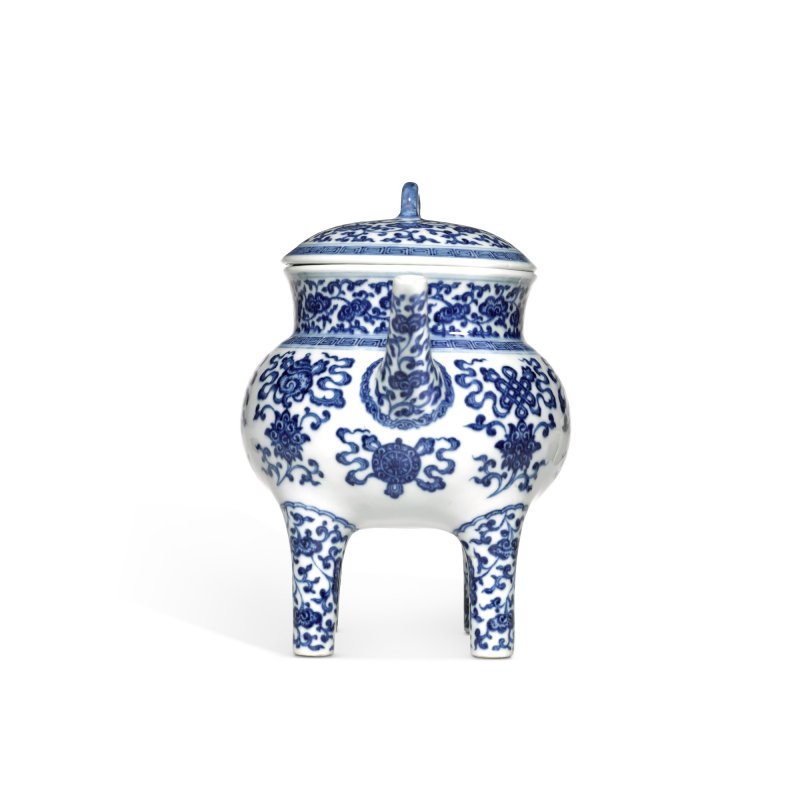
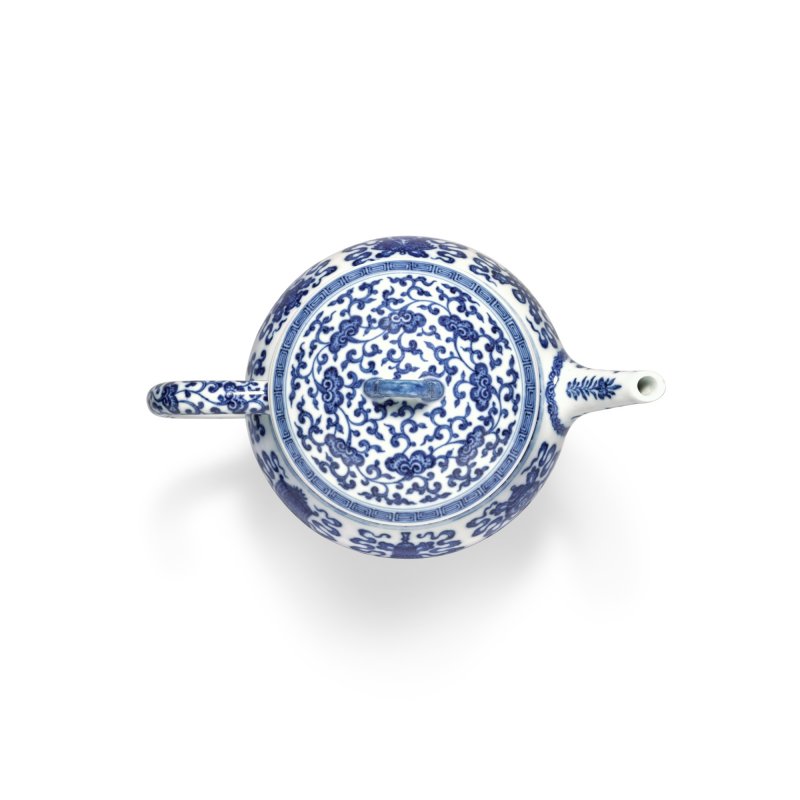
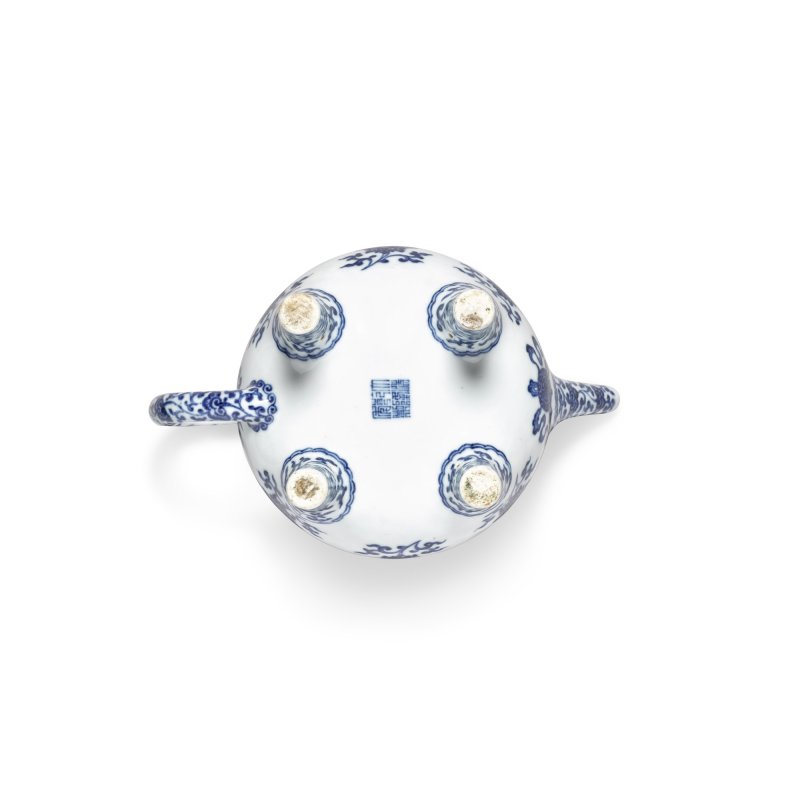
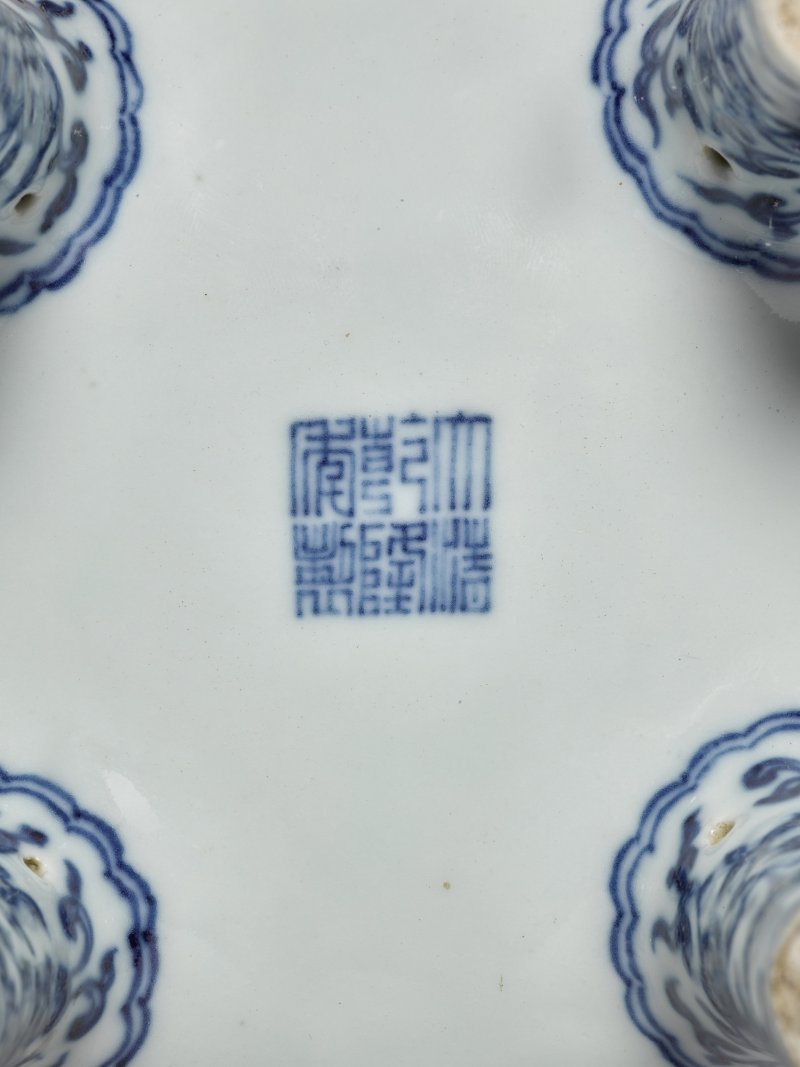
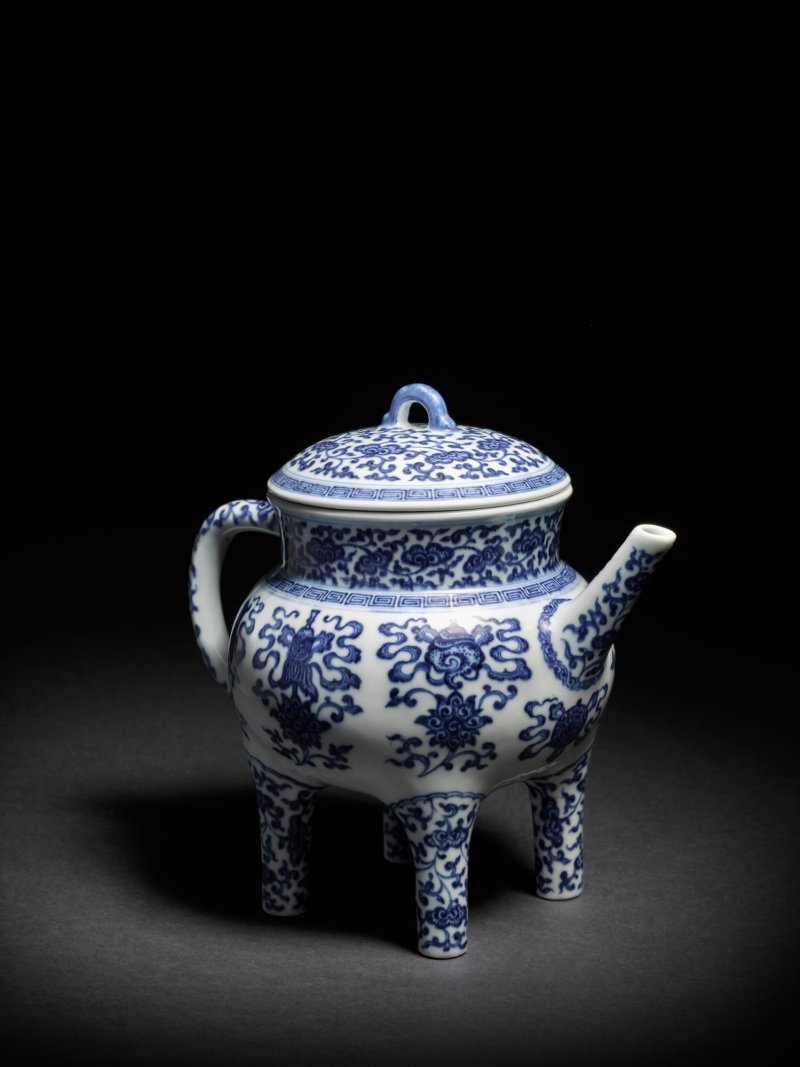
清乾隆 青花番蓮托八吉祥紋四足蓋盉 《大清乾隆年製》款
起拍价
USD 80,000
估值区间
80,000 - 120,000 USD
尺寸
未知
品相
如欲了解本拍品狀況的更多資訊,請聯絡 Drew.Lerner@sothebys.com
更多信息
the base with a six-character seal mark in underglaze blue (2)
Overall height 8½ in., 21.5 cm
来源:Richard Marchant 收藏
图录
说明:A merging of the archaic, the historic and the reigning imperial, the present ewer exemplifies the refined taste of the Qianlong Emperor and his reverence for the past. In form, the vessel is derived from archaic bronze wine ewers of the Shang and Zhou dynasties, known as he. Themselves inspired by pottery prototypes, these bronze vessels were among the series of altar wares used in elite Shang and Zhou contexts and continued to be beloved in the ensuing millennia, uncovered and preserved in scholarly and imperial contexts alike.
He of the present design in porcelain appear to be an 18th century innovation. According to Palace records, the first order for these vessels took place in the 3rd year of the Qianlong reign as was typical of the Emperor’s taste. Growing up amidst the extensive imperial collection of his father and grandfather, the Qianlong Emperor was a devoted scholar of archaic material and frequently commissioned such works derived from the past but enlivened with contemporary designs.
While contemporary in some respects, featuring lotus blooms, scrollwork and the Eight Buddhist Treasures (bajixiang) in typical ‘Qianlong style’, the present ewer is also an homage to the perceived zenith of blue-and-white porcelain: the early Ming dynasty. Featuring a rich dappled blue applied in imitation of the ‘heaping and piling’ defect of early unrefined cobalt, the present ewer relies heavily on the classical Ming aesthetic; from its band of scrolling lingzhi fungus to its selective celebration of negative space.
Ewers of this unusual form are found in important private and museum collections; one in the National Palace Museum, Taipei, was included in the Museum’s exhibition K’ang-Hsi, Yung-Cheng and Ch’ien-Lung Porcelain Ware from the Ch’ing Dynasty in the National Palace Museum, Taipei, 1986, cat. no. 71; another in the Tianjin Municipal Museum is illustrated in Tianjin Shi Yishu Bowuguan cang ci [Porcelains from the Tianjin Municipal Museum], Tianjin, 1993, pl. 166; and a third in the collection of the British Royal Family is illustrated in John Ayers, Chinese and Japanese Works of Art, London, 2016, vol. 1, pl. 424, together with a Jiaqing mark and period example, pl. 425.
Overall height 8½ in., 21.5 cm
来源:Richard Marchant 收藏
图录
说明:A merging of the archaic, the historic and the reigning imperial, the present ewer exemplifies the refined taste of the Qianlong Emperor and his reverence for the past. In form, the vessel is derived from archaic bronze wine ewers of the Shang and Zhou dynasties, known as he. Themselves inspired by pottery prototypes, these bronze vessels were among the series of altar wares used in elite Shang and Zhou contexts and continued to be beloved in the ensuing millennia, uncovered and preserved in scholarly and imperial contexts alike.
He of the present design in porcelain appear to be an 18th century innovation. According to Palace records, the first order for these vessels took place in the 3rd year of the Qianlong reign as was typical of the Emperor’s taste. Growing up amidst the extensive imperial collection of his father and grandfather, the Qianlong Emperor was a devoted scholar of archaic material and frequently commissioned such works derived from the past but enlivened with contemporary designs.
While contemporary in some respects, featuring lotus blooms, scrollwork and the Eight Buddhist Treasures (bajixiang) in typical ‘Qianlong style’, the present ewer is also an homage to the perceived zenith of blue-and-white porcelain: the early Ming dynasty. Featuring a rich dappled blue applied in imitation of the ‘heaping and piling’ defect of early unrefined cobalt, the present ewer relies heavily on the classical Ming aesthetic; from its band of scrolling lingzhi fungus to its selective celebration of negative space.
Ewers of this unusual form are found in important private and museum collections; one in the National Palace Museum, Taipei, was included in the Museum’s exhibition K’ang-Hsi, Yung-Cheng and Ch’ien-Lung Porcelain Ware from the Ch’ing Dynasty in the National Palace Museum, Taipei, 1986, cat. no. 71; another in the Tianjin Municipal Museum is illustrated in Tianjin Shi Yishu Bowuguan cang ci [Porcelains from the Tianjin Municipal Museum], Tianjin, 1993, pl. 166; and a third in the collection of the British Royal Family is illustrated in John Ayers, Chinese and Japanese Works of Art, London, 2016, vol. 1, pl. 424, together with a Jiaqing mark and period example, pl. 425.
常见问题
拍品的品相状况如何?
如欲了解本拍品狀況的更多資訊,請聯絡 Drew.Lerner@sothebys.com
这件拍品的流传来源是什么?
Richard Marchant 收藏
图录
图录