
拍品信息
拍品名称
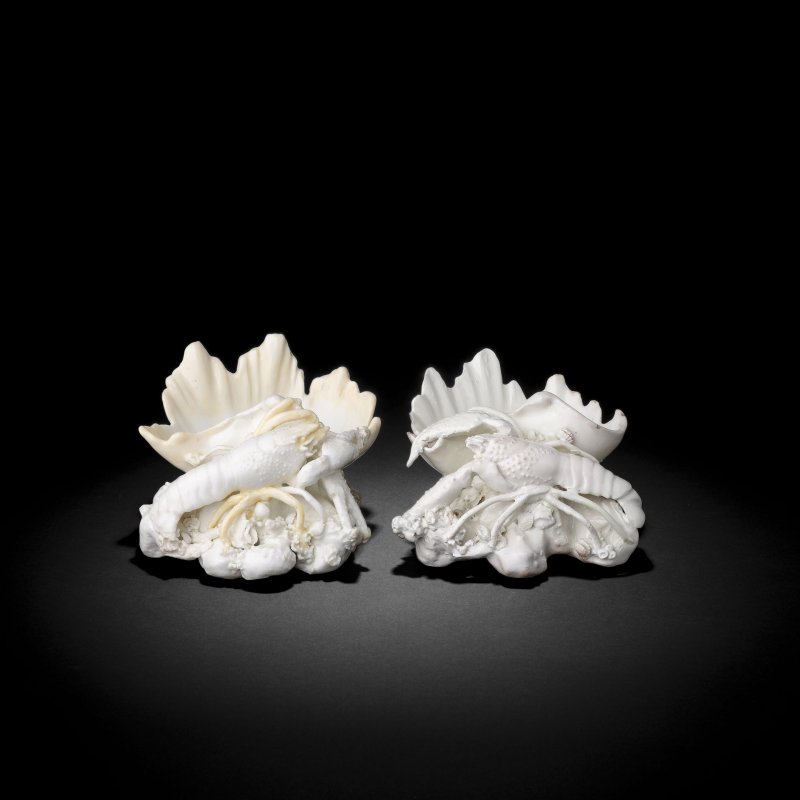
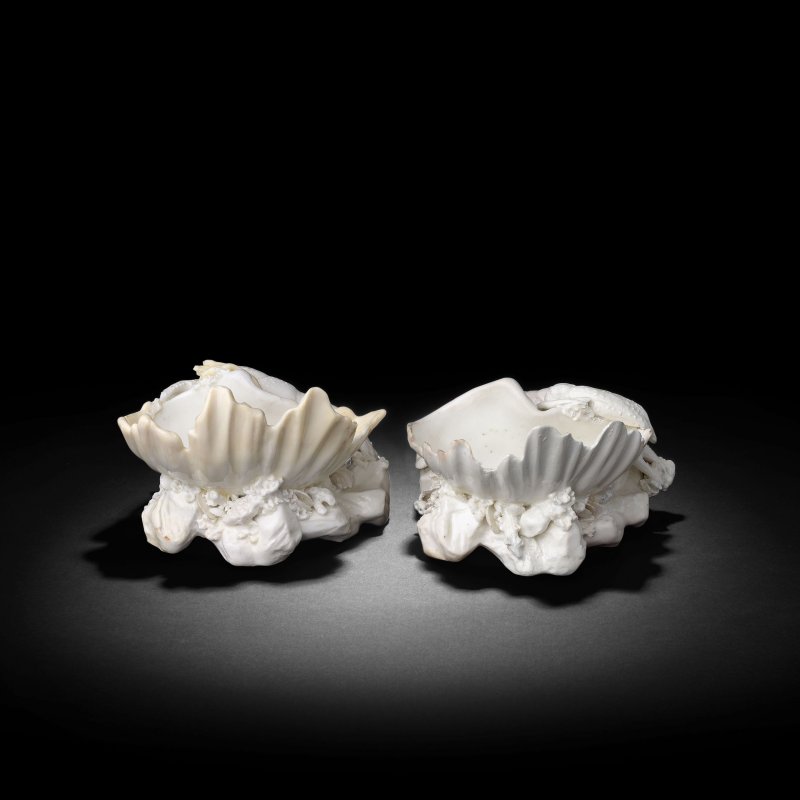
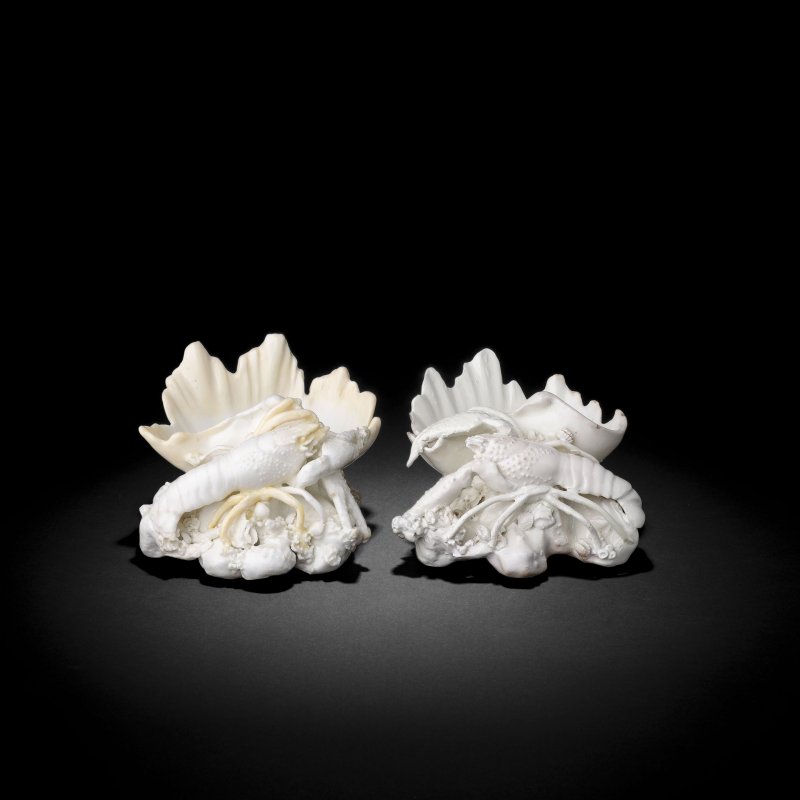
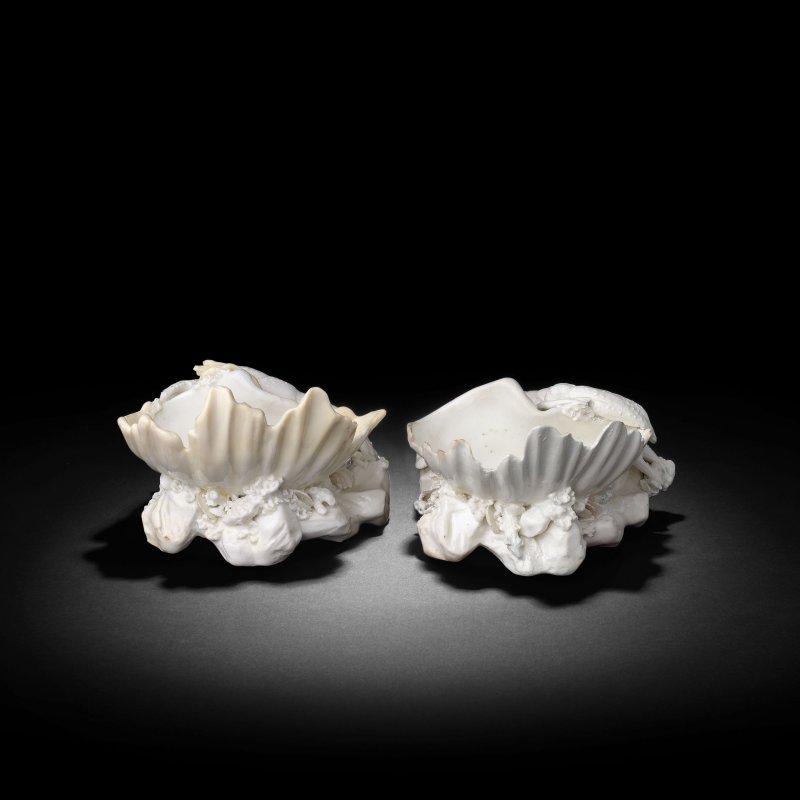
Two Chelsea white crayfish salts, circa 1745-49
起拍价
GBP 3,000
估值区间
未知
尺寸
未知
品相
未知
更多信息
Realistically modelled with the crustacean clambering on rockwork encrusted with a variety of shells, weed and coral sprigs, a larger open shell forming the salt dish, 11.5cm wide, incised triangle marks (2)
Footnotes
Provenance
Simon Spero exhibition, 2009, no.2 (example pictured left)
Literature
White, Mary, Beasts at the Whites' House, Vol.1, 2020, p.232
A pair of silver-gilt salts made by Nicholas Sprimont in 1742/43 are the direct inspiration for this model and form part of the famed Marine Service, created for Frederick, Prince of Wales and preserved in the Royal Collection (RCIN 51393 1-2). See Sally Kevill-Davies, 'Some new connections between Nicholas Sprimont's silver and early Chelsea porcelain', ECC Trans, Vol.31, 2020, pp.109-10.
It is not surprising that Sprimont sought to translate the rococo form into Chelsea porcelain, where they take on a whole new appeal and aesthetic. Horace Walpole owned a pair, also left in the white, one of which has an incised '3' in addition to the usual triangle mark. As Kevill-Davis elaborates, this presumably indicates that they originally formed a set of four or more, which would have looked spectacular as part of a table setting for service . Walpole's pair of salts are currently on display at the British Museum (inv. no.1887,0307,II.18).
Most examples from the early incised triangle period are left in the white with a few exceptions including the important pair sold by Bonhams on 13 December 2006, lot 144, probably outside-decorated in the London workshop of William Duesbury. The form was evidently re-issued in the red anchor period and enamelled in-house, see the example from the Peter and Mary White Collection, sold by Bonhams on 1 December 2025, lot 107.
Footnotes
Provenance
Simon Spero exhibition, 2009, no.2 (example pictured left)
Literature
White, Mary, Beasts at the Whites' House, Vol.1, 2020, p.232
A pair of silver-gilt salts made by Nicholas Sprimont in 1742/43 are the direct inspiration for this model and form part of the famed Marine Service, created for Frederick, Prince of Wales and preserved in the Royal Collection (RCIN 51393 1-2). See Sally Kevill-Davies, 'Some new connections between Nicholas Sprimont's silver and early Chelsea porcelain', ECC Trans, Vol.31, 2020, pp.109-10.
It is not surprising that Sprimont sought to translate the rococo form into Chelsea porcelain, where they take on a whole new appeal and aesthetic. Horace Walpole owned a pair, also left in the white, one of which has an incised '3' in addition to the usual triangle mark. As Kevill-Davis elaborates, this presumably indicates that they originally formed a set of four or more, which would have looked spectacular as part of a table setting for service . Walpole's pair of salts are currently on display at the British Museum (inv. no.1887,0307,II.18).
Most examples from the early incised triangle period are left in the white with a few exceptions including the important pair sold by Bonhams on 13 December 2006, lot 144, probably outside-decorated in the London workshop of William Duesbury. The form was evidently re-issued in the red anchor period and enamelled in-house, see the example from the Peter and Mary White Collection, sold by Bonhams on 1 December 2025, lot 107.