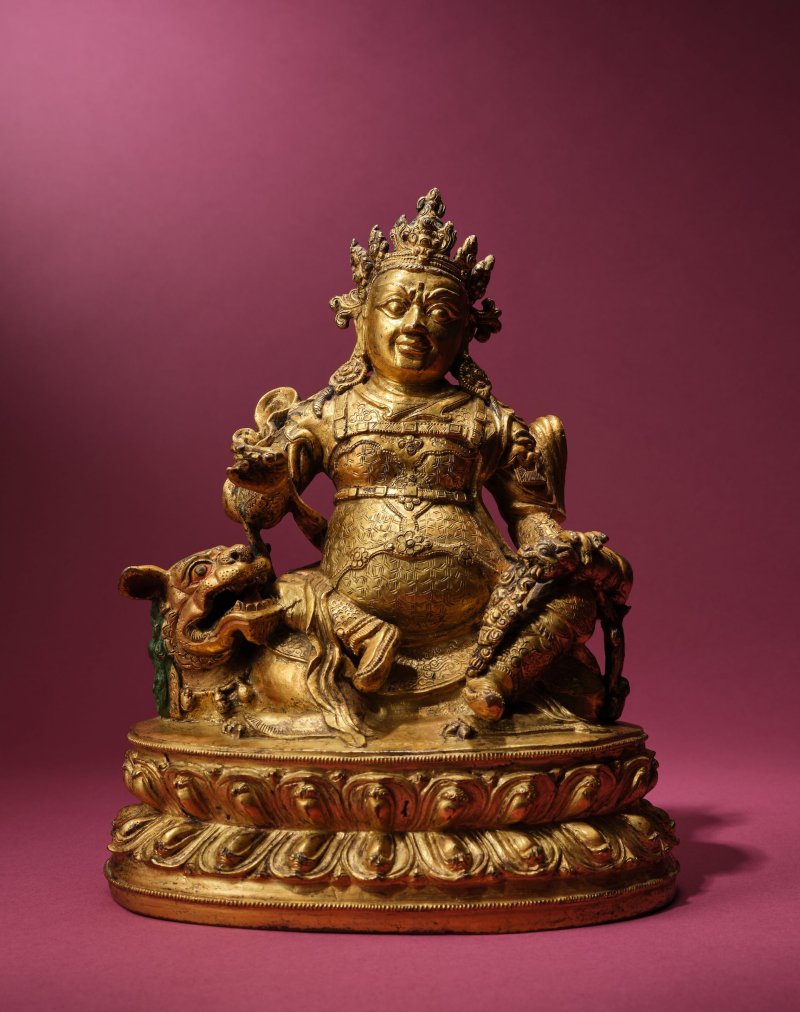

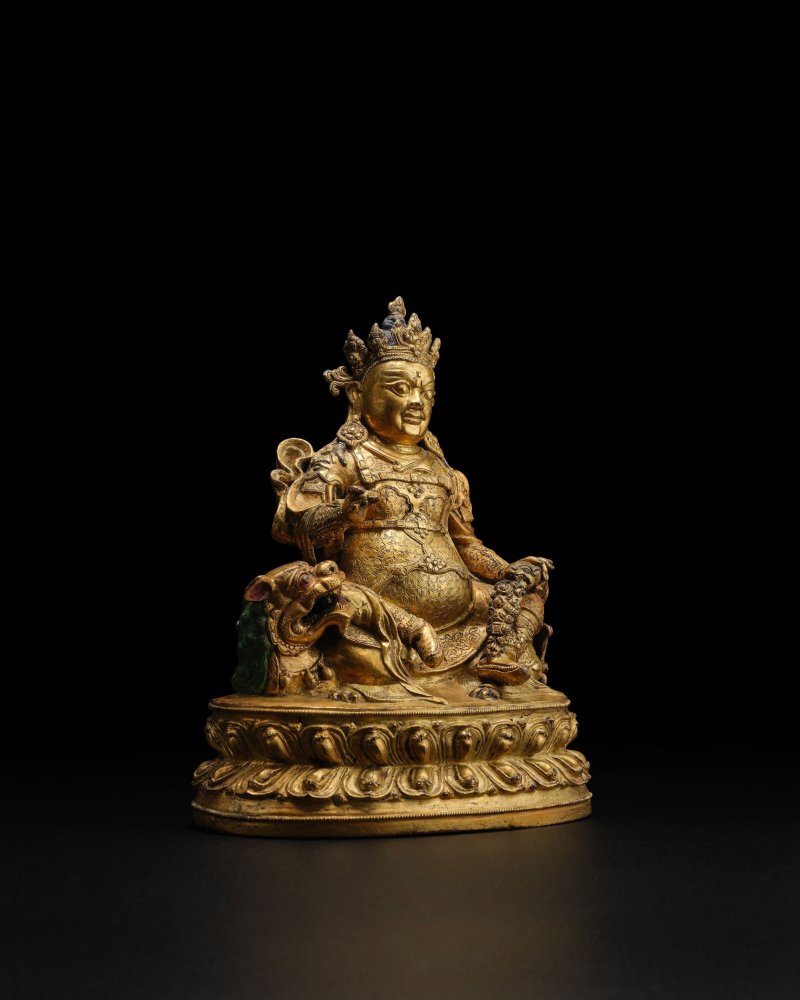
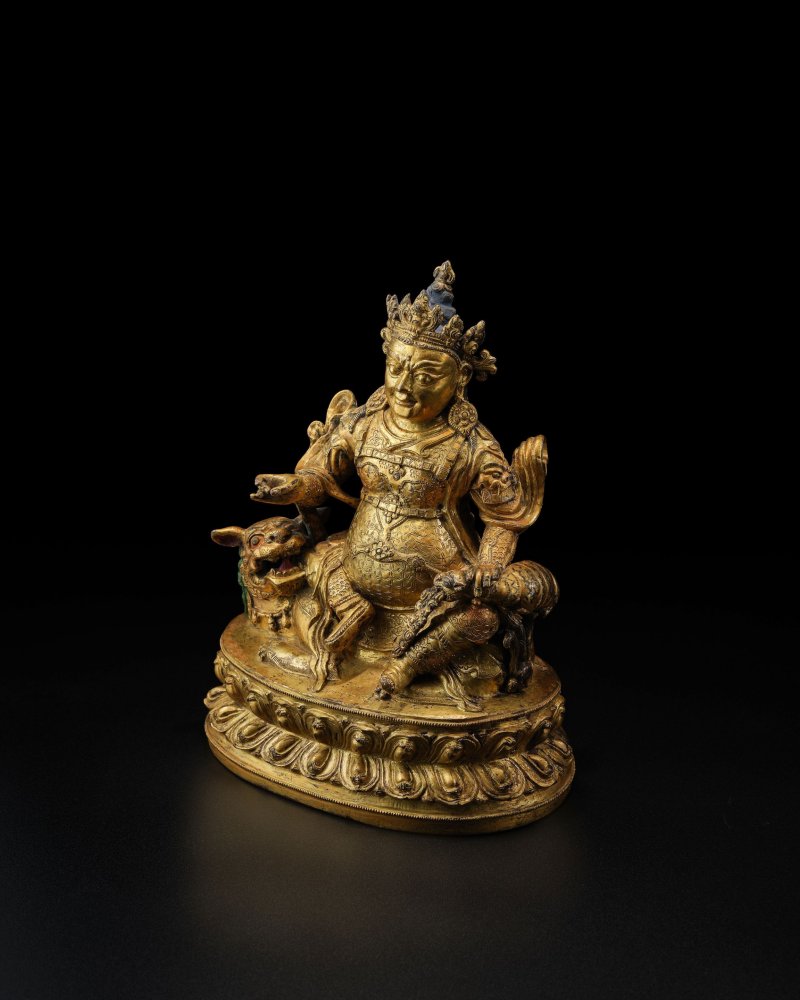
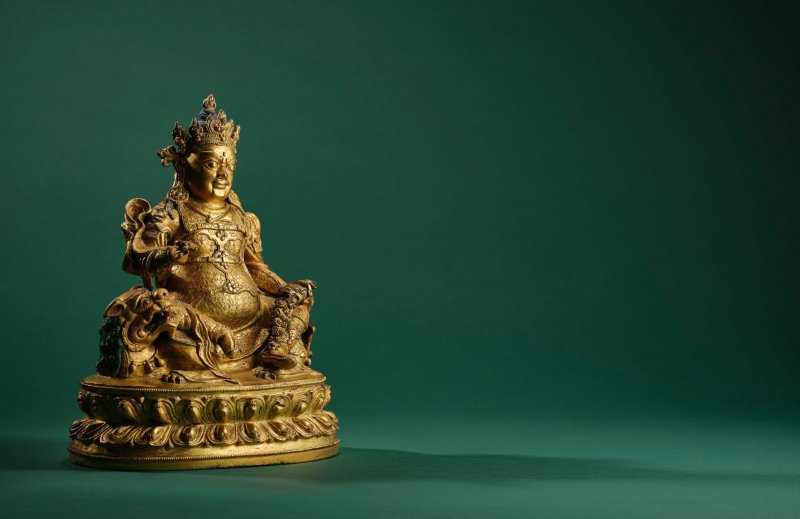
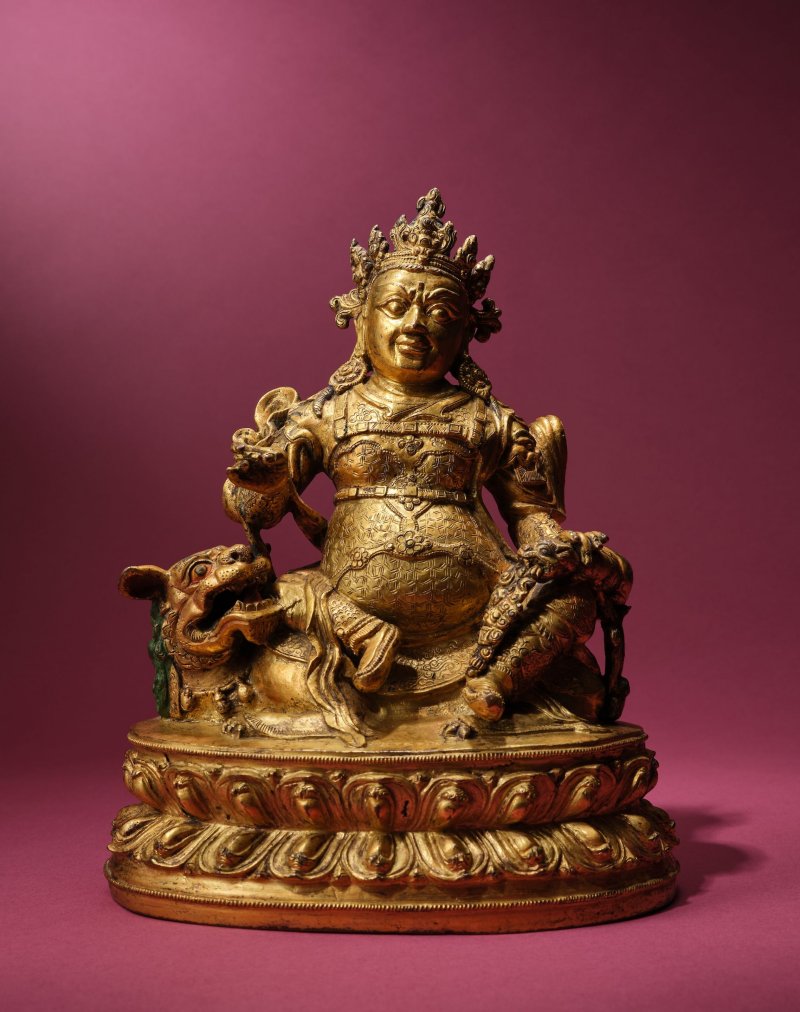
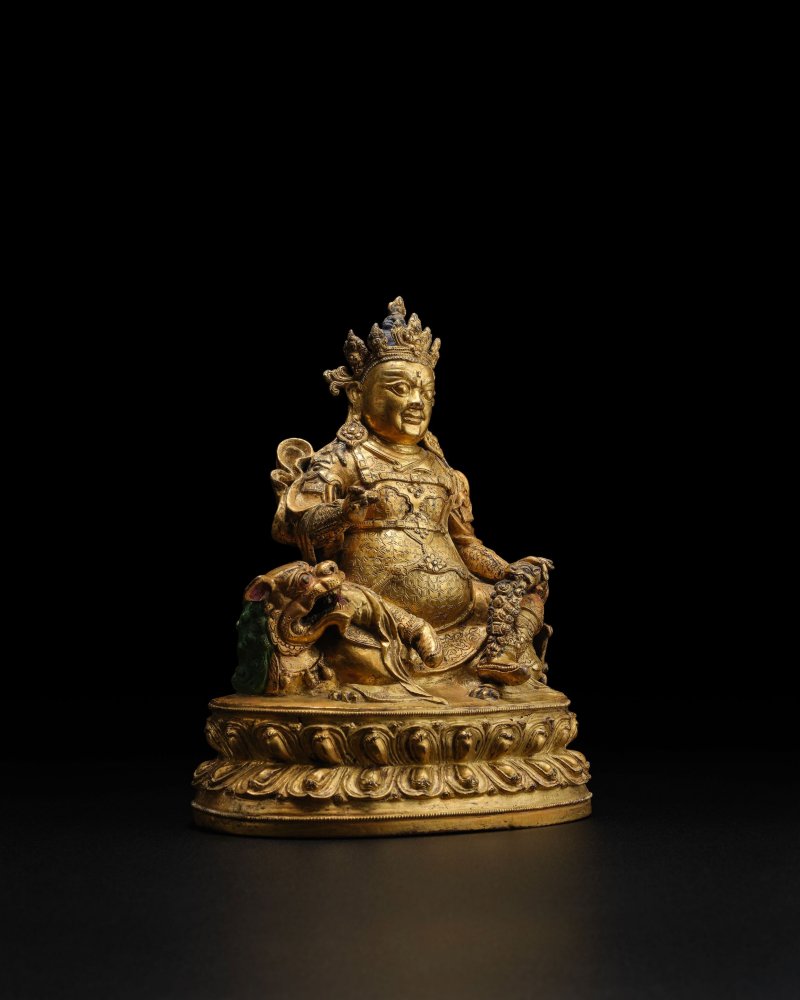
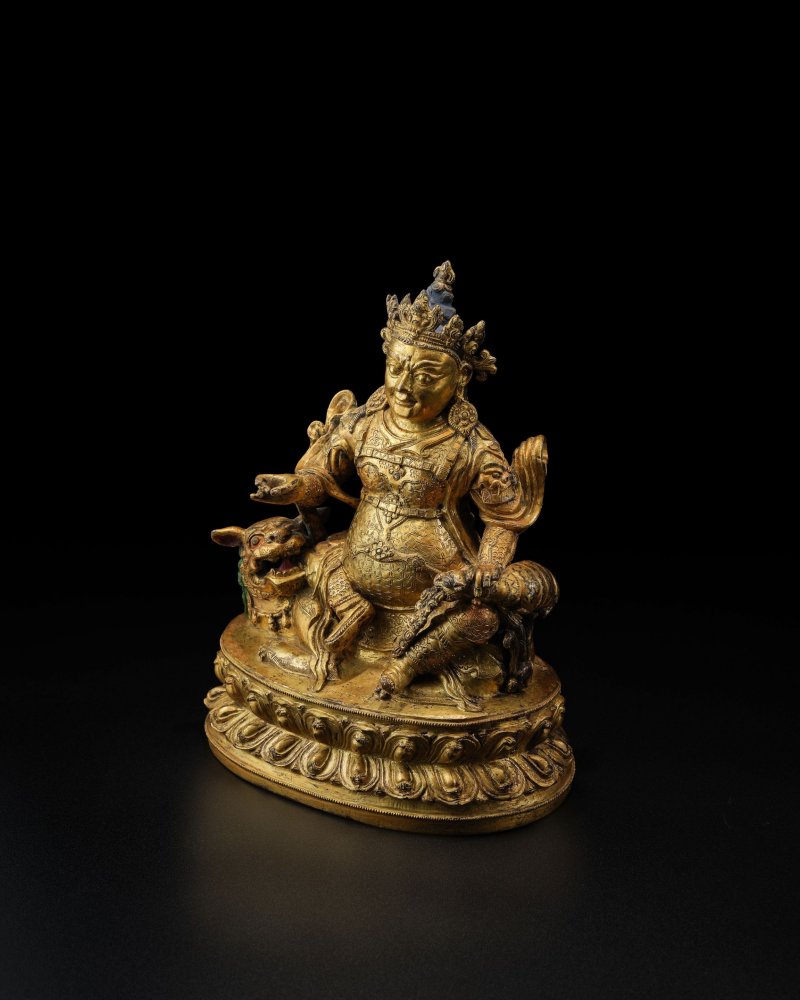
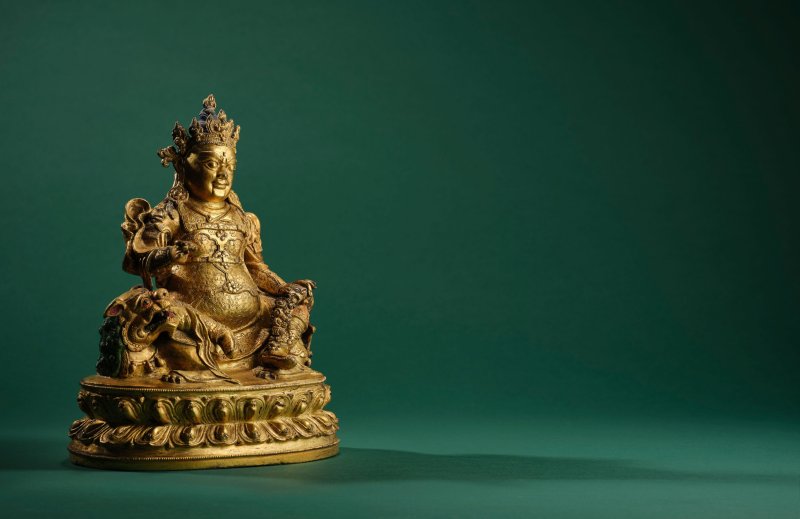
Lot 801 西藏 十五世紀 銅鎏金北方多聞天王像 | A GILT COPPER ALLOY FIGURE OF VAISHRAVANA
落槌价
预展中
成交价
预展中
| 拍卖公司 | 邦瀚斯 |
|---|---|
| 拍卖时间 | 2026年10月29日 |
拍品信息
拍品名称
西藏 十五世紀 銅鎏金北方多聞天王像 | A GILT COPPER ALLOY FIGURE OF VAISHRAVANA
年代
TIBET, 15TH CENTURY
起拍价
HKD 1,500,000
估值区间
HKD 1500000 - 2000000
尺寸
未知
品相
未知
更多信息
TIBET, 15TH CENTURY
With Tibetan inscriptions on the front and back of the base.
Himalayan Art Resources item no. 8870
23.5 cm (9 1/4 in.) high
Footnotes
西藏 十五世紀 銅鎏金北方多聞天王像
Published
Elke Hessel, Stephan von der Schulenburg & Matthias Wagner (eds.), Buddha: 108 Encounters, Frankfurt, 2015, p. 304, no. 101.
Meinrad Maria Grewenig & Eberhard Rist (eds.), Buddha: 2000 Years of Buddhist Art, 232 Masterpieces, Völklingen, 2016, pp. 432-433, no. 189.
Exhibited
Buddha: 108 Encounters, Museum Angewandte Kunst, Frankfurt, 26 February – 7 June 2015.
Buddha: 2000 Years of Buddhist Art, 232 Masterpieces, Völklingen, 24 June 2016 —19 February 2017.
Private European Collection
Vaishravana is one of the most compelling deities in Tibetan Buddhism because he combines two roles that might seem at odds. He is a fierce guardian who protects the Buddhist teachings, yet he is also a benevolent source of wealth and good fortune. Rather than seeing these as separate functions, Buddhist tradition treats them as part of the same divine responsibility. This sculpture expresses that balance beautifully, depicting Vaishravana as both regal and intimidating: a protector whose magnificence underscores his strength.
Vaishravana sits four-square in the saddle, the raised planes of his cheeks and the deep furrow between his brows sharpening an already vigilant gaze. He is clad in a full suit of armor and shod in fur-topped boots, the whole burnished to a hard brilliance that emphasizes his invulnerability. Silken sashes, incised with scrolling floral ornament, break into flight at either elbow, lending the seated figure a charge of movement. In his left hand he cradles the jewel-disgorging mongoose (), the deity's inexhaustible treasury, the creature's open mouth the source from which his wealth issues. Beneath him the snow lion twists its head upward and back toward its rider—formidable in its own right, yet turned in attention to its master, so that the group is bound by a single line of gaze. Consecratory pigments survive across the bronze. The deity's hair retains its blue, the conventional coloring for a wrathful protector, while the lion's mane holds a green wash by which the Tibetan snow lion () is invariably distinguished. Such pigment was renewed periodically as part of the image's ritual maintenance, and its survival indicates a sculpture kept in active worship.
Vaishravana is king of the yakshas and chief among the Four Great Kings (), the guardians of the cardinal directions: Dhritarashtra in the east, Virudhaka in the south, Virupaksha in the west, and Vaishravana himself in the north. Alone among the four he acquired an independent cult, and it is in that capacity—mounted, armored, and attended by the mongoose—that he appears here, rather than as one member of a protective quartet flanking a temple entrance.
The armor is the most telling stylistic element of the commission. From the 14th century onward, and with increasing definition under the Ming, the Heavenly Kings were re-imagined in Sino-Tibetan art according to a new and far more specific martial vocabulary, their generic cuirasses giving way to plate and mail rendered with something approaching an armorer's attention. The present sculpture belongs squarely to that development. Its torso is spanned by large interlocking plates arranged in a Y, worn over chainmail worked to a fine, even grain. The shoulders are guarded by leonine lappets cast in high relief and set with rosettes. The same configuration of torso plates appears in an early 15th-century Sakya thangka of Vaishravana in the Metropolitan Museum of Art, New York (2021.290; fig 1), which offers a painted counterpart to the arrangement modelled here in three dimensions. Comparable treatment of the armor, together with a closely related handling of the face and earrings, is found on a Ming bronze sold at Christie's, New York, 25 March 2004, lot 84.
The pedestal carries two inscriptions. On the front face of the lotus base is the deity's Tibetan designation, , contracting . A two-line inscription in Tibetan script runs across the reverse: a votive dedication invoking the deity as lord of the wealth of the universe and requesting his blessing upon the donor and upon all beings. The bronze compares favorably in scale to another 15th-century image of Vaishravana formerly of the Speelman collection, sold at Bonhams, Hong Kong, 5 May 2025, lot 1 (fig. 2). Another example was exhibited at the Capital Museum, Beijing, in 2013 (Yixi, ed., , 2013, pp. 164–65), and a further closely related gilt bronze figure was shown in Taipei in 2023 (Kao, ed., , 2023, p. 44).
For the figures listed in this essay, please refer to our printed or digital catalogue.
With Tibetan inscriptions on the front and back of the base.
Himalayan Art Resources item no. 8870
23.5 cm (9 1/4 in.) high
Footnotes
西藏 十五世紀 銅鎏金北方多聞天王像
Published
Elke Hessel, Stephan von der Schulenburg & Matthias Wagner (eds.), Buddha: 108 Encounters, Frankfurt, 2015, p. 304, no. 101.
Meinrad Maria Grewenig & Eberhard Rist (eds.), Buddha: 2000 Years of Buddhist Art, 232 Masterpieces, Völklingen, 2016, pp. 432-433, no. 189.
Exhibited
Buddha: 108 Encounters, Museum Angewandte Kunst, Frankfurt, 26 February – 7 June 2015.
Buddha: 2000 Years of Buddhist Art, 232 Masterpieces, Völklingen, 24 June 2016 —19 February 2017.
Private European Collection
Vaishravana is one of the most compelling deities in Tibetan Buddhism because he combines two roles that might seem at odds. He is a fierce guardian who protects the Buddhist teachings, yet he is also a benevolent source of wealth and good fortune. Rather than seeing these as separate functions, Buddhist tradition treats them as part of the same divine responsibility. This sculpture expresses that balance beautifully, depicting Vaishravana as both regal and intimidating: a protector whose magnificence underscores his strength.
Vaishravana sits four-square in the saddle, the raised planes of his cheeks and the deep furrow between his brows sharpening an already vigilant gaze. He is clad in a full suit of armor and shod in fur-topped boots, the whole burnished to a hard brilliance that emphasizes his invulnerability. Silken sashes, incised with scrolling floral ornament, break into flight at either elbow, lending the seated figure a charge of movement. In his left hand he cradles the jewel-disgorging mongoose (), the deity's inexhaustible treasury, the creature's open mouth the source from which his wealth issues. Beneath him the snow lion twists its head upward and back toward its rider—formidable in its own right, yet turned in attention to its master, so that the group is bound by a single line of gaze. Consecratory pigments survive across the bronze. The deity's hair retains its blue, the conventional coloring for a wrathful protector, while the lion's mane holds a green wash by which the Tibetan snow lion () is invariably distinguished. Such pigment was renewed periodically as part of the image's ritual maintenance, and its survival indicates a sculpture kept in active worship.
Vaishravana is king of the yakshas and chief among the Four Great Kings (), the guardians of the cardinal directions: Dhritarashtra in the east, Virudhaka in the south, Virupaksha in the west, and Vaishravana himself in the north. Alone among the four he acquired an independent cult, and it is in that capacity—mounted, armored, and attended by the mongoose—that he appears here, rather than as one member of a protective quartet flanking a temple entrance.
The armor is the most telling stylistic element of the commission. From the 14th century onward, and with increasing definition under the Ming, the Heavenly Kings were re-imagined in Sino-Tibetan art according to a new and far more specific martial vocabulary, their generic cuirasses giving way to plate and mail rendered with something approaching an armorer's attention. The present sculpture belongs squarely to that development. Its torso is spanned by large interlocking plates arranged in a Y, worn over chainmail worked to a fine, even grain. The shoulders are guarded by leonine lappets cast in high relief and set with rosettes. The same configuration of torso plates appears in an early 15th-century Sakya thangka of Vaishravana in the Metropolitan Museum of Art, New York (2021.290; fig 1), which offers a painted counterpart to the arrangement modelled here in three dimensions. Comparable treatment of the armor, together with a closely related handling of the face and earrings, is found on a Ming bronze sold at Christie's, New York, 25 March 2004, lot 84.
The pedestal carries two inscriptions. On the front face of the lotus base is the deity's Tibetan designation, , contracting . A two-line inscription in Tibetan script runs across the reverse: a votive dedication invoking the deity as lord of the wealth of the universe and requesting his blessing upon the donor and upon all beings. The bronze compares favorably in scale to another 15th-century image of Vaishravana formerly of the Speelman collection, sold at Bonhams, Hong Kong, 5 May 2025, lot 1 (fig. 2). Another example was exhibited at the Capital Museum, Beijing, in 2013 (Yixi, ed., , 2013, pp. 164–65), and a further closely related gilt bronze figure was shown in Taipei in 2023 (Kao, ed., , 2023, p. 44).
For the figures listed in this essay, please refer to our printed or digital catalogue.
常见问题
这件西藏 十五世紀 銅鎏金北方多聞天王像 | A GILT COPPER ALLOY FIGURE OF VAISHRAVANA的成交价是多少?
落槌价为 预展中。 成交价为 预展中。