
拍品信息
拍品名称
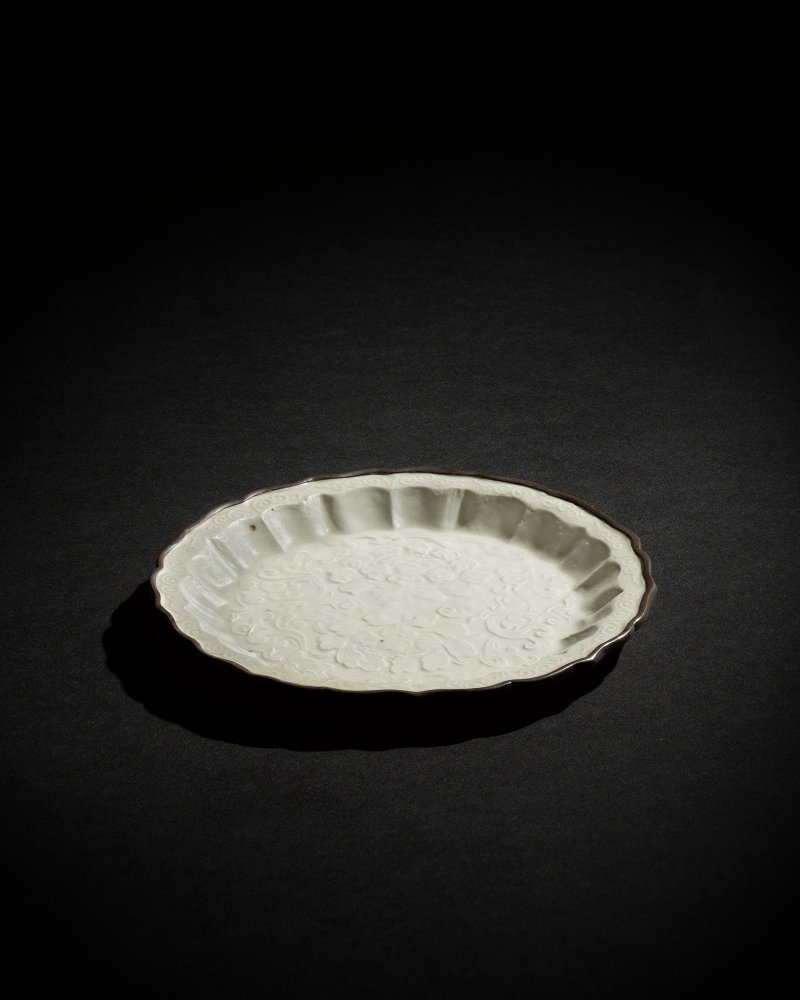
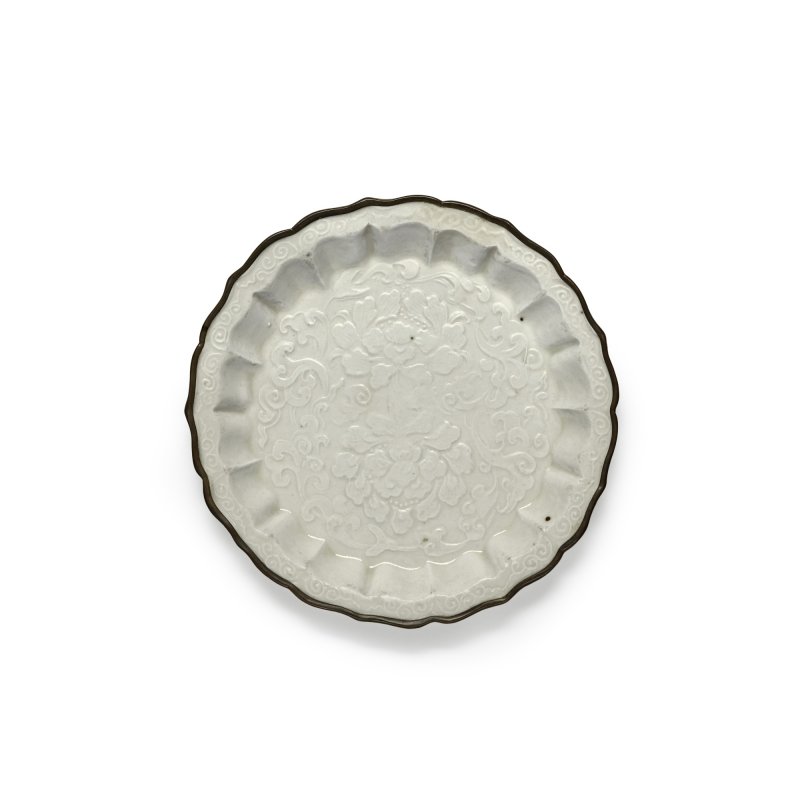
金 定窯印牡丹紋盤
起拍价
GBP 60,000
估值区间
60,000 - 80,000 GBP
尺寸
未知
品相
The rare dish features typical firing imperfections and expected surface wear including scuffing to the raised edges of the fluted well. Restoration and retouching to two points at the rim with associated areas of overspray. A further small flake visible below the metal rim. Otherwise very finely moulded with a characteristic ivory glaze.
If a condition report is provided to assist you with assessing the condition of the lot, it is for guidance purposes only. Such condition report may not refer to all faults, restoration, alterations, or adaptations because Sotheby's is not a professional conservator or restorer but rather a condition report is a statement of subjective, qualified opinion genuinely held by Sotheby's. For these reasons, any such condition report is not an alternative to taking your own professional advice regarding the condition of the lot. Prospective buyers should also refer to the Guide for Buyers at Auction which includes important notices concerning the type of property in this sale.
If a condition report is provided to assist you with assessing the condition of the lot, it is for guidance purposes only. Such condition report may not refer to all faults, restoration, alterations, or adaptations because Sotheby's is not a professional conservator or restorer but rather a condition report is a statement of subjective, qualified opinion genuinely held by Sotheby's. For these reasons, any such condition report is not an alternative to taking your own professional advice regarding the condition of the lot. Prospective buyers should also refer to the Guide for Buyers at Auction which includes important notices concerning the type of property in this sale.
更多信息
Diameter 14 cm, 5½ in.
来源:倫敦蘇富比,1997年12月2日,編號180
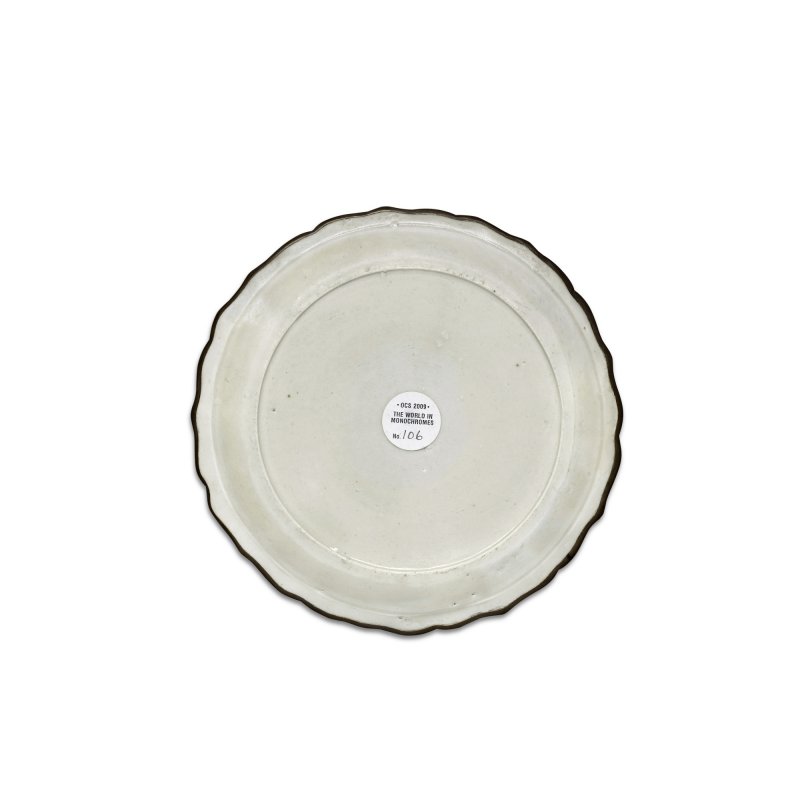
展览:《The World in Monochromes》,東方陶瓷學會,Brunei Gallery,倫敦大學亞非學院,倫敦,2009年,編號106
图录
说明:Crisply moulded with two vibrant blooms surrounded by a tangled profusion of overlapping leaves, the present dish represents one of the finest examples of moulded designwork from the zenith of production at Ding kilns of Hebei. Feather-light in the hand yet imposing in its elegance, the dish bears all of the features of the finest Ding wears, from its unctuous ivory-white glaze to the fineness of the clay body beneath.
The present dish is particularly remarkable in its barbed rim design, which lends the piece a grandeur not dissimilar to later imperial porcelain designs of the Early Ming dynasty. Surviving examples of this form are exceedingly rare. Compare a larger dish of barbed rim and moulded bird design in the Museum of Oriental Ceramics, Osaka, in Chugoku no toji [Chinese ceramics], vol. 5: Hakuji [White ware], Tokyo, 1998, pl. 55; and another dish of more comparable size and rock and flower design, sold at Christie's New York, 5th June 1986, lot 189 and again in our New York rooms, 15th September 2015, lot 34.
A related group of small dishes of fluted ‘chrysanthemum’ rims, lacking some of the finesse of the present barbed form, include a dish of related floral design excavated from a Ding kiln site in Xiheliu, Quyang county, in Ding ci yishu [The art of Ding porcelain], Shijiazhuang, 2002, pl. 150; one of crane design also from the same site, pl. 194; and a third of sleeping deer design in the National Palace Museum, Taipei, pl. 196.
The present floral design is also rare and possibly represents an earlier prototype of a later three-peony design termed Ti 56 by Jan Wirgin; see Sung Ceramic Designs, Stockholm, 1970, p. 157 and pl. 100a for an example in the Ashmolean Museum, Oxford. Compare also a sherd of very similar moulded floral style uncovered from Quyang in Selection of Ding Ware. The Palace Museum's Collection and Archaeological Excavation, Beijing, 2012, pl. 117.
常见问题
这件金 定窯印牡丹紋盤的成交价是多少?
落槌价为 预展中。 成交价为 预展中。
拍品的品相状况如何?
The rare dish features typical firing imperfections and expected surface wear including scuffing to the raised edges of the fluted well. Restoration and retouching to two points at the rim with associated areas of overspray. A further small flake visible below the metal rim. Otherwise very finely moulded with a characteristic ivory glaze.
If a condition report is provided to assist you with assessing the condition of the lot, it is for guidance purposes only. Such condition report may not refer to all faults, restoration, alterations, or adaptations because Sotheby's is not a professional conservator or restorer but rather a condition report is a statement of subjective, qualified opinion genuinely held by Sotheby's. For these reasons, any such condition report is not an alternative to taking your own professional advice regarding the condition of the lot. Prospective buyers should also refer to the Guide for Buyers at Auction which includes important notices concerning the type of property in this sale.
If a condition report is provided to assist you with assessing the condition of the lot, it is for guidance purposes only. Such condition report may not refer to all faults, restoration, alterations, or adaptations because Sotheby's is not a professional conservator or restorer but rather a condition report is a statement of subjective, qualified opinion genuinely held by Sotheby's. For these reasons, any such condition report is not an alternative to taking your own professional advice regarding the condition of the lot. Prospective buyers should also refer to the Guide for Buyers at Auction which includes important notices concerning the type of property in this sale.
这件拍品的流传来源是什么?
倫敦蘇富比,1997年12月2日,編號180
这件拍品曾在哪些展览中展出过?
《The World in Monochromes》,東方陶瓷學會,Brunei Gallery,倫敦大學亞非學院,倫敦,2009年,編號106
图录
图录