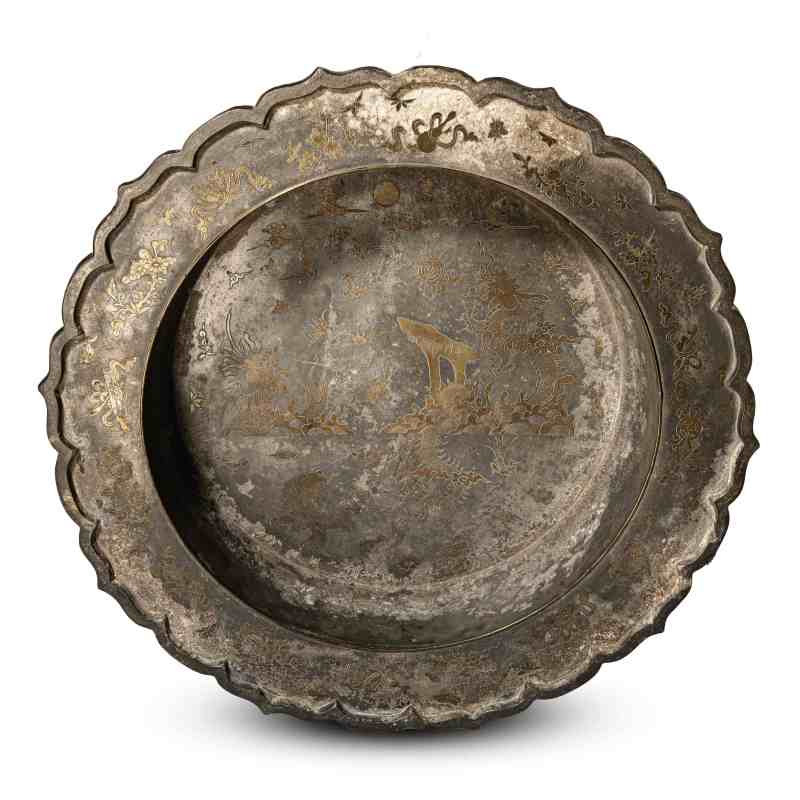

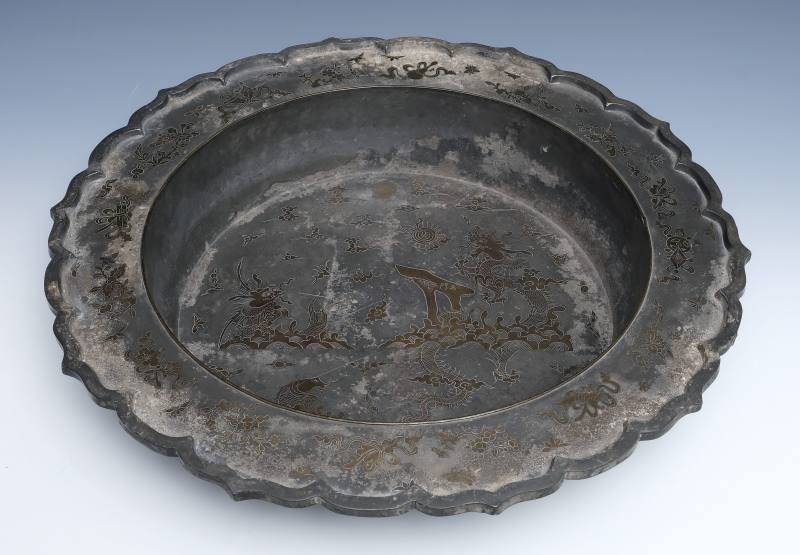
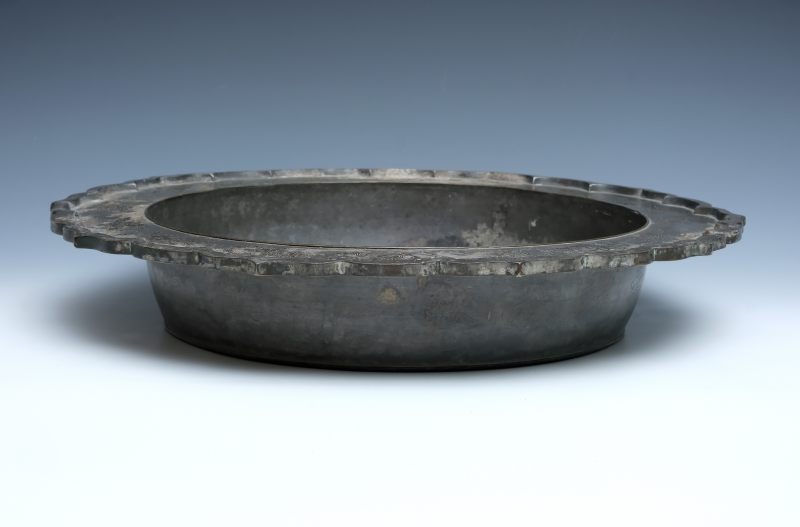
Lot 33 A large mixed metal pewter inlay dish 'Leaping the Dragon Gate', Xi Lian Pen (wash basin)
落槌价
****
成交价
****
拍品信息
拍品名称
A large mixed metal pewter inlay dish 'Leaping the Dragon Gate', Xi Lian Pen (wash basin)
年代
Ming Dynasty (17th century), with later Xianfeng-period inscription
起拍价
EUR 3,000
估值区间
€5,000 - €8,000
尺寸
D 51 cm, H 9 cm
品相
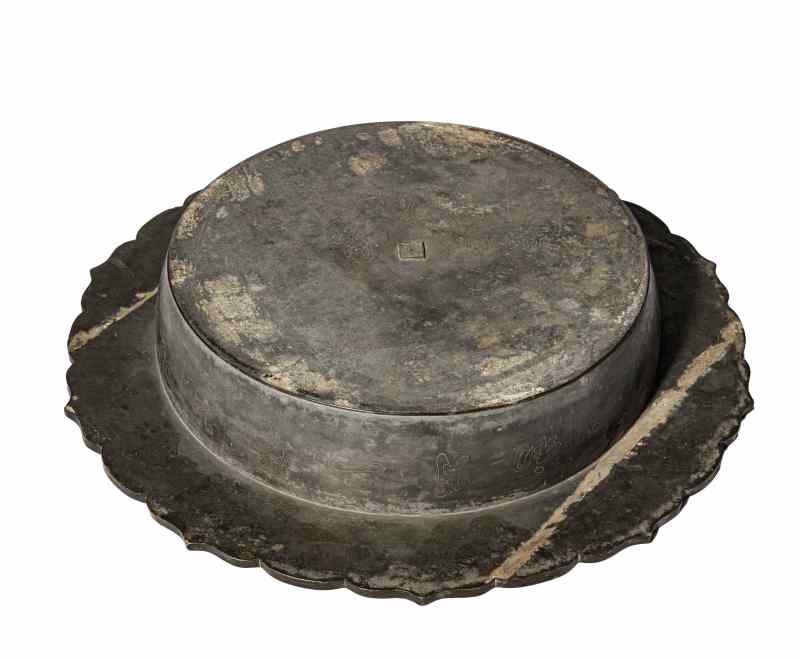
Visible corrosion and oxidation on the metal, along with wear consistent with age.
更多信息
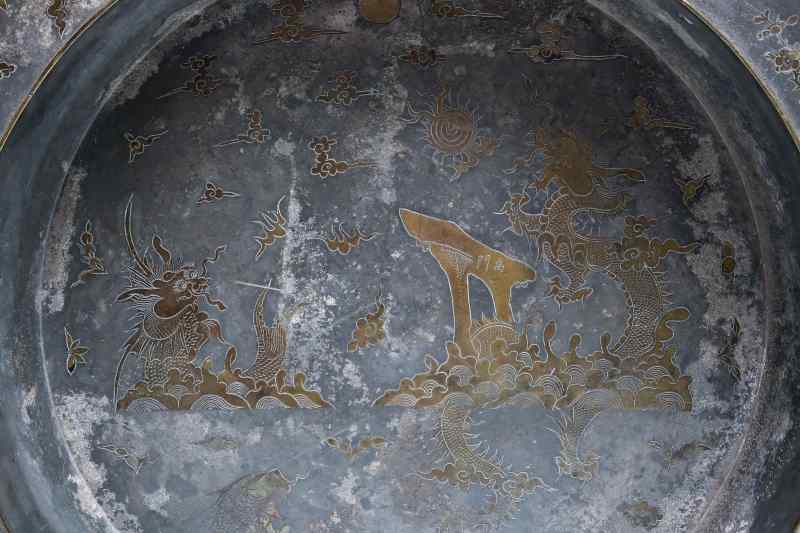
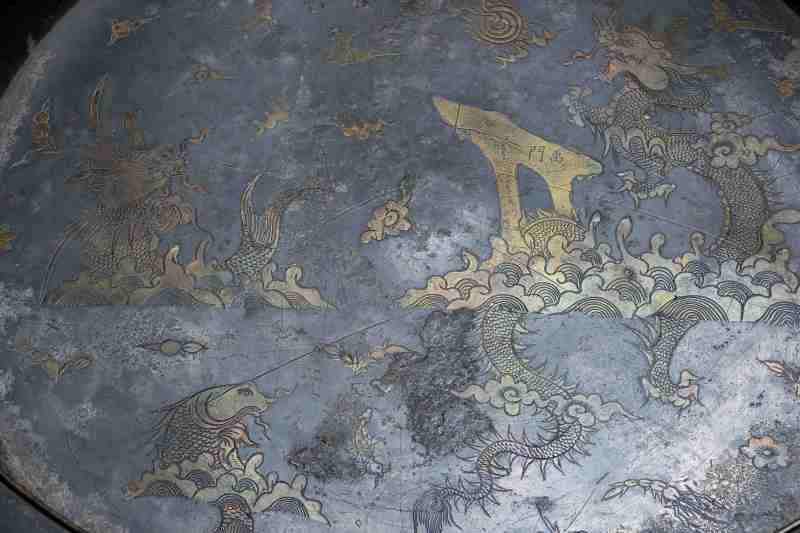
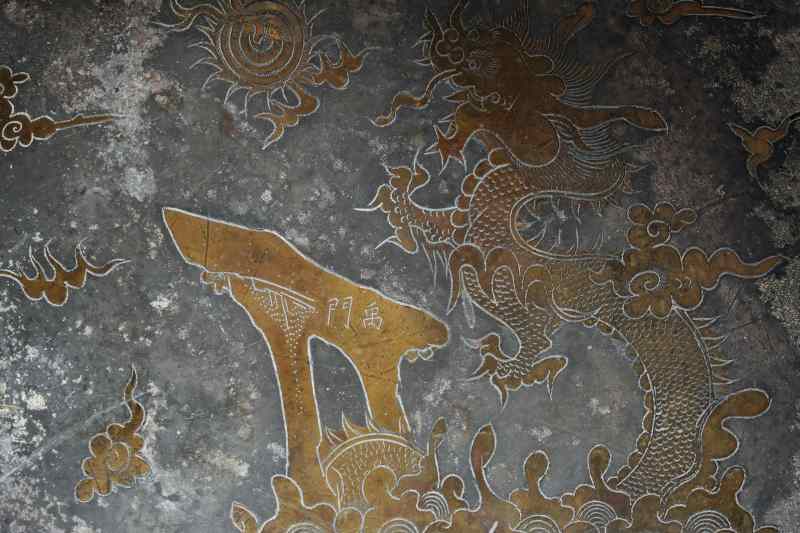
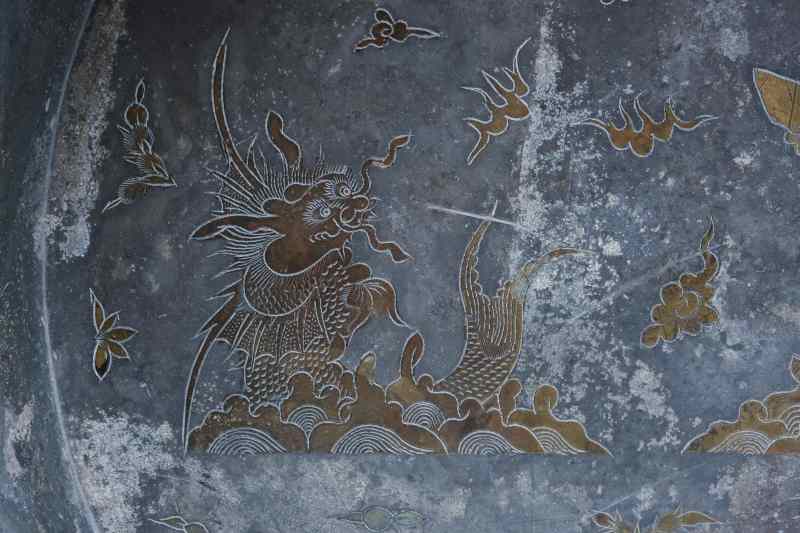
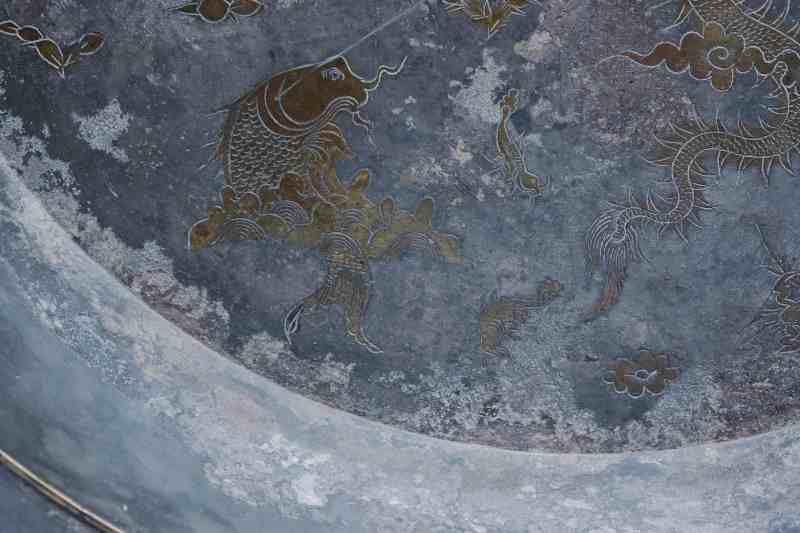
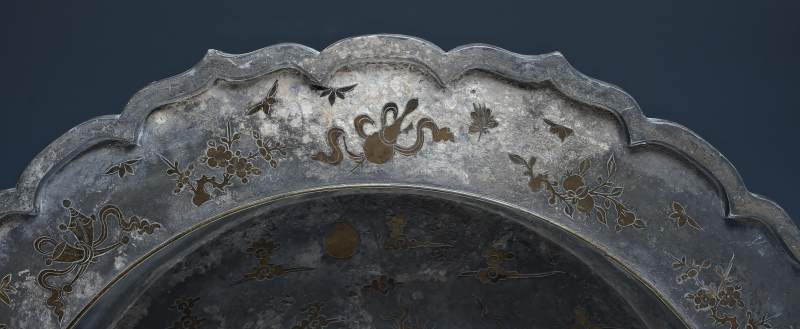
The interior parcel-gilt well decorated with a dynamic scene of a carp leaping from the water and transforming into a dragon, the barbed rim with a series of auspicious emblems. The form is associated with domestic furnishings of the Ming Dynasty.
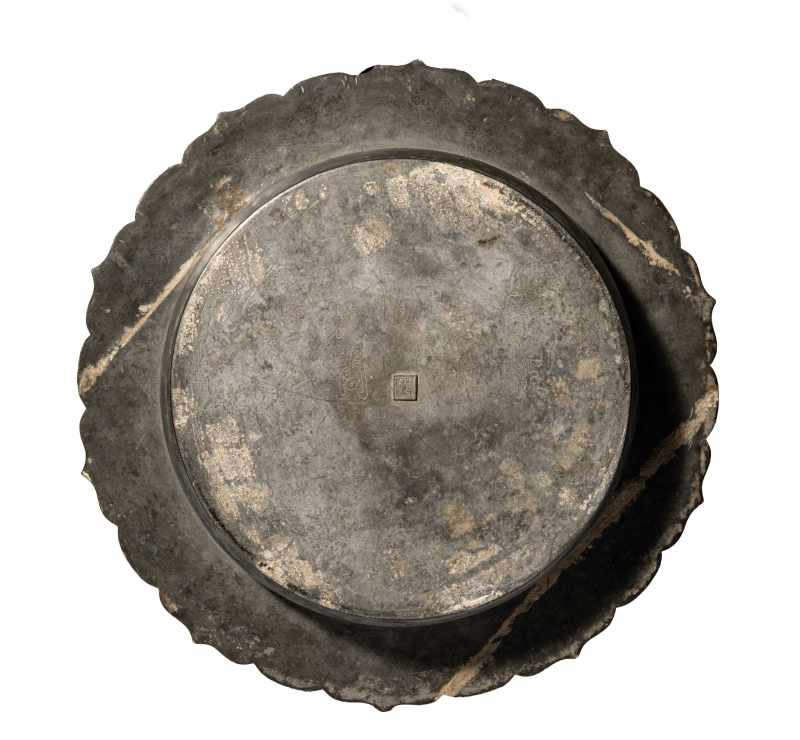
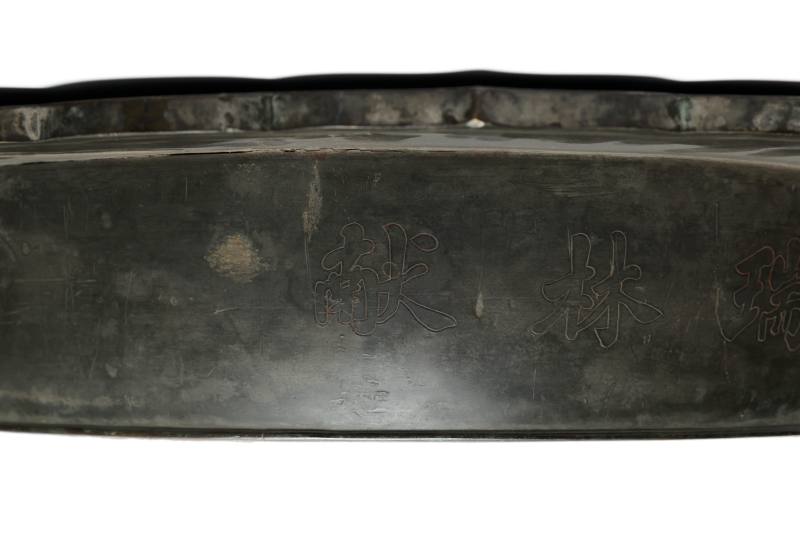
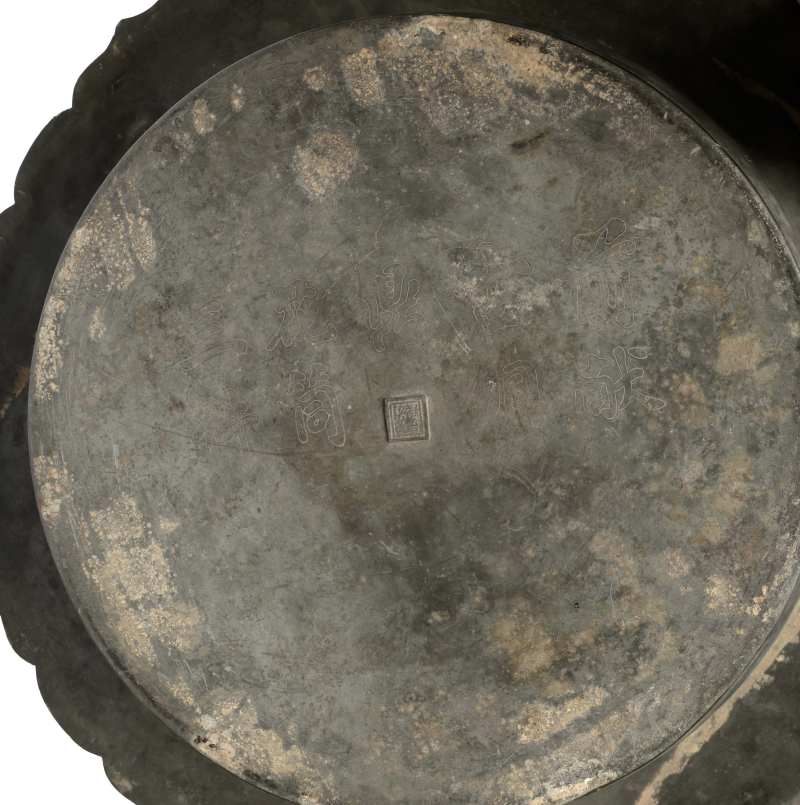
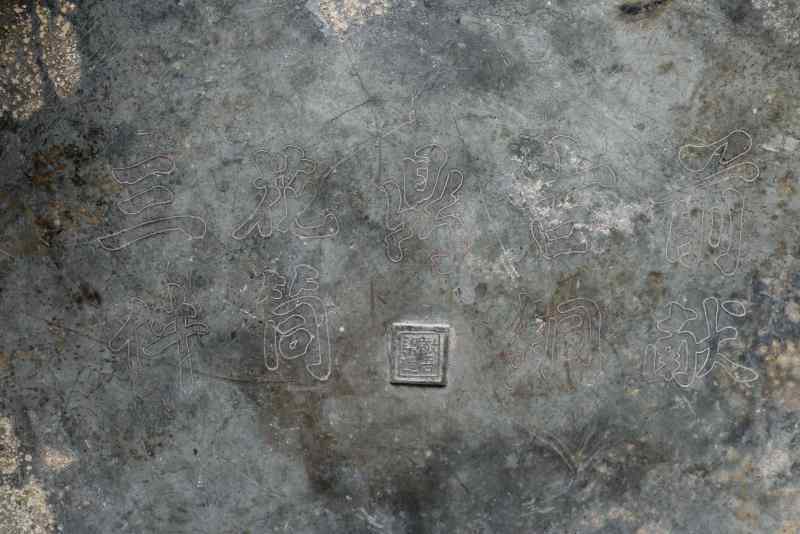
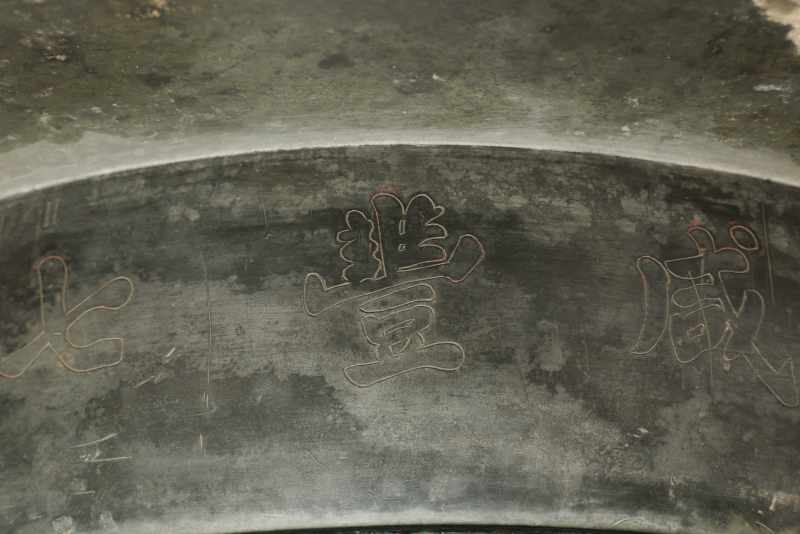
The exterior bears a later engraved inscription dated to the seventh year of the Xianfeng reign (1857). The underside is further incised with characters, showing a short poetic inscription referring to three flowers, while the sides of the rim bear the inscription: 咸豐七年二月初一日晋太弟子楊瑞林献 (translated: “Respectfully presented by disciple Yang Ruilin on the first day of the second month in the seventh year of Xianfeng [1857].”)
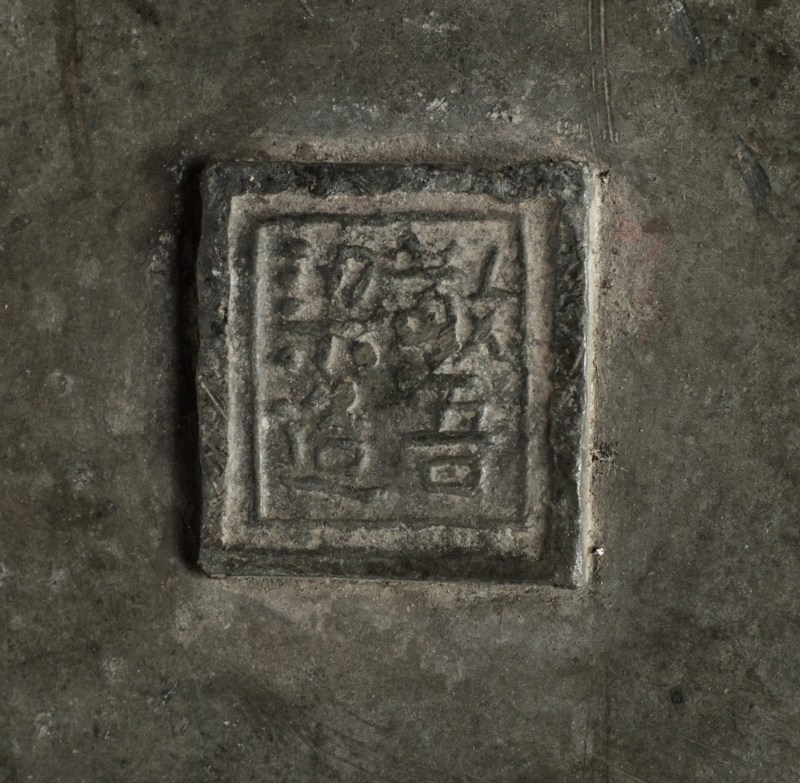
The centre of the reverse is impressed with a small relief seal mark, possibly a maker’s mark, now indistinct.
The image of the carp transforming into a dragon, known as liyu tiao longmen (carp leaping the Dragon Gate), is one of the most enduring symbols of aspiration and transformation in Chinese culture. Associated with perseverance, scholarly achievement, and advancement through merit, the motif was especially meaningful in relation to success in the civil examinations. Its presence on the present basin reflects the auspicious wishes traditionally associated with this subject.
**Literature**
Lit.: in Classic Chinese Furniture by Wang Shixiang, ill. 168 shows a stand with a similar bowl on wooden stand.
S. Handler notes in “Ablutions and Washing Clean: The Chinese Washbasin and Stand” (Journal of the Classical Chinese Furniture Society, Autumn 1991, vol. 7, no. 4, pp. 26–27) that, from the Ming dynasty onward, basins of this kind were typically found in affluent households and were frequently paired with wooden stands referred to as mianpenjia.
A similar dish from the collection of Mr. and Mrs. James E. Breece III was sold at Christie's New York, Sep. 18th 2003, New York, Lot 165.
A similar dish is held in the collection of the Minneapolis Institute of Art, accession number 2001.35.
以下内容由AI翻译:
【名称】
明十七世纪镶锡杂金属洗盆 '鲤鱼跃龙门'
【年代】
明(十七世纪),后有咸丰时期铭文
【描述】
内壁部分镀金,装饰有一幅生动的鲤鱼跃出水面并化为龙的场景,锯齿状边缘饰有一系列吉祥纹样。这种形式与明代家具有关。
外壁刻有后来的铭文,日期为咸丰七年(1857年)。底部进一步刻有文字,显示了一段简短的诗文,提到三种花朵,而边缘两侧刻有铭文:咸豐七年二月初一日晋太弟子楊瑞林献(译文:“敬献于咸丰七年二月初一,弟子杨瑞林”)
背面中心压印有一个小浮雕印章,可能是制作者标记,现已模糊不清。
鲤鱼跃龙门的形象是中国文化中最持久的象征之一,代表着抱负和转变。与毅力、学术成就和通过功绩晋升有关,这一图案特别有意义,尤其是在科举考试成功方面。这件洗盆上出现这一图案反映了与此主题相关的传统吉祥愿望。
**著录**
王世襄《中国古典家具》图168展示了一个类似碗的木架。
S. Handler在《净身与清洁:中国的洗盆和支架》(《古典中国家具学会杂志》,1991年秋季,第7卷第4期,第26-27页)中指出,从明代开始,这类洗盆通常出现在富裕家庭中,并经常与称为面盆架的木架配对。
一件来自James E. Breece III夫妇收藏的类似洗盆曾在佳士得纽约2003年9月18日拍卖会上售出,拍品编号165。
明尼阿波利斯艺术学院收藏有一件类似的洗盆,馆藏编号2001.35。
【品相】
金属表面可见腐蚀和氧化,以及与年龄相符的磨损。
The exterior bears a later engraved inscription dated to the seventh year of the Xianfeng reign (1857). The underside is further incised with characters, showing a short poetic inscription referring to three flowers, while the sides of the rim bear the inscription: 咸豐七年二月初一日晋太弟子楊瑞林献 (translated: “Respectfully presented by disciple Yang Ruilin on the first day of the second month in the seventh year of Xianfeng [1857].”)
The centre of the reverse is impressed with a small relief seal mark, possibly a maker’s mark, now indistinct.
The image of the carp transforming into a dragon, known as liyu tiao longmen (carp leaping the Dragon Gate), is one of the most enduring symbols of aspiration and transformation in Chinese culture. Associated with perseverance, scholarly achievement, and advancement through merit, the motif was especially meaningful in relation to success in the civil examinations. Its presence on the present basin reflects the auspicious wishes traditionally associated with this subject.
**Literature**
Lit.: in Classic Chinese Furniture by Wang Shixiang, ill. 168 shows a stand with a similar bowl on wooden stand.
S. Handler notes in “Ablutions and Washing Clean: The Chinese Washbasin and Stand” (Journal of the Classical Chinese Furniture Society, Autumn 1991, vol. 7, no. 4, pp. 26–27) that, from the Ming dynasty onward, basins of this kind were typically found in affluent households and were frequently paired with wooden stands referred to as mianpenjia.
A similar dish from the collection of Mr. and Mrs. James E. Breece III was sold at Christie's New York, Sep. 18th 2003, New York, Lot 165.
A similar dish is held in the collection of the Minneapolis Institute of Art, accession number 2001.35.
以下内容由AI翻译:
【名称】
明十七世纪镶锡杂金属洗盆 '鲤鱼跃龙门'
【年代】
明(十七世纪),后有咸丰时期铭文
【描述】
内壁部分镀金,装饰有一幅生动的鲤鱼跃出水面并化为龙的场景,锯齿状边缘饰有一系列吉祥纹样。这种形式与明代家具有关。
外壁刻有后来的铭文,日期为咸丰七年(1857年)。底部进一步刻有文字,显示了一段简短的诗文,提到三种花朵,而边缘两侧刻有铭文:咸豐七年二月初一日晋太弟子楊瑞林献(译文:“敬献于咸丰七年二月初一,弟子杨瑞林”)
背面中心压印有一个小浮雕印章,可能是制作者标记,现已模糊不清。
鲤鱼跃龙门的形象是中国文化中最持久的象征之一,代表着抱负和转变。与毅力、学术成就和通过功绩晋升有关,这一图案特别有意义,尤其是在科举考试成功方面。这件洗盆上出现这一图案反映了与此主题相关的传统吉祥愿望。
**著录**
王世襄《中国古典家具》图168展示了一个类似碗的木架。
S. Handler在《净身与清洁:中国的洗盆和支架》(《古典中国家具学会杂志》,1991年秋季,第7卷第4期,第26-27页)中指出,从明代开始,这类洗盆通常出现在富裕家庭中,并经常与称为面盆架的木架配对。
一件来自James E. Breece III夫妇收藏的类似洗盆曾在佳士得纽约2003年9月18日拍卖会上售出,拍品编号165。
明尼阿波利斯艺术学院收藏有一件类似的洗盆,馆藏编号2001.35。
【品相】
金属表面可见腐蚀和氧化,以及与年龄相符的磨损。
常见问题
拍品的品相状况如何?
Visible corrosion and oxidation on the metal, along with wear consistent with age.
拍品的尺寸是多少?
D 51 cm, H 9 cm