
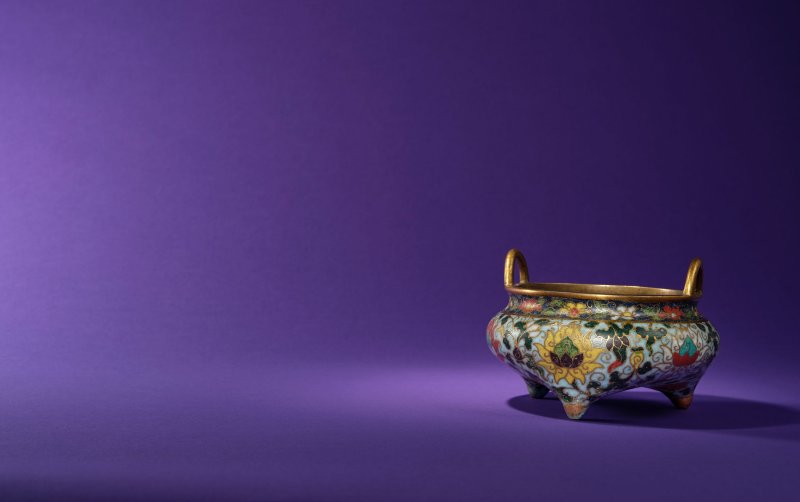
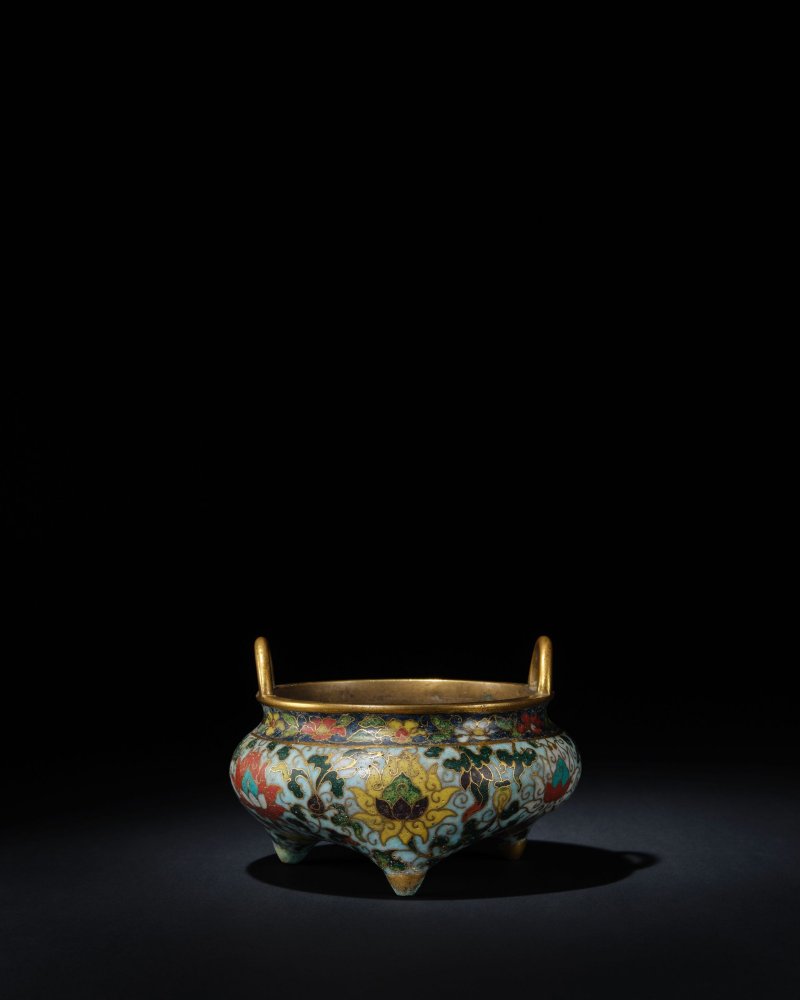
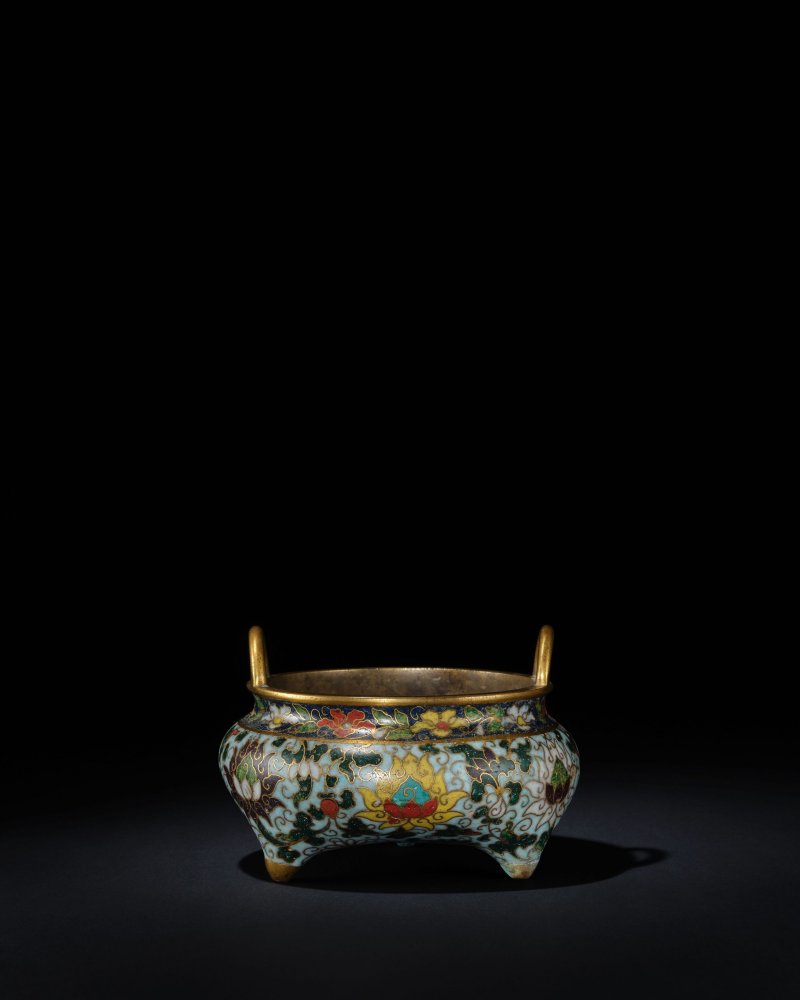
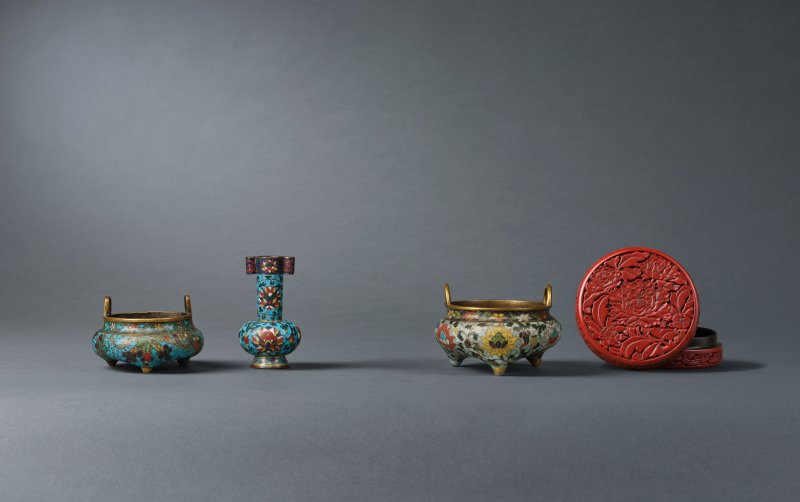
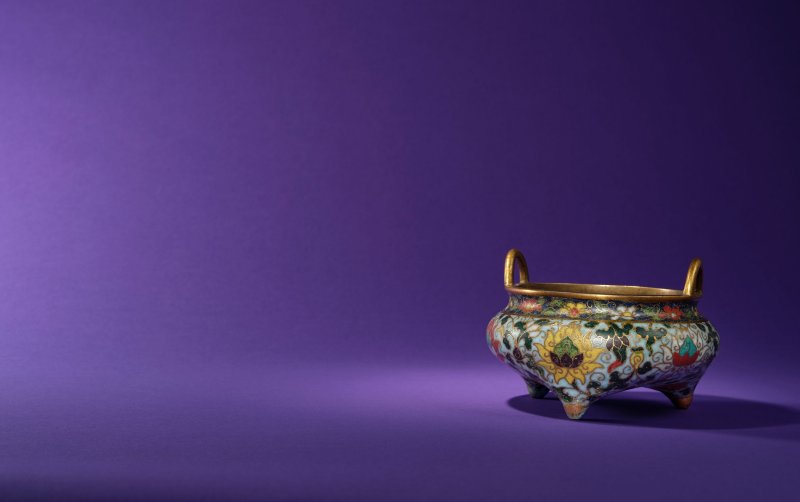
Lot 9 元/明早期 掐絲琺瑯纏枝蓮紋橋耳乳足爐 | A RARE CLOISONNÉ ENAMEL PALE-BLUE-GROUND TRIPOD INCENSE BURNER, DING
落槌价
预展中
成交价
预展中
| 拍卖公司 | 邦瀚斯 |
|---|---|
| 拍卖时间 | 2026年10月28日 |
拍品信息
拍品名称
元/明早期 掐絲琺瑯纏枝蓮紋橋耳乳足爐 | A RARE CLOISONNÉ ENAMEL PALE-BLUE-GROUND TRIPOD INCENSE BURNER, DING
年代
Yuan/Early Ming Dynasty
起拍价
HKD 600,000
估值区间
HKD 600000 - 800000
尺寸
未知
品相
未知
更多信息
Yuan/Early Ming Dynasty
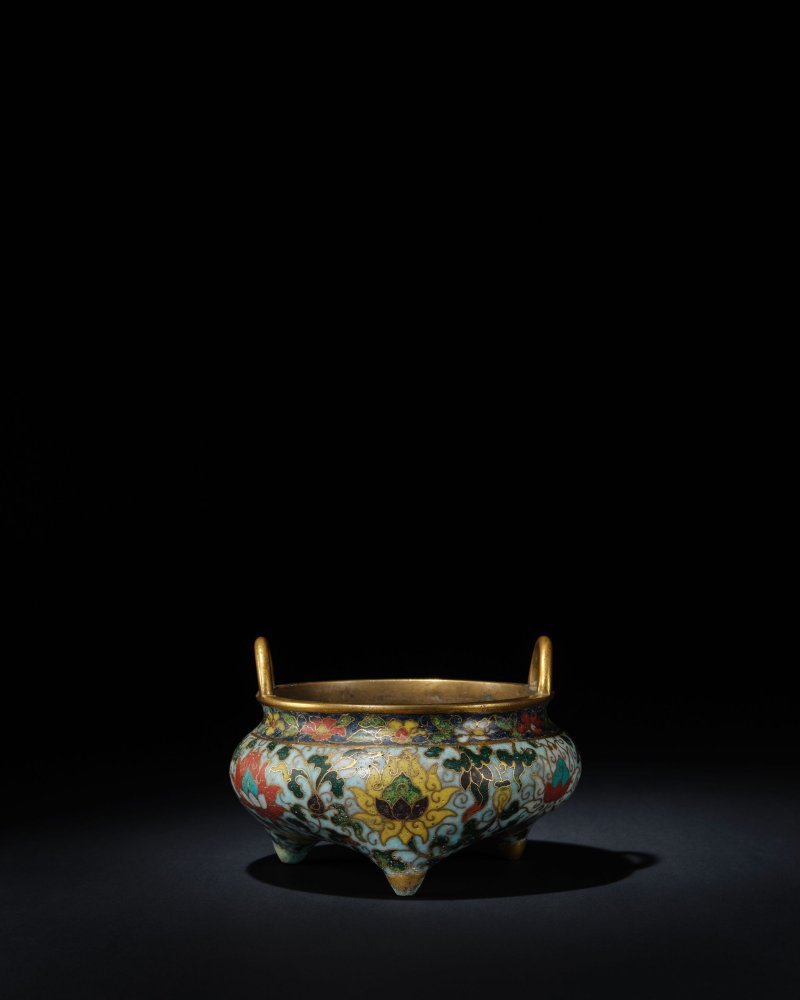
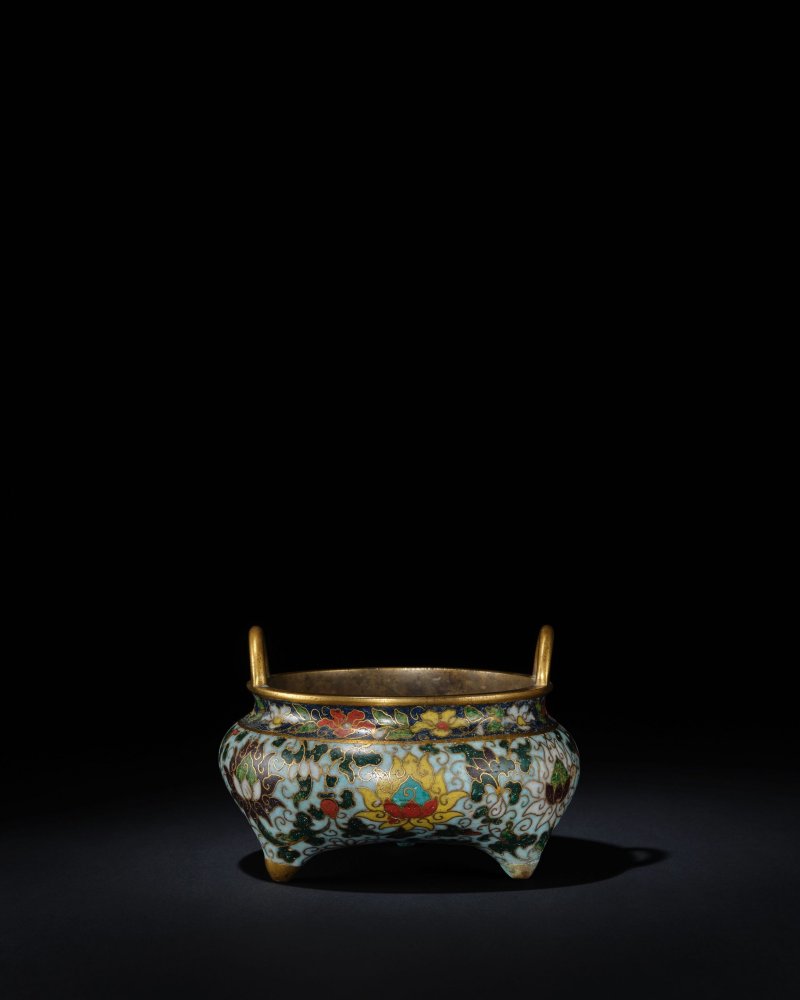
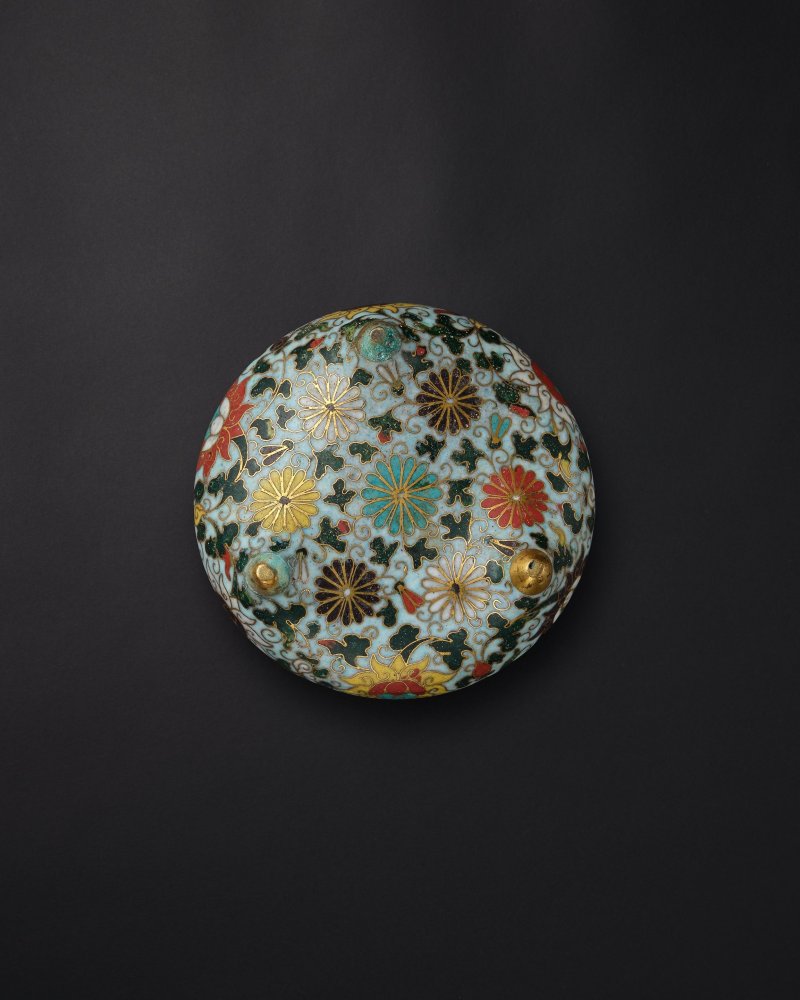
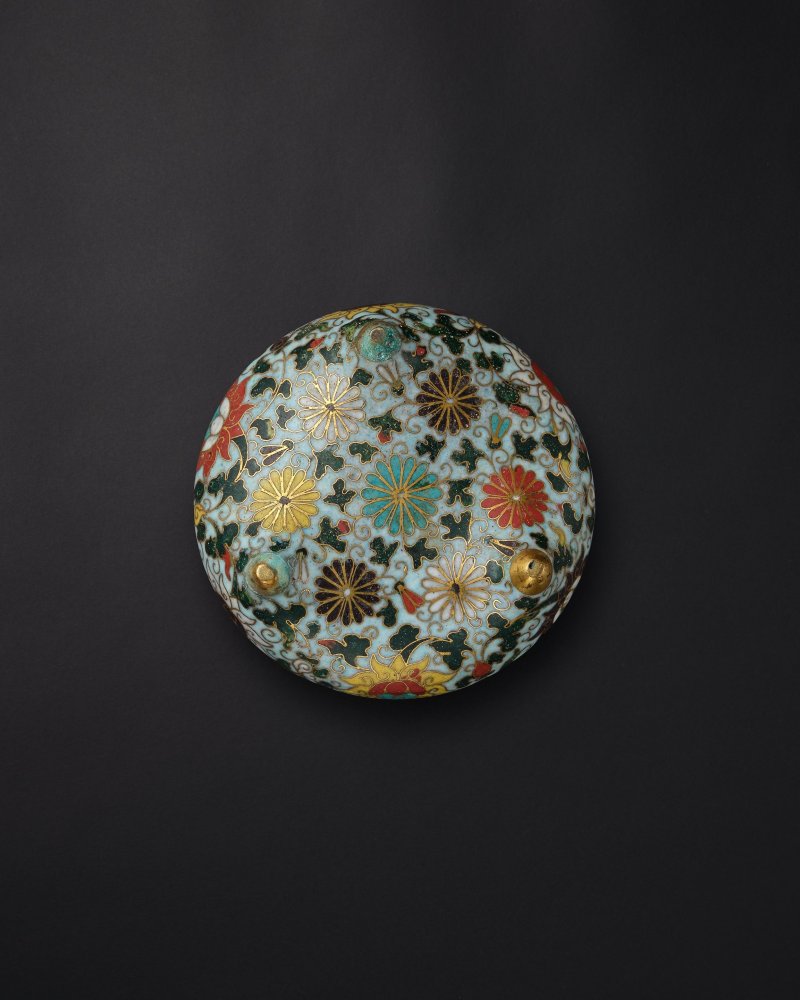
Cast with a compressed globular body supported on three short tapered gilt legs, surmounted by a short waisted neck and gilt rim surmounted by a pair of arch handles, the sides enamelled with large stylised lotus flowers in blue, red, yellow, white and red, each borne on a foliate scroll, the underside with four further florets wreathed in stylised foliage, all reserved on a pale blue ground, fitted box.
14.5cm (5 3/4in) diam. (2).
Footnotes
元/明早期 掐絲琺瑯纏枝蓮紋橋耳乳足爐
Provenance:
Bonhams London, 13 May 2021, lot 6
來源:
倫敦邦瀚斯,2021年5月13日,拍品編號6
The present lot is very rare due to its early date and unusual pale blue ground. See a similar turquoise-blue-ground cloisonné enamel tripod incense burner, Yuan dynasty, illustrated in the , vol.1, Beijing, 2011, pp.70-71, no.10, with similar base and leaves. See also a cloisonné enamel tripod incense burner, Ming dynasty, illustrated by H.Brinker and A.Lutz, , London, 1989, no.54. A further example, early Ming dynasty, is illustrated by B.Quette, , New York, 2011, p.96, fig.5:25.
The scrolling foliage on the present vessel is notable for its distinctive tri-lobed leaves, a characteristic feature of Yuan dynasty cloisonné enamels. Compare the foliage with a cloisonné enamel incense burner with animal-shaped handles, Yuan dynasty, in the Qing Court Collection, illustrated in , op.cit., pp.64-65, no.8; similar tri-lobed foliage can also be seen on several other Yuan dynasty cloisonné enamel vessels, illustrated in ., nos.10, 12.
Related forms of foliage can also be found on Yuan blue and white porcelain. See, for example, a blue and white jar, Yuan dynasty, with tri-lobed leaves, illustrated in , Beijing, 2017, p.13; and a blue and white jar with dragons and tri-lobed leaves, Yuan dynasty, illustrated in , Shanghai, 2012, no.62. The use of this motif on the present vessel may therefore point to an earlier Yuan decorative tradition.
The present incense burner derives its shape from an archaic vessel, , which had the body divided into three lobes. This shape appears to have been revisited during the fifteenth century; see B.Quette, ., pp.94-95.
A related incense burner, Ming dynasty, 15th century, was sold at Christie's Paris, 9 June 2015, lot 54.
爐束頸,碩腹,三乳足,口沿雙立耳。器身淺藍地,外壁飾纏枝蓮紋,底飾彩色菊花紋。
元明乳足爐,傳世罕見;以淺藍為地,更為珍稀。參考一件元代掐絲琺瑯三足爐,其底足與葉紋處理與本品相近,見《故宮博物院藏品大系:琺瑯器編》,卷1,北京,2011年,頁70至71,編號10。另參考明代一例,見H.Brinker 及 A.Lutz 著,《Chinese Cloisonné: The Pierre Uldry Collection》,倫敦,1989年,編號54;及明早期一例,見B.Quette著,《Cloisonné. Chinese Enamels from the Yuan, Ming and Qing Dynasties》,紐約,2011年,頁96,圖5:25。
本爐所飾纏枝蓮紋帶獨特之三瓣葉,此乃元代掐絲琺瑯之典型特徵。類似葉紋,可比較清宮舊藏一件元代掐絲琺瑯纏枝蓮紋獸耳爐,著錄於《故宮博物院藏品大系》,同前引,頁64至65,編號8;亦見於其他數件元代掐絲琺瑯器,同書編號10、12。
類似枝葉紋亦可見於元代青花瓷,參考一件元代青花罐,著錄於《元青花》,北京,2017年,頁13;另見一件元代青花龍紋罐,載於《幽藍神采:元代青花瓷器特集》,上海,2012年,編號62。此紋樣之運用,或指向更早之元代裝飾傳統。
本品器形源自古代青銅禮器鬲鼎,器身呈三瓣式鼓腹。此形制於十五世紀似曾復興,見B.Quette,同前引,頁94至95。
可比對明十五世紀一例,售於巴黎佳士得,2015年6月9日,拍品編號54。
Cast with a compressed globular body supported on three short tapered gilt legs, surmounted by a short waisted neck and gilt rim surmounted by a pair of arch handles, the sides enamelled with large stylised lotus flowers in blue, red, yellow, white and red, each borne on a foliate scroll, the underside with four further florets wreathed in stylised foliage, all reserved on a pale blue ground, fitted box.
14.5cm (5 3/4in) diam. (2).
Footnotes
元/明早期 掐絲琺瑯纏枝蓮紋橋耳乳足爐
Provenance:
Bonhams London, 13 May 2021, lot 6
來源:
倫敦邦瀚斯,2021年5月13日,拍品編號6
The present lot is very rare due to its early date and unusual pale blue ground. See a similar turquoise-blue-ground cloisonné enamel tripod incense burner, Yuan dynasty, illustrated in the , vol.1, Beijing, 2011, pp.70-71, no.10, with similar base and leaves. See also a cloisonné enamel tripod incense burner, Ming dynasty, illustrated by H.Brinker and A.Lutz, , London, 1989, no.54. A further example, early Ming dynasty, is illustrated by B.Quette, , New York, 2011, p.96, fig.5:25.
The scrolling foliage on the present vessel is notable for its distinctive tri-lobed leaves, a characteristic feature of Yuan dynasty cloisonné enamels. Compare the foliage with a cloisonné enamel incense burner with animal-shaped handles, Yuan dynasty, in the Qing Court Collection, illustrated in , op.cit., pp.64-65, no.8; similar tri-lobed foliage can also be seen on several other Yuan dynasty cloisonné enamel vessels, illustrated in ., nos.10, 12.
Related forms of foliage can also be found on Yuan blue and white porcelain. See, for example, a blue and white jar, Yuan dynasty, with tri-lobed leaves, illustrated in , Beijing, 2017, p.13; and a blue and white jar with dragons and tri-lobed leaves, Yuan dynasty, illustrated in , Shanghai, 2012, no.62. The use of this motif on the present vessel may therefore point to an earlier Yuan decorative tradition.
The present incense burner derives its shape from an archaic vessel, , which had the body divided into three lobes. This shape appears to have been revisited during the fifteenth century; see B.Quette, ., pp.94-95.
A related incense burner, Ming dynasty, 15th century, was sold at Christie's Paris, 9 June 2015, lot 54.
爐束頸,碩腹,三乳足,口沿雙立耳。器身淺藍地,外壁飾纏枝蓮紋,底飾彩色菊花紋。
元明乳足爐,傳世罕見;以淺藍為地,更為珍稀。參考一件元代掐絲琺瑯三足爐,其底足與葉紋處理與本品相近,見《故宮博物院藏品大系:琺瑯器編》,卷1,北京,2011年,頁70至71,編號10。另參考明代一例,見H.Brinker 及 A.Lutz 著,《Chinese Cloisonné: The Pierre Uldry Collection》,倫敦,1989年,編號54;及明早期一例,見B.Quette著,《Cloisonné. Chinese Enamels from the Yuan, Ming and Qing Dynasties》,紐約,2011年,頁96,圖5:25。
本爐所飾纏枝蓮紋帶獨特之三瓣葉,此乃元代掐絲琺瑯之典型特徵。類似葉紋,可比較清宮舊藏一件元代掐絲琺瑯纏枝蓮紋獸耳爐,著錄於《故宮博物院藏品大系》,同前引,頁64至65,編號8;亦見於其他數件元代掐絲琺瑯器,同書編號10、12。
類似枝葉紋亦可見於元代青花瓷,參考一件元代青花罐,著錄於《元青花》,北京,2017年,頁13;另見一件元代青花龍紋罐,載於《幽藍神采:元代青花瓷器特集》,上海,2012年,編號62。此紋樣之運用,或指向更早之元代裝飾傳統。
本品器形源自古代青銅禮器鬲鼎,器身呈三瓣式鼓腹。此形制於十五世紀似曾復興,見B.Quette,同前引,頁94至95。
可比對明十五世紀一例,售於巴黎佳士得,2015年6月9日,拍品編號54。
常见问题
这件元/明早期 掐絲琺瑯纏枝蓮紋橋耳乳足爐 | A RARE CLOISONNÉ ENAMEL PALE-BLUE-GROUND TRIPOD INCENSE BURNER, DING的成交价是多少?
落槌价为 预展中。 成交价为 预展中。