
拍品信息
拍品名称
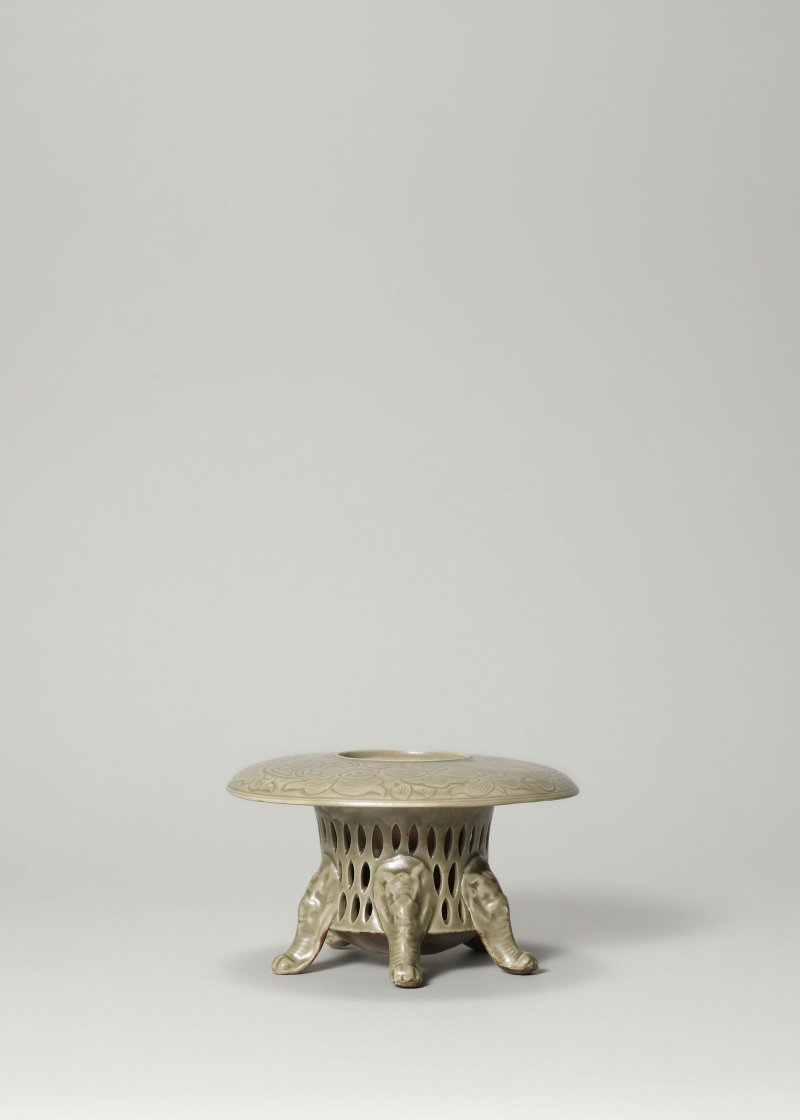
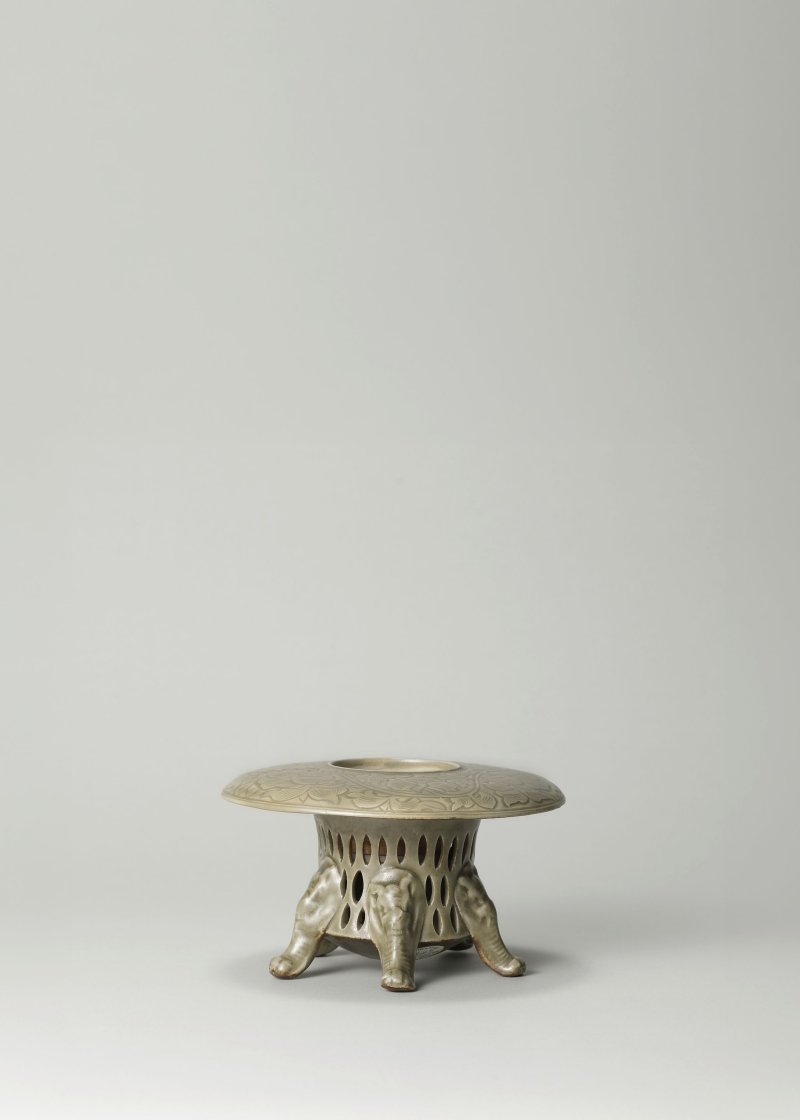
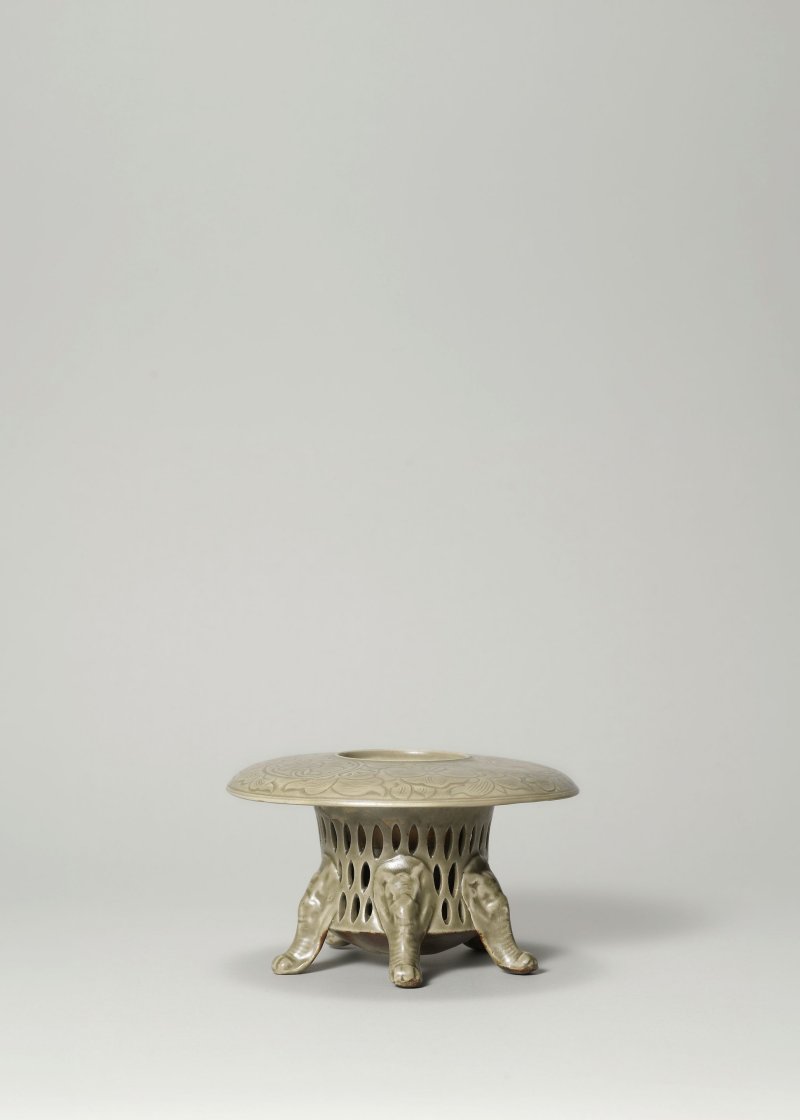
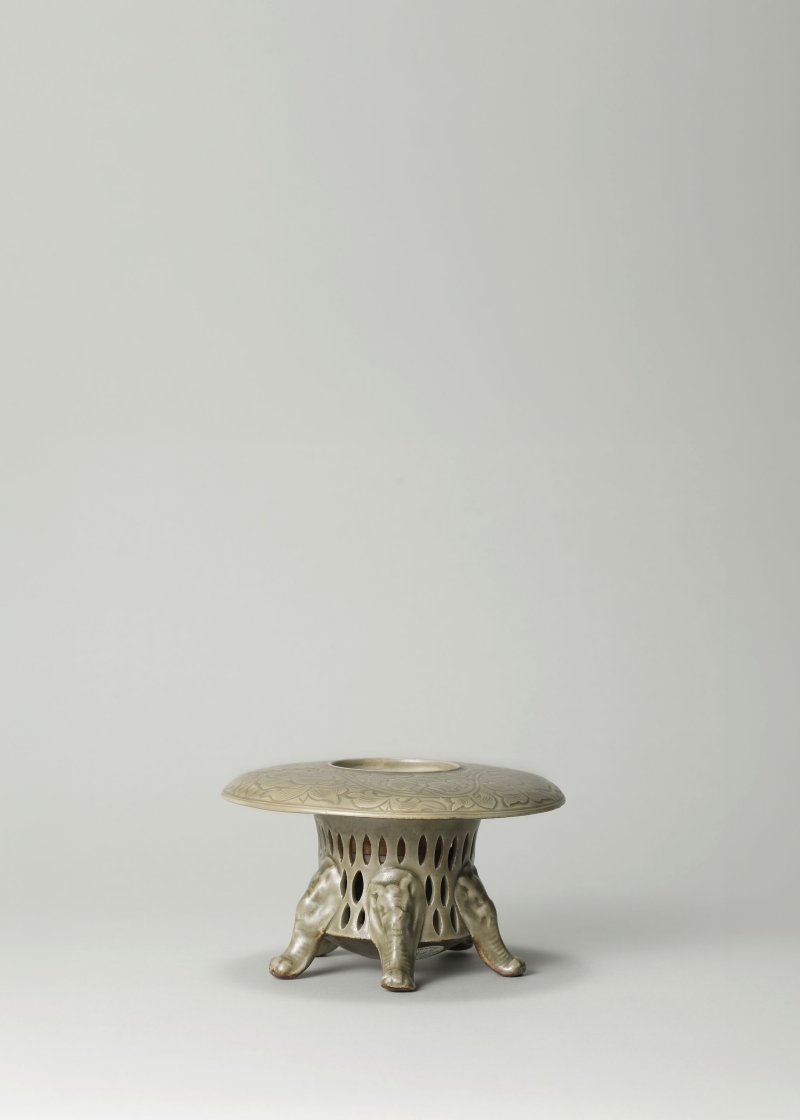
北宋 耀州窯青釉刻花鏤空五足爐 | A RARE YAOZHOU CARVED AND RETICULATED CELADON-GLAZED INCENSE BURNER
年代
Northern Song Dynasty
起拍价
HKD 80,000
估值区间
HKD 80000 - 120000
尺寸
未知
品相
未知
更多信息
Northern Song Dynasty
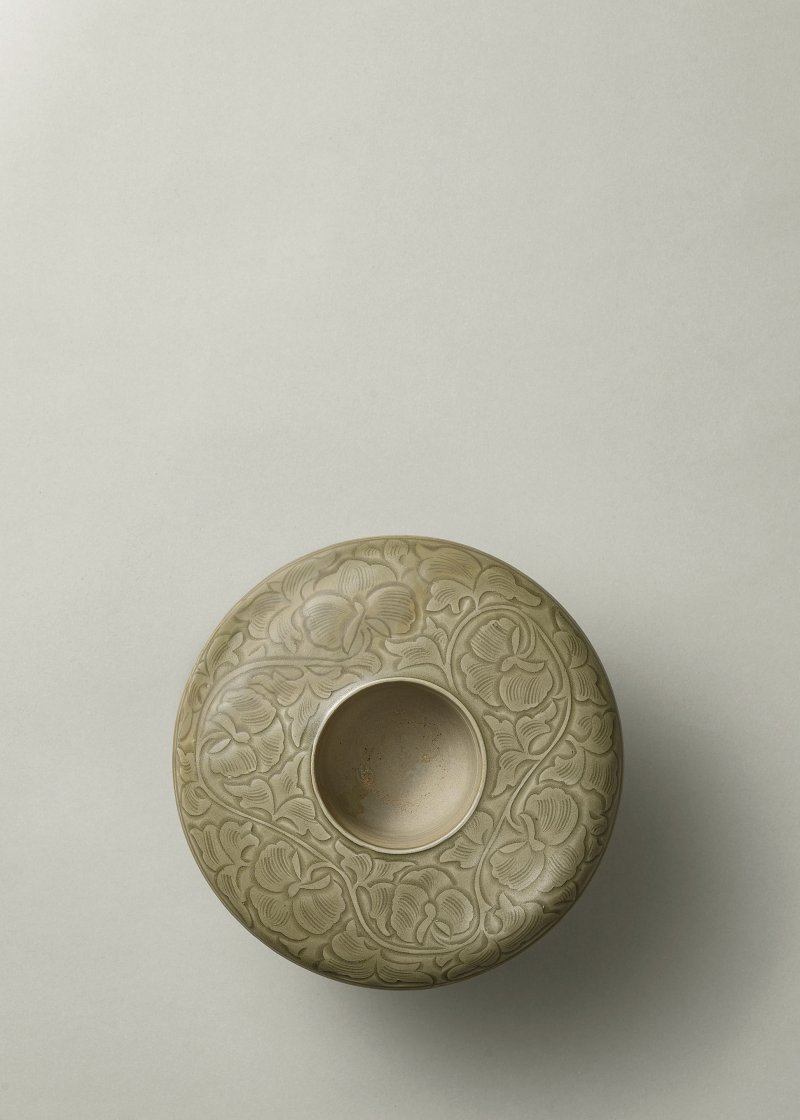
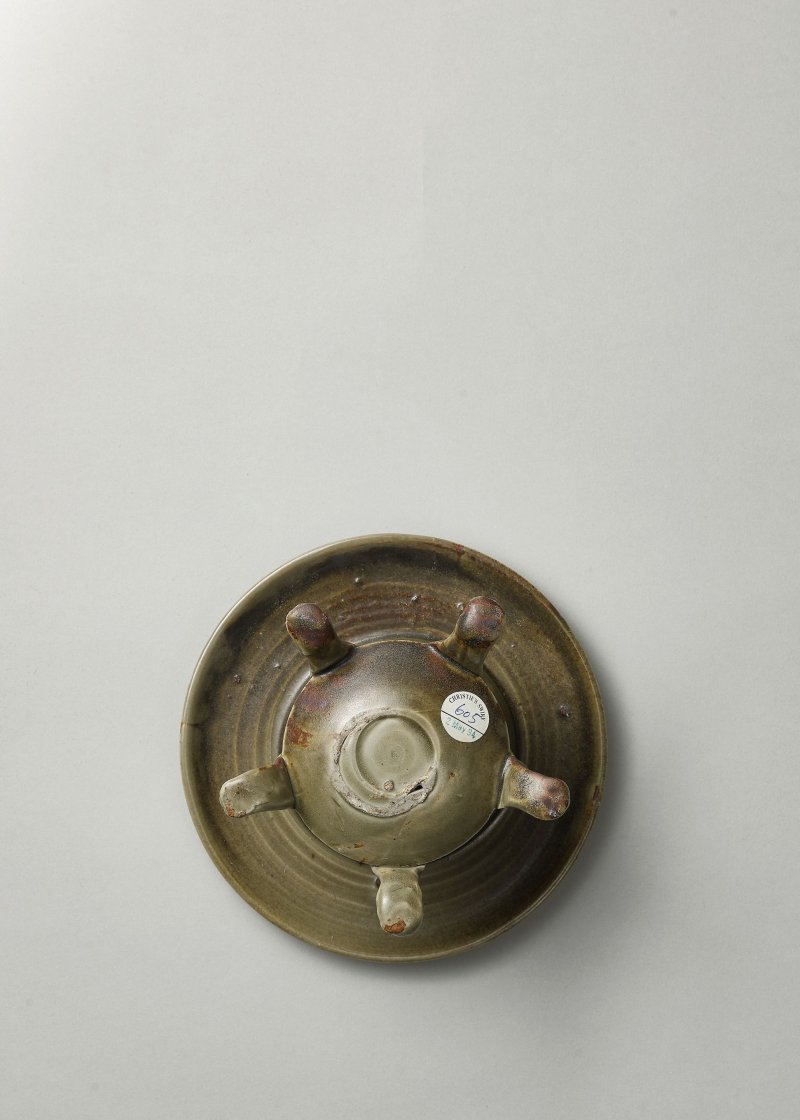
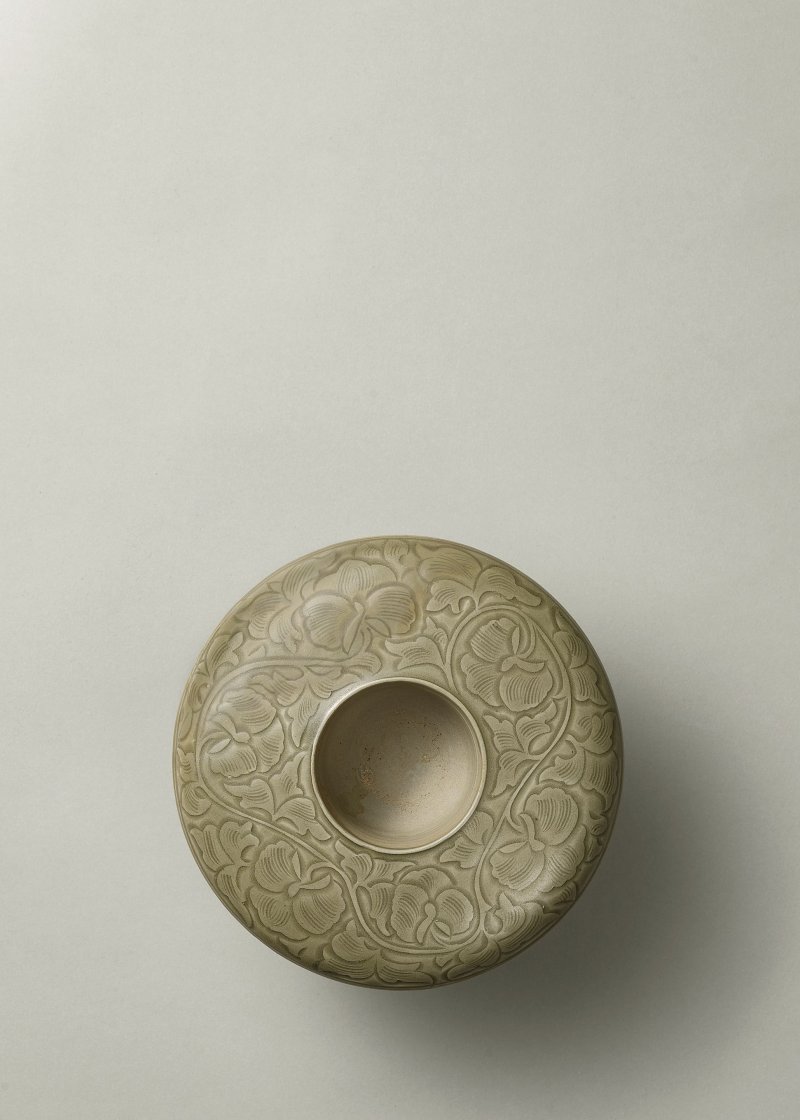
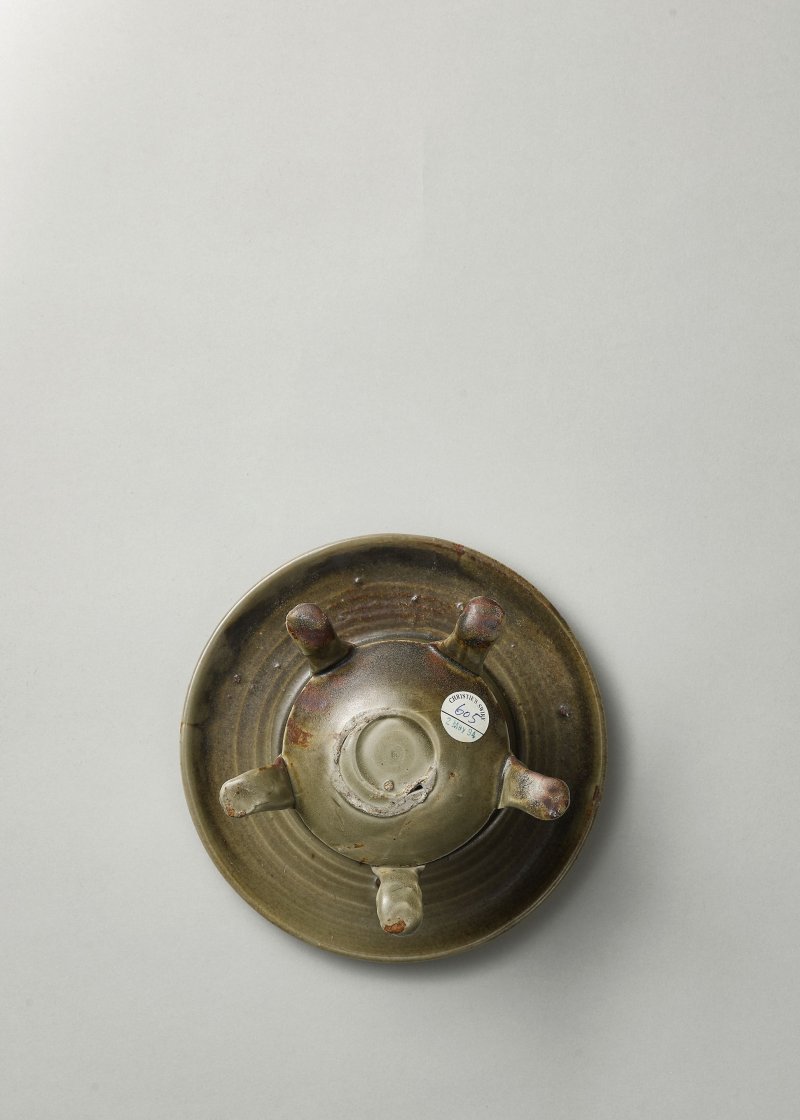
Supported on five large paws issuing from mythical beast masks, the wide everted rim well carved with dense floral scrolls, spraying over the drum-shaped waisted body pierced with almond-shaped apertures, covered overall with a pale olive-green glaze pooling attractively in the recesses, fitted box.
17cm (6 3/4in) diam. (2).
Footnotes
北宋 耀州窯青釉刻花鏤空五足爐
Provenance:
Christie's Hong Kong, 2 May 1994, lot 605
來源:
香港佳士得,1994年5月2日,拍品編號605
Five-legged censers (wuzulu) represent a prestigious vessel form with origins rooted in Tang dynasty metallic prototypes, most famously exemplified by the gilded silver five-legged incense burners recovered from the underground crypt of the Famen Temple in Shaanxi (sealed in AD 874). During the Northern Song dynasty, the celebrated Yaozhou kilns at Huangbao, Tongchuan, adapted this noble architectural form into high-fired celadon production, integrating complex openwork reticulation with their signature translucent glaze. When fired, the vitreous glaze pooled within the deeply pierced lattice and along the contours of the cabriole feet, creating a dramatic interplay of light, shadow, and emerald-toned depth that accentuated the sculptural qualities of the vessel.
Compare a closely related Yaozhou incense burner from the Charles B. Hoyt collection, in the Museum of Fine Arts, Boston, illustrated in , Tokyo, 1980, pl.22. See also a slightly smaller Yaozhou incense burner, Northern Song dynasty, which was sold at Sotheby's London, 11 May 2022, lot 36.
本品五足爐之器形,其起源可追溯至唐代金屬器原型,其中最著名者莫過於陝西法門寺地宮(公元874年密封)出土之鎏金銀五足香爐。至北宋時期,銅川黃堡耀州窯將此種高雅之造型融於青瓷製作之中,並結合複雜精細之鏤空工藝與其標誌性透亮釉色。高溫燒製之際,玻璃質釉水積聚於深鏤之花格與獸面蹄足之輪廓褶皺之間,營造出光影交錯、翠色幽深之視覺效果,盡顯此器物之雕塑美感。
參考波士頓美術館收藏一件極為相似之耀州窯香爐,原為查爾斯·霍伊特(Charles B. Hoyt)舊藏,著錄於《東洋陶瓷大觀》,卷10,東京,1980年,圖版22;另可比較一件尺寸稍小之香爐,售於倫敦蘇富比,2022年5月11日,拍品編號36。
Supported on five large paws issuing from mythical beast masks, the wide everted rim well carved with dense floral scrolls, spraying over the drum-shaped waisted body pierced with almond-shaped apertures, covered overall with a pale olive-green glaze pooling attractively in the recesses, fitted box.
17cm (6 3/4in) diam. (2).
Footnotes
北宋 耀州窯青釉刻花鏤空五足爐
Provenance:
Christie's Hong Kong, 2 May 1994, lot 605
來源:
香港佳士得,1994年5月2日,拍品編號605
Five-legged censers (wuzulu) represent a prestigious vessel form with origins rooted in Tang dynasty metallic prototypes, most famously exemplified by the gilded silver five-legged incense burners recovered from the underground crypt of the Famen Temple in Shaanxi (sealed in AD 874). During the Northern Song dynasty, the celebrated Yaozhou kilns at Huangbao, Tongchuan, adapted this noble architectural form into high-fired celadon production, integrating complex openwork reticulation with their signature translucent glaze. When fired, the vitreous glaze pooled within the deeply pierced lattice and along the contours of the cabriole feet, creating a dramatic interplay of light, shadow, and emerald-toned depth that accentuated the sculptural qualities of the vessel.
Compare a closely related Yaozhou incense burner from the Charles B. Hoyt collection, in the Museum of Fine Arts, Boston, illustrated in , Tokyo, 1980, pl.22. See also a slightly smaller Yaozhou incense burner, Northern Song dynasty, which was sold at Sotheby's London, 11 May 2022, lot 36.
本品五足爐之器形,其起源可追溯至唐代金屬器原型,其中最著名者莫過於陝西法門寺地宮(公元874年密封)出土之鎏金銀五足香爐。至北宋時期,銅川黃堡耀州窯將此種高雅之造型融於青瓷製作之中,並結合複雜精細之鏤空工藝與其標誌性透亮釉色。高溫燒製之際,玻璃質釉水積聚於深鏤之花格與獸面蹄足之輪廓褶皺之間,營造出光影交錯、翠色幽深之視覺效果,盡顯此器物之雕塑美感。
參考波士頓美術館收藏一件極為相似之耀州窯香爐,原為查爾斯·霍伊特(Charles B. Hoyt)舊藏,著錄於《東洋陶瓷大觀》,卷10,東京,1980年,圖版22;另可比較一件尺寸稍小之香爐,售於倫敦蘇富比,2022年5月11日,拍品編號36。
常见问题
这件北宋 耀州窯青釉刻花鏤空五足爐 | A RARE YAOZHOU CARVED AND RETICULATED CELADON-GLAZED INCENSE BURNER的成交价是多少?
落槌价为 预展中。 成交价为 预展中。