
拍品信息
拍品名称
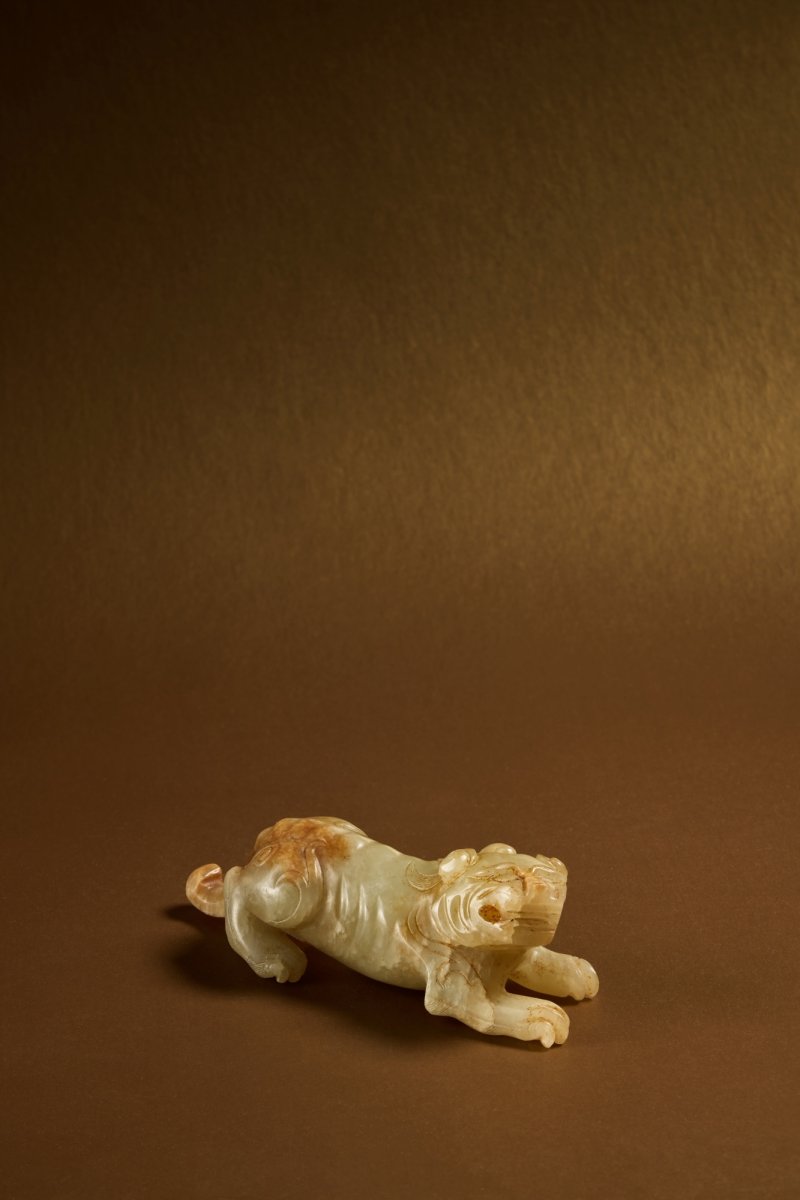
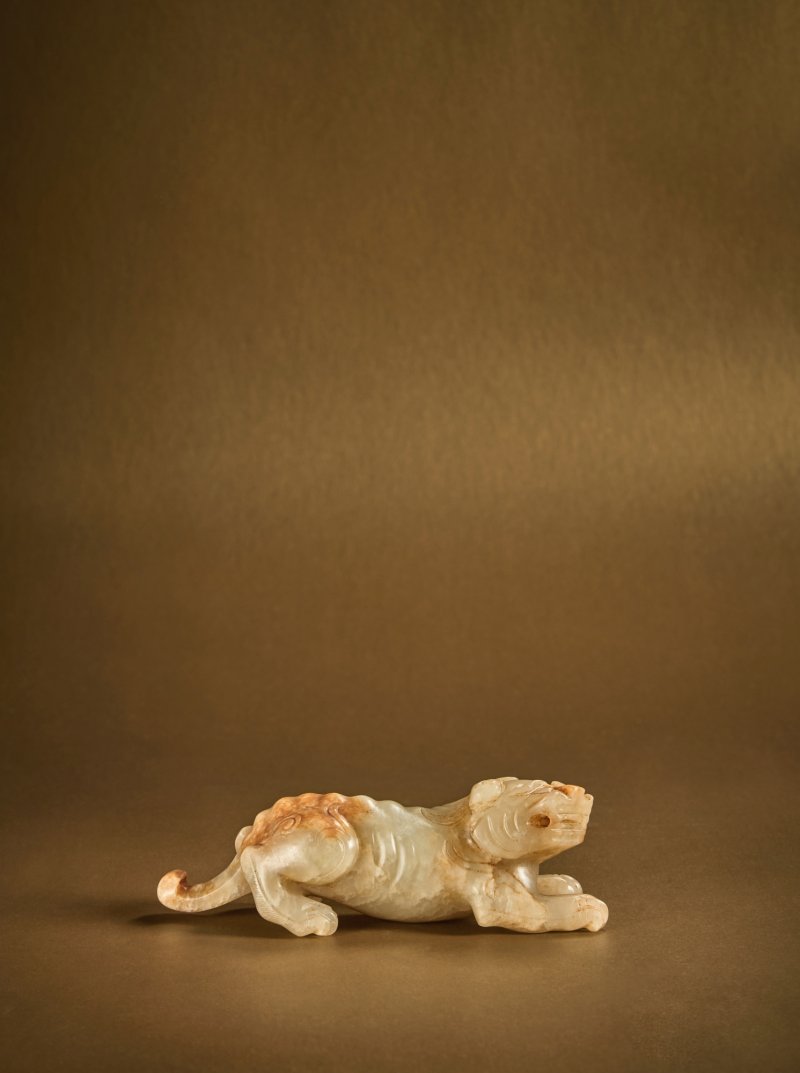
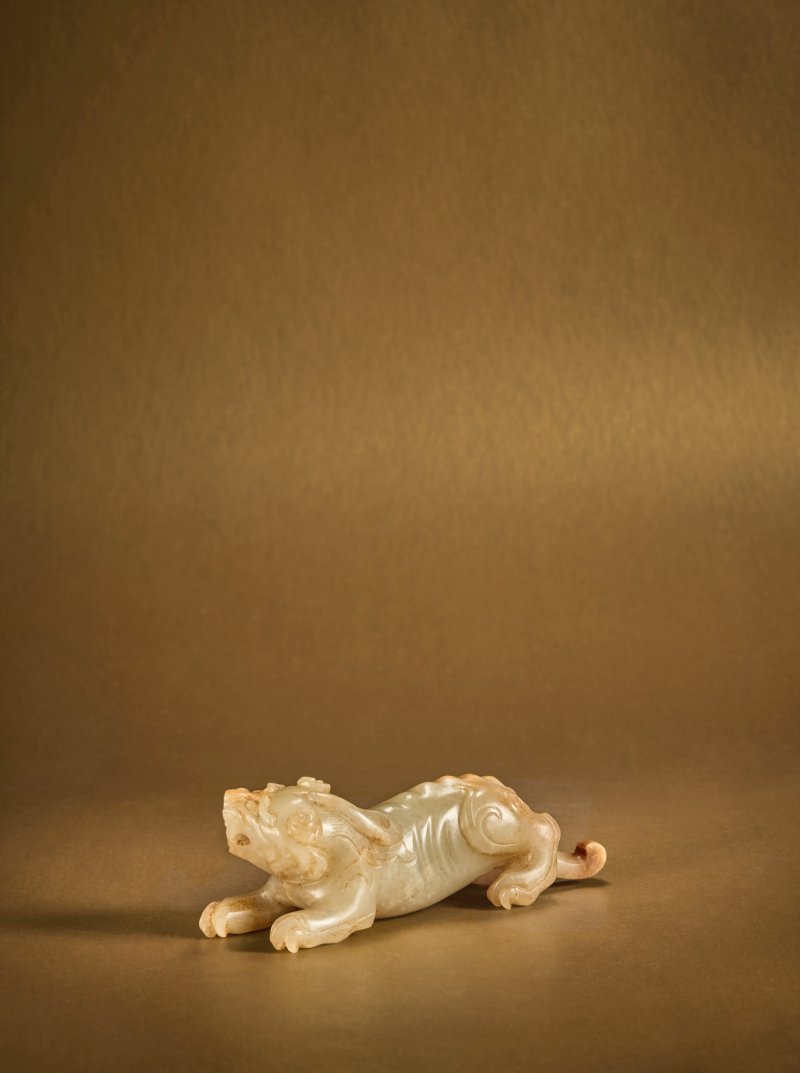
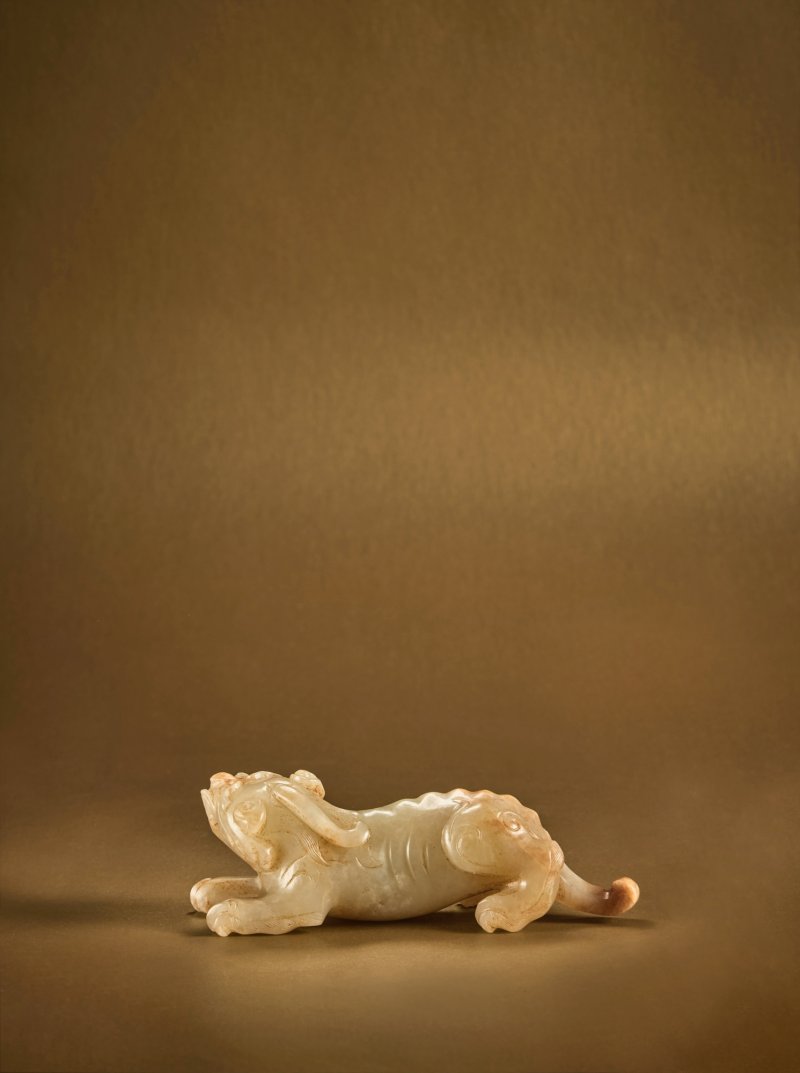
六朝 青白玉雕辟邪
起拍价
USD 100,000
估值区间
100,000 - 150,000 USD
尺寸
未知
品相
如欲了解本拍品狀況的更多資訊,請聯絡 Drew.Lerner@sothebys.com
更多信息
wood stand (2)
Length 4⅝ in., 11.7 cm
来源:鄭德坤 (1908-2001) 收藏,1968年之前
Bluett & Sons Ltd.,倫敦
展览:《Chinese Jade Throughout the Ages》,維多利亞與艾爾伯特博物館,倫敦,1975年,編號180
《Chinese Jades from Han to Ch'ing》,亞洲協會,紐約,1980年,編號12
《Chinese Jades from the Mu-Fei Collection》,Bluett & Sons Ltd.,倫敦,1990年,編號31
著录:S. Howard Hansford,《Chinese Carved Jades》,倫敦,1968年,圖版66
Jessica Rawson及John Ayers,〈Chinese Jades through the Ages〉,《Transactions of the Oriental Ceramic Society》,40卷,倫敦,1973年,編號180
图录
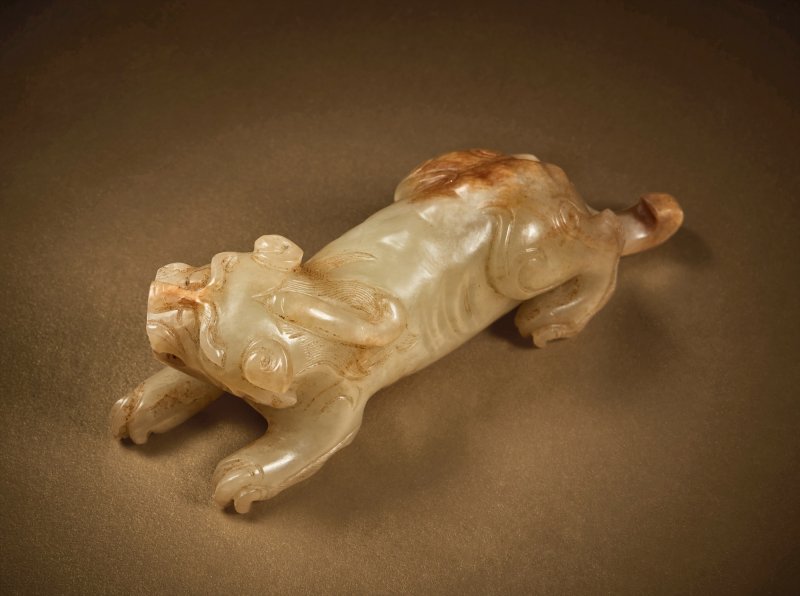
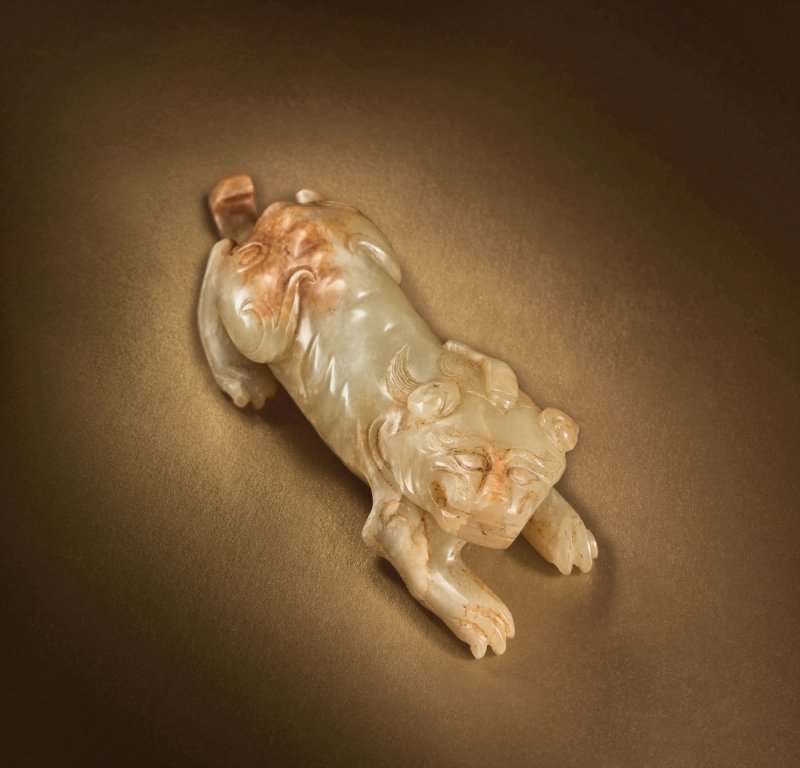
说明:Rippling with life, clawing forward and snarling in protection, the present carving exemplifies the extraordinary developments in Chinese lapidary arts during the first centuries of the common era. Departing from the more rigid designs of the Shang and Zhou dynasties, artisans of the Han and Six Dynasties periods developed a more naturalistic approach to animal carvings, taking inspiration from real life in their rendering of creatures both real and imaginary.
Its head turned gently to the right, its rear haunches poised to run, the present figure exemplifies this naturalism. While comparable jade carvings uncovered from Six Dynasties contexts are exceedingly rare, the sheer sculptural quality of this example and the following lot closely aligns with the general art-historical milieu of the time: from life-size stone figures guarding the ‘Spirit Roads’ to elite tombs to the expressive line work of the painter Gu Kaizhi.
Tiger-like in proportions but with a flowing mane, cloudlike fur and a single horn, the present carving is best described as a bixie. A term first appearing in Han dynasty classics describing the mythical beasts that live in the outer realms, the bixie has long been seen as a fearsome and auspicious creature that wards away misfortune and guards one’s path to the afterlife. Most famously exemplified by large stone figures guarding tombs, these bixie peer out, their hair and horns rippling with power, as lasting symbols of their owners’ protection.
A very small number of related jade bixie are known to survive, variously attributed to the Han dynasty and Six Dynasties period. Compare a closely related bixie in the National Palace Museum, Taipei, illustrated in Illustrated Catalogue of Ancient Jade Artifacts in the National Palace Museum, Taipei, 1988, pl. 336; preserved alongside two winged examples of related posture and stone: ibid. pl. 335 and Masterworks of Chinese Jade in the National Palace Museum, supplement, Taipei, 1973, pl. 18. Another smaller bixie in the Palace Museum, Beijing is illustrated in Zhongguo meishu quanji. Gongyi meishu bian [Complete collection of Chinese art. Arts and crafts edition], vol. 9: yuqi [Jade], Beijing, 1991, pl. 212; and another winged example from the collection of Sir Joseph Hotung, now preserved in the British Museum, London was included in Jessica Rawson, Chinese Jade from the Neolithic to the Qing, British Museum, London, 1995, cat. no 26:7. Also compare a slightly smaller bixie of closely related stance and color from the Shuisong Shanfang Collection included in Exquisite Jade Carving, University Museum and Art Gallery, University of Hong Kong, Hong Kong, 1996, cat. no. 66 (and cover).
For a further variation on this magnificent form and a possible historic connection between this bixie and the previous (also formerly in Cheng Te-k’un’s Mu-Fei Collection), please see the cataloguing of the previous lot.
Length 4⅝ in., 11.7 cm
来源:鄭德坤 (1908-2001) 收藏,1968年之前
Bluett & Sons Ltd.,倫敦
展览:《Chinese Jade Throughout the Ages》,維多利亞與艾爾伯特博物館,倫敦,1975年,編號180
《Chinese Jades from Han to Ch'ing》,亞洲協會,紐約,1980年,編號12
《Chinese Jades from the Mu-Fei Collection》,Bluett & Sons Ltd.,倫敦,1990年,編號31
著录:S. Howard Hansford,《Chinese Carved Jades》,倫敦,1968年,圖版66
Jessica Rawson及John Ayers,〈Chinese Jades through the Ages〉,《Transactions of the Oriental Ceramic Society》,40卷,倫敦,1973年,編號180
图录
说明:Rippling with life, clawing forward and snarling in protection, the present carving exemplifies the extraordinary developments in Chinese lapidary arts during the first centuries of the common era. Departing from the more rigid designs of the Shang and Zhou dynasties, artisans of the Han and Six Dynasties periods developed a more naturalistic approach to animal carvings, taking inspiration from real life in their rendering of creatures both real and imaginary.
Its head turned gently to the right, its rear haunches poised to run, the present figure exemplifies this naturalism. While comparable jade carvings uncovered from Six Dynasties contexts are exceedingly rare, the sheer sculptural quality of this example and the following lot closely aligns with the general art-historical milieu of the time: from life-size stone figures guarding the ‘Spirit Roads’ to elite tombs to the expressive line work of the painter Gu Kaizhi.
Tiger-like in proportions but with a flowing mane, cloudlike fur and a single horn, the present carving is best described as a bixie. A term first appearing in Han dynasty classics describing the mythical beasts that live in the outer realms, the bixie has long been seen as a fearsome and auspicious creature that wards away misfortune and guards one’s path to the afterlife. Most famously exemplified by large stone figures guarding tombs, these bixie peer out, their hair and horns rippling with power, as lasting symbols of their owners’ protection.
A very small number of related jade bixie are known to survive, variously attributed to the Han dynasty and Six Dynasties period. Compare a closely related bixie in the National Palace Museum, Taipei, illustrated in Illustrated Catalogue of Ancient Jade Artifacts in the National Palace Museum, Taipei, 1988, pl. 336; preserved alongside two winged examples of related posture and stone: ibid. pl. 335 and Masterworks of Chinese Jade in the National Palace Museum, supplement, Taipei, 1973, pl. 18. Another smaller bixie in the Palace Museum, Beijing is illustrated in Zhongguo meishu quanji. Gongyi meishu bian [Complete collection of Chinese art. Arts and crafts edition], vol. 9: yuqi [Jade], Beijing, 1991, pl. 212; and another winged example from the collection of Sir Joseph Hotung, now preserved in the British Museum, London was included in Jessica Rawson, Chinese Jade from the Neolithic to the Qing, British Museum, London, 1995, cat. no 26:7. Also compare a slightly smaller bixie of closely related stance and color from the Shuisong Shanfang Collection included in Exquisite Jade Carving, University Museum and Art Gallery, University of Hong Kong, Hong Kong, 1996, cat. no. 66 (and cover).
For a further variation on this magnificent form and a possible historic connection between this bixie and the previous (also formerly in Cheng Te-k’un’s Mu-Fei Collection), please see the cataloguing of the previous lot.
常见问题
这件六朝 青白玉雕辟邪的成交价是多少?
落槌价为 预展中。 成交价为 预展中。
拍品的品相状况如何?
如欲了解本拍品狀況的更多資訊,請聯絡 Drew.Lerner@sothebys.com
这件拍品的流传来源是什么?
鄭德坤 (1908-2001) 收藏,1968年之前
Bluett & Sons Ltd.,倫敦
Bluett & Sons Ltd.,倫敦
这件拍品曾在哪些展览中展出过?
《Chinese Jade Throughout the Ages》,維多利亞與艾爾伯特博物館,倫敦,1975年,編號180
《Chinese Jades from Han to Ch'ing》,亞洲協會,紐約,1980年,編號12
《Chinese Jades from the Mu-Fei Collection》,Bluett & Sons Ltd.,倫敦,1990年,編號31
《Chinese Jades from Han to Ch'ing》,亞洲協會,紐約,1980年,編號12
《Chinese Jades from the Mu-Fei Collection》,Bluett & Sons Ltd.,倫敦,1990年,編號31
这件拍品被哪些著录书籍记载?
S. Howard Hansford,《Chinese Carved Jades》,倫敦,1968年,圖版66
Jessica Rawson及John Ayers,〈Chinese Jades through the Ages〉,《Transactions of the Oriental Ceramic Society》,40卷,倫敦,1973年,編號180
图录
Jessica Rawson及John Ayers,〈Chinese Jades through the Ages〉,《Transactions of the Oriental Ceramic Society》,40卷,倫敦,1973年,編號180
图录