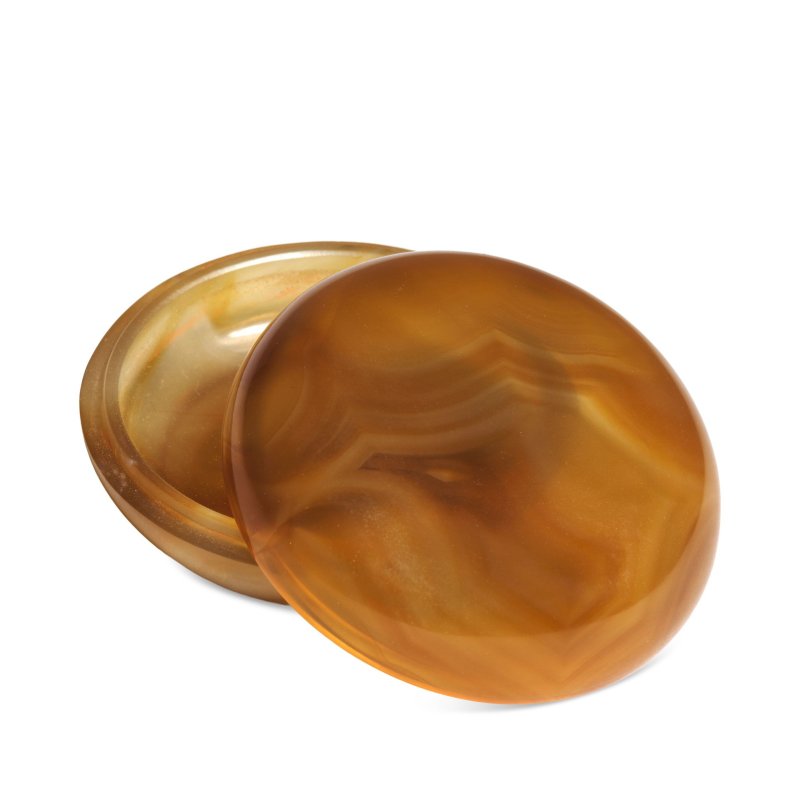

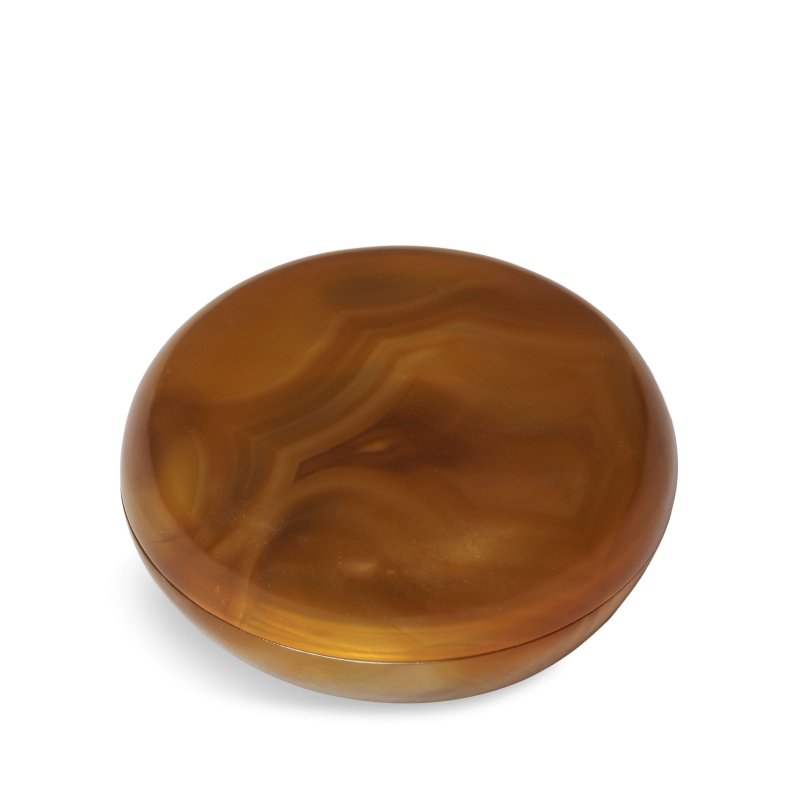
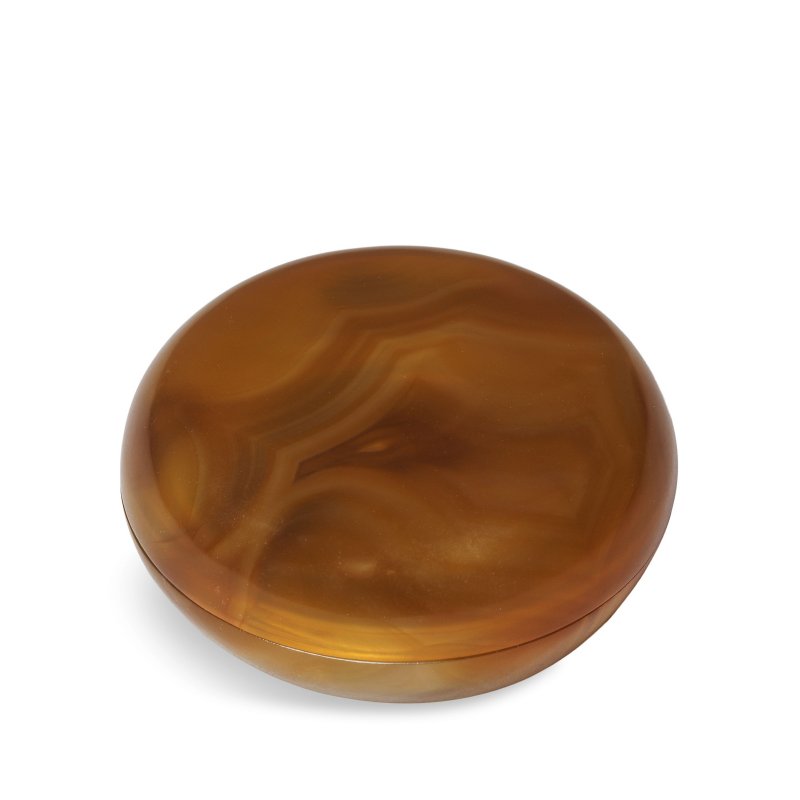
Lot 1 清乾隆 瑪瑙印泥盒 | A RARE AGATE CIRCULAR SEAL PASTE BOX AND COVER
落槌价
预展中
成交价
预展中
| 拍卖公司 | 邦瀚斯 |
|---|---|
| 拍卖时间 | 2026年11月05日 |
拍品信息
拍品名称
清乾隆 瑪瑙印泥盒 | A RARE AGATE CIRCULAR SEAL PASTE BOX AND COVER
年代
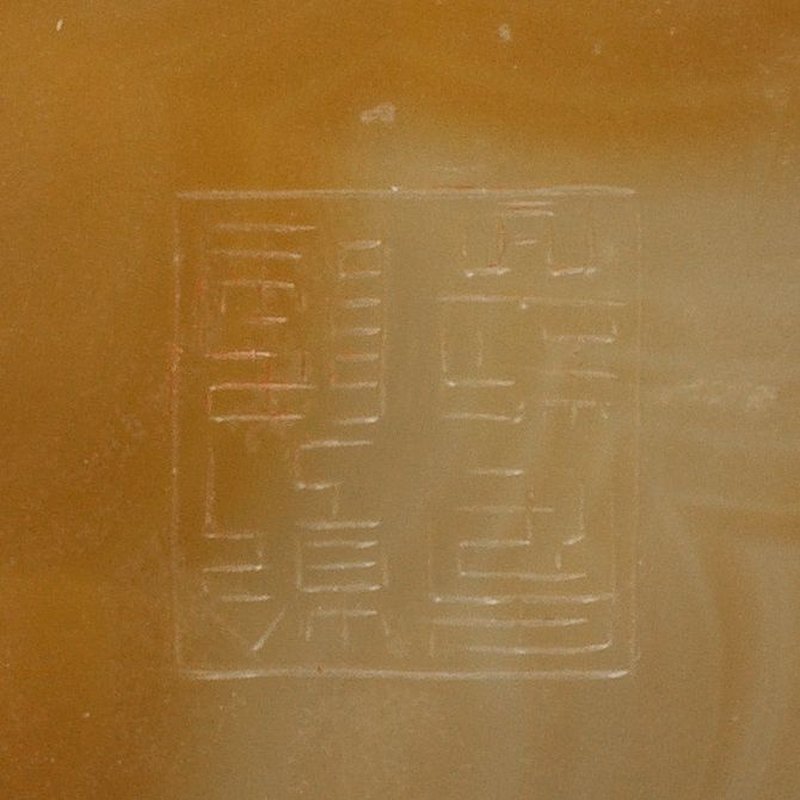
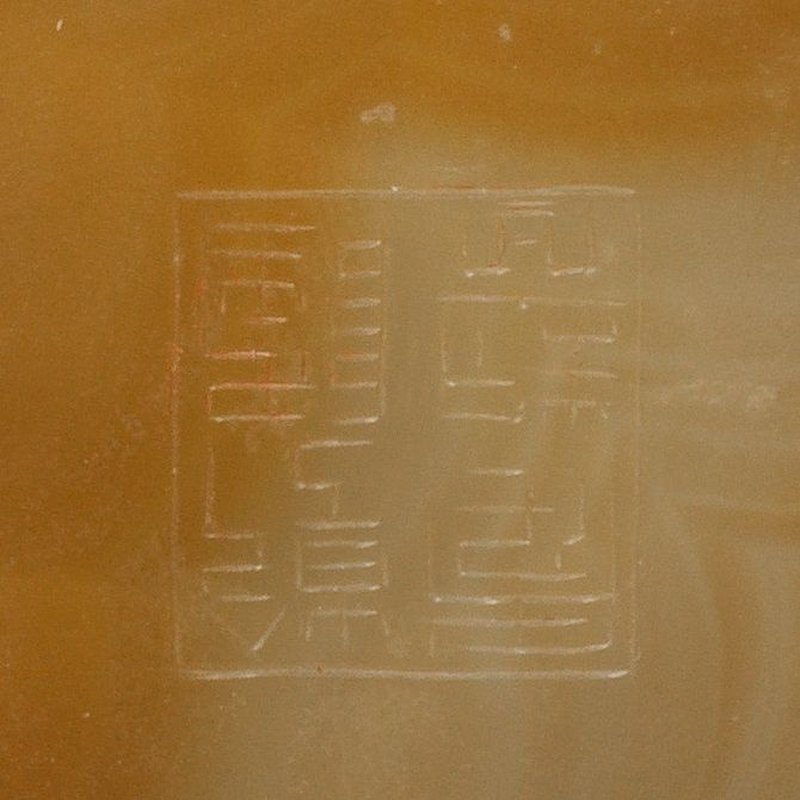
Qianlong incised seal mark and of the period
起拍价
GBP 8,000
估值区间
GBP 8000 - 12000
尺寸
未知
品相
未知
更多信息
Qianlong incised seal mark and of the period
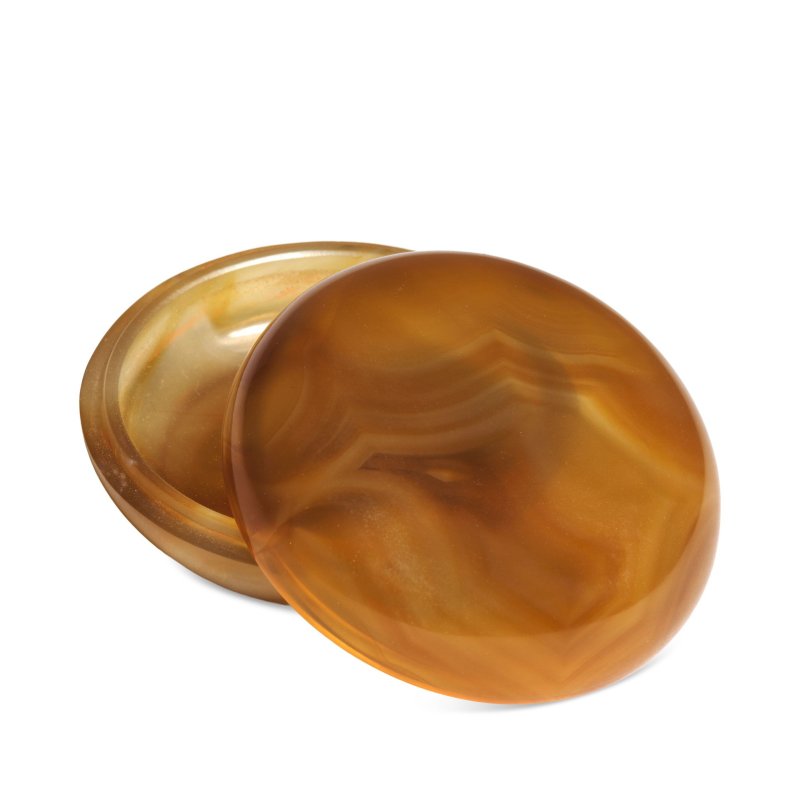
Exquisitely carved and hollowed, the box rising from a short slightly inward-tapering foot, with curved sides to a raised rim providing secure seating for the domed cover, the translucent stone smoothly polished to reveal its naturally lustrous amber-honey tone striations. 5.3cm (2 1/8in) diam. (2).
Footnotes
清乾隆 瑪瑙印泥盒
「乾隆年製」篆書刻款
Provenance: Pat Miller, Hawaii
Robert Kleiner & Co. Ltd., London
Acquired from the above on 25 October 2008
Exhibited: Honolulu Academy of Arts, Hawaii
來源:Pat Miller,夏威夷
倫敦古董商Robert Kleiner & Co. Ltd.
從上處獲得于2008年10月25日
檀香山藝術學院,美國夏威夷
Agate was particularly favoured at the Qing Court for its natural beauty, translucency and subtle variations of colour, with the Yongzheng Emperor showing a marked appreciation for the inherent qualities of the stone. Archival records from the (Imperial Jade Workshop) within the (Imperial Palace Workshops), dated between 1724 and 1729, record that the Emperor instructed that agate brushwashers and bowls should remain undecorated in order to reveal the natural patterns of the stone; vessels with 'intricate' designs or of unsatisfactory quality were rejected and returned to the workshops. A number of extant agate vessels bearing Yongzheng reign marks in the Imperial collections of the Palace Museum, Taipei, and the Palace Museum, Beijing, similarly demonstrate this preference for restraint and an appreciation of the material itself. See Feng Mingzhu, , Taipei, 2009, pp.235–245. See also a rare agate oval dish, Yongzheng incised four-character mark and of the period, which was sold at Bonhams London, 12 May 2011, lot 184.
This appreciation for the natural beauty of agate continued into the Qianlong reign, when the Imperial Workshops produced refined objects for the scholar's studio, including seal-paste boxes such as the present example. The plain, undecorated surface of the present box, which allows the naturally occurring bands and colour variations of the agate to serve as its principal ornament, reflects the same aesthetic preference for the unaltered beauty of the material. See an agate dish, Qianlong seal mark and period, in the Victoria and Albert Museum, London, which according to the Wells Bequest records came 'from the Summer Palace at Pekin', referring to the Yuanmingyuan; see M.Wilson, , London, 2004, pp.98 (acc.no.1551-1882). See also an agate bowl, 18th century, in the Metropolitan Museum of Art, New York (acc.no.02.18.899).
See a rare small agate bowl, Qianlong four-character mark and of the period, which was sold at Sotheby's Paris, 12 December 2013, lot 43. Compare also with a similar chalcedony seal paste box and cover, from the collection of Mary and George Bloch, Qianlong seal mark and of the period, which was sold at Sotheby's Hong Kong, 23 October 2005, lot 26. And another finely carved agate seal paste box with cover, Qianlong seal mark and of the period, which was sold at Christie's New York, 1st December 1983, lot 669.
Exquisitely carved and hollowed, the box rising from a short slightly inward-tapering foot, with curved sides to a raised rim providing secure seating for the domed cover, the translucent stone smoothly polished to reveal its naturally lustrous amber-honey tone striations. 5.3cm (2 1/8in) diam. (2).
Footnotes
清乾隆 瑪瑙印泥盒
「乾隆年製」篆書刻款
Provenance: Pat Miller, Hawaii
Robert Kleiner & Co. Ltd., London
Acquired from the above on 25 October 2008
Exhibited: Honolulu Academy of Arts, Hawaii
來源:Pat Miller,夏威夷
倫敦古董商Robert Kleiner & Co. Ltd.
從上處獲得于2008年10月25日
檀香山藝術學院,美國夏威夷
Agate was particularly favoured at the Qing Court for its natural beauty, translucency and subtle variations of colour, with the Yongzheng Emperor showing a marked appreciation for the inherent qualities of the stone. Archival records from the (Imperial Jade Workshop) within the (Imperial Palace Workshops), dated between 1724 and 1729, record that the Emperor instructed that agate brushwashers and bowls should remain undecorated in order to reveal the natural patterns of the stone; vessels with 'intricate' designs or of unsatisfactory quality were rejected and returned to the workshops. A number of extant agate vessels bearing Yongzheng reign marks in the Imperial collections of the Palace Museum, Taipei, and the Palace Museum, Beijing, similarly demonstrate this preference for restraint and an appreciation of the material itself. See Feng Mingzhu, , Taipei, 2009, pp.235–245. See also a rare agate oval dish, Yongzheng incised four-character mark and of the period, which was sold at Bonhams London, 12 May 2011, lot 184.
This appreciation for the natural beauty of agate continued into the Qianlong reign, when the Imperial Workshops produced refined objects for the scholar's studio, including seal-paste boxes such as the present example. The plain, undecorated surface of the present box, which allows the naturally occurring bands and colour variations of the agate to serve as its principal ornament, reflects the same aesthetic preference for the unaltered beauty of the material. See an agate dish, Qianlong seal mark and period, in the Victoria and Albert Museum, London, which according to the Wells Bequest records came 'from the Summer Palace at Pekin', referring to the Yuanmingyuan; see M.Wilson, , London, 2004, pp.98 (acc.no.1551-1882). See also an agate bowl, 18th century, in the Metropolitan Museum of Art, New York (acc.no.02.18.899).
See a rare small agate bowl, Qianlong four-character mark and of the period, which was sold at Sotheby's Paris, 12 December 2013, lot 43. Compare also with a similar chalcedony seal paste box and cover, from the collection of Mary and George Bloch, Qianlong seal mark and of the period, which was sold at Sotheby's Hong Kong, 23 October 2005, lot 26. And another finely carved agate seal paste box with cover, Qianlong seal mark and of the period, which was sold at Christie's New York, 1st December 1983, lot 669.
常见问题
这件清乾隆 瑪瑙印泥盒 | A RARE AGATE CIRCULAR SEAL PASTE BOX AND COVER的成交价是多少?
落槌价为 预展中。 成交价为 预展中。