
Lot 82 A Chinese blue and white 'Roosters' tea caddy
落槌价
****
成交价
****
拍品信息
拍品名称
A Chinese blue and white 'Roosters' tea caddy
年代
Transitional period
起拍价
未知
估值区间
€ 2.000 – € 4.000
尺寸
H: H. 15,9 cm
品相
未知
更多信息
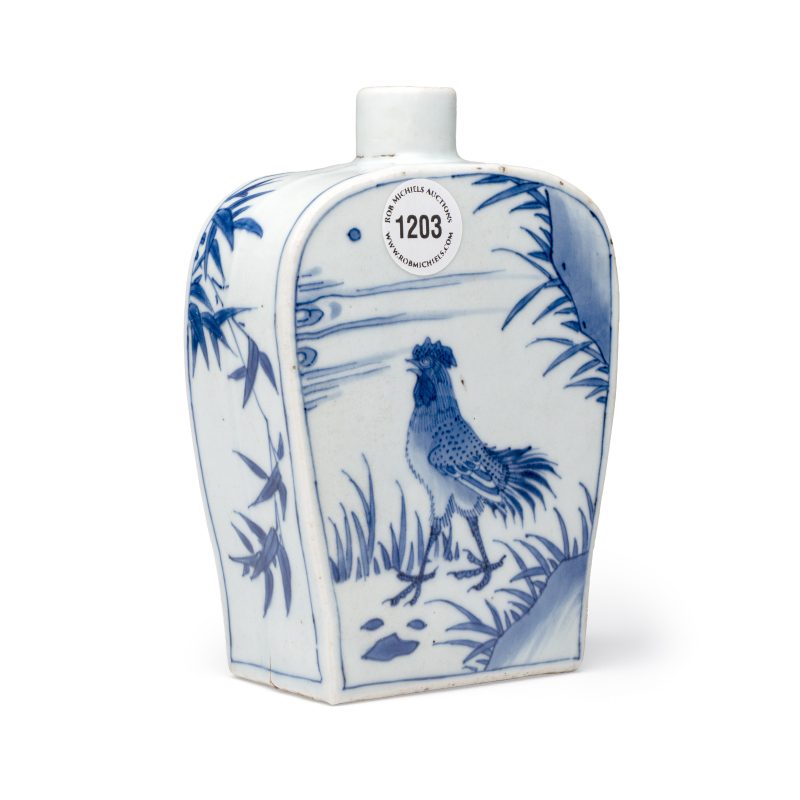
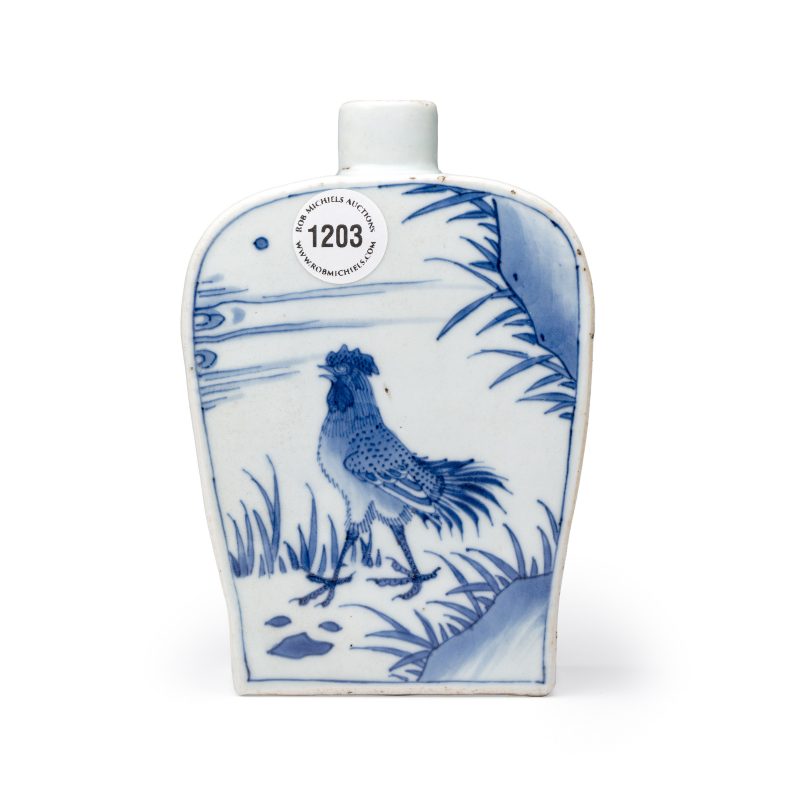
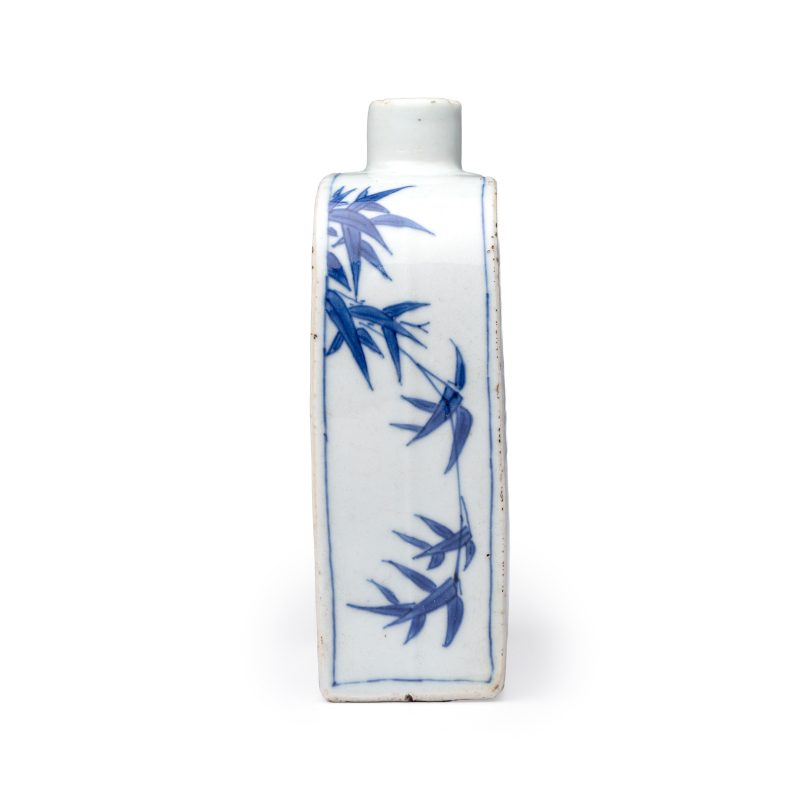
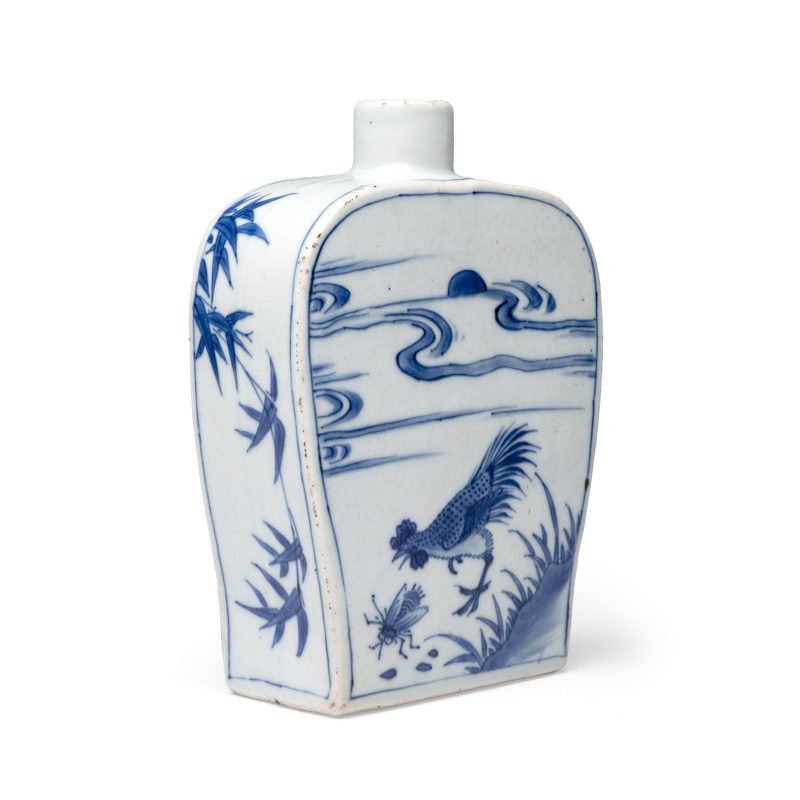
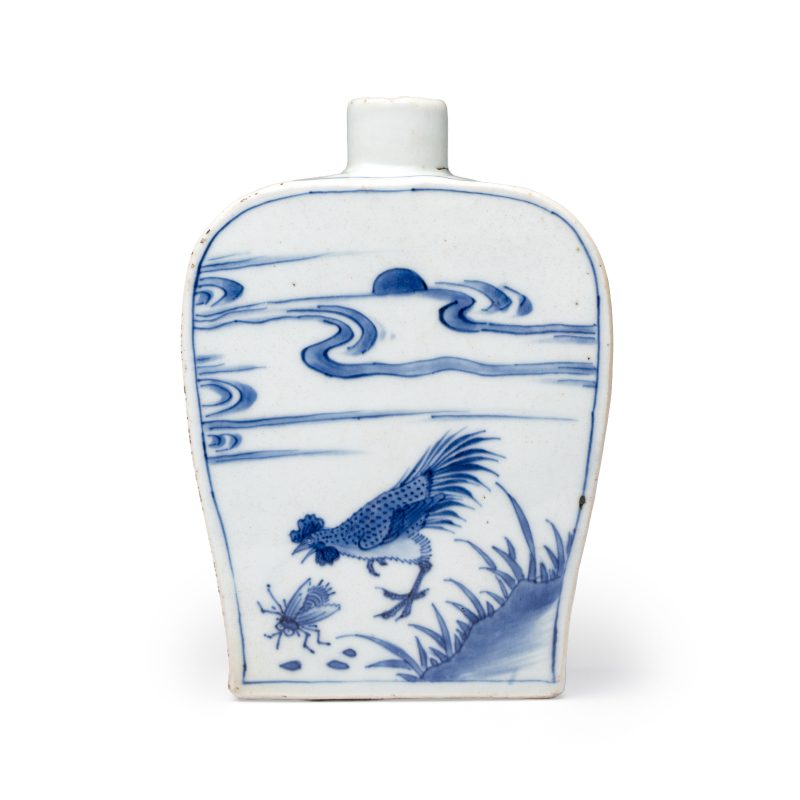
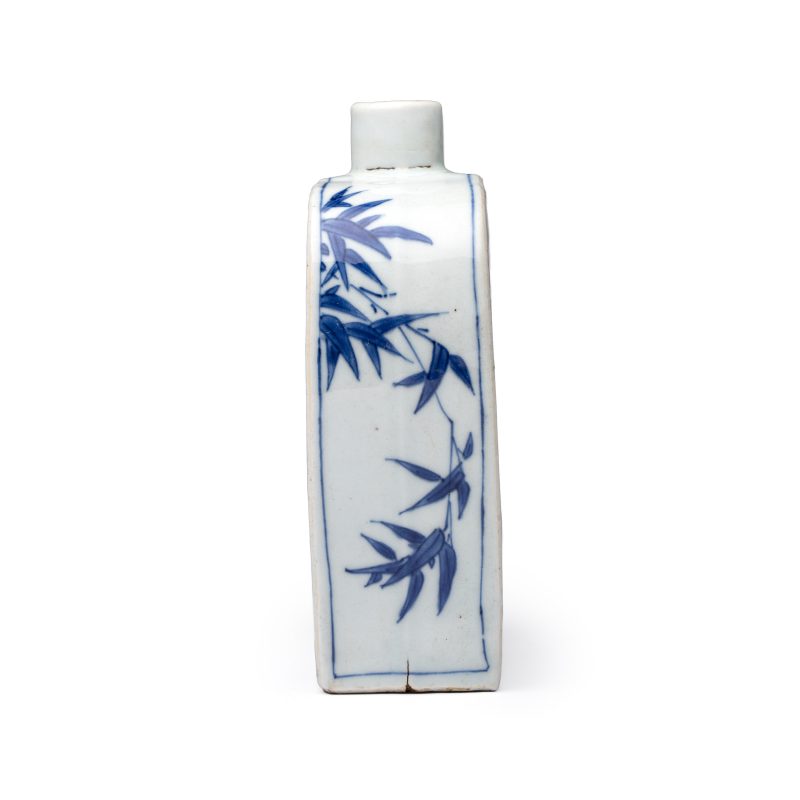
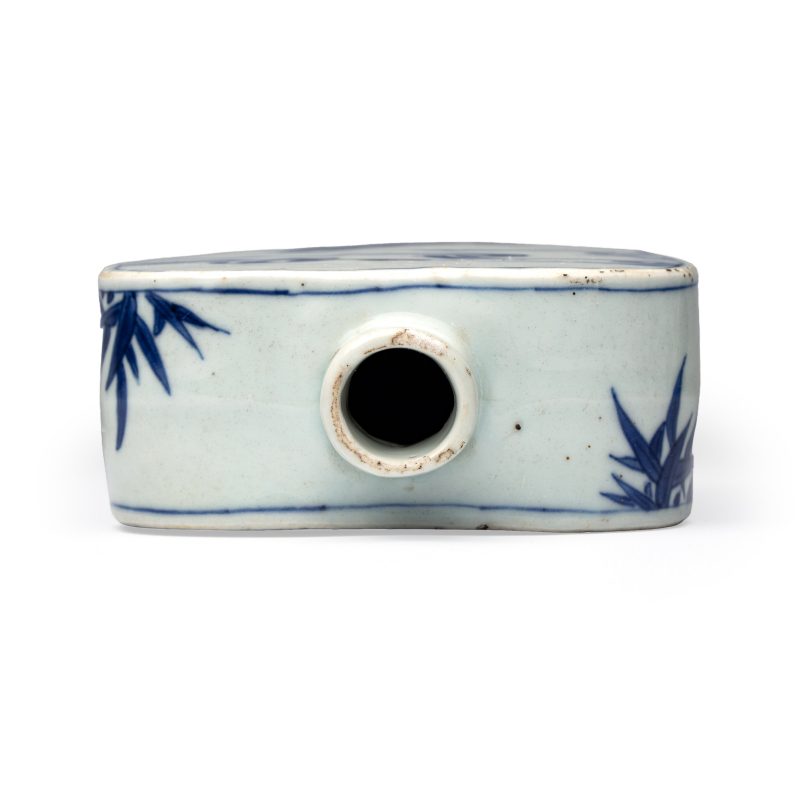
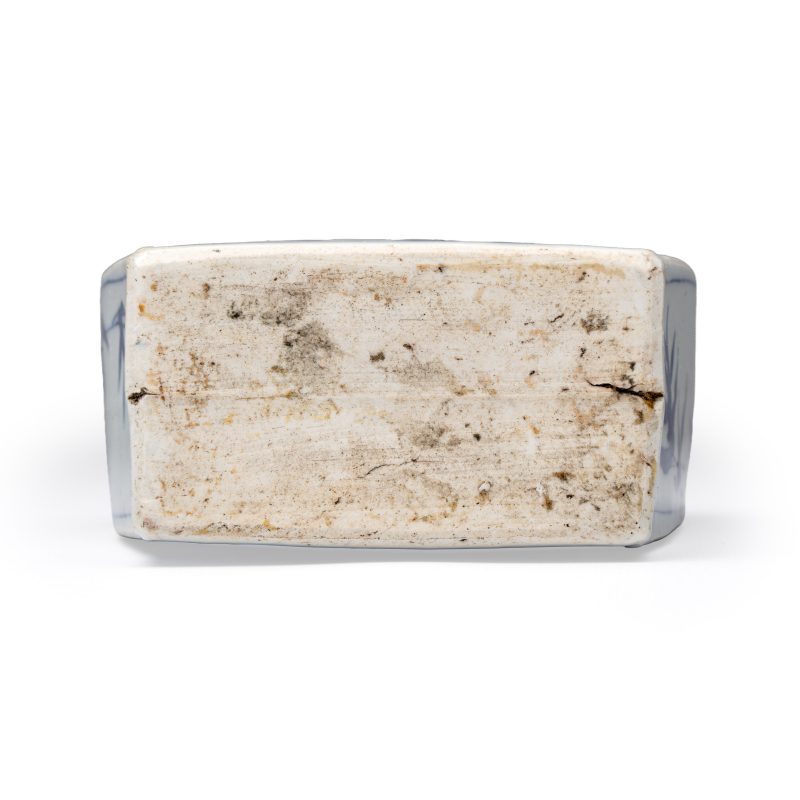
Of flattened rectangular form, the tea caddy has two broad principal sides joined by two narrow sides that taper gently upwards to rounded shoulders, surmounted by a short cylindrical neck. Both principal sides are finely painted in underglaze cobalt blue with a rooster: on one side standing proudly among rocks and grasses, and on the other pecking at a large insect beneath scrolling clouds. The narrow sides are decorated with bamboo sprays, while the base is left unglazed.
The rooster is one of the most commonly depicted domestic fowls in Chinese decorative art and frequently appears in auspicious rebuses. The Chinese word for rooster, ji (雞), is a homophone of ji (吉), meaning good fortune or auspiciousness.
茶葉罐呈扁方形,溜肩,兩側向下略收,下承平底,頂置短直頸。罐身兩面以青花分繪雄雞,一隻昂首立於竹石草叢之間,另一隻低首覓食,上方飾流雲,兩側繪修竹。底部露胎。
雄雞是中國裝飾藝術中常見的家禽題材之一,亦常見於吉祥諧音紋飾。「雞」與「吉」音近,因而寓有吉祥如意、納福迎祥之意。
Provenance:
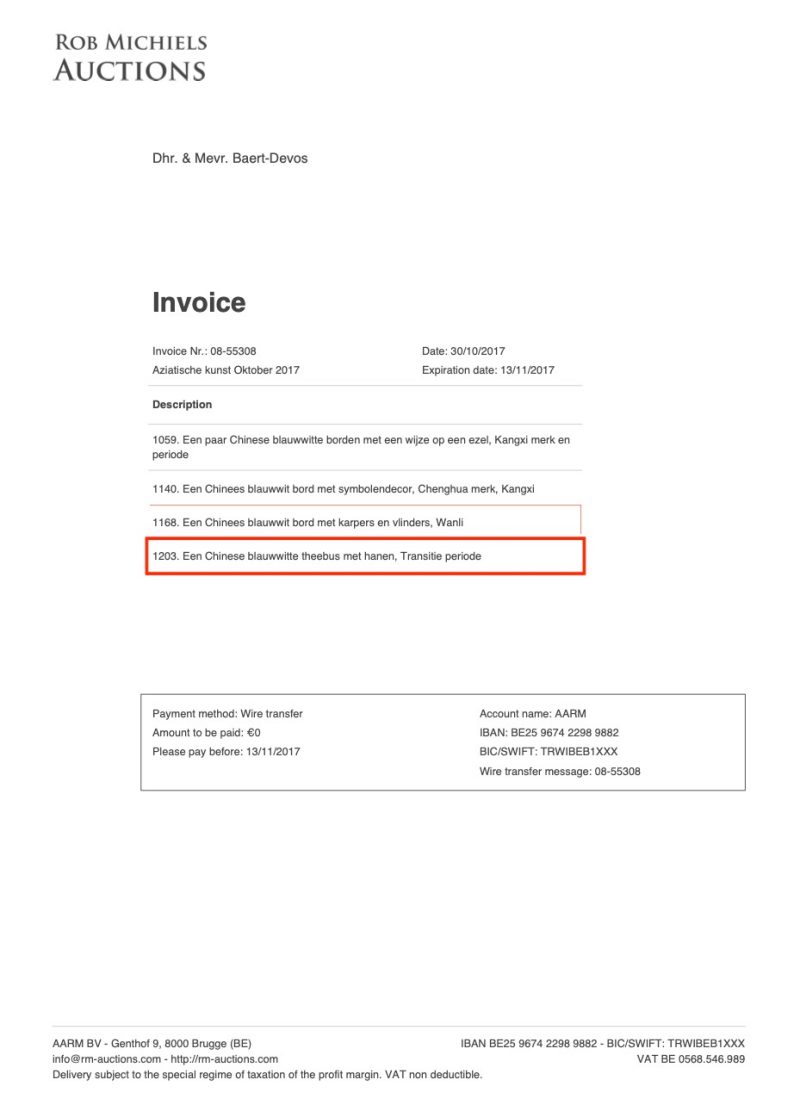
Rob Michiels Auctions, Bruges, 28 October 2017, lot 1203. (sold EUR 4.420,00) (link)
The Mr. and Mrs. Baert-Devos Collection, Belgium. Acquired from the above. (see added scan)
The rooster is one of the most commonly depicted domestic fowls in Chinese decorative art and frequently appears in auspicious rebuses. The Chinese word for rooster, ji (雞), is a homophone of ji (吉), meaning good fortune or auspiciousness.
茶葉罐呈扁方形,溜肩,兩側向下略收,下承平底,頂置短直頸。罐身兩面以青花分繪雄雞,一隻昂首立於竹石草叢之間,另一隻低首覓食,上方飾流雲,兩側繪修竹。底部露胎。
雄雞是中國裝飾藝術中常見的家禽題材之一,亦常見於吉祥諧音紋飾。「雞」與「吉」音近,因而寓有吉祥如意、納福迎祥之意。
Provenance:
Rob Michiels Auctions, Bruges, 28 October 2017, lot 1203. (sold EUR 4.420,00) (link)
The Mr. and Mrs. Baert-Devos Collection, Belgium. Acquired from the above. (see added scan)
常见问题
拍品的尺寸是多少?
H: H. 15,9 cm