
拍品信息
拍品名称
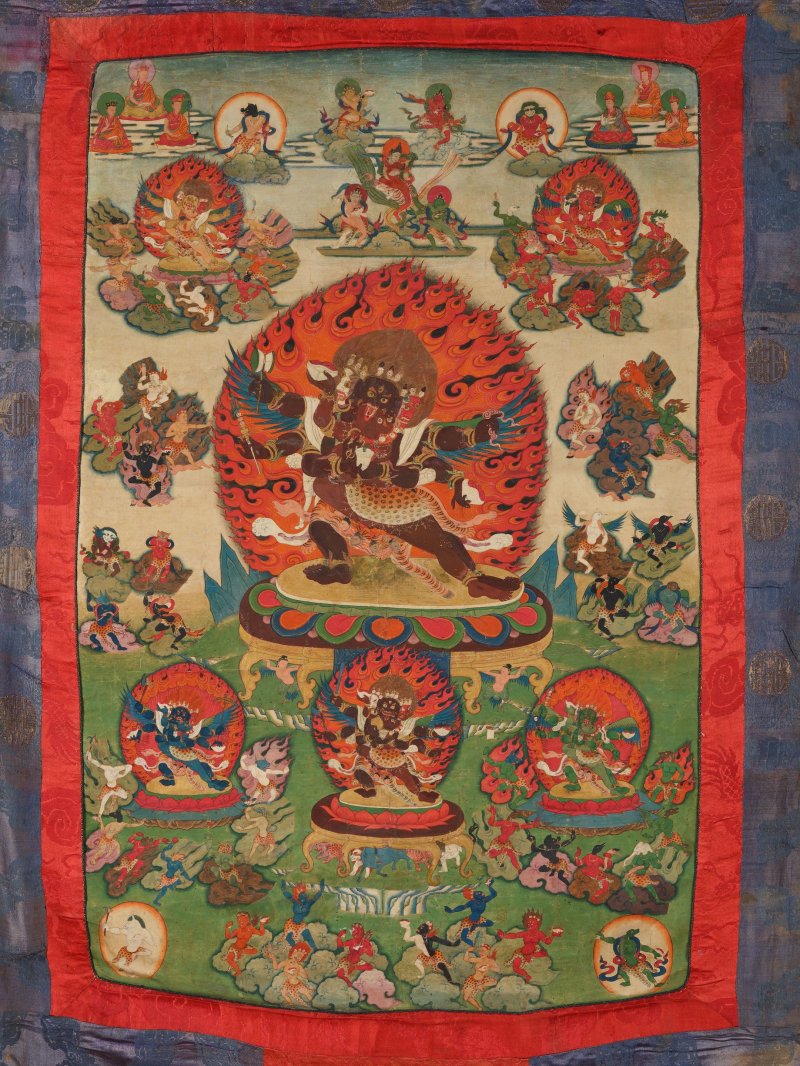
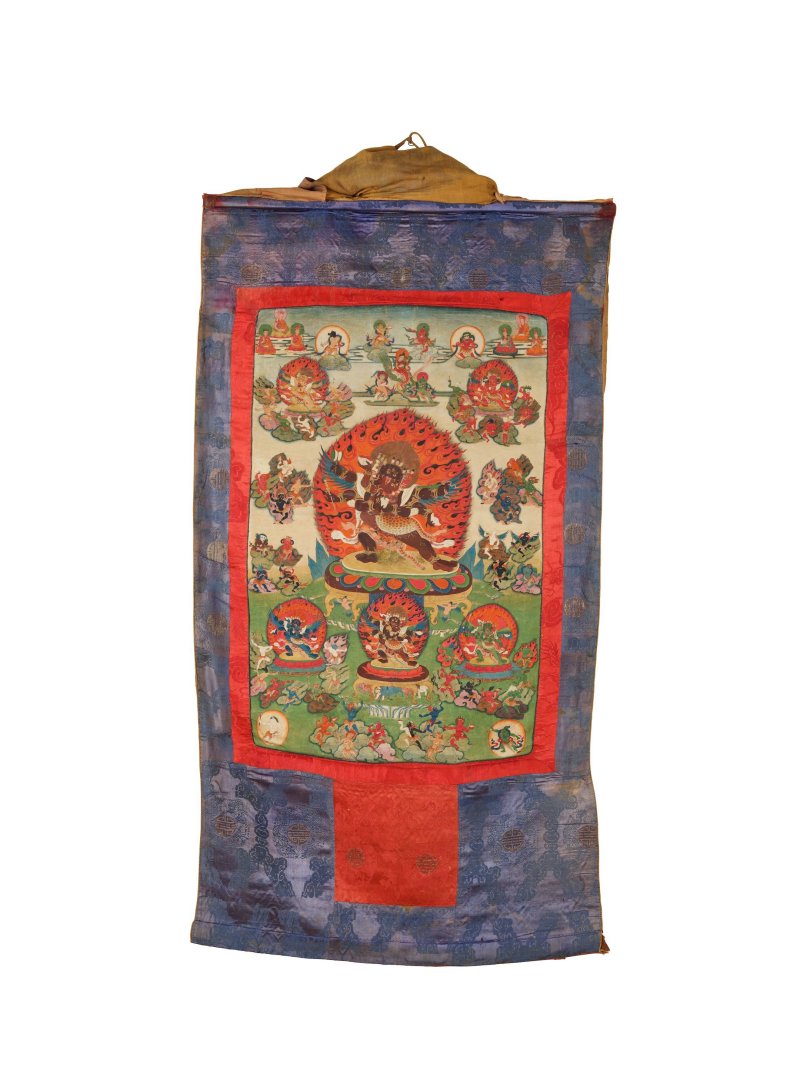
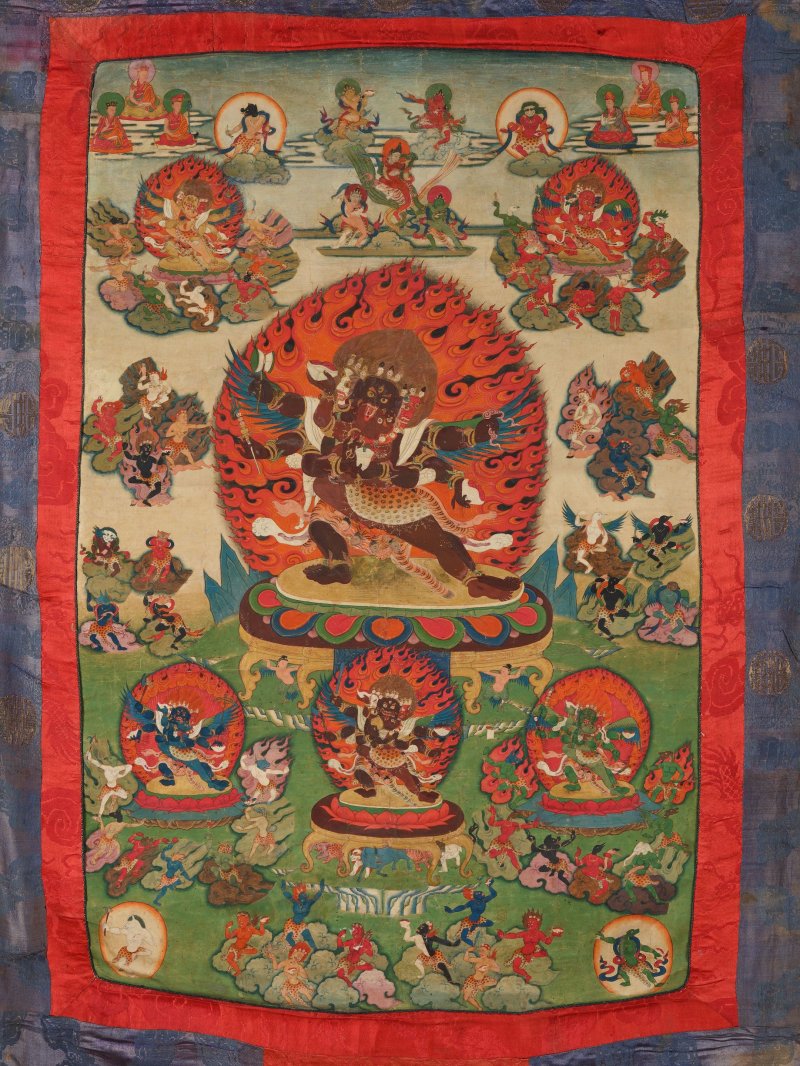
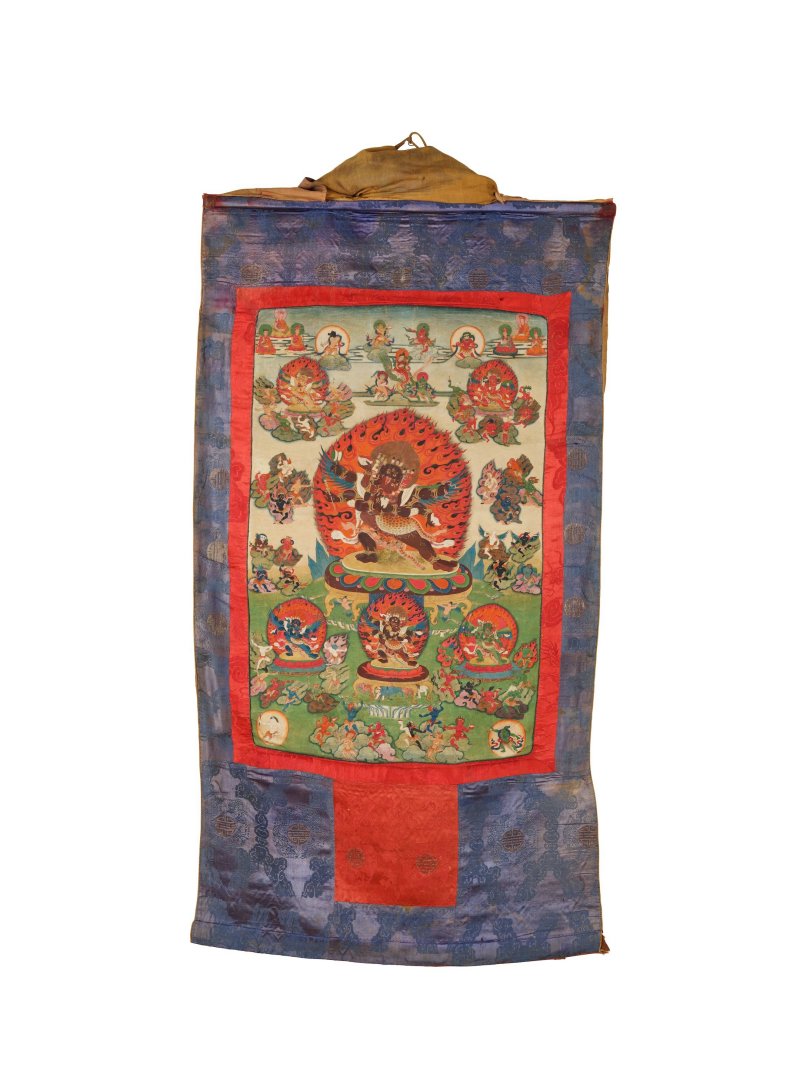
藏東 八蚌風格 十九世紀 赫魯嘎唐卡 | A THANGKA OF MAHOTTARA HERUKA
年代
EASTERN TIBET, PALPUNG STYLE, 19TH CENTURY
起拍价
HKD 200,000
估值区间
HKD 200000 - 300000
尺寸
未知
品相
未知
更多信息
EASTERN TIBET, PALPUNG STYLE, 19TH CENTURY
Distemper on cloth; mounted with silks.
Himalayan Art Resources item no. 41008
Image: 70 x 44.5 cm (27 1/2 x 17 1/2 in.)
With silks: 117 x 63 cm (46 x 24 3/4 in.)
Footnotes
藏東 八蚌風格 十九世紀 赫魯嘎唐卡
Provenance
Arnold Lieberman, New York
Bonhams, New York, 17 March 2014, lot 37
John and Karina Stewart Collection
Standing atop a lotus base at the center of the composition, Mahottara Heruka embraces his consort within a blazing mandorla. He is flanked by Ratna Heruka, Padma Heruka, Buddha Heruka, Karma Heruka, and Vajra Heruka. The lower portion of the composition is populated by an assembly of fifty-eight wrathful and attendant deities, comprising five male and female Heruka pairs, eight Yoginis, eight animal-headed Tramen, four female Gatekeepers, and twenty-eight Shavaris. Lineage masters populate the upper register, anchoring the vision in historical tradition. To the top left sit three figures, likely including the Tenth Shamarpa, Chodrub Gyatso (1741/42–1792), and the Thirteenth Karmapa, Dudul Dorje (1733/34–1797/98). To the right are three additional masters, among whom is the Eighth Tai Situpa, Chokyi Jungne (1700–1774).
In the Nyingma tradition, the Guhyagarbha Tantra (8th-10th century) is considered the most important of all Tantras. It describes two basic mandala configurations—one of forty-two peaceful deities and another of fifty-eight wrathful deities—combined they are the One Hundred Peaceful & Wrathful Deities. There is a clear organization and a structured hierarchy in the Tantra and two mandalas. There is also a clear relationship between the deities of the Guhyagarbha Tantra and the various Tibetan Buddhist traditions of the Bardo Todal ().
The forty-two peaceful and fifty-eight wrathful deities form the visual framework for depicting the bardo journey. In the 14th century, the 'Terton' Karma Lingpa discovered the 'treasure text' known as the , which is read to the deceased to guide their consciousness and help them achieve a favorable rebirth.
A closely related example of this iconography, executed in the Eastern Tibetan Palpung style and comparable to the present thangka, is a 19th-century depiction of Guru Dragpo in the Rubin Museum of Art (P1994.8.3; HAR 55).
Distemper on cloth; mounted with silks.
Himalayan Art Resources item no. 41008
Image: 70 x 44.5 cm (27 1/2 x 17 1/2 in.)
With silks: 117 x 63 cm (46 x 24 3/4 in.)
Footnotes
藏東 八蚌風格 十九世紀 赫魯嘎唐卡
Provenance
Arnold Lieberman, New York
Bonhams, New York, 17 March 2014, lot 37
John and Karina Stewart Collection
Standing atop a lotus base at the center of the composition, Mahottara Heruka embraces his consort within a blazing mandorla. He is flanked by Ratna Heruka, Padma Heruka, Buddha Heruka, Karma Heruka, and Vajra Heruka. The lower portion of the composition is populated by an assembly of fifty-eight wrathful and attendant deities, comprising five male and female Heruka pairs, eight Yoginis, eight animal-headed Tramen, four female Gatekeepers, and twenty-eight Shavaris. Lineage masters populate the upper register, anchoring the vision in historical tradition. To the top left sit three figures, likely including the Tenth Shamarpa, Chodrub Gyatso (1741/42–1792), and the Thirteenth Karmapa, Dudul Dorje (1733/34–1797/98). To the right are three additional masters, among whom is the Eighth Tai Situpa, Chokyi Jungne (1700–1774).
In the Nyingma tradition, the Guhyagarbha Tantra (8th-10th century) is considered the most important of all Tantras. It describes two basic mandala configurations—one of forty-two peaceful deities and another of fifty-eight wrathful deities—combined they are the One Hundred Peaceful & Wrathful Deities. There is a clear organization and a structured hierarchy in the Tantra and two mandalas. There is also a clear relationship between the deities of the Guhyagarbha Tantra and the various Tibetan Buddhist traditions of the Bardo Todal ().
The forty-two peaceful and fifty-eight wrathful deities form the visual framework for depicting the bardo journey. In the 14th century, the 'Terton' Karma Lingpa discovered the 'treasure text' known as the , which is read to the deceased to guide their consciousness and help them achieve a favorable rebirth.
A closely related example of this iconography, executed in the Eastern Tibetan Palpung style and comparable to the present thangka, is a 19th-century depiction of Guru Dragpo in the Rubin Museum of Art (P1994.8.3; HAR 55).
常见问题
这件藏東 八蚌風格 十九世紀 赫魯嘎唐卡 | A THANGKA OF MAHOTTARA HERUKA的成交价是多少?
落槌价为 预展中。 成交价为 预展中。