
拍品信息
拍品名称
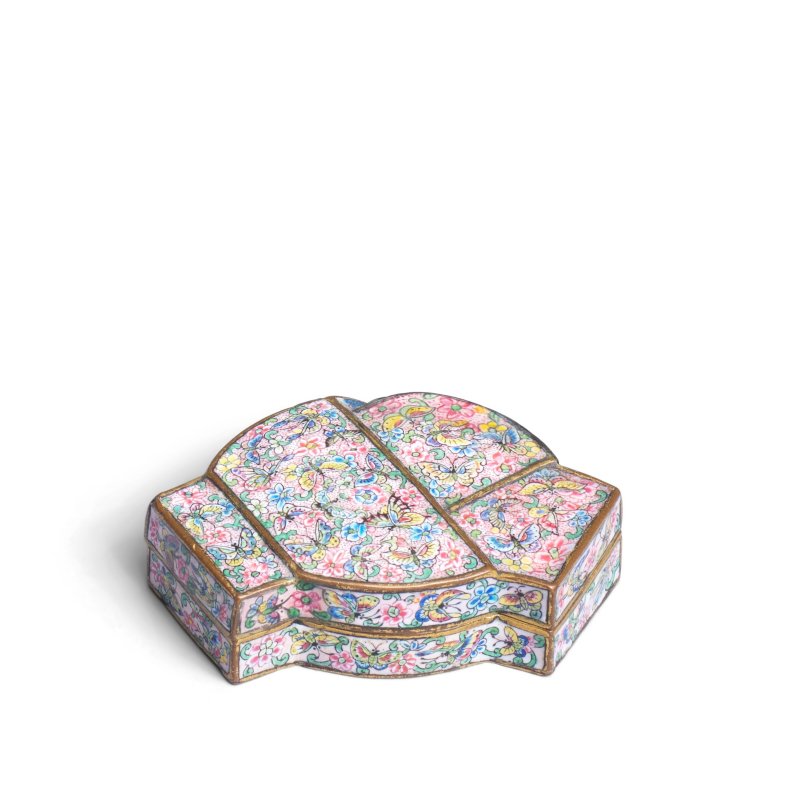
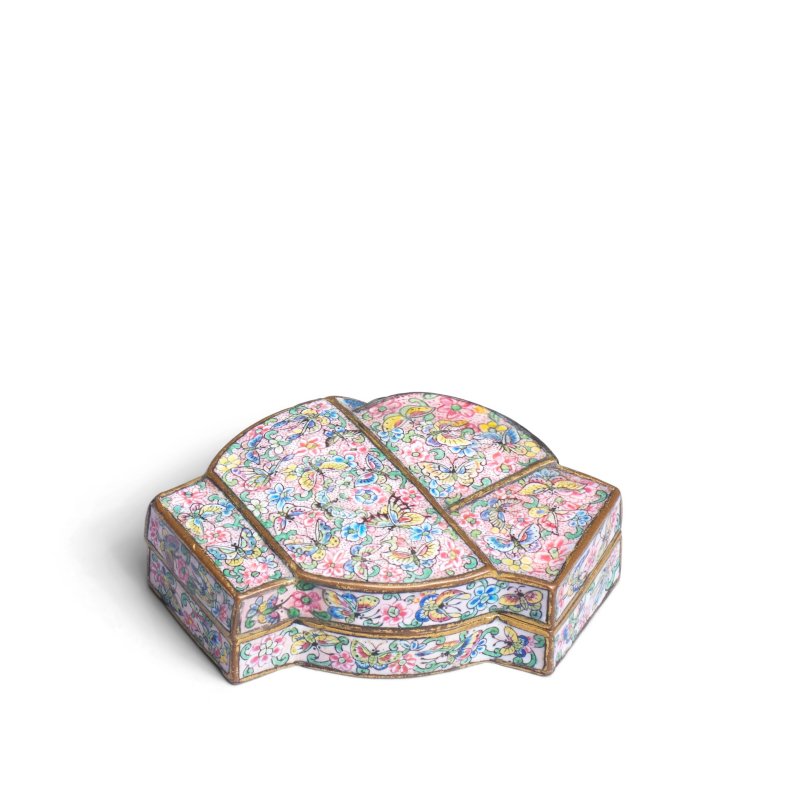
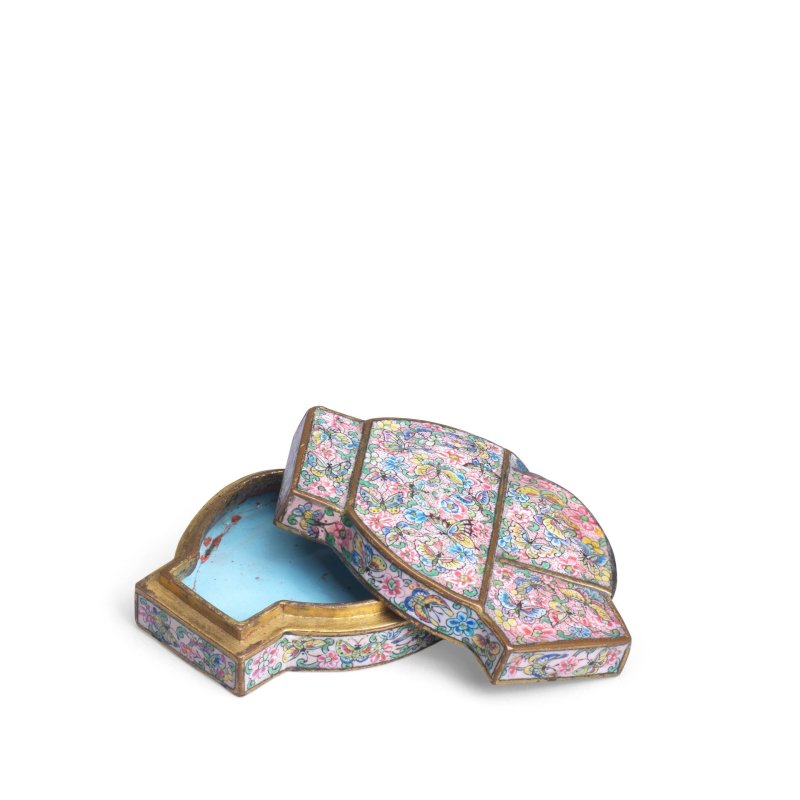
清雍正 北京銅胎畫琺琅花蝶紋結形蓋盒 | A VERY RARE BEIJING ENAMEL 'RIBBON KNOT' BOX AND COVER
年代
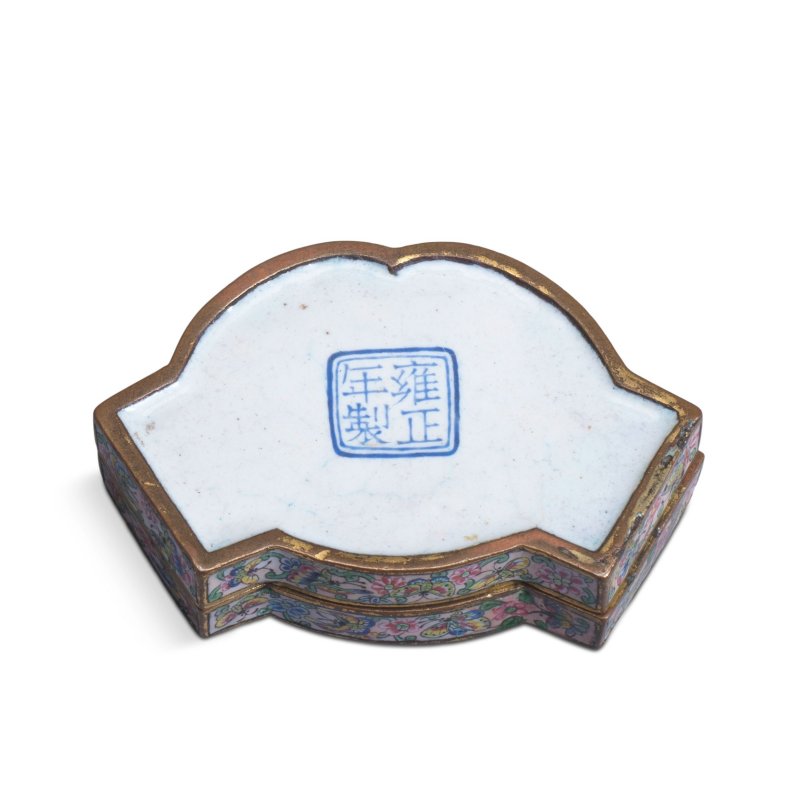
Yongzheng four-character mark and of the period
起拍价
GBP 30,000
估值区间
GBP 30000 - 40000
尺寸
未知
品相
未知
更多信息
Yongzheng four-character mark and of the period
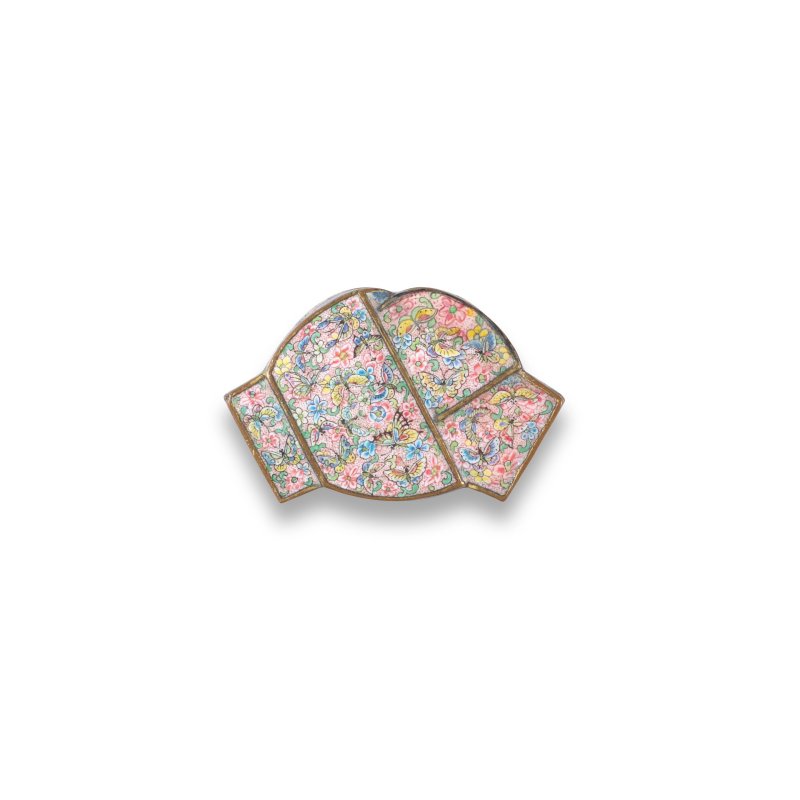
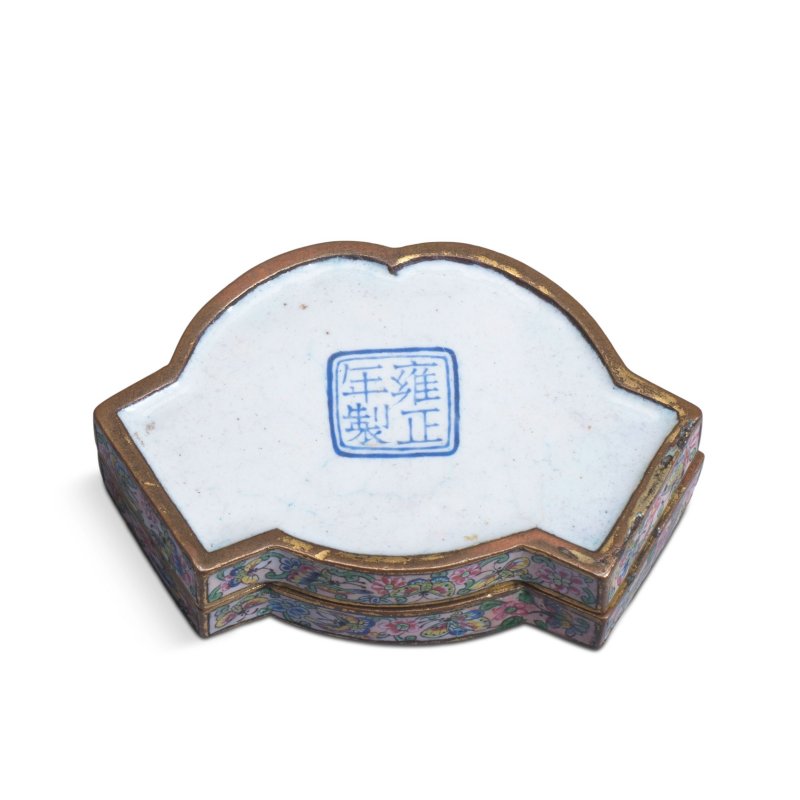
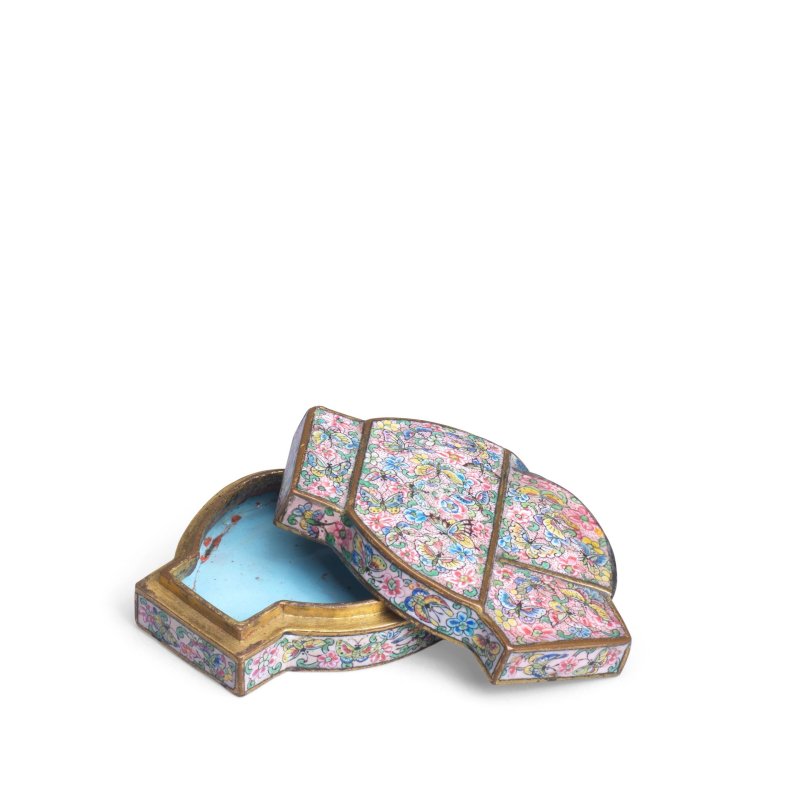
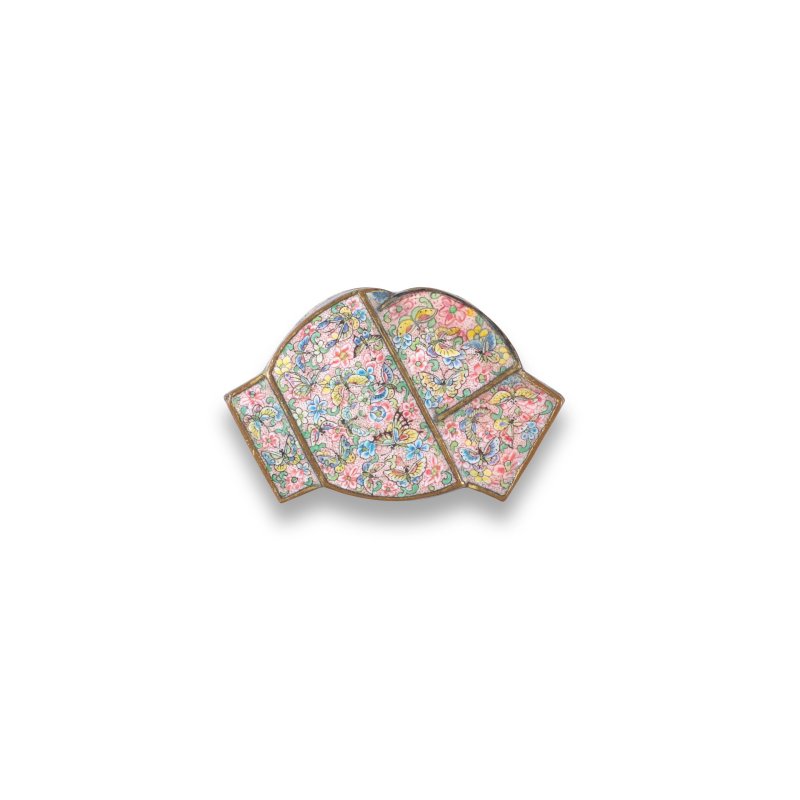
In the form of a ribbon knot, finely painted to the exterior of the sides and cover with butterflies in flight amongst flowers on a pink dotted diaper ground, the interior enamelled in turquoise-blue, the base enamelled white and bearing the reign mark in blue. 5.6cm (2 1/4in) wide. (2).
Footnotes
清雍正 北京銅胎畫琺琅花蝶紋結形蓋盒
「雍正年製」楷書款
Provenance: Sir Harry M. Garner, KBE CB (1891-1977) and Lady Garner (1897-1994), England
Bluett & Son Ltd., London
Spink & Son Ltd., London, acquired from the above on 25 June 1984
Frank P. Korn OBE (1914-1996) and Ruth Korn (1924-2026), Surrey, likely acquired during the 1985 Spink & Son Ltd. exhibition; noted in the Spink & Son Ltd., London valuation dated 21 February 1995
Published, Exhibited and Illustrated: The Oriental Ceramic Society, The Arts of the Ch'ing Dynasty, London, 1964, no.338
Michael Gillingham, , 1978, no.81
Bluett & Son Ltd., , London, 1984, no.G38 (Exhibited)
Spink & Son Ltd., , London, 1985, p.77, no.156
大英帝國爵級司令勛章及巴斯勛章獲得者Harry M Garner爵士(1891-1977) 及Garner女爵 (1897-1994)伉儷,英格蘭
倫敦古董商Bluett & Son Ltd.
倫敦古董商Spink & Son Ltd.,從上處獲得于1984年6月25日
大英帝國勛章獲得者Frank P. Korn(1914-1996)及Ruth Korn(1924-2026)伉儷,英国萨里,或于1985年Spink & Son Ltd.展覽時獲得;倫敦古董商Spink & Son Ltd.于1995年2月21日的評估報告中曾提及
東方陶瓷學會,《The Arts of the Ch'ing Dynasty》,倫敦,1964年,編號338
Michael Gillingham,《Chinese Painted Enamels: an Exhibition held in the Department of Eastern Art》,1978年,編號81
Bluett & Son Ltd.,《Chinese Painted Enamels: from the Collection of Sir Harry and Lady Garner》,倫敦,1984年,編號G38(展覽)
Spink & Son Ltd.,《The Minor Arts of China II》,倫敦,1985年,第77頁,編號156
Sir Harry M. Garner KBE CB (1891-1977) was a distinguished mathematician who joined the Royal Aircraft Establishment in 1927. He served as Director of Scientific Research at the Ministry of Aircraft Production in 1943 and Chief Scientist at the Ministry of Supply between 1949 and 1953. As an eminent collector and scholar of East Asian art, Garner published extensively on Chinese decorative arts, producing authoritative reference works on blue and white porcelain, lacquer, and cloisonné enamels. Together with Lady Garner, he assembled one of the finest private collections of Oriental art in Britain, much of which was later donated to the British Museum, London, and the Victoria and Albert Museum, London. Garner was deeply involved with the Oriental Ceramic Society, serving as Honorary Secretary from 1951 to 1967 and as President from 1967 to 1971.
The Imperial Enamel Workshops in Beijing were established during the Kangxi reign, producing painted enamel wares for the Qing Court in a highly specialised and technically demanding medium. Kangxi period painted enamels are now well represented in major museum collections, whereas surviving examples from the Yongzheng reign are considerably rarer. Yongzheng period Beijing enamel is consequently of particular importance for the study of the development of the medium at the Qing Court. As seen in the present lot, wares produced during the Yongzheng period were predominantly small in size, characterised by well-proportioned forms and refined painting. See a related oval box and cover, Yongzheng four-character mark, decorated with flowers, in the Qing Court Collection at the Palace Museum, Taipei, illustrated in , Taipei, 2014, p.44.
The present box and cover is a fine example of Beijing enamel of the Yongzheng period. According to archival records, during the Kangxi and Yongzheng periods, Imperial painted enamel wares were manufactured predominantly at the Palace and princely workshops in the capital. It was not until the thirteenth year of the Qianlong reign (1748) that the Qing Court first instructed officials in Guangdong to commission painted enamel wares as Imperial tribute wares. Thereafter, production patterns gradually shifted.
The unusual form of the present box appears to derive from the Japanese (結び文), a stylised form representing a letter folded and tied into a knot, which was employed in Japanese decorative arts from at least the 17th century, particularly in the production of small lacquer and ceramic containers. An early example is a polychrome -form incense container by Nonomura Ninsei, 17th century, in the Osaka Museum of Oriental Ceramics (acc.no.02593). The adoption of this distinctly Japanese form in Yongzheng period painted enamel is especially noteworthy in view of the Emperor's well known appreciation of Japanese lacquer. An 18th century black and gilt lacquer knot-shaped box and cover in the Qing Court Collection at the Palace Museum, Taipei (acc. no. 故漆000485N000000000), possibly of Japanese manufacture, provides a further interesting comparison.
At the same time, the form would have acquired an auspicious resonance within the Chinese context: the character for 'knot' ( 結) is a near homophone of (吉), meaning 'auspiciousness' or 'good fortune'. The present box may therefore represent a Japanese-derived form adapted for the Qing Court and invested with auspicious meaning within the Chinese decorative tradition. The butterfly motif is another prominent feature of the design. The word for butterfly ( 蝴) forms part of a homophone for (福), meaning 'blessing' or 'good fortune'. Furthermore, as butterflies are frequently depicted in pairs, they have long been associated with happiness, conjugal harmony, and the flourishing of descendants. Together, these motifs convey a layered message of auspiciousness, prosperity, and familial felicity.
See a related Beijing enamel yellow-ground 'peaches' seal paste box and cover, Yongzheng four-character mark and of the period, which was sold at Sotheby's Hong Kong, 7 October 2015, lot 3783.
In the form of a ribbon knot, finely painted to the exterior of the sides and cover with butterflies in flight amongst flowers on a pink dotted diaper ground, the interior enamelled in turquoise-blue, the base enamelled white and bearing the reign mark in blue. 5.6cm (2 1/4in) wide. (2).
Footnotes
清雍正 北京銅胎畫琺琅花蝶紋結形蓋盒
「雍正年製」楷書款
Provenance: Sir Harry M. Garner, KBE CB (1891-1977) and Lady Garner (1897-1994), England
Bluett & Son Ltd., London
Spink & Son Ltd., London, acquired from the above on 25 June 1984
Frank P. Korn OBE (1914-1996) and Ruth Korn (1924-2026), Surrey, likely acquired during the 1985 Spink & Son Ltd. exhibition; noted in the Spink & Son Ltd., London valuation dated 21 February 1995
Published, Exhibited and Illustrated: The Oriental Ceramic Society, The Arts of the Ch'ing Dynasty, London, 1964, no.338
Michael Gillingham, , 1978, no.81
Bluett & Son Ltd., , London, 1984, no.G38 (Exhibited)
Spink & Son Ltd., , London, 1985, p.77, no.156
大英帝國爵級司令勛章及巴斯勛章獲得者Harry M Garner爵士(1891-1977) 及Garner女爵 (1897-1994)伉儷,英格蘭
倫敦古董商Bluett & Son Ltd.
倫敦古董商Spink & Son Ltd.,從上處獲得于1984年6月25日
大英帝國勛章獲得者Frank P. Korn(1914-1996)及Ruth Korn(1924-2026)伉儷,英国萨里,或于1985年Spink & Son Ltd.展覽時獲得;倫敦古董商Spink & Son Ltd.于1995年2月21日的評估報告中曾提及
東方陶瓷學會,《The Arts of the Ch'ing Dynasty》,倫敦,1964年,編號338
Michael Gillingham,《Chinese Painted Enamels: an Exhibition held in the Department of Eastern Art》,1978年,編號81
Bluett & Son Ltd.,《Chinese Painted Enamels: from the Collection of Sir Harry and Lady Garner》,倫敦,1984年,編號G38(展覽)
Spink & Son Ltd.,《The Minor Arts of China II》,倫敦,1985年,第77頁,編號156
Sir Harry M. Garner KBE CB (1891-1977) was a distinguished mathematician who joined the Royal Aircraft Establishment in 1927. He served as Director of Scientific Research at the Ministry of Aircraft Production in 1943 and Chief Scientist at the Ministry of Supply between 1949 and 1953. As an eminent collector and scholar of East Asian art, Garner published extensively on Chinese decorative arts, producing authoritative reference works on blue and white porcelain, lacquer, and cloisonné enamels. Together with Lady Garner, he assembled one of the finest private collections of Oriental art in Britain, much of which was later donated to the British Museum, London, and the Victoria and Albert Museum, London. Garner was deeply involved with the Oriental Ceramic Society, serving as Honorary Secretary from 1951 to 1967 and as President from 1967 to 1971.
The Imperial Enamel Workshops in Beijing were established during the Kangxi reign, producing painted enamel wares for the Qing Court in a highly specialised and technically demanding medium. Kangxi period painted enamels are now well represented in major museum collections, whereas surviving examples from the Yongzheng reign are considerably rarer. Yongzheng period Beijing enamel is consequently of particular importance for the study of the development of the medium at the Qing Court. As seen in the present lot, wares produced during the Yongzheng period were predominantly small in size, characterised by well-proportioned forms and refined painting. See a related oval box and cover, Yongzheng four-character mark, decorated with flowers, in the Qing Court Collection at the Palace Museum, Taipei, illustrated in , Taipei, 2014, p.44.
The present box and cover is a fine example of Beijing enamel of the Yongzheng period. According to archival records, during the Kangxi and Yongzheng periods, Imperial painted enamel wares were manufactured predominantly at the Palace and princely workshops in the capital. It was not until the thirteenth year of the Qianlong reign (1748) that the Qing Court first instructed officials in Guangdong to commission painted enamel wares as Imperial tribute wares. Thereafter, production patterns gradually shifted.
The unusual form of the present box appears to derive from the Japanese (結び文), a stylised form representing a letter folded and tied into a knot, which was employed in Japanese decorative arts from at least the 17th century, particularly in the production of small lacquer and ceramic containers. An early example is a polychrome -form incense container by Nonomura Ninsei, 17th century, in the Osaka Museum of Oriental Ceramics (acc.no.02593). The adoption of this distinctly Japanese form in Yongzheng period painted enamel is especially noteworthy in view of the Emperor's well known appreciation of Japanese lacquer. An 18th century black and gilt lacquer knot-shaped box and cover in the Qing Court Collection at the Palace Museum, Taipei (acc. no. 故漆000485N000000000), possibly of Japanese manufacture, provides a further interesting comparison.
At the same time, the form would have acquired an auspicious resonance within the Chinese context: the character for 'knot' ( 結) is a near homophone of (吉), meaning 'auspiciousness' or 'good fortune'. The present box may therefore represent a Japanese-derived form adapted for the Qing Court and invested with auspicious meaning within the Chinese decorative tradition. The butterfly motif is another prominent feature of the design. The word for butterfly ( 蝴) forms part of a homophone for (福), meaning 'blessing' or 'good fortune'. Furthermore, as butterflies are frequently depicted in pairs, they have long been associated with happiness, conjugal harmony, and the flourishing of descendants. Together, these motifs convey a layered message of auspiciousness, prosperity, and familial felicity.
See a related Beijing enamel yellow-ground 'peaches' seal paste box and cover, Yongzheng four-character mark and of the period, which was sold at Sotheby's Hong Kong, 7 October 2015, lot 3783.
常见问题
这件清雍正 北京銅胎畫琺琅花蝶紋結形蓋盒 | A VERY RARE BEIJING ENAMEL 'RIBBON KNOT' BOX AND COVER的成交价是多少?
落槌价为 预展中。 成交价为 预展中。


