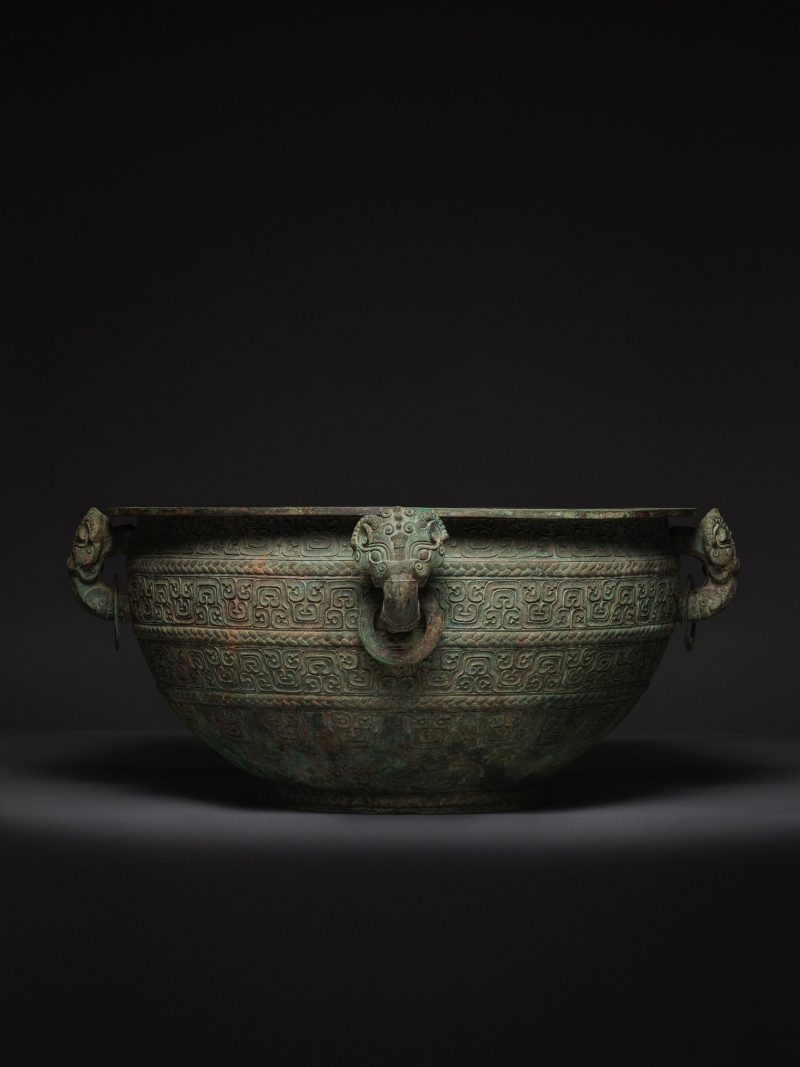

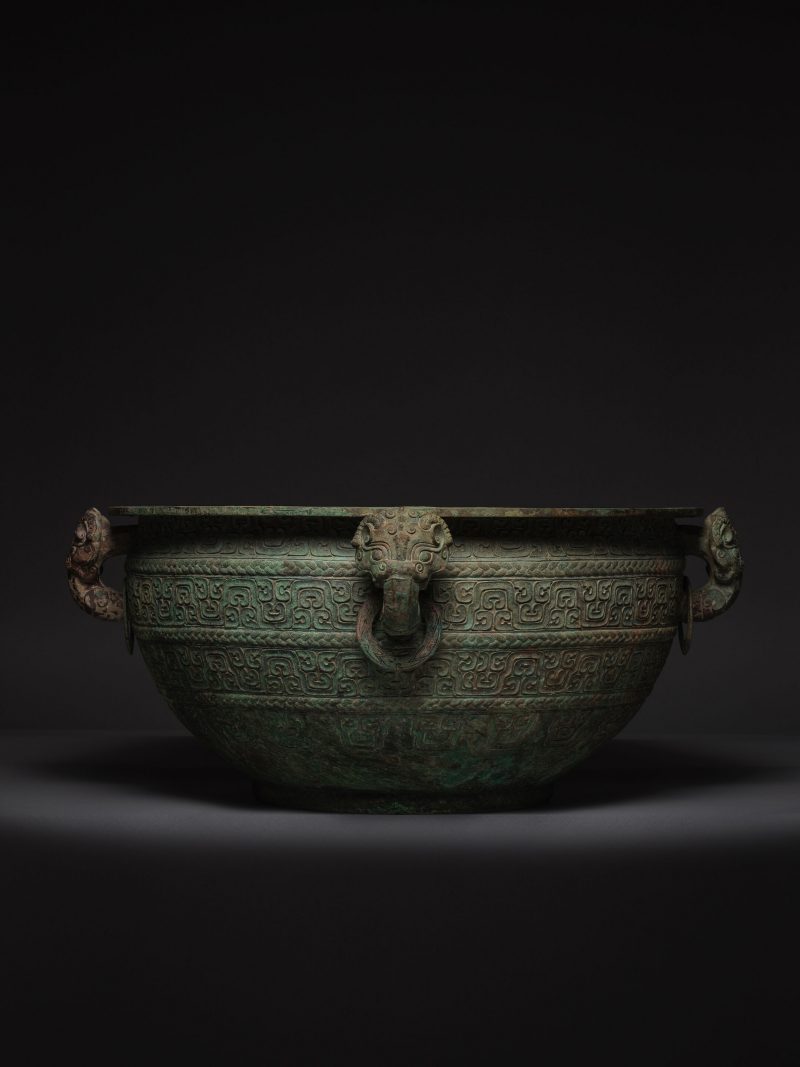
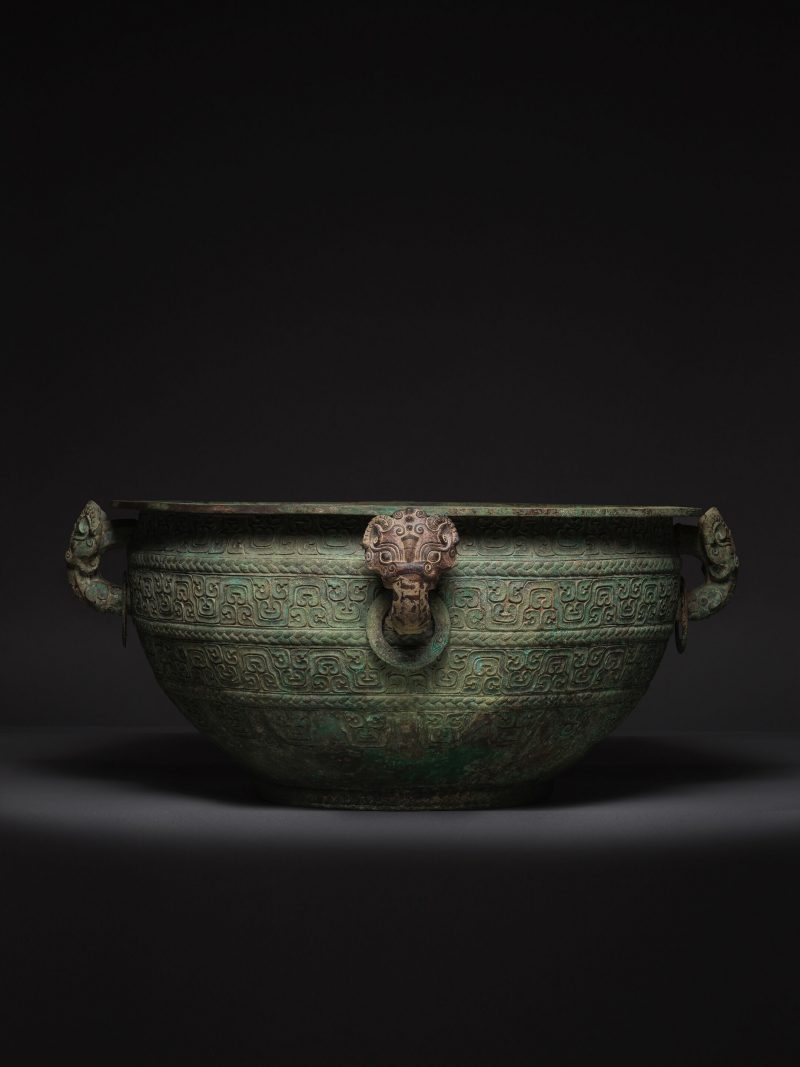
Lot 32 春秋 約公元前六/五世紀 青銅波曲紋鑒 | IMPORTANT ET TRÈS RARE GRAND BASSIN RITUEL EN BRONZE, JIAN
落槌价
预展中
成交价
预展中
| 拍卖公司 | 邦瀚斯 |
|---|---|
| 拍卖时间 | 2026年12月10日 |
拍品信息
拍品名称
春秋 約公元前六/五世紀 青銅波曲紋鑒 | IMPORTANT ET TRÈS RARE GRAND BASSIN RITUEL EN BRONZE, JIAN
年代
春秋 約公元前六/五世紀
起拍价
未知
估值区间
EUR 100,000–150,000
尺寸
88 cm (34 1/2 in.) diam.
品相
未知
更多信息
IMPORTANT ET TRÈS RARE GRAND BASSIN RITUEL EN BRONZE, JIAN
Période des Printemps et Automnes, vers VI/Ve siècle av. J.-C.
AN IMPORTANT MASSIVE ARCHAIC BRONZE RITUAL BASIN, JIAN
Spring and Autumn period, ca. 6th/5th century BC
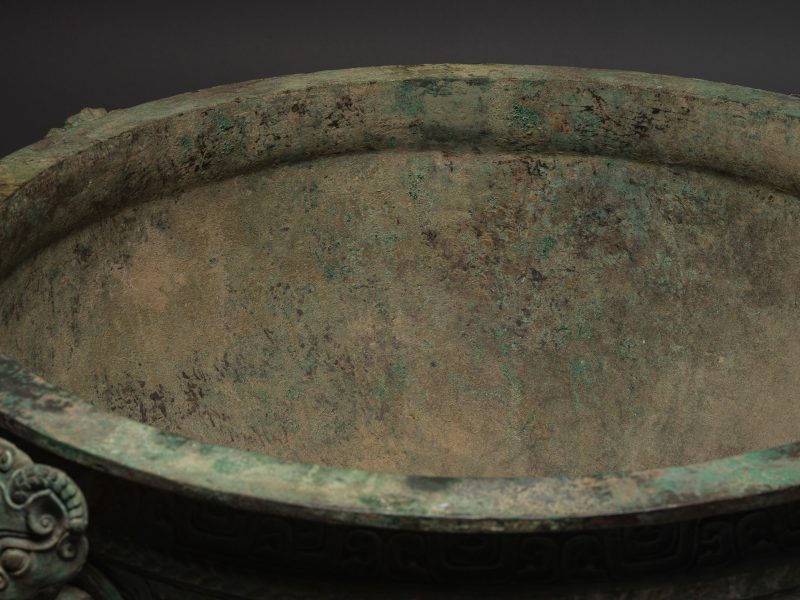
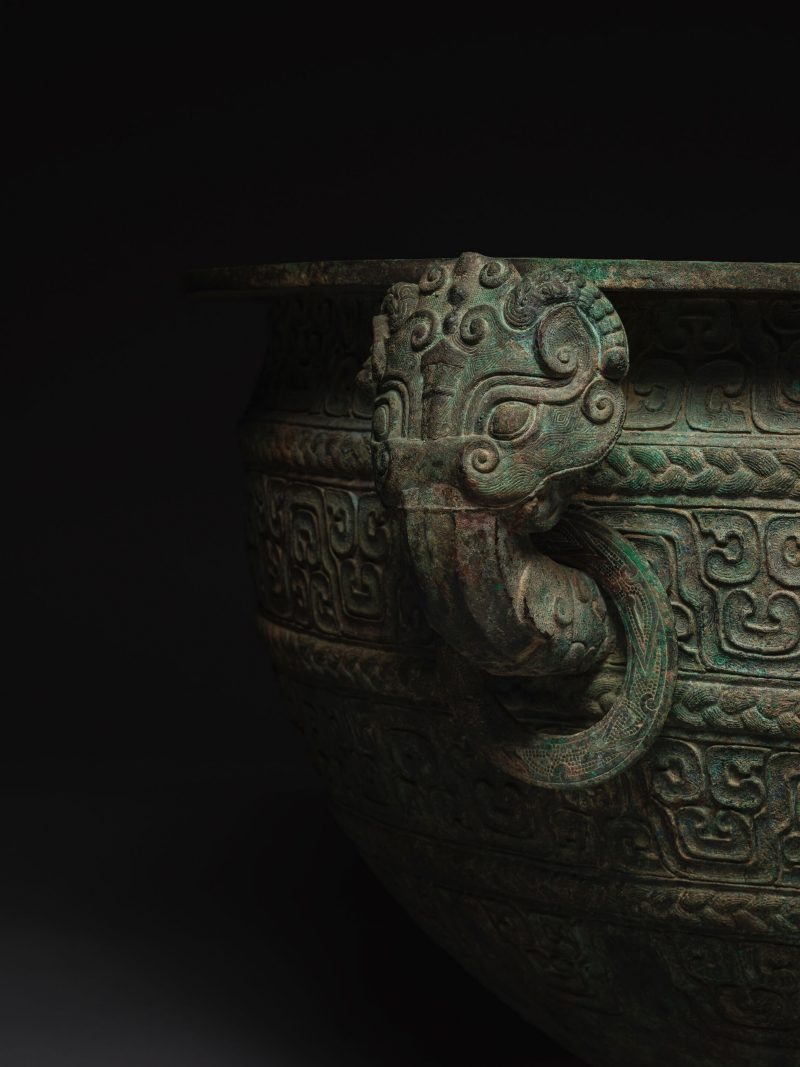
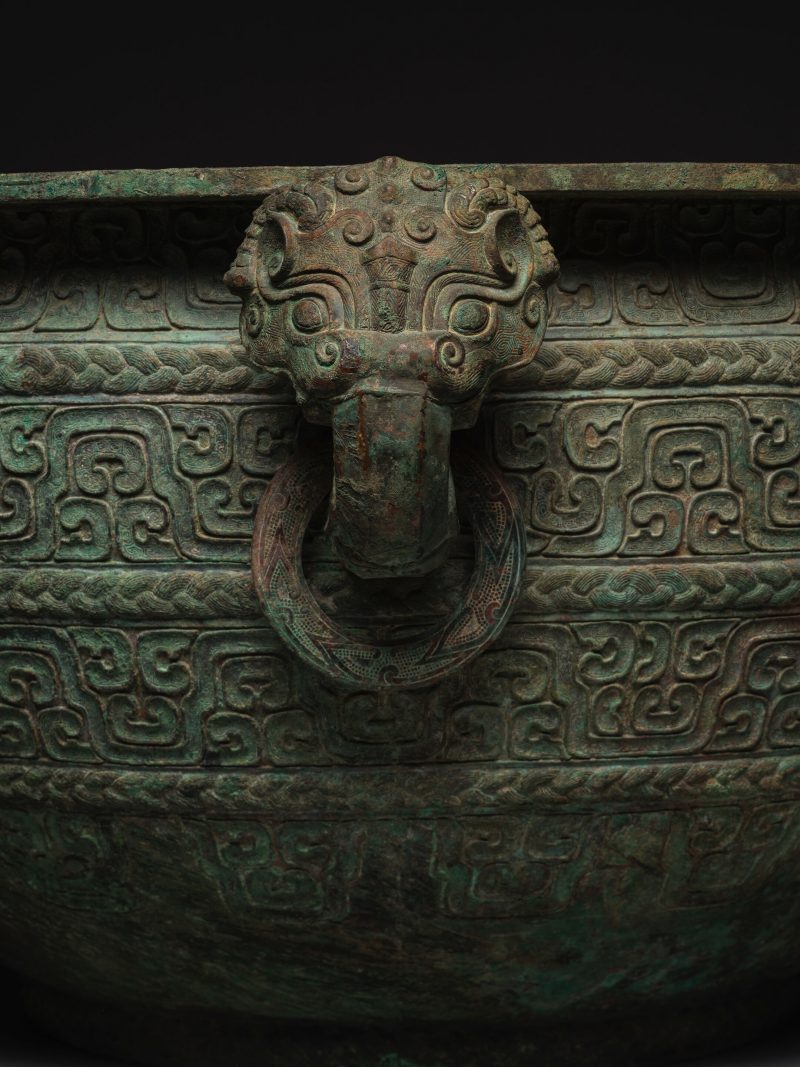
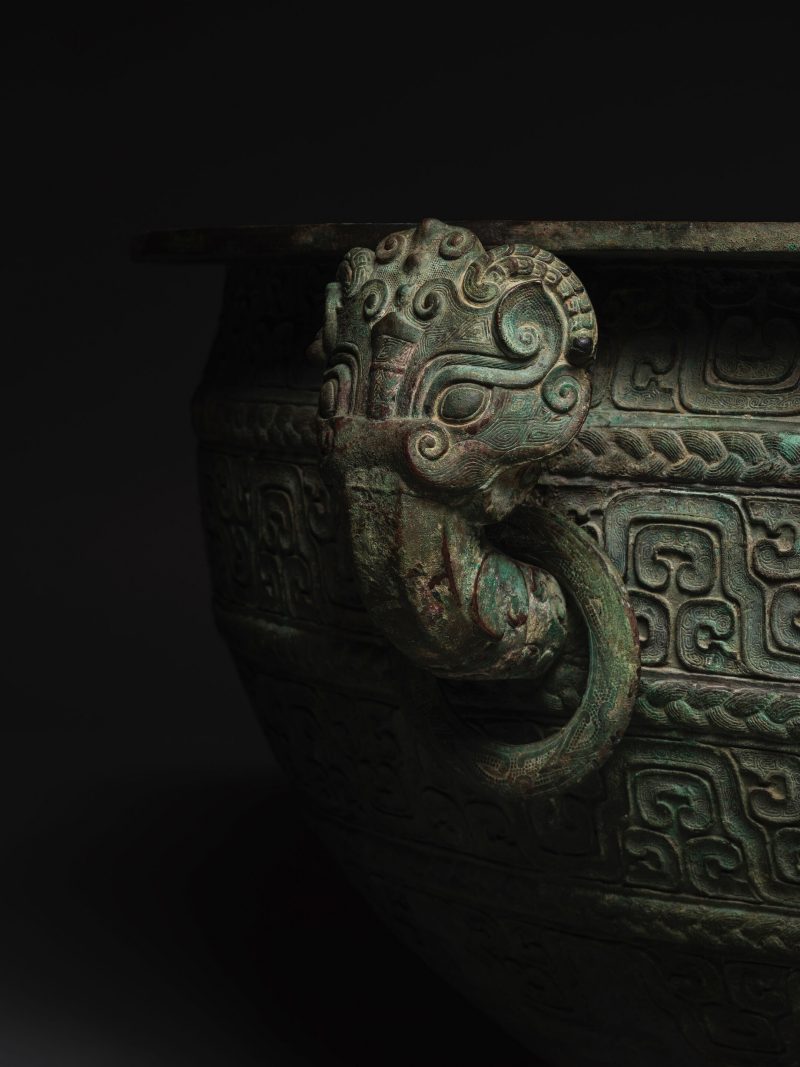
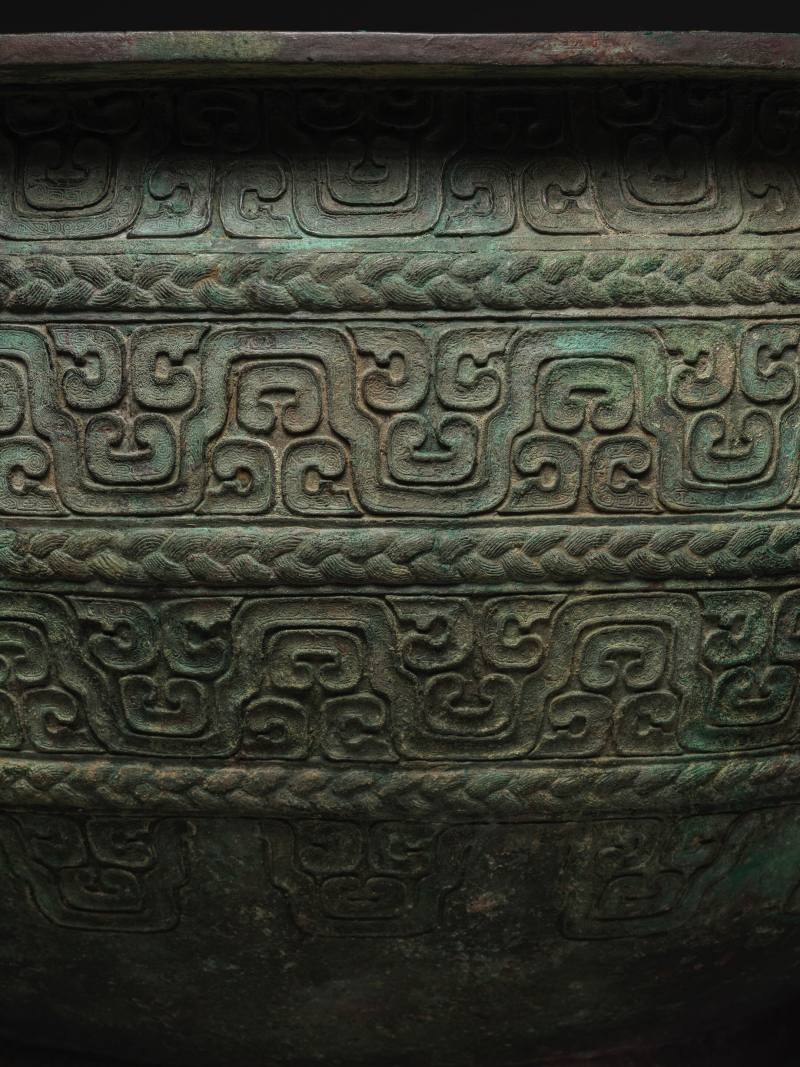
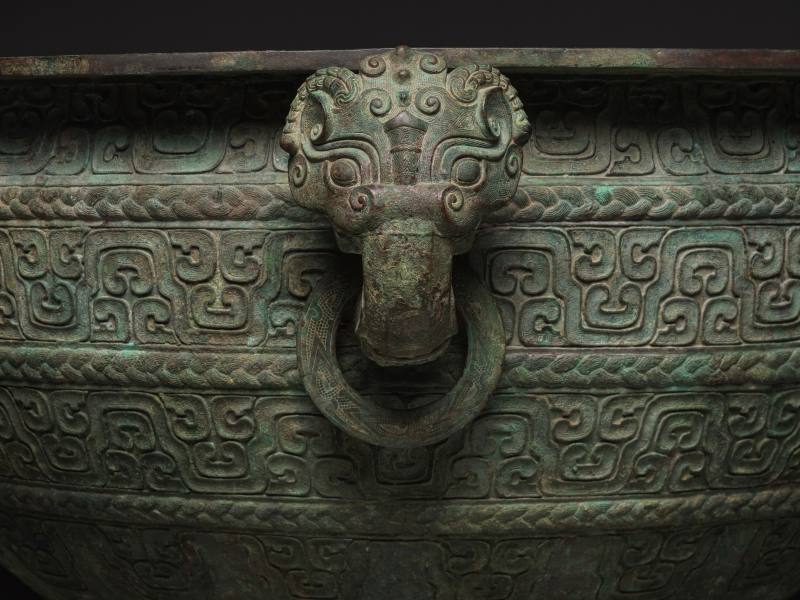
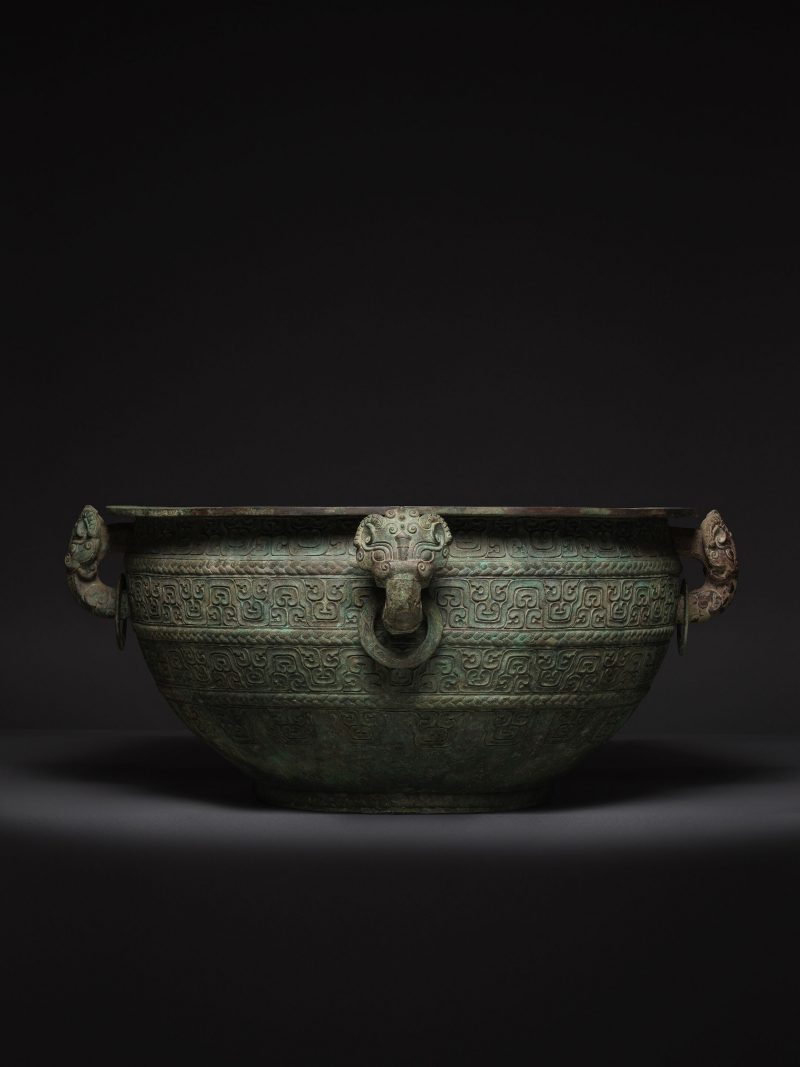
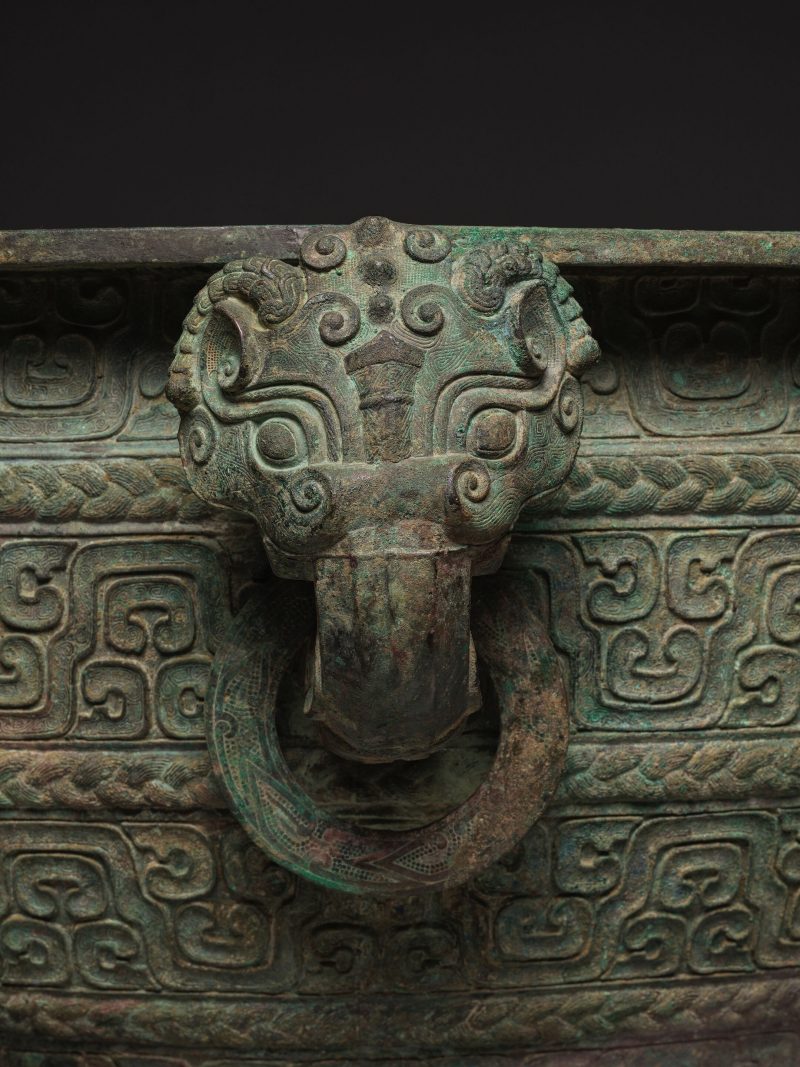
With deep, rounded sides rising to a recessed neck below a wide everted rim, set with four large handles each cast with a prominent three-dimensional mythical beast mask and suspending loose rings, the body finely cast with three wide registers each decorated with a continuous pattern of triangular broken waves filled with C-shaped hooks forming highly abstract animal masks, the concave lines filled with finely cast hooks and volutes, the rows separated by bands of braided ropes, the bronze patinated to a light greyish-green with areas of encrustation.
88 cm (34 1/2 in.) diam.
春秋 約公元前六/五世紀 青銅波曲紋鑒
Provenance:
Wui Po Kok Antique Co., Ltd., Hong Kong , 1998
Gisèle Croës Arts d'Extrême Orient, Brussels, 2010
Published, Exhibited and Illustrated:
Gisèle Croës Arts d'Extrême Orient, Ancient Chinese Treasures 2, Tefaf, Maastricht, March 18 - 27 2011, pp. 16-19
來源:
Wui Po Kok Antique Co., Ltd., 香港, 1998年
Gisèle Croës Arts d'Extrême Orient,布魯塞爾, 2010年
展覽著錄:
Gisèle Croës Arts d'Extrême Orient,《Ancient Chinese Treasures 2》,歐洲藝術與古董博覽會,馬斯特里赫特,2011年3月18-27日,第16-19頁
In the late 6th century BC, a new decorative style emerged among bronzes cast in the region of the ancient state of Wu covering the eastern shores of the Huai river in modern Jiangsu and parts of Anhui provinces. Characterised by dense patterns of comma-shaped curls terminating in hooked points and intricate, highly abstract interlaced snake-dragons finely cast in relief in an undulating pattern, this distinctive new style was named for the region where it appeared on bronzes. The 'Huai' style derived from different sources, among them zoomorphic motifs which were adapted and stylised before being turned into an abstract pattern of waves, commas and hooks as demonstrated on the decoration of this magnificent massive bronze basin.
It was not until the mid-20th century discovery of a large bronze foundry complex in Houma, Shanxi province in northern China that the origins of these distinctive patterns were revealed. Fragments of reused clay models, master pattern blocks, and decorated clay moulds pointed to a highly sophisticated production process which involved the use of pattern blocks to transfer impressions onto the mould which were in turn joined to form a larger pattern, thus increasing the speed and volume of production without sacrificing quality was an astonishing innovation. Their presence proves foundries at Houma operated with a specialized workforce and a division of labour as discussed by Lothar Ledderose in Ten Thousand Things: Module and Mass Production in Chinese Art, Princeton, 2001.
The designs and patterns carved onto the numerous fragments and remains uncovered in the Houma foundry complex illustrate the superior skills and the ingenuity of the artisans devising and casting these highly complex designs and transferring them onto the moulds from which vessels of different sizes and shapes were cast. Using piece-moulds and lost-wax casting techniques, the quality of vessels cast during this period in the early Spring and Autumn period is unsurpassed as this massive basin demonstrates. The Houma foundry complex was established in 585 BC by the rulers of the State of Jin who remained its chief patrons for about 150 years. An inscription on a large jian in the collection of the Minneapolis Institute of Art (accession no. 50.46.103) records that the vessel was made for the son of Lord Zhi, the ruling family of the Jin state, demonstrating that such large basins were made for the ruling aristocracy.
Not many basins of this size and design have survived. Related examples of similarly large size with variations on the interlaced dragon design include two related, inscribed examples, dated to the first half of the fifth century BC, one in the collection of the Freer Gallery of Art, Smithsonian Institution, Washington, D.C., published in Jenny So, Eastern Zhou Ritual Bronzes from the Arthur M. Sackler Collections, New York, 1995, p. 40, fig. 55, and the mentioned pair to this vessel in the collection of the Minneapolis Institute of Art (accession no. 50.46.103). Compare also with a related basin from the Avery Brundage collection, illustrated in René-Yvon Lefebvre d'Argencé, Bronze Vessels of Ancient China in the Avery Brundage Collection, Tokyo, 1974, pp. 106, no. XLV.
以下内容由AI翻译:
【描述】
深圆腹上收至内凹的颈部,宽口沿外翻,设四件大耳,每耳铸有突出的立体神兽面具,并悬挂活环。器身精细铸造三道宽纹饰带,每带饰以连续的三角形断波纹,其间填充C形钩,形成高度抽象的动物面具图案,凹线中细密地铸有钩和涡卷纹,各纹饰带之间以编织绳纹分隔。青铜表面呈浅灰绿色,局部有锈蚀。
公元前6世纪晚期,在古代吴国所在的淮河东岸地区(今江苏及安徽部分地区)所铸的青铜器上,出现了一种新的装饰风格。这种风格的特点是密集的逗号形卷曲纹饰,末端带有钩状尖端,以及以浮雕精铸的繁密、抽象、彼此交缠的起伏蛇龙纹。这种独特的风格以其出现的地区命名为“淮式”。淮式纹饰来源于不同的源头,其中包括经过改编和风格化的动物纹饰,最终演变成波浪、逗号和钩状的抽象图案,如这件宏伟的大铜盆上的装饰所示。
直到20世纪中期,在中国北方山西省侯马发现了一个大型青铜铸造厂遗址,这些独特图案的起源才得以揭示。遗址中发现了再利用的泥模碎片、主模块和装饰过的泥范,表明当时采用了高度复杂的生产过程,使用模块将图案转移到模具上,再组合成更大的图案,从而在不牺牲质量的情况下提高了生产速度和产量。这一创新令人惊叹。这些证据证明了侯马铸造厂拥有专门的劳动力和分工,正如罗塔尔·莱德罗斯在《万件事物:中国艺术中的模块与大规模生产》(普林斯顿,2001年)一书中所讨论的那样。
侯马铸造厂遗址中发现的大量碎片和遗物上的设计和图案展示了工匠们在设计和铸造这些复杂图案时的高超技艺和创造力,并将其转移到用于铸造不同大小和形状的器物的模具上。通过分块模和失蜡铸造技术,这一时期(春秋早期)铸造的器物质量无与伦比,如这件大铜盆所示。侯马铸造厂于公元前585年由晋国统治者建立,并在其后的约150年内一直为其主要赞助人。明尼阿波利斯艺术学院收藏的一件大鉴(藏品编号50.46.103)上的铭文记录了该器物为晋国执政家族智氏之子所制,表明这类大盆是为统治贵族制作的。
如此尺寸和设计的盆并不多见。类似尺寸且具有变体交缠龙纹饰的例子包括两件相关的铭文器物,年代约为公元前5世纪上半叶,一件收藏于华盛顿特区弗里尔美术馆(出版于苏珊·索,《亚瑟·M·萨克勒收藏的东周礼器》,纽约,1995年,第40页,图55),另一件收藏于明尼阿波利斯艺术学院(藏品编号50.46.103)。另可比较艾弗里·布伦戴奇收藏的一件相关器物,见雷内-伊冯·勒费夫尔·达让塞,《艾弗里·布伦戴奇收藏的中国古代青铜器》,东京,1974年,第106页,编号XLV。
常见问题
这件春秋 約公元前六/五世紀 青銅波曲紋鑒 | IMPORTANT ET TRÈS RARE GRAND BASSIN RITUEL EN BRONZE, JIAN的成交价是多少?
落槌价为 预展中。 成交价为 预展中。
拍品的尺寸是多少?
88 cm (34 1/2 in.) diam.